

Credo in unum Deum. And also in Limerick Hurling and Munster Rugby. Photo: Stone Bridge, Wicklow Town; Railway Bridge, Station Rd., Newcastle West.
Ireland
Joined January 2012
- Tweets9.2K
- Following868
- Followers257
- Likes52.8K





Derek Hanrahan retweeted

Rest in perfect peace, René Girard (25 Dec. 1923–4 Nov. 2015).
More than a great intellectual, you were, without a doubt, a prophet of the last days. As the great servant of Christ that you were, you inspire us not only through your confidence in Christianity but also through your very defence of it. Generations after us will continue to draw inspiration from both.
You continue to strengthen our faith and expose the tricks of the devil—both in the mundane moments of our lives and in the grander scheme of things.
Your genius, courage, and faith—a rare combination—will inspire for eons to come.
Thank you for devoting your life to the pursuit of truth, René.
You are loved, wherever you are.

Derek Hanrahan retweeted

What happens to a Catholic nation when it stops understanding what the Mass is & what it is actually for?
I found this article in The Irish Times, written by Séamas O'Reilly, profoundly sad. He describes abandoning Sunday Mass 22 years ago and feeling grateful, almost every Sunday since, to have escaped the obligation. At first glance, it reads like another familiar celebration of Ireland's emancipation from Catholicism. The oppressive institution has been left behind, the burdensome rituals discarded, and the modern individual is finally free to spend Sunday morning as he pleases. Obviously this is the editorial intention.
Except that something rather more interesting happens.
O'Reilly returns to Mass in Enniskillen with his father and siblings, to commemorate the 35th anniversary of his mother's death. Suddenly, the religion he has so happily discarded becomes the means by which his family remembers her. His body remembers the gestures, his knees remember when to bend, his mouth remembers the prayers. The words have changed slightly, but something far older and deeper remains. He describes the peculiar experience of encountering something once intimately familiar that has become strangely foreign, I found that extraordinarily poignant.
Here is a man who has spent more than two decades congratulating himself on escaping Catholicism, yet finds himself returning to the altar when confronted with one of the most fundamental realities of human existence: death, memory, love and the enduring bond between the living and those who have gone before us. Of course, he presents his attendance as an act of affection for his parents rather than renewed religious belief...we should take him at his word, but surely there is something worth examining in the fact that the Church he has rejected still provides the language, gestures and sacred setting through which his family remembers its dead?
The deeper tragedy, I think, is what his account reveals about the disappearance of transcendence from our understanding of the sacred liturgy. O'Reilly remembers Mass as an obligation, an activity to be endured, something measured in annual attendances, like school assemblies or compulsory exercise. He recalls attending perhaps 70 or 80 Masses a year, but nowhere does he suggest that he understood himself to be standing at Calvary, participating sacramentally in the one sacrifice of Christ, or encountering the living God. I do not say that to criticise him personally. Rather, I wonder what it tells us about the catechesis and liturgical culture of an entire generation.
How did a nation once so thoroughly immersed in Catholic practice produce so many people for whom the Mass appears to have meant so little? Perhaps we should ask whether the Church, in its eagerness to make the liturgy accessible, familiar and ordinary, sometimes failed to communicate precisely what makes it extraordinary. If the Mass becomes principally a communal gathering, a collection of readings, songs and familiar routines, why should anyone feel compelled to attend once the social expectation disappears? The obligation only makes sense when we understand what we are obliged towards.
Catholics do not attend Mass simply because the Church has devised an arbitrary Sunday regulation. We go because worship is not an optional embellishment of human existence. It is the proper response of creatures to their Creator. We go because the Eucharist is not merely a memorial of something that happened long ago, but the sacramental making-present of Christ's sacrifice, through which heaven touches earth. We go because, in the deepest sense, we were made for communion with God. This is where the modern language of liberation becomes so terribly inadequate. Freedom is not simply the absence of obligation. A husband is not liberated by abandoning fidelity, nor a parent by escaping responsibility for a child. The obligations arising from love are not necessarily constraints upon our freedom. They can be the very means by which freedom finds its meaning.
St Augustine understood this with remarkable clarity: "Our heart is restless until it rests in you."
What if the apparent freedom of abandoning worship is, at least in part, a freedom from the very thing that makes us most fully human? There is another dimension to this which seems particularly relevant to Ireland.
Catholicism did not merely provide the Irish with a Sunday activity. It shaped their understanding of time, suffering, death, community, history and eternity. The Mass connected generations across centuries. The same prayers were offered for the dead, the same sacrifice celebrated, the same hope proclaimed in the Resurrection.
This is not merely cultural nostalgia. The Catholic understanding of the Communion of Saints makes a startling claim: that the dead in Christ are not simply figures preserved in our memories, but members of a living communion which transcends death itself. When O'Reilly attends Mass for his mother, he enters a tradition which understands remembrance as something infinitely more profound than recollection. The Church prays for her soul, commends her to God's mercy and offers the sacrifice of Christ. That is an astonishing thing, whether one believes it or not.
Yet much contemporary secular commentary seems incapable of recognising this distinction. Religion is reduced to sociology, ritual to habit, doctrine to institutional control, and liberation to the ability to sleep in on Sunday.
Ireland has every reason to confront the appalling failures and scandals of its ecclesiastical institutions. Those failures were real, and the anger they generated cannot simply be dismissed. But there is an intellectual poverty in imagining that the failures of churchmen somehow exhaust the meaning of Catholicism, or that the abandonment of religious practice necessarily represents human progress. Indeed, the irony of O'Reilly's article is that its most moving passages concern the very things his supposed liberation cannot entirely explain: the persistence of memory, the significance of inherited gestures, the enduring claims of family, and the human instinct to reach beyond death. He concludes with a joke about being relieved not to burst into flames on entering a church.
I smiled at that, but I was left thinking about something much sadder. A civilisation can forget the meaning of its rituals long before it stops performing them. Eventually, it stops performing them because it has forgotten why they mattered. Perhaps that is the real story of Catholic Ireland. Not simply that people stopped going to Mass, but that generations of Catholics were never adequately taught what an extraordinary thing the Mass actually is. And perhaps the greatest tragedy is that, having mistaken an invitation to eternity for an inconvenient Sunday obligation, so many now celebrate their freedom from it. What they have lost may be infinitely greater than what they imagine they have gained.
irishtimes.com/life-style/pe…

Derek Hanrahan retweeted
“The Middle Ages said that the figure of Christ in [The Judgement of Solomon] is Solomon... But that's not true. The figure of Christ is obviously the good prostitute—who prefers to sacrifice all her interest and even herself... She is willing to lose her child so that the child will live.”
— René Girard, CBC Ideas

ALT The Judgement of Solomon, by Peter Paul Rubens. (c. 1617)

“Traditionally, the Christians have seen [Judah's action] as a prophecy of Christ. All the scholars find this enormously funny: ‘How could it be—hahaha!— absolutely no connection,’ and so forth. But the connection is obvious. The connection is obvious, because Jesus dies a scapegoat death in order to do away with all scapegoat death, in order to reveal scapegoat death. Therefore, he's doing exactly the same thing as Judah. He's preferring to die instead of a scapegoat.”
— An informal talk by René Girard - 1994

Derek Hanrahan retweeted

Muslim extremists are murdering leading members of the Christian community in Jordan.

The Nine Christian Martyrs Who Lost Their Lives in the Jordan Church Attack
Nine Jordanian Christians were martyred in a deadly terrorist attack on St. George’s Greek Orthodox Church in the village of Hamoud, Karak Governorate, on Friday, October 23, 2026. Three armed men opened fire on mourners who had gathered for a funeral, turning a moment of prayer and farewell into a tragedy. The attack initially claimed the lives of seven martyrs, with two more victims later dying from their injuries, bringing the death toll to nine. Approximately 40 others were injured.
Dr. Fadi Al-Halsa
Dr. Fadi Al-Halsa was a young Jordanian dentist who had recently graduated from Alexandria University in Egypt in 2026. The only son of his parents, he was remembered by his professors and classmates for his kindness, good character, and dedication to his studies. After years of hard work, he had returned to Jordan to begin his dental career and build his future.
Dr. Khaled Al-Halsa
Known as the “Doctor of the Poor,” Dr. Khaled Al-Halsa was a beloved dentist in Karak, Jordan, remembered for his kindness and dedication to helping those in need. He frequently provided free dental treatment to the poor and would even cut his vacations short to return to his hometown and care for his patients. He was martyred during the terrorist attack after being shot in the head.
Mazen Rasmi Al-Qusus
Mazen Rasmi Al-Qusus was a Jordanian lawyer from Karak, remembered by those who knew him for his kindness, good character, and respectful treatment of others. His death brought grief to his family, friends, and the legal community in Jordan. He was among those wounded during the terrorist attack and later died from his injuries.
Dr. Assem Barqan
Dr. Assem Barqan was a father and Jordanian associate professor at Hashemite University who had pursued his studies in Poland. He was deeply devoted to his students and passionate about education. Out of his love for Jordan, he actively spoke in defense of his country and worked to contribute positively to its future. He cared deeply for his hometown of Karak, expressing his hope that it would overcome its hardships and remain strong through the efforts of its people.
Ehab Nayef Al-Halsa
Ehab Nayef Al-Halsa, affectionately known as “Abu William,” was a Jordanian from Karak, remembered by his friends and neighbors for his kindness, compassion, and good character. He was known for caring deeply about others and often spoke about the suffering of people around him. One acquaintance recalled that although he had known Ehab for only nine months, his kindness had left an unforgettable impression.
Maher Al-Zureiqat
Maher Al-Zureiqat was a Jordanian pharmacist who served as the pharmacist in charge at the Italian Hospital in Karak. He was remembered for his kindness, dedication to his profession, and the strong relationships he built with his colleagues and community. Throughout his career, he devoted himself to his work while striving to provide a dignified life for his family.
Dr. Mohammed Al-Qusus
Dr. Mohammed Al-Qusus was a Jordanian Christian dentist and one of the country’s longest-practicing dental professionals. Known for his kindness and generosity, he dedicated much of his life to helping those in need, often providing free dental treatment to patients who could not afford it. He served communities in Zarqa, Karak, and Amman. He was seriously wounded during the terrorist attack and later died from his injuries, becoming the ninth Christian martyr.
Alaa Al-Masarweh
Alaa Khalil Al-Masarweh was a Jordanian from Karak whose life was tragically cut short during the terrorist attack. His death brought deep sorrow to his family, friends, and loved ones, who mourned his loss alongside the wider Jordanian community.
Marwan Al-Khitan
Marwan Al-Khitan was a Jordanian Christian from Karak who was actively involved in politics and the public life of his country.

Derek Hanrahan retweeted
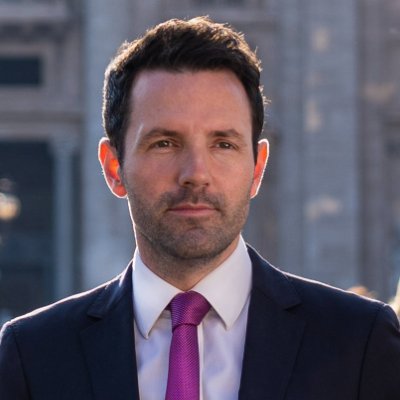
I'm deeply saddened to hear of the passing of Niall McDonagh from Galway. We first met when he was studying for the priesthood in New York, and we became good friends over the years.
Niall was one of the most extraordinary men I have ever met. He had an incredibly deep faith and unwavering belief in God, which inspired me in my own faith. Even as he faced illness in recent years, he told me how he was offering up his suffering to God, and he wasn't afraid of dying.
He was passionate about helping others and always took the time to listen carefully to anyone who came to him with their problems, offering beautiful, thoughtful advice rooted in his faith. I feel very fortunate to have known him and to have called him a friend.
My deepest sympathies to his mother Mary, his brother David, and all his family and friends. May he rest in peace.
Derek Hanrahan retweeted

King Abdullah, Muslim and mensch, showed the way with his hospital visits to the survivors. Thank you, Your Majesty. @KingAbdullahII

Derek Hanrahan retweeted

On this day—October 25, 1929
The Shaw Commission arrived in Jerusalem to investigate Arab massacres of Jews across Mandate Palestine. This was two decades before Israel’s independence.
Arabs had killed 133 Jews brutally with axes, knives, and clubs in places like Jerusalem, Hebron, and Safed. Homes were looted, synagogues were destroyed, and survivors were raped and mutilated.
The massacres were ongoing. There were another 57 Arab attacks against Jews as the Commission sat. The Grand Mufti later invoked the Protocols of the Elders of Zion and compared himself to Jesus, claiming Jews had denounced him.
The Commission found the Arab attacks on Jews were driven by hostility to Jews in general and the notion of Jewish sovereignty anywhere in the Land.
This was the conclusion before there were any “settlements,” “occupation,” or even a State of Israel.

Derek Hanrahan retweeted

🚨⚠️ALARMANTEMENTE PREOCUPANTE:
Ejecutivo de Bayer lo ha ADMITIDO ¡EN EL ESCENARIO!
"Era necesario MENTIR, para que las dosis de la “vacuna Covid” fueran aceptadas por la población"
"Hubiéramos tenido una tasa de RECHAZO del 95% si les hubiéramos dicho a la gente que era TERAPIA GÉNICA... así que en su lugar los llamamos 'vacunas'."
"De lo contrario nadie se hubiera inoculado"
Este es un ejecutivo farmacéutico en la Cumbre Mundial de la Salud REVELANDO LA VERDAD mientras se ríe de cómo manipularon la aceptación.
¿Cuando los Medios de Comunicación, lo llamarán un crimen contra la humanidad? 🔥
Derek Hanrahan retweeted

I commend @flannerytony for his excellent article in this week’s @CTribune. The misrepresentation of this story has gone on too long and some hard questions need to be asked of those who have spun it for sensationalist, ideological or commercial purposes.

Derek Hanrahan retweeted
Devastating piece by @DouglasKMurray, taking note of how the morally corrupt ruling class of the UK has invited in the people who would eagerly destroy it, and punishes those who notice and complain. Read whole thing here: spectator.com/article/france…

Derek Hanrahan retweeted

HEROES in the Netherlands 🏆
Lawyer Peter Strassen receives a monumental welcome as he takes on Pandemic Planners Bill Gates, Albert Bourla and Mark Rutte in the Netherlands Civil Court Case…
Derek Hanrahan retweeted

Every time you hear about "preserving our democracy" you should think of Edward Bernays, Freud's nephew and the founder of modern propaganda. He came up with the phrase "Saving the world for democracy." Here is the first paragraph of his book 'Propaganda' (he thought it was a good thing. It was published in 1928.
"The conscious and intelligent manipulation of the organized habits and opinions of the masses is an important element in democratic society. Those who manipulate this unseen mechanism of society constitute an invisible government which is the true ruling power of the country."
He called this project "the engineering of consent"

Derek Hanrahan retweeted

When was the Dublin Rape Crisis Centre (once a worthy organisation) hijacked by people who seem to have no concern for rape victims but instead want to push their toxic agendas?
All taxpayer funding should be withdrawn until they have a clear out and return to their key purpose.

Derek Hanrahan retweeted
Wow, wow, wow. Watch this!

Historian @ProfStonebraker thought she'd achieved the life of a happy and intellectually fulfilled atheist at the start of her academic career, until she encountered the ideas of New Atheists @PeterSinger and @RichardDawkins. This led her to question her assumptions and, ultimately, convert to Christian faith!
More stories like this can be read in the book 'Coming To Faith Through Dawkins' 👉 kregel.com/apologetics-and-e…


Derek Hanrahan retweeted

Paul is one of the most interesting thinkers in Ireland.

The rise of AI forces us to confront what it means to be human, argues Paul Kingsnorth, a leading Christian critic of the AI 'machine'. Religion has the answer, he says in this clip. (Watch the full interview here: youtube.com/watch?v=o3klxw1m…).
Derek Hanrahan retweeted

The persecution of Christians in India is horrific.

Location: Konta, Sukma, Chhattisgarh
Date: October 13
Hindu nationalist supporters barged into a Christian missionary school, accusing the institution of exposing Hindu students to Christian teachings as a means of religious conversion. They demanded changes to the school’s dress code and prayer practices during the nine days of Navratri, arguing that Hindu students should not be exposed to Christian religious practices or indoctrinated into Christianity.
Derek Hanrahan retweeted
"Vaccinated" pilots were banned from transporting World Economic Forum members due to the safety risks they posed... they were transported exclusively by non-"vaccinated" pilots...
The rest of the millions of regular flights were flown by pilots forced to be "vaccinated" entirely...
Josh Yoder, director of the U.S. pilots' group Freedom Flyers.
Subscribe to t.me/TruthAboutCOVID