


Edwin retweeted

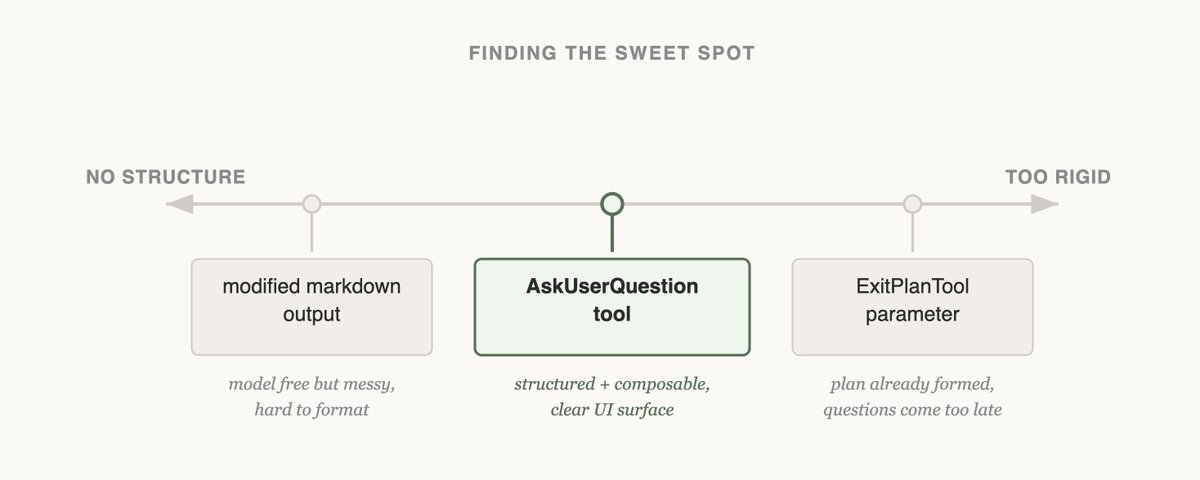
building an agent is more of an art than a science
teapawt.net/trq212/status/20274637…

Edwin retweeted

I'm cancelling my After Effects plan. I built a free Claude skill and Fable 5.2 just used it to rebuild 43 years of gamepads in one 27-second shot.
i fed my own skill 4 ChatGPT renders, one per era, and asked for a single shot that runs from 1977 to 2020.
it held:
> Claude kept the renders as a look target only and wrote every shell, dome and gear itself in three.js
> 1977: the Atari CX40 opens on 4 metal domes under the stick and 1 fire button
> 1985: the NES pad comes apart into 8 buttons, 1 chip and 1 data wire
> 1996: the N64 stick reads light through 2 slotted wheels while an LED and a sensor count the slots
> 2020: a motor and a gear train in each DualSense trigger push back on your finger
> between eras the pad scatters into a column of parts and an orange line sweeps down it, turning them into the next controller
i wrote every line of this skill and i still didn't expect it to pull off 4 eras in one take.
my skill and the prompts behind it 👇


Edwin retweeted

HOLY F*CK, animation design studio in 18 repos.
18 free open-source skills for Opus 5.5.
Scenes. Timelines. Vectors. Particles. Export.
01 Remotion Skills → Agent guidance for video.
github.com/remotion-dev/skil…
02 Motion Canvas → Animated explainers. github.com/motion-canvas/mot…
03 Motion → Layout transitions.
github.com/motiondivision/mo…
04 Ola → Smooth value interpolation.
github.com/franciscop/ola
05 Anime.js → Timelines and stagger. github.com/juliangarnier/ani…
06 Manim → Math in motion.
github.com/ManimCommunity/ma…
07 Shifty → Tween playback and easing.
github.com/jeremyckahn/shift…
08 Two.js → Animated 2D vector scenes.
github.com/jonobr1/two.js
09 Lottie Web → Vector animation playback.
github.com/airbnb/lottie-web
10 TweenJS → Sequenced property animation.
github.com/CreateJS/TweenJS
11 LUME → 3D scenes with HTML.
github.com/lume/lume
12 gifenc → Animated GIF encoding.
github.com/mattdesl/gifenc
13 Konva → Interactive canvas animation.
github.com/konvajs/konva
14 Blender → Rigging and character animation.
github.com/blender/blender
15 Three.js → Animated 3D scenes.
github.com/mrdoob/three.js
16 Godot → Game animation systems.
github.com/godotengine/godot
17 Babylon.js → 3D animation and rendering.
github.com/BabylonJS/Babylon…
18 Proton → Particle emitters and behaviors.
github.com/drawcall/Proton
Brief → build → animate → refine → render.
Bookmark this. Go build something worth watching ↓


Edwin retweeted

$ASTS BofA 2028 EPS estimate revision tells the margin compression story that comes with the rocket business.
This was going to be a company with 95% operating margins, now the upside is cut massively, at-least for the next 5-10 years as the company will need to invest billions of dollars into launch infrastructure.
More risk for less reward than previously thought.

Edwin retweeted

Weekend hack: HackerTube. I was annoyed with YouTube's recommendations so I had Claude filter down 43M comments over 20 years of HN to 6,454 videos that keep being recommended. *Significantly* better viewing experience, ~2 hours with Opus 5.5:
hackertube.org/
- Excellent recs without any logins (state is kept in local browser session)
- Thumbnail is a representative frame from middle of the video instead of the super duper A/B test hyper-optimized user uploads
- Underlying data from the comment analysis as one zip file, point your Claude at it and ask for your own version
- HackerTube Longs ✊
A bit more on the process:
I use Claude Code (desktop app for Mac), Opus 5.5 on Medium effort as my default. I only talk to Claude and have it do everything, the only "manual work" I helped with in tandem was in the browser (reminiscent of MenuGen): 1) I had to create some kind of API key from Google Cloud UI to query YouTube for video metadata, 2) I booted up a VPS box for serving and 3) I bought the domain name. Once the box was up I gave Claude the IP and told it update, secure, harden, deploy and optimize the code, and it did the whole thing.
Many awesome projects that would have normally taken weeks/months even can now be few-shotted for breakfast. What else are we not thinking of.

Edwin retweeted

Había leído vagamente sobre las bondades de las tutorías individualizadas y las mejoras en los resultados académicos pero no era consciente de la magnitud.
Claramente con la IA, el problema del elevado coste de implementación desaparece. Ojalá los grandes grupos educativos con recursos y ganas de liderar los rankings patrios se animen a ponerlo en marcha en España.
H/t @Profesociedades
cc/ @sanz_ismael @Godivaciones @Recuenco

A University of Chicago psychologist published a short paper in 1984 proving that the average tutored student outperformed 98% of students in a normal class, and almost nobody outside education research has read it.
His name was Benjamin Bloom.
He called it the 2 Sigma Problem.
Two of his PhD students, Joanne Anania and Joseph Arthur Burke, compared three ways of teaching the same material:
> A normal class with one teacher and a room full of students.
> Mastery learning, where students take regular quick tests and get corrections before moving on.
> One-to-one tutoring, combined with mastery learning.
The tutored students beat the normal class by two standard deviations.
In Bloom's words, "the average tutored student was above 98% of the students in the control class."
And about 90% of tutored students reached a level that only the top 20% of the normal class reached.
Here's the part that matters.
These were ordinary students in ordinary schools. Same kind of kids, different conditions.
Bloom's conclusion was blunt. One-to-one tutoring works, but it is too costly for most societies to provide at scale. So he set a challenge for researchers: find methods of group teaching that work as well as a personal tutor.
He also ranked the cheaper levers. Feedback and correction before moving on was worth about one standard deviation by itself. Graded homework, about 0.8. Cooperative learning, about 0.8.
For 40 years, that challenge mostly sat there.
Now AI tutors are being pitched as the answer.
But the early evidence says the design decides everything. A tutor that hands you answers is a shortcut. A tutor that makes you try, checks you, and corrects you is closer to what Bloom measured.
The 2 sigma never came from the tutor knowing more. It came from someone making sure you could not skip the hard part.
Who was the one person who taught you one-to-one and changed how you learn?

Edwin retweeted

How I got Claude to listen to 500 podcasts for my company, and how you can build your own
A problem you are working on today has already been solved
The person who solved it is explaining how they did it 34 minutes into a podcast you don't have time to listen to
I run a Texas apartment company. Every morning, Claude reads any newly published episode from about 500 shows we track. In one week in October, that was about 365 episodes, start to finish.
The first read flagged 197 short passages for deeper analysis. The second read cut that to 12 worth acting on.
Any small business owner or investor can build their customized version of this.
What comes back for me
The marketing VP at a large apartment operator was on an industry show talking about her ad vendor. The vendor was celebrating a 50-70% jump in phone leads. Her team checked the calls against their CRM. About 54 of every 100 were spam, vendors, and bankers.
Claude knew we were building a cost-per-lease report by channel, counting calls, with nothing to screen out junk. A channel that looks cheap (per inquiry) might just be a channel full of spam.
So about 90 seconds of her conversation came to us written up: who said it, why she's credible, where it sits in the episode, why it applies to our report, who owns it and what to check.
Nobody had to listen to anything.
Same week, our own notes said a tax credit we've used was still live. A podcast guest's comment about a different tax break is how we caught it.
A cost segregation CEO said the 179D energy deduction is closed to buildings that start construction after June 30, 2026. He sells that work, so we believed him, then checked the IRS guidance anyway. 45L, the credit we've actually used, has the same cutoff.
And two operators were telling owners on investor podcasts to judge a property manager by one document: the before-and-after T12 from a recent takeover. We manage apartments for other owners. We can now prep for that question or even highlight our performance proactively based on that metric.
Some of these confirm what we're seeing. Some teach us something new. Some warn us long before we'd have found it ourselves.
The first time I shared the "Podcast Brief" with our executives, one of them forwarded an item to our trade association's general counsel because it was so relevant.
How to build one
1. Write down what you care about, and go wider than feels right. Mine is apartment management, construction, fundraising, opportunity zones, wealth management, local politics, zoning, liquidity events and interesting people.
2. Build the show list. Podscan tracks about 600,000 active podcasts and carries the transcripts. I started with the 117 shows I already followed. Claude found similar shows and searched transcripts across every line of our business, and got to about 7,000 candidates. It pulled recent episodes and guests on about 1,100 of them and rejected two-thirds. With the shows I started with, we ended up with about 500. Judge on the guests and the content, not the audience size.
3. Write the context document. This is the whole trick. Ours says who we are, what we believe, what we're working on, what we've already done and who owns what. It's fed by my daily work in Claude and weekly updates from our executives, so it moves when we move. If we're chasing a niche problem this month, the agents hunt for it across all 500 shows.
4. Read everything. Every new episode, every morning, in full. No keyword filters. The best material is a passing remark in the middle of an episode about something else. Sonnet does the first read. Opus goes deep on what gets flagged.
5. Check the work. The second read goes back to the full transcript, tests each claim against our own notes and traces anything big to a primary source. It keeps what the speaker said separate from what we concluded.
6. Correct it. When our team tells it something it got wrong about how we operate, that goes into the context document right away.
What went wrong
My review of the first run: "Surfaced some really good stuff but didn't go deep enough to be useful." We rebuilt it to pull the actual passages, with timestamps, names and numbers.
It got facts wrong that were sitting in our own notes. It pinned a Houston default on the wrong sponsor. Machine transcripts make their own mistakes too. One had the buyer and seller reversed. In one big run, the second read caught 79 errors from the first.
The agents also tried to rank shows after two episodes and called some of them noise. I stopped that. A national construction show usually has nothing for us. Then an episode three weeks later has a two minute blurb that is solid gold.
Your context document holds your deals, your people and your plans.
Bottom line
This works for any industry. If you own a plumbing company or a dental group, or you're just managing your own money, somebody is talking about your problem on a podcast right now.
Everyone's looking for something new and actually useful to do with AI. This has been one of mine.
The agents are only as good as what they know about you. So start with one page about your business. The podcasts are just the input.
This is an AI post from a guy who builds apartments.
Edwin retweeted

Sesgos cognitivos e impacto en la inversión. Fuente: seminario "Inversión con Convicción" que estoy impartiendo en algunos family offices.

Edwin retweeted

Andrej Karpathy spent 8 years at OpenAI and Tesla
Last week he compressed everything he knows into one free 2-hour lecture
Prompts → Agents → Harness → Graphs → Loops
People spend $15k on bootcamps that teach less than this
You probably don't have 2 hours right now
Don't let it vanish from your feed
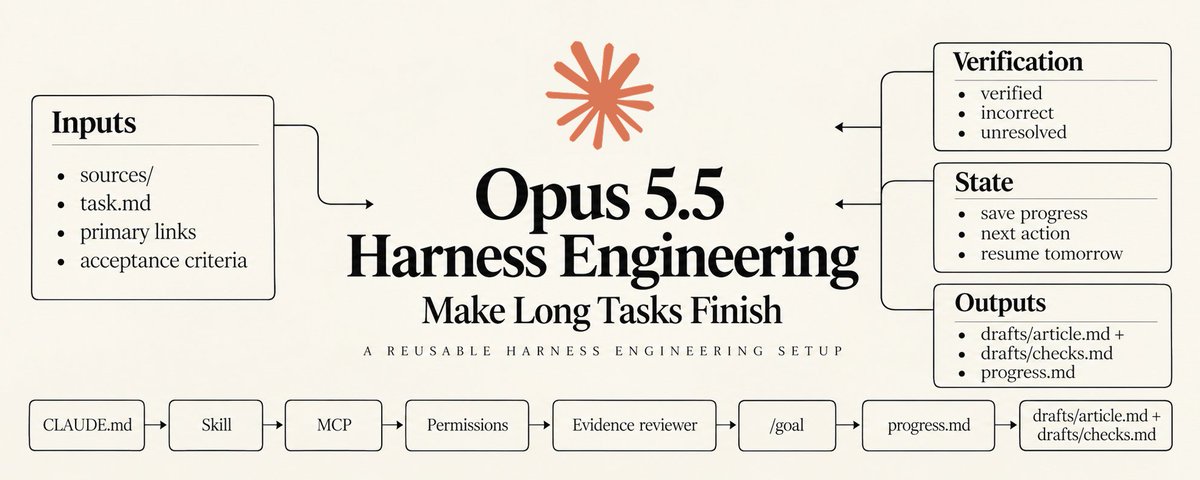
Watch it, then read the full Opus 5.5 harness engineering guide below



Edwin retweeted
Escribir fuerza a concretar el pensamiento.
Sin ponerlo en papel es fácil no darse cuenta de las palabras vagas, de lo que sobra o de nuestros huecos en un razonamiento. Al escribirlo se congela el pensamiento y se puede depurar, pulir.
Ferriss recomienda escribir a diario, aunque sea poco y mal. Una o dos páginas de lo que sea, preferiblemente a mano (yo añado que preferiblemente a pluma). Dos páginas malas son mejor que nada y evita la parálisis. La calidad llega después, al revisar.
Para revisar pide tres cosas:
1) marcar todo lo confuso
2) señalar dónde se pierde el interés
3) decidir qué 10 % es imprescindible y qué se puede cortar.
Si no hay un escritor cerca, alguien con formación legal suele revisar bien porque está acostumbrado a examinar cada palabra.
El efecto no se queda en el texto. Se aprende a detectar antes lo superfluo y a pensar con más precisión en general en la vida diaria.
h/t @tferriss


Edwin retweeted
Te puedes leer este paper o puedes mejor escuchar a Robie Williams decir lo mismo en esta entrevista: la inactividad te mata. teapawt.net/Hribson/status/2080001…


Edwin retweeted

"Me dieron en la uña del pie con un martillo": el escabroso testimonio de Emirlendris Benítez ntn24.com/noticias-actualida…

Edwin retweeted
Judging by my tl there is a growing gap in understanding of AI capability.
The first issue I think is around recency and tier of use. I think a lot of people tried the free tier of ChatGPT somewhere last year and allowed it to inform their views on AI a little too much. This is a group of reactions laughing at various quirks of the models, hallucinations, etc. Yes I also saw the viral videos of OpenAI's Advanced Voice mode fumbling simple queries like "should I drive or walk to the carwash". The thing is that these free and old/deprecated models don't reflect the capability in the latest round of state of the art agentic models of this year, especially OpenAI Codex and Claude Code.
But that brings me to the second issue. Even if people paid $200/month to use the state of the art models, a lot of the capabilities are relatively "peaky" in highly technical areas. Typical queries around search, writing, advice, etc. are *not* the domain that has made the most noticeable and dramatic strides in capability. Partly, this is due to the technical details of reinforcement learning and its use of verifiable rewards. But partly, it's also because these use cases are not sufficiently prioritized by the companies in their hillclimbing because they don't lead to as much $$$ value. The goldmines are elsewhere, and the focus comes along.
So that brings me to the second group of people, who *both* 1) pay for and use the state of the art frontier agentic models (OpenAI Codex / Claude Code) and 2) do so professionally in technical domains like programming, math and research. This group of people is subject to the highest amount of "AI Psychosis" because the recent improvements in these domains as of this year have been nothing short of staggering. When you hand a computer terminal to one of these models, you can now watch them melt programming problems that you'd normally expect to take days/weeks of work. It's this second group of people that assigns a much greater gravity to the capabilities, their slope, and various cyber-related repercussions.
TLDR the people in these two groups are speaking past each other. It really is simultaneously the case that OpenAI's free and I think slightly orphaned (?) "Advanced Voice Mode" will fumble the dumbest questions in your Instagram's reels and *at the same time*, OpenAI's highest-tier and paid Codex model will go off for 1 hour to coherently restructure an entire code base, or find and exploit vulnerabilities in computer systems. This part really works and has made dramatic strides because 2 properties: 1) these domains offer explicit reward functions that are verifiable meaning they are easily amenable to reinforcement learning training (e.g. unit tests passed yes or no, in contrast to writing, which is much harder to explicitly judge), but also 2) they are a lot more valuable in b2b settings, meaning that the biggest fraction of the team is focused on improving them. So here we are.

RT @AbelAvellan: American operators hold ~1,000 MHz of low and mid band spectrum, tunable on the @AST_SpaceMobile network. With our curren…
Edwin retweeted

Someone made an online version of The Old King's Crown. Although unofficial, it got the designer's blessing.
oldkingscrown.fly.dev/
Edwin retweeted

BlueBird 11. Fully deployed.
All 13 satellites - 20,000 sq ft of phased arrays in orbit - performing as planned.
American innovation built for space based cellular broadband, resilience, and security. 🇺🇸🌎📶📱

