

Go Belowground with us. It is fascinating! Dept. Experimental and Functional Morphology at @IBOTCZ #GoBelowground #ExFuMo
- Tweets644
- Following344
- Followers501
- Likes420


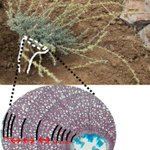












ALT It will focus on the description and analysis of clonal, bud bank, fine root traits using methods of plant morphology, architecture and anatomy. The course will be composed of lectures and practical trait assessments enabling application of taught methods. Course description: The course starts with lectures presenting the latest developments in the understanding of ecological functions of belowground plant traits which are mostly overlooked in contemporary functional ecology. Introduced topics: plant form and function, plant architecture as a demographical constraint, clonal traits and environmental gradients, bud bank and disturbance, anatomical traits in herb roots and belowground organs. The lectures will be accompanied by field excursions, plant sampling and trait assessment in the laboratory. Methods of functional traits assessment which are presented include: clonal and bud bank traits, herb-chronological analysis using morphological and anatomical markers, and plant age assess


ALT Experimental set-up for root growth and image acquisition configurations. A Empty rhizobox, B rhizobox pre-filled with peat soil and (C) opened rhizobox with root system on the soil surface. D Configuration 1 (CONF1) for SNAPSCAN VNIR imaging including the camera equipped with a Schneider Kreuznach Apo-Xenoplan lens mounted on a frame connected to the imaging stand with a 34.5 cm working distance (WD) between the camera lens and the sample surface. E CONF2 using the same set-up as CONF1 with a WD of 14 cm. F CONF3 used the camera with a 0.5x C-mount lens adapter mounted to a stereomicroscope. The WD between the stereomicroscope lens and sample surface varied between 10 and 14 cm according to the different magnifications




ALT Schematic diagram showing how, once effects of size on biomass allocation have been addressed, normalisation constant values can be used to consider how biomass allocation is affected by species differences in growth characteristics and environmental preferences.