

We offer accelerated TMS and other breakthrough mental health treatments in the New York City area. It’s About Time to Feel Well.
Brooklyn, NY
Joined December 2022
- Tweets264
- Following200
- Followers103
- Likes393






Fermata retweeted

Binge drinking is fueled by a vicious cycle of brain injury, suggests this 2023 prospective MRI study:
pubmed.ncbi.nlm.nih.gov/3732…
Binging on #alcohol raises cortisol, shrinking brain regions that manage stress and self-control, leading to more binging.
#soberliving #alcoholism

Fermata retweeted
Saffron worked just as well as SSRI #antidepressants for #anxiety and #depression in this analysis of 4-8 trials:
pubmed.ncbi.nlm.nih.gov/3891…
But before we get too excited, these are small trials, and SSRIs have small effect sizes anyway.
How to use saffron:
chrisaikenmd.com/supplements

Fermata retweeted

Hey readers...I'm a best selling new author.
My book, "inessential pharmacology" is...
#1 pharmacology
#1 depression
#1 humor: Doctors and Medicine
On New releases charts on Amazon right now.
amzn.to/3RXn03G

Fermata retweeted

I am very excited to share that The American Journal of Therapeutics has published our Special Issue on Psychedelic Therapy: A Primer for Primary Care Clinicians! These articles are aimed to educate physicians & clinicians on psychedelics as therapeutics
lnkd.in/gRbAeZA6

Fermata retweeted
The sections:
Historical Perspective & Overview
Lysergic Acid Diethylamide (LSD)
N,N-Dimethyltryptamine & Ayahuasca
Psilocybin
Ibogaine
3,4-Methylenedioxy-methamphetamine (MDMA)
Ketamine
The Strengths, Weaknesses, Opportunities, & Threats of Psychedelic Therapeutics
Fermata retweeted
This comprehensive work was written by an accompaniment of coauthors from:
@UniofOxford @uwsomwwami @KECKSchool_USC @StanfordMed @IcahnMountSinai @Columbia @unrmed @FermataHealth @AcaciaClinics
Fermata retweeted

Superbowl Sunday at Stanford’s Experimental Therapeutics Hub
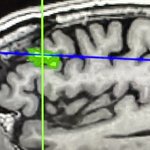
1) Making our hands twitch: A demo of SAINT – the rapid TMS protocol, personalized by prior fMRI analysis, making it much more rapid and efficacious than previous generations of Transcranial Magnetic Stimulation (TMS). They are FDA-approved and seeing 90% remission rates from treatment-resistant depression after an average of 2.6 days of treatment. More: ncbi.nlm.nih.gov/pmc/article…
2) The brain scan on the screen guides the focal point of the magnetically induced activation, and the three retroreflectors on forehead and instrument provide registration, like the virtual filming rig we saw on the Avatar set: flic.kr/p/G6atX8
3) “Ultrasonic Ketamine Uncaging for Non-Opioid Therapy of Chronic Pain” — the next study. They have used focused Ultrasound (tFUS) to unlock an engineered molecular cage carrying a small-molecule drug so that the drug is only released in a precise region of the brain (to millimeter-scale). This can verify the mechanism of action in that particular brain region while avoiding systemic exposure and its side effects. They have shown this to work in animal models, delivering higher doses than systemic ketamine administration, and just to the targeted brain region.
4) Self-Hypnosis: We are most hypnotizable at the age of 6-10 years old (a developmental critical period). As adults, about 20% of us are highly hypnotizable and 20% are resistant. We had a similar distribution in Dr. Spiegal’s impromptu test of our crew (the outdoor photo). While we have genetic markers for hypnotizability, there are few correlates with other measurable traits — other than the subjective ability to be imaginative and disassociate from distraction. Hypnosis therapy has been effective for many disorders from anxiety to addiction (e.g., 20% cessation of smoking). You can take the 3-minute self-test here: reveri.com/hypnotizability-t…
They have shown that they can increase responsiveness to hypnosis treatments with the SAINT TMS. And I suspect the same will be found in an upcoming study of psilocybin, given its potential to reopen critical periods (ref. Gül Dölen’s work: xitter.cf/FutureJurvetson/status…)


Never a dull dinner with Gül Dölen 💊🐙🧠
She is the researcher who gave MDMA to octopuses and noted the pro-social effects. Why? She wanted to study an intelligence as alien to ours as we could find on earth. If psychedelics had similar effects as in humans, perhaps some mechanisms of action lay outside the common themes of the Serotonin 2A receptors or activity in certain cortical regions — as the octopus does not have a cerebral cortex or amygdala at all. They have a donut-shaped brain wrapped around the throat with 50 different brain lobes. Our common evolutionary ancestor is a tubule so ancient, neither brains nor eyes yet existed.
So, might there be something more primitive still that explains the common effects across species… and across medicines that seem so very different (MDMA, ketamine and the classic psychedelics)?
Her recent Nature paper presents a radically different hypothesis: these medicines reopen our critical periods of learning, and they do so by relaxing the extra-cellular matrix (ECM) that embeds the neurons in our brain. Let’s pause to let that sink in. A master switch for critical periods… outside of the neuron.
1) Critical Periods: This is the period of time after birth where the brain boots up a bunch of functionality that is not encoded in our DNA – like the vision system and the ability to discriminate phonemes (and thus learn a new language without an accent). This period shuts down in adulthood, and rarely reopens (with interesting exceptions after extreme events, like a stroke).
2) ECM: Every cell type produces a unique ECM, and they become fibrotic in some diseases of aging. Relaxing the ECM in the brain may be the mechanism for enhanced meta-plasticity underlying critical periods. And it lasts for weeks after each use of psychedelics in mouse models. This explains the importance of a post-treatment integration period to see therapeutic benefits.
Notably, psychedelics induce metaplasticity (the plasticity of synaptic plasticity) rather than hyperplasticity (common to the drugs of addiction: cocaine, amphetamines, alcohol, opiates) and are used to cure addiction.
So, her work suggests that psychedelics act on a diverse array of binding targets to trigger a change in gene expression that leads to activity-dependent degradation of the ECM, which in turn is the permissive event that enables the metaplasticity seen in critical periods.
Her conclusion: “psychedelics could serve as a ‘master key’ for unlocking a broad range of critical periods. Indeed, recent evidence suggests that repeated application of ketamine is able to reopen the critical period for ocular dominance plasticity by targeting the ECM. This framework expands the scope of disorders (including autism, stroke, deafness and blindness) that might benefit from treatment with psychedelics; examining this possibility is an obvious priority for future studies.”
And thanks to Jeeshan Chowdhury for organizing the dinner last night.
• Dolen’s Nature paper on the ECM: nature.com/articles/s41586-0…
• My summary post on octopus intelligence: flic.kr/p/2mZGrT5
• Summary of her octopus + MDMA study: newscientist.com/article/218…
• Lab: dolenlab.org


Fermata retweeted

“When these codes are active, hospitals using the SAINT neuromodulation system can submit claims for SAINT treatment, expanding the adoption of our novel, rapid-acting therapy for treatment-resistant major depression.” Dave Vort, President of Magnus tinyurl.com/AMAtaitbscodes


Fermata retweeted
“SAINT may be considered one of the first personalized depression treatments available, and it was made possible by combining new ideas with old and bringing together advances in neuroscience, radiology, and engineering.”
psychnews.psychiatryonline.o…
#SAINT #MDD #depressiontreatment

Fermata retweeted

So excited that @IainCampbellPhD and my son @BaszuckiMatt will share their stores of transformation from Bipolar illness to not only full remission, but thriving and helping others. #ProudMom #KetoForBipolar

We're thrilled to share @IainCampbellPhD & Matt Baszucki will be speakers at Metabolic Health Summit 2024!
Both @BaszuckiMatt & Dr. Campbell have experienced bipolar disorder & the therapeutic effects of the keto diet, and now raise awareness about the evidence of its benefits.


RT @ScottMuirMD: Great news, @Jamie_Ducharme , we have moved past #SSRI this year, with treatments like @magnusmed #SAINT! 79% remission fr…
This quoted post is unavailable.


Fermata retweeted
Yup. A renaissance that is long overdue! Motivated our investment in @OsmindHQ. The company aims to usher in a new era of neuropsychiatry by leveraging technology and data to enable precision mental healthcare, much like we saw in oncology over the past decade. Think of it as the operating system for a sector undergoing rapid change.
And the need is great, and rapidly growing. Osmind is accelerating a renaissance in one of the most broken areas of healthcare. During the COVID-19 pandemic, the prevalence of depression tripled. The World Health Organization predicts that—without significant changes—mental illness will cost the world economy $16 trillion by 2030, making it the largest disease burden globally. A new generation of psychedelic therapies in FDA trials are showing unprecedented cure rates. Change is coming, and Osmind can help humanity learn how to heal.
From Series A: “Osmind’s modern EHR is the first and only software that solves specific challenges faced by innovative mental health practices. It allows clinicians to track measurement-based outcomes for intensive treatment modalities and deliver more tailored care, automates compliance processes for the U.S. FDA and insurance companies, and streamlines patient and practice management. The software also aggregates de-identified real-world data to accelerate research and development of new mental health treatments and diagnostics such as psychedelic medicines, neuromodulation, digital therapeutics, digital phenotyping, and neuroimaging."


Fermata retweeted

The thing that concerns me the most about our digital health industry is that most of the solutions that are being built today are completely different from the actual REAL problems in the healthcare system.
This means they stand zero chance of adoption or scale within todays healthcare infrastructure.