

Plato Homerus philosophorum - Author - Technologist
USA
Joined September 2022
- Tweets5.5K
- Following747
- Followers375
- Likes25.2K



TonyMcK retweeted

“The happiness of your life depends upon the quality of your thoughts.”
- Marcus Aurelius
TonyMcK retweeted

Palmer Luckey reveals why he didn't sue Facebook after getting fired at 24 for donating to Trump
Walter Isaacson: "So let's go back to the firing. You got fired basically because you contributed nine or $10,000 to a Trump-supporting PAC. Then they said, 'Oh, no, that wasn't the reason. It wasn't political.' But that was totally untrue. Do you wish you had pushed back and fought for your rights?"
Palmer Luckey: "The real answer is yes. You got to remember I was 24. I was a young guy. I didn't have experience in any of this. I think I probably should have fought harder, but you also have to remember that once you've been fired, you can't fight your way back into being in charge of your company that you started as a teenager."
"You can't sue them into making you the CEO, right? That doesn't happen. What you're actually doing is just litigating the past, maybe getting some money for the future, but then in the process, you have to put so much time and energy into that singular effort."
"You basically need to convert your life to win these lawsuits into that of a professional full-time victim. And so I had to decide, do I want to spend the next 5 years of my life being a professional victim, whining about how ruined I am and how I'll never amount to anything because of how poorly they treated me?"
"Was I going to be a professional victim? Or was I going to start a new company and prove that I'm not a one-hit wonder, that I'm not the dummy that people said that I was? And I think with the benefit of perfect hindsight, I made the right choice. In a perfect world, I would love to have fought for what's right and also started Anduril, but it's hard to imagine that I could have done both effectively simultaneously."
TonyMcK retweeted

All true, and I would add that even an experienced pilot can get caught flat-footed by the dynamic nature of these storms. In 2006, retired test pilot Scott Crossfield (one of the most famous test pilots in the world; first person to fly Mach 2; first person to fly the X-15) lost his life after entering worsening weather (thunderstorms) in his Cessna 210, which broke apart in flight as he was descending and trying to go away from the bad weather (with ATC's help). Scott was one of the most capable pilots in the world, but even he was unable to foresee the danger he was in when he found himself in an area of rapidly developing thunderstorms.

TonyMcK retweeted

A biologist looks deeper into biology and finds chemistry.
A chemist looks deeper into chemistry and finds physics.
A physicist looks deeper into physics and finds mathematics.
A mathematician looks deeper into mathematics and finds logic.
A logician looks deeper into logic and finds philosophy.
A philosopher looks deeper into philosophy and starts questioning everything.
TonyMcK retweeted
I drove through there in 1977, spent three nights each in Herat, Kandahar and Kabul, before heading east over the Khyber Pass. It was the most primitive shithole I saw in my trip overland around the world, only places that primitive were jungle villages in the Golden Triangle.
TonyMcK retweeted

in 1817, awaiting the arrival of a massive statue of Ramesses II (known in greek as Ozymandias) at British shores, Percy Shelley and Horace Smith proposed a duel, to see who could write a better sonnet inspired by the statue and an inscription. A generational mogging ensued.


TonyMcK retweeted
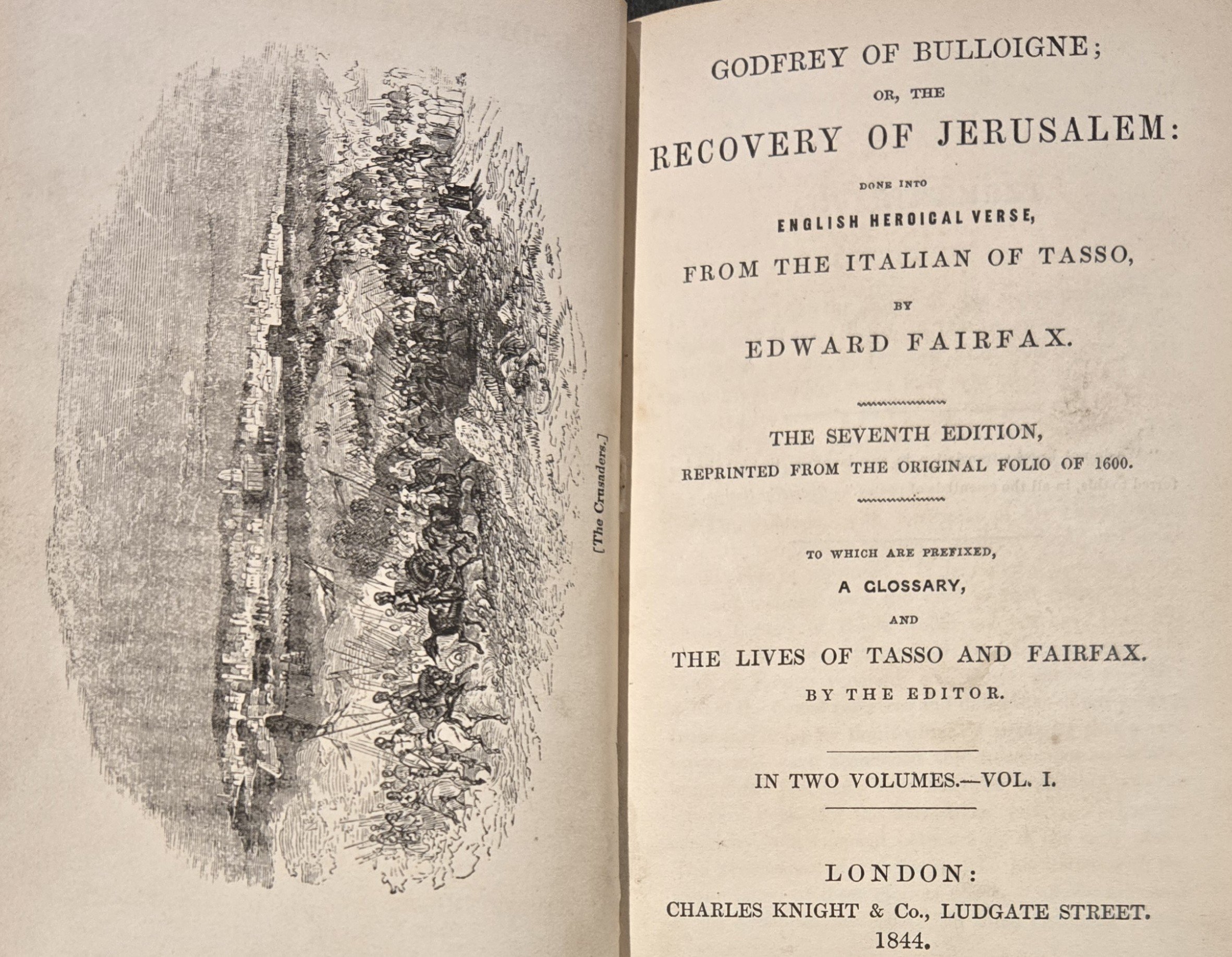
Our latest free books give-away, open to all worldwide. This time it's 8 books from the last 200 years, and 8 people will be drawn to pick their choice. Retweet this and you're in for the random draw on Sunday 11 October. Proper books these. Details to follow over next few hours!




TonyMcK retweeted

Insane!!!

Starship Flight 14 launch and orbit was a success, but what did the launch sound and feel like form Port Isabel, about 5 miles away?
Here is a visual & audio experience almost as good as being there! If you haven't been to a Starship launch, you really need to plan a trip! @esherifftv
Sound UP!
TonyMcK retweeted

Starship Flight 14 launch and orbit was a success, but what did the launch sound and feel like form Port Isabel, about 5 miles away?
Here is a visual & audio experience almost as good as being there! If you haven't been to a Starship launch, you really need to plan a trip! @esherifftv
Sound UP!

TonyMcK retweeted
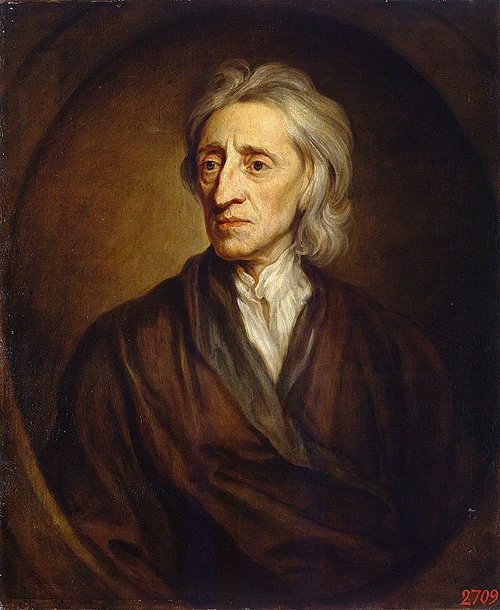
Glimpses of Gibbon
Zinghis Khan and John Locke
"The Catholic inquisitors of Europe, who defended nonsense by cruelty, might have been confounded by a barbarian, who anticipated the lessons of philosophy and established by his laws a system of pure theism and perfect toleration. His first and only article of faith was the existence of one God, the author of all good, who fills, by his presence, the heavens and earth, which he has created by his power."
(Footnote 64.8: A singular conformity may be found between the religious laws of Zinghis Khan and of Mr. Locke.)



TonyMcK retweeted

“There is but one way to tranquility of mind and happiness, and that is to account no external things thine own, but to commit all to God.”
TonyMcK retweeted

The Great Inversion: AI Is Quietly Draining the Public Internet of Thought
Something profound is happening to the Internet, and almost no one is naming it clearly.
I have been cataloging it of the last 4 years.
For decades, the web’s most valuable resource wasn’t bandwidth or servers. It was the messy, public give-and-take of human questions and answers.
I was a Top Writer on Quora for nearly a decade as well as a massive pre-crazy Wikipedia contributor — I lived in the space of that give and take.
Someone would hit a wall, open a forum, type out the problem, and a conversation would form. Ideas were stress-tested in the open. Nuance appeared. Dead ends were marked. Better questions got refined in real time. That entire process — the friction, the disagreement, the collective thinking — was left behind as searchable, linkable, durable public knowledge.
That flow has reversed.
The same questions, the same moments of curiosity or confusion, are now more routed into private AI interfaces. A person opens a chat window, types the prompt, receives the output, and the entire exchange vanishes into a closed ecosystem.
The assumption we must make (because it is true) is that the AI company stores both the prompt and the response. The thinking that once would have become part of the shared human record is instead locked inside a corporate training silo.
This is not a minor shift in user behavior. It is an inversion of the Internet’s original knowledge architecture.
Public discourse is being systematically stripped of its higher-signal material. As the internet’s data gets more and more noisy in a very really way it is growing quiet.
The questions that used to generate the richest threads the ones that forced people to clarify assumptions, admit uncertainty, or synthesize across domains are the ones most efficiently answered by AI. What remains on the open web is increasingly the residual: lower-effort posts, performative arguments, recycled takes, and the questions that still feel too social or too ambiguous for a model.
AI then trains on that thinning residue, while the better thinking is captured privately and never returns to the commons.
The result is a strange feedback loop. The public Internet becomes less thoughtful precisely because the thoughtful interactions have been privatized. And the models, trained more and more on what is left behind, risk becoming increasingly fluent in the lesser exchanges that now dominate the surface.
This is not the usual complaint about “AI is making people dumber” or “forums are dying.” Those are symptoms. The deeper phenomenon is structural: the migration of human cognitive surplus from a public knowledge commons into private, non-reciprocal data reservoirs.
The Internet is no longer primarily a place where thinking is externalized and shared. It is becoming a place where thinking is extracted and contained.
The novelty of this observation is that it reframes the problem away from content moderation, engagement algorithms, or even AI capability. The core issue is architectural. We have inverted the direction of knowledge flow. What once leaked outward into a shared substrate now drains inward into silos that do not, by default, give back.
The long-term consequences are massive under-discussed as not noticed.
How does a civilization maintain a high-quality public epistemic environment when its best questions are no longer asked in public? What happens to the training data of future models when the richest human reasoning is locked behind commercial walls? And what cultural muscles atrophy when the habit of thinking out loud, in front of others, becomes rarer?
This is the silent inversion of the Internet. The data once destined for the commons is now shunted into AI. The thoughtful exchanges are disappearing from the surface, and the models are learning from what remains.
That is the novel dynamic. Everything else is downstream of it.
TonyMcK retweeted

Cyrus the Great talks about this:
φιλέειν γὰρ ἐκ τῶν μαλακῶν χώρων μαλακοὺς γίνεσθαι· οὐ γὰρ τι τῆς αὐτῆς γῆς εἶναι καρπόν τε θωμαστὸν φύειν καὶ ἄνδρας ἀγαθοὺς τὰ πολέμια.
-
From mild countries soft people are likely to come, for the same land does not grow marvelous fruits of the earth and also men valiant in war.
Herodotus 9.121
teapawt.net/millerman/status/20851…

TonyMcK retweeted
When the surgeon came in that third morning, I said to him “Doc, you have to fix me, I am not going to live another day like this.”
Three days earlier it seemed my procedure had gone well, but it hadn’t. An hour after I talked to the surgeon, as they were wheeling me on the gurney into the operating room, a nurse leaned over and told me “You are having multiple organ failure.”
I thought to myself, “Dang, I haven’t even read the Classics. What would Thomas Jefferson and Ben Franklin think of me?”
Later that summer, after the first week on life support, a couple more weeks in ICU and a week in SNF, two or three months passed as I came back to life, my bone marrow started making red blood cells, my fingernails started growing again. “Whew, that was close, I almost went through Life without reading the Classics!”
I started out with Herodotus, as the first historian he seemed to be the place to start. I was sticking to history, poetry and philosophy seemed beyond my grasp. Self-directed, I logically proceeded to Thucydides. Then I came to understand that Livy was the equivalent of these guys in Roman history. After two or three Penguins of Livy, I decided Greek history was much more interesting and went back to Xenophon, Arrian, even Pausanius, but soon ran out of Greek historians.
So, I went back and read the Romans, more Livy, Tacitus, Sallust, mucked around in Suetonius, finally got to the magnificent Plutarch. As someone who reads all back matter, front matter and footnotes, I was still uncertain of a lot, I couldn’t tell the difference between Cassius Dio and Diodorus Siculus in references. Now I can.
After all the history, I was ready for Homer! Then, I leapt into Virgil and sampled one or two plays from each of the three Tragedians, and Aristophanes. Finally, I felt bold enough to try philosophy, started with Marcus Aurelius, and set off into Plato and Aristotle.
Eventually, during the “Summer of Roman History” I systematically read all the classic historians up to Ammianus Marcellinus.
That’s when I got the idea to write my Ancient Classics User Guide, to provide people like my younger myself, like my grandsons, a clear path, so they wouldn’t have to stumble through the glorious wilderness like I did. I wrote a chapter about each of the ancient authors, who they were and when they lived, what they wrote about, and included rich samples of all the works.
Readers can see the “Scipio’s Dream” view of all of the classics arranged chronologically in the Table of Contents, start from Homer and go straight through to Ammianus, or more likely choose writers who strike their fancy, like Julius Caesar or Marcus. I’m a big fan of Polybius, and my favorite is Longinus and his insuperable commentary on all the greatest authors - “On the Sublime.”

TonyMcK retweeted
Vitruvius unique mention in classical literature of Archimedes' discovery of Displacement and Specific Gravity
From De Architectura, Book IX, Sections 9-12:
9. Though Archimedes discovered many curious matters which evince great intelligence, that which I am about to mention is the most extraordinary. Hiero, when he obtained the regal power in Syracuse, having, on the fortunate turn of his affairs, decreed a votive crown of gold to be placed in a certain temple to the immortal gods, commanded it to be made of great value, and assigned an appropriate weight of gold to the manufacturer. He, in due time, presented the work to the king, beautifully wrought, and the weight appeared to correspond with that of the gold which had been assigned for it.
10. But a report having been circulated, that some of the gold had been abstracted, and that the deficiency thus caused had been supplied with silver, Hiero was indignant at the fraud, and, unacquainted with the method by which the theft might be detected, requested Archimedes would undertake to give it his attention. Charged with this commission, he by chance went to a bath, and being in the vessel, perceived that, as his body became immersed, the water ran out of the vessel. Whence, catching at the method to be adopted for the solution of the proposition, he immediately followed it up, leapt out of the vessel in joy, and, returning home naked, cried out with a loud voice that he had found that of which he was in search; for he continued exclaiming, in Greek, εὕρηκα (I have found it out).
11. After this, he is said to have taken two masses, each of a weight equal to that of the crown, one of them of gold and the other of silver. Having prepared them, he filled a large vase with water up to the brim, wherein he placed the mass of silver, which caused as much water to run out as was equal to the bulk thereof. The mass being then taken out, he poured in by measure as much water as was required to fill the vase once more to the brim. By these means he found out what quantity of water was equal to a certain weight of silver.
12. He then placed the mass of gold in the vessel, and, on taking it out, found that the water which ran over was lessened, because, as the magnitude of the gold mass was smaller than that containing the same weight of silver. After again filling the vase by measure, he put the crown itself in, and discovered that more water ran over then than with the mass of gold that was equal to it in weight; and thus, from the superfluous quantity of water carried over the brim by the immersion of the crown, more than that displaced by the mass, he found, by calculation, the quantity of silver mixed with the gold, and made manifest the fraud of the manufacturer.
Text from the invaluable classics site at
penelope .uchicago.edu
