









J.P. retweeted

HOLY CRAP 🚨: Who the fuck has been watching over the taxpayers money!!! We should not have to pay a single dime in taxes until this shit is fixed!!!
👏🏻👏🏻👏🏻

Single Asset Vaults (XLS-65) amendment is now in 2 weeks activation on the XRP Ledger!!! ✅
It's an important building block for Lending on XRP (XLS-66).
The vaults are native, without smart contracts, allow you to deposit XRP or any other issued asset into it.
Vault owners use those funds to lend out and earn yield for depositors of the vault.
In return depositors get a liquid liquidity pool token they can use for other vaults on the XRP Ledger to leverage their capital and maximize capital efficiency!

1
9


For the slam dunk of the year!

How the FUCK are you better than your mothers? Answer that with your chest.
You have everything and built OnlyFans, prostitution, divorce courts, and broken homes. Yall dress like whores with no shame and dignity.
On every social media platform, you prostitute yourselves despite all your education and degrees.
They endured and created KINGS. You complain and create chaos.
Our mothers kept families together with prayer and patience. You tear families apart with pride, stubborness and pettiness.
You are the HIGHEST in single motherhood. HIGHEST in body counts.
HIGHEST in STDs.
HIGHEST in prostitution.
HIGHEST in paternity fraud.
HIGHEST in raising the most fatherless, confused, violent, depressed generation of kids to EVER exist.
HIGHEST in education but HIGHEST in divorce.
You won't tolerate the rubbish they tolerated, but YOU ARE the rubbish they never tolerated.
How are you better than them?
At least they weren't getting ran through by irresponsible men and then crying on TikTok about being a single mother like it's a badge of honor.
They were happily MARRIED and raised the BEST generation of children to ever walk this earth.
They raised masculine men, inventors, presidents, scientists, generals, kings, queens.
They raised men who built civilization, providers and protectors of humanity for thousands of years with the LITTLE that they had.
You have EVERYTHING, yet you are the most miserable, medicated, bitter, unhappy generation of women to ever exist. Always blaming men, blaming patriarchy, blaming your trauma, blaming everybody but YOURSELF.
You are difficult because you are lazy, entitled, and stubborn. Instead of accepting it, you choose to insult your mothers to cover up your shame.
Don't you EVER disrespect our mothers ever again. They did their best with the little they had. Thats the true power of a woman.
6
Great explanation here while we all wait for lending to go live

I got quoted here a few times it seems. 😀
Although the video is quite good and "fair", there are still many points I’d like to address and talk about to provide a little more context that might help you understand the topic better. 👍
In my original video from which these clips were cut out, I actually explained the "CoverRate" in great detail, as this is the most important aspect to understand and get right, after all, it’s your only "on-chain" protection if a loan defaults.
(I’ll explain in a moment why I specifically said "on-chain")
It’s important to understand that this rate is fully configurable by the loan broker. Both the liquidation rate and the minimum cover rate can be set to values between 0.001% and 100% at the same time.
Or, in other words: With sufficient available coverage and the right settings, a vault owner can fully protect the vault for the depositor, not with collateral but with first-loss capital instead.
A different mechanism, but the same result when implemented correctly (Check the vault settings and loan broker!)
Next we have the confusion around private vaults and public vaults.
Private vaults can be created just like public vaults, since the underlying technology is designed from the ground up to be free-to-use, permissionless and open.
The difference with private vaults is that a loan broker can also set up a vault so that only those who he wishes to authorize as participants can make deposits, controlled by "permissioned domains" and "credentials" (Both are permissionless features on the XRPL for anyone to use).
For example, @soil_farm’s vaults will be permissioned and rely on KYC credentialed acccounts (most likely via @sumsub), while others may prefer an open, public vault. (Check the vault settings and loan broker!)
Now about the unsecured lending protocol aspect 🧐
It's true that the current version of the lending protocol is unsecured, but an on-chain-secured version is already in the works (I don't know anyone who wouldn't at least want the option to post collateral on-chain as part of the native on-chain protocol in the future).
The confusion around "uncollateral" and "collateral" is something I also had a hard time understanding but it's actually pretty simple. 😀
It comes from the fact that XRP can always also additionally be used as collateral in any type of traditional "off-chain" loan agreement where such an approach involves the collateral held with @Ripple Custody, @BitGo (or others custody solutions) being utilized in the event of a loan default.
This liquidation mechanism unfortunately isn’t yet part of the on-chain lending protocol, though. That’s the difference. Here we are talking about "off-chain" legal recourse.
If you want to pledge @XRP as collateral for your on-chain loan agreement, you’d also have to sign an "off-chain" agreement as well, which isn’t really a big deal in an institutional setting. (Later it will all be handled on-chain eventually anyway)
Also when it comes to amendments, it’s almost always the same story:
After careful consideration and extensive testing, most amendments are getting enacted eventually, because no one is really opposed to putting these features into effect on XRPL. (Who doesn't want lending? 😅)
So the issue isn’t really whether it’ll be enacted, but rather when and how this can be done without compromising the security and stability of the XRPL as it continues to advance.
Back to your main question...
Who eats the loss?
The one who doesn't check the vault settings and loan broker!
@XRPLF #XRPEducationMonth

ALT Source: https://github.com/XRPLF/XRPL-Standards/tree/master/XLS-0066-lending-protocol
1
1
96

J.P. retweeted

You asked how I'd fix our healthcare.
As a practicing spine surgeon 21+ years in practice half of my profession will hate this. PATIENTS COME FIRST so here it is.
TWO RULES & MUST OR NOTHING WORKS; must stop the bleeding
1) Stop patients from getting sicker and sicker. That's what drives cost.
2) Stop hospitals, insurers and private equity from swallowing private practice. 82% of U.S. Drs now work for one of them.
We are spending more & more money every year. We are a much sicker country today than 20 years ago, & our spending has almost doubled & quality worsened.
This is just the start. More details later
ACCOUNTABILITY FOR EVERYONE
1. Physicians get paid based on outcomes, not volume. Independent, patient-reported results 6 wks, 3, 6 & 12 months, risk-adjusted so no one can game them. Better results & more years of excellence earn higher pay. PUBLISH IT ALL.
2. Hold hospitals & the doctors they employ to the same standard. Penalties for chronically worse outcomes, especially in high-dollar specialties like spine & cardiac surgery.
3. Reward patients who take care of themselves w/ lower premiums, like good drivers. Measure it with objective markers & following your doctor's plan. If you have a genetic or congenital condition & you follow your doctor's orders, you earn the same reward.
STOP THE TAKEOVER AND THE PRICE GAMES
4. Same price for the same service, hospital or doctor's office. Commercial insurers pay hospital outpatient departments 1.3x to 13x more for the same services whether it's office visits or surgical procedures.
5. Make nonprofit hospitals earn their tax break. It's worth about $28 billion a year, vs about $16 billion in charity care.
6. Lift the ban on new physician-owned hospitals. Cut certificate-of-need, observation status and the 3-midnight rule.
7. Allow outpatient codes for outpatient surgery centers for Medicare, not just limited to inpatient hospital, which is much higher fee.
8. Protect doctors who speak up: a fast-track hotline and agencies that actually investigate. Many physicians are afraid to speak up. And physicians need much stronger protections for retaliation.
COVERAGE FOR EVERYONE
9. Fix Medicare pay. Adjusted for inflation, it's down 33% since 2001. Index it to inflation.
10. Sell Medicare to people under 65 with lower premiums, deductibles and copays. Let it compete w/ insurers. This will help Medicare start making money.
11. Replace Medicaid w/ Medicare, so everyone has the same coverage.
12. Fund it w/ a tiered tax on income above $50 million, for individuals and corporations, hospital systems included. Every dollar goes straight to subsidizing premiums, w/ low deductibles and copays.
13. Let patients buy insurance across state line, whatever plan they choose to buy that works everywhere & see Drs across state lines.
STOP PEOPLE GETTING SICK
14. Catch disease early. Comprehensive blood work from age 21 (fasting insulin, ApoB, Lp(a), homocysteine, …..) to reverse pre-diabetes before it becomes diabetes. This way we can catch many potential diseases early on and change the trajectory of that individual's life.
15. Free Zepbound or GLO-1 for every eligible adult, weekly at satellite clinics. Screen every patient first for the rare risk of permanent vision loss (NAION). This medication has shown not just for weight loss, but significant anti-inflammatory properties and longevity.
16. Optimize patients before surgery. Today's "clearance" predicts whether you'll survive, not whether you're ready. Many patients are going into surgery not optimized.
17. Require hospitals to serve real, regenerative food cooked without seed oils. Every patient gets full nutrition counseling before discharge.
18. Teach prevention in medical school and residency: nutrition, lifestyle, gut health
I practice what I preach: 1,850+ consecutive spine surgeries over 8.5 years, narcotic-free. Under 1.2% needed narcotics. My data is coming.
Which one would you do first?

I'm a spine surgeon. You asked a fair question, so here's the plain-English answer.
Before 2012 you could buy an individual plan online for about $200 a month, pick from six or seven insurers, and choose your own deductible: $500 if you wanted to pay more up front, $5,000 if you didn't. If you were healthy, that is. If you were sick, they could turn you down, and that part was real and had to be fixed.
Obamacare fixed it by requiring every plan to cover everyone for everything. Good. But that made the real price of a plan jump, and the only way to keep the monthly number from looking insane was to push the cost onto the back end. That's your $6,500 deductible. You're paying comprehensive prices for catastrophic coverage.
Then the quiet part. The law caps what insurers can keep at 20% of premiums. So the only way an insurer makes more money is if the total bill gets bigger. 20% of $10,000 beats 20% of $5,000. They have no reason to fight the hospital's price. They pass it through, take their cut, and send you the premium.
And the hospital's price went up. Hospitals bought the independent doctors, and the same visit & surgery under the hospital's name now costs 3-10 times more. Hospital prices are up 281% since 2000.
The number of insurers you can choose from fell to one in half the counties in America by 2018. Meanwhile, six in ten adults now have a chronic disease, so the pool is sicker.
So: sicker patients, pricier hospitals, an insurer that profits from a bigger bill, and a law that moved the cost to your deductible. That's what you're paying for.
Nobody in that chain gets paid more if you get better. That's the part to fix.
J.P. retweeted

Every economy runs on money, and if you corrupt the money, you corrupt everything downstream from it.
Ludwig von Mises laid this out in The Theory of Money and Credit, published in 1912, and central bankers have spent over a century pretending not to notice. His core argument: money is not a neutral veil draped over real transactions. It enters the economy at specific points, through specific actors, and distorts prices before the broader market can adjust. The first recipients of new money spend it at yesterday's prices. By the time it filters down to you, prices have already risen. You absorb the inflation without ever touching the printing press.
This is called the Cantillon Effect, and it explains why Wall Street firms and Treasury-connected banks consistently outperform while your savings account loses purchasing power year after year. The Federal Reserve creates credit. Banks receive it first. Asset prices inflate. You arrive late to the party and pay the inflated cover charge.
Mises drew a sharp distinction between commodity money (gold, silver, historically chosen by markets through voluntary exchange) and fiduciary media, which are credit instruments issued beyond any warehouse receipt for real goods. When banks extend credit beyond genuine savings, interest rates fall below their natural level. Entrepreneurs then borrow heavily and launch long-term capital projects that the real pool of savings cannot sustain. The boom feels productive, buy it is a mirage built on credit expansion, not deferred consumption.
The bust is the market correcting the central bank's failure.
Mises completed this theory into what became the Austrian Business Cycle, later extended by Friedrich Hayek, who won the Nobel Prize in 1974 partly on that foundation. The cycle goes: credit expansion, artificial boom, malinvestment, correction. Governments intervene at the correction phase, suppress it with more credit expansion, and push the malinvestment deeper into the structure of production. Each cycle ends worse than the last.
You can trace this directly through 2001, 2008, and the inflation surge of 2021 to 2023, where the Fed expanded its balance sheet past $8.9 trillion and consumer prices jumped at their fastest pace since 1981. The textbooks called it "stimulus." Mises would have called it what it was: counterfeiting at institutional scale.
Sound money, grounded in commodity or at minimum a strict commodity standard, removes the political temptation entirely. No committee sets interest rates. No Treasury secretary pressures a Fed chair. Supply and demand for loanable funds determine the price of credit, and the economy builds on a foundation that reflects actual human preferences rather than a bureaucrat's preferred growth target.
Mises gave us the diagnosis in 1912, but the patient keeps refusing the cure.

J.P. retweeted
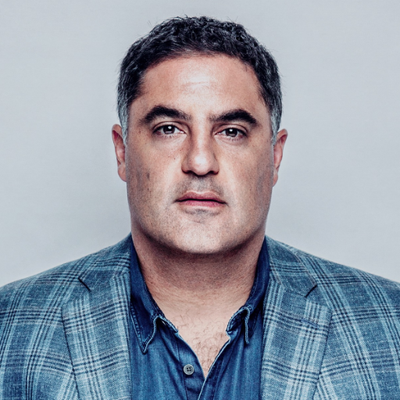
If you had told me five years ago that I would be having this conversation with @TuckerCarlson, I'd never believe you. But that shows you how quickly things can change. Nobody in DC saw this left-right populist alliance coming. Only way to beat the establishment. Interview below.
J.P. retweeted

🚨 BREAKING: The House has PASSED @RepThomasMassie’s resolution to FORCE the release of names of Congressmen who used the Congressional slush fund to pay out for sexuaI misconduct settlements, 420-0
These are TAXPAYER DOLLARS being used to PAY OFF accusers.

J.P. retweeted

PUT THE GOVERNMENT'S ENTIRE BUDGET ON THE BLOCKCHAIN SO WE CAN SEE HOW THEY ARE WASTING OUR MONEY


This!

Every dollar the Federal Reserve prints dilutes the purchasing power of every dollar you already hold. This is not a bug in the system; it's the entire reason it exists.
Fiat currency, unbacked by gold or any commodity, gives central banks the power to expand the money supply at will. The Fed created $4.5 trillion in new money between March and June 2020 alone, more than doubling its balance sheet in three months. No wealth was produced to match it. The Fed simply conjured digits, and the existing pool of dollars became worth less the moment it did.
The process works through what is called the Cantillon effect, named for Richard Cantillon, the 18th-century banker who noticed that new money never enters an economy uniformly. It enters at a specific point: the Treasury, the primary dealers, the connected banks. Those institutions spend the fresh money before prices have adjusted upward. They buy assets, properties, equities. By the time that money filters down to wage earners and savers, prices have already risen. You absorb the inflation without ever touching the stimulus.
Redistribution by stealth. No congressman votes to cut your purchasing power by 8.3 percent (as happened in 2022). The Federal Reserve does it administratively, and your savings account takes the loss while bond markets celebrate cheap credit.
Then there is the problem of malinvestment. When the Fed holds interest rates artificially below their market-clearing level, it sends a false signal. Entrepreneurs borrow heavily and deploy capital into projects that only appear profitable under cheap-money conditions: speculative tech startups in 2021, subprime mortgage securities in 2006. When the rate cycle eventually turns, those projects collapse, and real resources have been wasted. Workers trained for industries that should never have existed. Buildings half-finished. Capital burned.
Sound money advocates have traced this boom-bust pattern across every major cycle since the Federal Reserve's founding in 1913. The institution was sold to the public as a "stabilizer," but the dollar has lost over 97 percent of its purchasing power since then. Judge it by results, not intentions.
The exit from this system is straightforward in principle and politically radioactive in practice: separate money from state control, return to a commodity anchor, and strip central banks of the authority to manufacture purchasing power from nothing.

4
J.P. retweeted
The money supply does not need to grow for an economy to grow. A fixed stock of money serves a growing economy perfectly well, because prices adjust downward as production expands. More goods chasing the same number of dollars means each dollar buys more. That is prosperity.
Central bankers treat deflation like a contagious disease, but falling prices are simply the market telling you that someone got more efficient. When Ford cut the price of the Model T from $850 in 1909 to $260 by 1925, consumers did not stop buying cars while waiting for prices to fall further. They bought millions of them. Falling prices driven by productivity growth do not paralyze economies; they reward savers and punish waste.
The key insight sits in the unit of account. Murray Rothbard made this explicit in "The Case for a 100 Percent Gold Dollar": the actual quantity of money in an economy is largely irrelevant to its functioning, because money's job is to facilitate exchange, not to exist in any particular volume. If the total supply of gold were fixed at, say, 10,000 tons forever, prices across the economy would simply denominate in smaller and smaller fractions of an ounce as output grew. The math scales indefinitely. A dollar divisible to eight decimal places (as Bitcoin already is, reaching units called satoshis at 0.00000001 BTC) gives you 2.1 quadrillion discrete units from a capped supply of 21 million coins. No economy in human history has needed more pricing granularity than that.
Governments expand the money supply because it lets them spend without taxing you directly, transferring purchasing power from your savings to whoever receives the new money first (typically banks and politically connected borrowers). By the time the new dollars reach your wages, prices have already adjusted upward. You paid the tax; someone else collected it.
A fixed money supply eliminates that mechanism. Producers compete to offer you more value per unit of currency rather than lobbying the Fed for favorable credit conditions. Capital allocation returns to the actual preferences of actual people, expressed through voluntary exchange, rather than the distorted signals that cheap credit manufactures. The economy needs honest money, denominated in units small enough to price anything from a country's GDP to a cup of coffee.

J.P. retweeted
I'm a spine surgeon. You asked a fair question, so here's the plain-English answer.
Before 2012 you could buy an individual plan online for about $200 a month, pick from six or seven insurers, and choose your own deductible: $500 if you wanted to pay more up front, $5,000 if you didn't. If you were healthy, that is. If you were sick, they could turn you down, and that part was real and had to be fixed.
Obamacare fixed it by requiring every plan to cover everyone for everything. Good. But that made the real price of a plan jump, and the only way to keep the monthly number from looking insane was to push the cost onto the back end. That's your $6,500 deductible. You're paying comprehensive prices for catastrophic coverage.
Then the quiet part. The law caps what insurers can keep at 20% of premiums. So the only way an insurer makes more money is if the total bill gets bigger. 20% of $10,000 beats 20% of $5,000. They have no reason to fight the hospital's price. They pass it through, take their cut, and send you the premium.
And the hospital's price went up. Hospitals bought the independent doctors, and the same visit & surgery under the hospital's name now costs 3-10 times more. Hospital prices are up 281% since 2000.
The number of insurers you can choose from fell to one in half the counties in America by 2018. Meanwhile, six in ten adults now have a chronic disease, so the pool is sicker.
So: sicker patients, pricier hospitals, an insurer that profits from a bigger bill, and a law that moved the cost to your deductible. That's what you're paying for.
Nobody in that chain gets paid more if you get better. That's the part to fix.

CAN SOMEONE EXPLAIN HEALTH INSURANCE LIKE I’M FIVE?
I pay $580 every month for health insurance. Then I get sick, visit the doctor, and receive a $1,400 bill because I haven’t met my $6,500 deductible.
So I paid nearly $7,000 in premiums just to be told I still have to spend another $6,500 before most of my coverage kicks in.
And every January, the deductible resets and the whole game starts over.
WHAT EXACTLY AM I PAYING FOR IF I STILL HAVE TO EMPTY MY OWN POCKETS BEFORE MY INSURANCE DOES ITS JOB?
J.P. retweeted

Pull up a stool. We’re arguing about the damn tickers, ipo’s, and espionage while the money’s changing seats.
Long bonds to short bills.
Short bills into tokenized Treasury funds.
Same Treasury exposure in a form you can move onchain.
That last move is the one I give a shit about because the second somebody needs to post collateral on a Saturday, the question changes.
Can I move it?
Will you take it?
Can I turn it into cash at size, right F’ing now?!
Go ahead. Quote me the yield again.
That’s the XRP question on my mind.
When somebody needs cash against that collateral, can a route through XRP give them a better executable price at the size they need?
Show me the quote.
Show me the fill.
Show me the money!
Then we’ll have something to talk about folks.

