









J.P. retweeted

HOLY CRAP 🚨: Who the fuck has been watching over the taxpayers money!!! We should not have to pay a single dime in taxes until this shit is fixed!!!



J.P. retweeted

You asked how I'd fix our healthcare.
As a practicing spine surgeon 21+ years in practice half of my profession will hate this. PATIENTS COME FIRST so here it is.
TWO RULES & MUST OR NOTHING WORKS; must stop the bleeding
1) Stop patients from getting sicker and sicker. That's what drives cost.
2) Stop hospitals, insurers and private equity from swallowing private practice. 82% of U.S. Drs now work for one of them.
We are spending more & more money every year. We are a much sicker country today than 20 years ago, & our spending has almost doubled & quality worsened.
This is just the start. More details later
ACCOUNTABILITY FOR EVERYONE
1. Physicians get paid based on outcomes, not volume. Independent, patient-reported results 6 wks, 3, 6 & 12 months, risk-adjusted so no one can game them. Better results & more years of excellence earn higher pay. PUBLISH IT ALL.
2. Hold hospitals & the doctors they employ to the same standard. Penalties for chronically worse outcomes, especially in high-dollar specialties like spine & cardiac surgery.
3. Reward patients who take care of themselves w/ lower premiums, like good drivers. Measure it with objective markers & following your doctor's plan. If you have a genetic or congenital condition & you follow your doctor's orders, you earn the same reward.
STOP THE TAKEOVER AND THE PRICE GAMES
4. Same price for the same service, hospital or doctor's office. Commercial insurers pay hospital outpatient departments 1.3x to 13x more for the same services whether it's office visits or surgical procedures.
5. Make nonprofit hospitals earn their tax break. It's worth about $28 billion a year, vs about $16 billion in charity care.
6. Lift the ban on new physician-owned hospitals. Cut certificate-of-need, observation status and the 3-midnight rule.
7. Allow outpatient codes for outpatient surgery centers for Medicare, not just limited to inpatient hospital, which is much higher fee.
8. Protect doctors who speak up: a fast-track hotline and agencies that actually investigate. Many physicians are afraid to speak up. And physicians need much stronger protections for retaliation.
COVERAGE FOR EVERYONE
9. Fix Medicare pay. Adjusted for inflation, it's down 33% since 2001. Index it to inflation.
10. Sell Medicare to people under 65 with lower premiums, deductibles and copays. Let it compete w/ insurers. This will help Medicare start making money.
11. Replace Medicaid w/ Medicare, so everyone has the same coverage.
12. Fund it w/ a tiered tax on income above $50 million, for individuals and corporations, hospital systems included. Every dollar goes straight to subsidizing premiums, w/ low deductibles and copays.
13. Let patients buy insurance across state line, whatever plan they choose to buy that works everywhere & see Drs across state lines.
STOP PEOPLE GETTING SICK
14. Catch disease early. Comprehensive blood work from age 21 (fasting insulin, ApoB, Lp(a), homocysteine, …..) to reverse pre-diabetes before it becomes diabetes. This way we can catch many potential diseases early on and change the trajectory of that individual's life.
15. Free Zepbound or GLO-1 for every eligible adult, weekly at satellite clinics. Screen every patient first for the rare risk of permanent vision loss (NAION). This medication has shown not just for weight loss, but significant anti-inflammatory properties and longevity.
16. Optimize patients before surgery. Today's "clearance" predicts whether you'll survive, not whether you're ready. Many patients are going into surgery not optimized.
17. Require hospitals to serve real, regenerative food cooked without seed oils. Every patient gets full nutrition counseling before discharge.
18. Teach prevention in medical school and residency: nutrition, lifestyle, gut health
I practice what I preach: 1,850+ consecutive spine surgeries over 8.5 years, narcotic-free. Under 1.2% needed narcotics. My data is coming.
Which one would you do first?

I'm a spine surgeon. You asked a fair question, so here's the plain-English answer.
Before 2012 you could buy an individual plan online for about $200 a month, pick from six or seven insurers, and choose your own deductible: $500 if you wanted to pay more up front, $5,000 if you didn't. If you were healthy, that is. If you were sick, they could turn you down, and that part was real and had to be fixed.
Obamacare fixed it by requiring every plan to cover everyone for everything. Good. But that made the real price of a plan jump, and the only way to keep the monthly number from looking insane was to push the cost onto the back end. That's your $6,500 deductible. You're paying comprehensive prices for catastrophic coverage.
Then the quiet part. The law caps what insurers can keep at 20% of premiums. So the only way an insurer makes more money is if the total bill gets bigger. 20% of $10,000 beats 20% of $5,000. They have no reason to fight the hospital's price. They pass it through, take their cut, and send you the premium.
And the hospital's price went up. Hospitals bought the independent doctors, and the same visit & surgery under the hospital's name now costs 3-10 times more. Hospital prices are up 281% since 2000.
The number of insurers you can choose from fell to one in half the counties in America by 2018. Meanwhile, six in ten adults now have a chronic disease, so the pool is sicker.
So: sicker patients, pricier hospitals, an insurer that profits from a bigger bill, and a law that moved the cost to your deductible. That's what you're paying for.
Nobody in that chain gets paid more if you get better. That's the part to fix.
J.P. retweeted

Every economy runs on money, and if you corrupt the money, you corrupt everything downstream from it.
Ludwig von Mises laid this out in The Theory of Money and Credit, published in 1912, and central bankers have spent over a century pretending not to notice. His core argument: money is not a neutral veil draped over real transactions. It enters the economy at specific points, through specific actors, and distorts prices before the broader market can adjust. The first recipients of new money spend it at yesterday's prices. By the time it filters down to you, prices have already risen. You absorb the inflation without ever touching the printing press.
This is called the Cantillon Effect, and it explains why Wall Street firms and Treasury-connected banks consistently outperform while your savings account loses purchasing power year after year. The Federal Reserve creates credit. Banks receive it first. Asset prices inflate. You arrive late to the party and pay the inflated cover charge.
Mises drew a sharp distinction between commodity money (gold, silver, historically chosen by markets through voluntary exchange) and fiduciary media, which are credit instruments issued beyond any warehouse receipt for real goods. When banks extend credit beyond genuine savings, interest rates fall below their natural level. Entrepreneurs then borrow heavily and launch long-term capital projects that the real pool of savings cannot sustain. The boom feels productive, buy it is a mirage built on credit expansion, not deferred consumption.
The bust is the market correcting the central bank's failure.
Mises completed this theory into what became the Austrian Business Cycle, later extended by Friedrich Hayek, who won the Nobel Prize in 1974 partly on that foundation. The cycle goes: credit expansion, artificial boom, malinvestment, correction. Governments intervene at the correction phase, suppress it with more credit expansion, and push the malinvestment deeper into the structure of production. Each cycle ends worse than the last.
You can trace this directly through 2001, 2008, and the inflation surge of 2021 to 2023, where the Fed expanded its balance sheet past $8.9 trillion and consumer prices jumped at their fastest pace since 1981. The textbooks called it "stimulus." Mises would have called it what it was: counterfeiting at institutional scale.
Sound money, grounded in commodity or at minimum a strict commodity standard, removes the political temptation entirely. No committee sets interest rates. No Treasury secretary pressures a Fed chair. Supply and demand for loanable funds determine the price of credit, and the economy builds on a foundation that reflects actual human preferences rather than a bureaucrat's preferred growth target.
Mises gave us the diagnosis in 1912, but the patient keeps refusing the cure.

J.P. retweeted
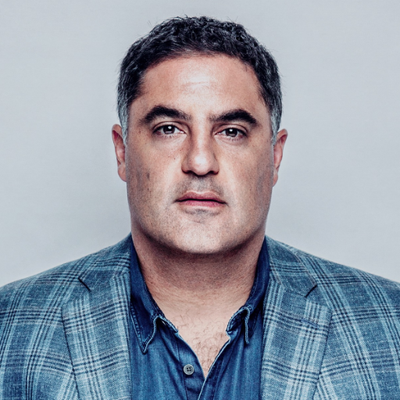
If you had told me five years ago that I would be having this conversation with @TuckerCarlson, I'd never believe you. But that shows you how quickly things can change. Nobody in DC saw this left-right populist alliance coming. Only way to beat the establishment. Interview below.
J.P. retweeted

🚨 BREAKING: The House has PASSED @RepThomasMassie’s resolution to FORCE the release of names of Congressmen who used the Congressional slush fund to pay out for sexuaI misconduct settlements, 420-0
These are TAXPAYER DOLLARS being used to PAY OFF accusers.

J.P. retweeted

PUT THE GOVERNMENT'S ENTIRE BUDGET ON THE BLOCKCHAIN SO WE CAN SEE HOW THEY ARE WASTING OUR MONEY
J.P. retweeted
The money supply does not need to grow for an economy to grow. A fixed stock of money serves a growing economy perfectly well, because prices adjust downward as production expands. More goods chasing the same number of dollars means each dollar buys more. That is prosperity.
Central bankers treat deflation like a contagious disease, but falling prices are simply the market telling you that someone got more efficient. When Ford cut the price of the Model T from $850 in 1909 to $260 by 1925, consumers did not stop buying cars while waiting for prices to fall further. They bought millions of them. Falling prices driven by productivity growth do not paralyze economies; they reward savers and punish waste.
The key insight sits in the unit of account. Murray Rothbard made this explicit in "The Case for a 100 Percent Gold Dollar": the actual quantity of money in an economy is largely irrelevant to its functioning, because money's job is to facilitate exchange, not to exist in any particular volume. If the total supply of gold were fixed at, say, 10,000 tons forever, prices across the economy would simply denominate in smaller and smaller fractions of an ounce as output grew. The math scales indefinitely. A dollar divisible to eight decimal places (as Bitcoin already is, reaching units called satoshis at 0.00000001 BTC) gives you 2.1 quadrillion discrete units from a capped supply of 21 million coins. No economy in human history has needed more pricing granularity than that.
Governments expand the money supply because it lets them spend without taxing you directly, transferring purchasing power from your savings to whoever receives the new money first (typically banks and politically connected borrowers). By the time the new dollars reach your wages, prices have already adjusted upward. You paid the tax; someone else collected it.
A fixed money supply eliminates that mechanism. Producers compete to offer you more value per unit of currency rather than lobbying the Fed for favorable credit conditions. Capital allocation returns to the actual preferences of actual people, expressed through voluntary exchange, rather than the distorted signals that cheap credit manufactures. The economy needs honest money, denominated in units small enough to price anything from a country's GDP to a cup of coffee.

J.P. retweeted
I'm a spine surgeon. You asked a fair question, so here's the plain-English answer.
Before 2012 you could buy an individual plan online for about $200 a month, pick from six or seven insurers, and choose your own deductible: $500 if you wanted to pay more up front, $5,000 if you didn't. If you were healthy, that is. If you were sick, they could turn you down, and that part was real and had to be fixed.
Obamacare fixed it by requiring every plan to cover everyone for everything. Good. But that made the real price of a plan jump, and the only way to keep the monthly number from looking insane was to push the cost onto the back end. That's your $6,500 deductible. You're paying comprehensive prices for catastrophic coverage.
Then the quiet part. The law caps what insurers can keep at 20% of premiums. So the only way an insurer makes more money is if the total bill gets bigger. 20% of $10,000 beats 20% of $5,000. They have no reason to fight the hospital's price. They pass it through, take their cut, and send you the premium.
And the hospital's price went up. Hospitals bought the independent doctors, and the same visit & surgery under the hospital's name now costs 3-10 times more. Hospital prices are up 281% since 2000.
The number of insurers you can choose from fell to one in half the counties in America by 2018. Meanwhile, six in ten adults now have a chronic disease, so the pool is sicker.
So: sicker patients, pricier hospitals, an insurer that profits from a bigger bill, and a law that moved the cost to your deductible. That's what you're paying for.
Nobody in that chain gets paid more if you get better. That's the part to fix.

CAN SOMEONE EXPLAIN HEALTH INSURANCE LIKE I’M FIVE?
I pay $580 every month for health insurance. Then I get sick, visit the doctor, and receive a $1,400 bill because I haven’t met my $6,500 deductible.
So I paid nearly $7,000 in premiums just to be told I still have to spend another $6,500 before most of my coverage kicks in.
And every January, the deductible resets and the whole game starts over.
WHAT EXACTLY AM I PAYING FOR IF I STILL HAVE TO EMPTY MY OWN POCKETS BEFORE MY INSURANCE DOES ITS JOB?
J.P. retweeted

Pull up a stool. We’re arguing about the damn tickers, ipo’s, and espionage while the money’s changing seats.
Long bonds to short bills.
Short bills into tokenized Treasury funds.
Same Treasury exposure in a form you can move onchain.
That last move is the one I give a shit about because the second somebody needs to post collateral on a Saturday, the question changes.
Can I move it?
Will you take it?
Can I turn it into cash at size, right F’ing now?!
Go ahead. Quote me the yield again.
That’s the XRP question on my mind.
When somebody needs cash against that collateral, can a route through XRP give them a better executable price at the size they need?
Show me the quote.
Show me the fill.
Show me the money!
Then we’ll have something to talk about folks.


J.P. retweeted

🚨🇺🇸🇵🇸 The U.S. has DENIED visas to two Palestinian Christian leaders from BETHLEHEM, preventing them from speaking at separate events in America.
And both were planning to discuss what Palestinians are experiencing under Israeli occupation.
Father Issa Thaljieh, a Greek Orthodox priest at the Church of the Nativity, was supposed to address Christian leaders in Washington on November 16 about Israeli settler violence.
His visa was rejected on security grounds, according to organizers.
Reverend Munther Isaac was also denied a visa to attend a Christian conference in Atlanta, where he planned to challenge Christian Zionism and its consequences for Palestinians.
The State Department cited national-security considerations and visa requirements but has not publicly identified a specific threat posed by either man.
Two Christian leaders from the birthplace of Jesus wanted to tell American Christians what's happening to their communities.
Neither was granted a visa to do so.
Source: Israel Palestine News, The Siasat Daily / Writer: Oliver


J.P. retweeted

The insane levels of murder and mayhem carried out by Israel with impunity over the last 3+ years can only happen under total jewish control of America, established a long time ago. They didn't just come into power on Oct 6th 2023.
This creates a challenge for all of us:
J.P. retweeted
Brazil is my pick to get there first. Japan is where I think it scales.
By “there,” I mean a local-currency market on XRPL that can quote a $1 million payment, deliver the full payout, and do it again tomorrow.
🇧🇷 Brazil has the bank exit.
Real trade flows. BBRL already on XRPL. And Braza’s own terms say it redeems BBRL 1:1 into Brazilian reais with same-day settlement, subject to its limits and controls. Ripple already has payments relationships with Braza, Nomad, and Banco Genial.
Now show me firm bids in size on XRP/BBRL or RLUSD/BBRL. The redemption gives you a way back to the bank. The bid tells you how many reais you’ll actually get.
🇯🇵 Japan brings the balance sheets.
SBI VC Trade distributes RLUSD as a regulated electronic payment instrument. On November 2, it reported more than ¥30 billion in JPYSC balances within its own service, including more than ¥10 billion in its lending program. And SBI Remit already has years of experience using XRP for outbound remittances.
Look at what SBI announced on back-to-back days.
Oct. 27 — SBI and Startale announced an MOU with BlackRock to explore connecting tokenized money market funds with JPYSC.
Oct. 28 — SBI announced an MOU with Cross River’s parent, CRB Group, covering a strategic alliance and a proposed Japan joint venture. Earlier that month, Cross River Bank separately announced it would integrate XRPL-issued RLUSD into its U.S. core banking platform.
There’s already a working example on the dollar side. Qualified Purchasers can mint and redeem Ondo’s OUSG on XRPL with RLUSD around the clock. OUSG’s portfolio has included BlackRock’s BUIDL.
The connection I’m watching is redeemable yen on XRPL, with market makers ready to quote it in size. If SBI gets that live first, Japan could beat Brazil to it.
🇰🇷 Korea is where EVERNORTH could light the second spark.
Japan and South Korea are Evernorth’s first international focus markets. It reported holding about 473 million XRP as of October 9 and named Ripple, Kraken, Coinbase, and BitGo as its initial execution partners. Institutional XRP lending is part of the plan.
Korea already has active XRP trading and institutional XRP custody through BDACS. If Evernorth lends XRP to market makers there, they’ll have inventory to quote with. The next step is finding counterparties willing to commit won and deliver the payout at size.
🇸🇬 Singapore is the institutional gateway.
Ripple holds an expanded MAS Major Payment Institution licence and participates in BLOOM. SBI has SBI Coinhako, its AsiaNext exchange joint venture with Switzerland’s SIX, and SBI Digital Markets. Add Startale on JPYSC and DigiFT on tokenized Japanese equities, and you can see how SBI is using Singapore to connect Asian and Western institutions.
sgBENJI gives you a live example. In October, Franklin Templeton issued roughly $150 million in tokenized money market fund shares to one XRPL wallet, bringing its holdings to about $200 million at the recorded share price. The wallet shares authorized signers with Franklin’s issuing account, and the underlying ownership is undisclosed. DBS separately confirms that eligible exchange clients can trade RLUSD for sgBENJI, giving them a way to move from a dollar stablecoin into a yield-bearing fund.
Brazil is the spark.
Japan is where I think the banks take it to size.
Evernorth in Korea could be the second spark.
I’m watching for the first repeatable seven-figure quote.
Same payment size, same deadline.
Show me which route puts more local currency in the recipient’s account.
J.P. retweeted

Hegseth may have avoided impeachment by an AIPAC backed House but it sure as fuck backfired.
@RepThomasMassie will now go down in history as the first politician in the 21st Century to actually stand up for what was right.
He stood against the machine and stared it down.
Well done, Massie.
