

Aspiring novelist. Ex-researcher in computational neuroscience.
London, England
Joined July 2012
- Tweets361
- Following114
- Followers58
- Likes836






George Parish retweeted

Just published! 🥁
Hippocampal neurons reinstate specific episodic memories in humans. These Episode Specific Neurons are independent of Concept Neurons or Time Cells and code the conjunction of elements that make up the event.
Check it out here:
nature.com/articles/s41562-0…

George Parish retweeted

Frontal cortex firing into the basal ganglia in a desparate attempt to keep our inner devil at bay!
https://teapawt.net/t.co/GWrfmQDz59
@rodrigoleaomusic
#brain #sciart #science #neuron #biology #mind #neuro #brainart #psychedelic #psyart #trippyart #neurology #brainhealth
George Parish retweeted

George Parish retweeted

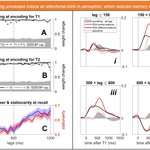
Ever wondered whether spike-timing-dependent plasticity (STDP) plays a role in human episodic memory? In our new preprint we @Kimron_Shapiro & @SimonHanslmayr present behavioural evidence in a human episodic memory experiment that is consistent with STDP. Here’s how we did it:

Altering stimulus timing via fast rhythmic sensory stimulation induces STDP-like recall performance in human episodic memory biorxiv.org/cgi/content/shor… #bioRxiv
George Parish retweeted

Social media has been broadly linked to intensifying political polarization.
But why would social media drive polarization?
My new paper in PNAS suggests that the reason might not be what you think... 🧵
pnas.org/doi/10.1073/pnas.22…

George Parish retweeted

Ever wonder how spontaneous rhythms of cognition interact with temporal structure in the environment? This preprint is for you! And 🎉 Congrats to Leah Snapiri 🎉 on putting out the first paper from her exciting PhD work!
biorxiv.org/content/10.1101/…

George Parish retweeted

The Perception of Time in Humans, Brains, and Machines psyarxiv.com/c7vzx/
George Parish retweeted

What’s the Best Way to Soothe a Crying Baby?
Using the "transport response" method of carrying a crying baby for a few minutes and then sitting with the child helps reduce crying and heart rate.
#babies #neuroscience #science
neurosciencenews.com/transpo…

George Parish retweeted

Scientists have developed tattoos that change color in response to glucose, albumin, and pH levels. The new tech could let people with diabetes or kidney disease track and control their health without having to take frequent blood samples. doi.org/10.1002/anie.2019044…


George Parish retweeted

Out now @brainstimj: Can we use brain stimulation to target the gut-brain axis?
We show that non-invasive stimulation of vagal afferents increases stomach-brain coupling.
Led by @revivaciously, w/ @glassybrain & @BrainAndStomach
brainstimjrnl.com/article/S1…

ALT Using a single-blind randomized crossover design, we investigated the effect of acute right-sided transcutaneous auricular vagus nerve stimulation (taVNS) versus sham stimulation on stomach-brain coupling. In line with preclinical research, taVNS increased stomach-brain coupling in the nucleus of the solitary tract (NTS) and the midbrain while boosting coupling across the brain. Crucially, in the cortex, taVNS-induced changes in coupling occurred primarily in transmodal regions and were associated with changes in hunger ratings as indicators of the subjective metabolic state.
George Parish retweeted
Nature (2020)
A hypothalamic novelty signal modulates hippocampal memory
nature.com/articles/s41586-0…


George Parish retweeted

The dominant intellectual current in AI research today is the belief that we can (and soon will) create human-level AI without having to understand how the mind works (and without even having a proper definition of intelligence), through pure behaviorism and gradient descent.
George Parish retweeted

"Eye-contact affects synchronization between brains more than within brains, demonstrating that eye-contact is an inherently social signal."
—Social synchronization of brain activity increases during eye-contact nature.com/articles/s42003-0… Congrats to @caroluft, @Ioanna_Zioga_ & al!
George Parish retweeted
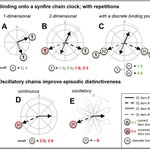
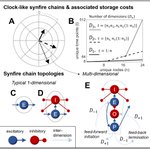
I'll present my poster 'Unifying STDP and theta-phase-dependent synaptic plasticity in a computational model to explain theta-dependent memory effects in humans and animals' with @GeorgeMParish @Kimron_Shapiro and @SimonHanslmayr #SfNConnectome21 P340.04 today at 11 am EST.

George Parish retweeted

Did you know that our brains, pupils, gaze and heart rate synchronize with other people when we watch videos? But why? And which signals should or should not synchronize?
We test a new theory on 150+ people, with @lucas_c_parra. Out in @PNASNexus: doi.org/10.1093/pnasnexus/pg…
1/13

George Parish retweeted

Incredibly excited to share our paper ‘Somatic mutation rates scale with lifespan across mammals’ now published @nature.
nature.com/articles/s41586-0…
An illustrated & updated tweetorial… [1/24]

George Parish retweeted

Your brain expands and shrinks over time — these growth charts show how go.nature.com/3v35m1V
