


Greatness retweeted

This guy is bold
Obi-Kwankwaso
Warri City Stadium
Rivers State
Sim Fubara
#NigeriawillbeOk
#Onitsha


Greatness retweeted

Today’s town hall in Anambra was more than a homecoming for our presidential candidate, His Excellency Mr. Peter Obi, CON.
It was a return to the beginning. A return to the place and the people where the vision was first formed, where purpose took root, and where the long road of SERVICE first found its direction.
Thank you, Ndi Anambra, for showing up, and for the love that reminded us why the journey matters.


Greatness retweeted

He who killed his brother isn't a hero.
Shame on you, Soludo.
These are songs sung by ndi Anambra today
Soludo's retirement will be documented.
Greatness retweeted

NDC-NCC Press Release
Nov 20,2026
FOR IMMEDIATE RELEASE
HOMEBOY RETURNS: PETER OBI RECEIVES HERO’S WELCOME IN ANAMBRA AHEAD OF AFTERNOON EVENT IN ONITSHA
ONITSHA, NIGERIA — Today, the beating heart of Onitsha did not just beat; it roared. In an overwhelming, deeply emotional testament to unyielding faith and shared vision, a magnificent, sprawling sea of humanity completely halted the city to welcome home our leader, Peter Obi, ahead of this afternoon's historic event.
This was not just a political gathering; it was a profound family reunion. The tears of joy, the deafening cheers of our resilient youth, the blessings of our mothers, and the expectant eyes of our fathers all spoke a single, undeniable truth: the spirit of the Nigeria Democratic Congress lives deeply within the soul of every citizen. Anambra has firmly reminded us that the journey to rescue and rebuild our great nation is not just a campaign—it is an unstoppable movement powered by the love of the people.
We are profoundly humbled by this breathtaking reception. To the incredible people of Onitsha and across Anambra, thank you for standing tall, for believing, and for showing the world what hope looks like. The march toward a new dawn has officially begun.
Please stay tuned…
Signed,
Dr. Constance Ikokwu
Spokesperson, NDC National Campaign Council
@THISDAYLIVE
@ARISEtv
@vanguardngrnews
@MobilePunch
@daily_trust
@GuardianNigeria
@DailyTimesNGR
@LeadershipNGA
@BlueprintNewsNG
@channelstv
@AIT_Online
@NTANewsNow
@NewsCentralTV


Greatness retweeted
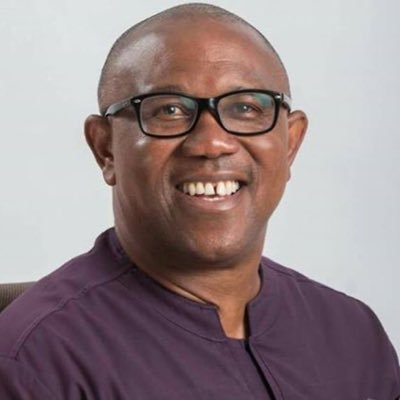
NIGERIANS, GO AND VERIFY (5)
CONNECTING COMMUNITIES, UNLOCKING PROSPERITY: OUR ROAD INFRASTRUCTURE RECORD
Peter Obi
Another critical foundation of development is infrastructure, particularly road construction and maintenance.
Infrastructure is not just about constructing roads, bridges, and buildings. It is about connecting people, opening up economic opportunities, reducing poverty, and enhancing the well-being of ordinary citizens. A road that connects a farmer to a market, a patient to a hospital, a child to a school, or a manufacturer to a distribution centre is an investment in economic and human development.
This thinking informed our approach under the Anambra Integrated Development Strategy (ANIDS). We set out to connect all 177 communities in the State with motorable roads, paying particular attention to rural communities that had suffered years of neglect. Our objective was to build an interconnected road network that served the entire State, rather than concentrate projects in major cities or politically important locations.
I. The Road Revolution: Over 900 Kilometres of Road Projects
Between March 2006 and March 2014, during my two-term tenure in office, my administration asphalted over 900 kilometers of roads. These projects were deliberately distributed across the three senatorial zones of Anambra State to connect communities, facilitate commerce, and enhance transportation.
I acknowledge that Dr. Chris Ngige started the road revolution in Anambra State, and I commend the efforts his administration made in initiating several road projects. When we assumed office in 2006, we recognised the importance of continuing worthwhile projects rather than abandoning them simply because they had been initiated by a previous administration.
Among the roads we inherited from Ngige and completed were the Owerri–Ezukala–Umunze–Umuchu–Amesi–Uga–Igboukwu Road, where his administration stopped around Umuchu and we continued through Amesi, Uga, and onward to Igboukwu; the Iseke–Orsumoghu–Ukpor–Utu–Nnewi–Awka-Etiti Road, where his administration stopped at Ukpor and we continued towards Awka-Etiti; and the Ideani-Otuocha where work stopped around Awkuzu before our administration continued the project from Nteje to Otuocha.
There were also roads, such as Mmili John and Nkwelle Ezunaka bypass, which had been awarded before we took over, but on which no payment had been made by the time we assumed office. We took over these projects, assessed their status, and proceeded with the work. This was our approach to continuity in governance: acknowledging what had been started, distinguishing between projects merely awarded and those on which work and payment had actually commenced, and ensuring that important infrastructure projects were carried forward.
Some of the major roads and corridors included Amansea–Ebenebe Road; Aguleri–Umueze Anam–Mmiata Road; Nnewi–Ozubulu–Okija Road; and the Old Onitsha–Awka Road.
Other important projects included:
Awka and its Environs: Zik’s Avenue, Awka; Adazi-Nnukwu–Obeledu–Neni Road; 33 Junction–Nwafor Orizu College of Education Road; roads within the Awka Government Reserved Area (GRA); and the Old Nkpor–Amawbia Road.
Nnewi and Surrounding Communities: Nnobi–Nnewi Road; roads within Nnewi town; Akwaeze–Oraeri–Igboukwu Road; and Ekwulobia–Nkpologwu–Akpo–Achina–Umuchu Road.
Onitsha and its Environs: Bridge Head–Umunya Road; over 30 roads in other parts of Onitsha; more than 25 roads within the Onitsha GRA; over 20 stone-based roads within Harbour Industrial Estate, Onitsha; and the Nkwele Ezunaka Bypass.
Other Communities and Strategic Corridors: Awgbu–Amaokpala Road, with the Odor Bridge; Aguluezechukwu–Ogboji–Ajalli Road; Awkuzu–Igbariam Road, passing through the university; Owerri–Ezukala–Umuchukwu Road; Ugwuoba–Obosi Road; and Lilu Road.
Greatness retweeted
Power!!!!!
Go and verify!!!
We go school!!!!!
#VoteNDC
#NigeriawillbeOk
Greatness retweeted

🚨 BREAKING: Another troubling INEC revelation!
Uploaded polling-unit results cannot appear on IReV until a RATECH logs in and approves them. Even worse, the RATECH has the power to overwrite the results.
Why should anyone other than the Presiding Officer have such power over uploaded election results?
INEC must explain this. Nigerians are watching!
Repost and Tag INEC, remember Rig and Die 2027.
Greatness retweeted

Hey @grok let's have a little dance, shall we? Can you make a list of which hospitals benefitted from this grant?

Greatness retweeted

Our analysis of the 2023 elections in Rivers State shows why publishing only polling-unit results on IReV is not enough.
In Obio/Akpor, the polling-unit sheets on IReV give the Labour Party HOR candidate 67,320 votes. The declared result gives him 18,766. Those two records cannot both be right. Somewhere between the polling unit and the declaration, during collation, 48,554 of his votes disappeared while his opponent's total rose by 24,357.
Collation is meant to add up polling-unit results, not override them.
The public cannot see where this happened, because the ward and constituency collation sheets have never been published.
We are not asking INEC to replace its collation process. We are asking it to publish every document that process produces, so that no figure can be changed between one stage and the next without anyone being able to see it real time.

Greatness retweeted
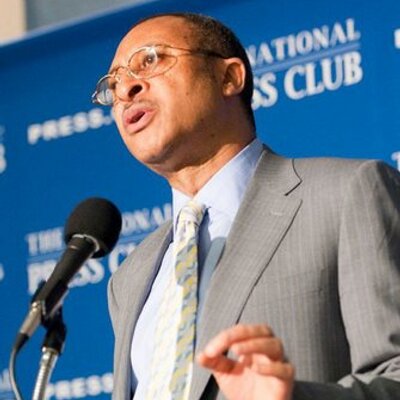
They have somehow turned the word " trader"into a slur, as though earning an honest living through business were a mark of disgrace. Yet, history tells a rather different story. Jimmy Carter, Herbert Hoover and Warren G. Harding all had business backgrounds before ascending to the American presidency. Their commercial pursuits did not make them lesser men; they were simply men who had occupations before they sought public office.
Peter Obi, too, has an honest occupation. And to be honest that is what makes his background particularly important in a political culture where public office has become, for far too many, an occupation in itself. We have watched politicians grow so dependent on the privileges of power that one is left wondering what becomes of them when the government doors are finally shut.
There is something profoundly reassuring about a man who can leave politics and return to his business without losing his means of survival. Politics ought to be an opportunity to serve society, not a means of securing one's livelihood.

Greatness retweeted
NIGERIANS, GO AND VERIFY (4)
Building a Healthy Nation: Our Health Sector Record in Anambra
Peter Obi
In the previous instalment of this series, I discussed our investments in education and explained why we considered human capital development central to the progress of Anambra State. Another sector that received considerable attention under our administration was healthcare. We understood that education gives people the tools to build their future, while good healthcare enables them to live healthy and productive lives.
When we assumed office in 2006, the healthcare system in Anambra faced serious challenges. Our health institutions required rehabilitation, medical equipment was inadequate, many communities lacked accessible primary healthcare facilities, and several medical training institutions had not secured accreditation. We therefore decided to approach healthcare as a comprehensive development priority, rather than concentrate resources on a few prominent hospitals.
Under our Anambra Integrated Development Strategy (ANIDS), we invested simultaneously in primary, secondary, and tertiary healthcare, medical training, maternal and child health, medical equipment, and partnerships with religious and private institutions.
Our approach was simple: healthcare should be accessible to people wherever they live, and the quality of treatment they receive should not depend on their status or whether they live in a city or a rural community.
Building a Teaching Hospital and College of Medicine
One of our most significant achievements was the establishment of the Chukwuemeka Odumegwu Ojukwu University Teaching Hospital at Awka.
We initiated, constructed, equipped, and secured accreditation for the institution, building it virtually from scratch. When I discovered that the state university was admitting medical students without having a teaching hospital through which they could complete their training, possibly with the intention of assigning them elsewhere, I considered the situation unacceptable. We therefore embarked on the construction of a modern teaching hospital to address this deficiency.
We constructed more than 25 buildings and provided facilities for the College of Medicine, laboratories, pathology, accident and emergency services, pediatrics, male and female wards, special wards, consultant clinics, and other essential departments.
We also provided vehicles, including ambulances and staff buses, to support the hospital and the College of Medicine as part of the accreditation requirements.
The objective was not merely to build another hospital but to establish an institution capable of providing specialist healthcare while training the next generation of Nigerian medical doctors.
Rehabilitating General Hospitals
We also recognized that a teaching hospital alone could not meet the healthcare needs of the population. General hospitals had to function effectively because they provide the essential link between primary healthcare and specialist treatment.
We rehabilitated and resuscitated 15 general hospitals across the three senatorial zones of Anambra State. We undertook substantial improvements in their buildings, wards, equipment, and general facilities.
In 2013, we provided ₦400 million for the ongoing renovation of 11 selected general hospitals, alongside other healthcare interventions.
Our intention was to ensure that people did not have to travel unnecessarily long distances to obtain basic secondary medical care.
Taking Primary Healthcare to the Communities
We believed that the best healthcare system is one that prevents illnesses and treats people early, rather than one that waits until minor health problems become emergencies.
That informed our extensive investment in primary healthcare. We built over 120 primary healthcare centers across communities in the 177 autonomous communities of Anambra State and rehabilitated existing facilities.


The people you lobby for didnt tell that they don't own tbis street and are very unpopular?
Anyways, enjoy our looted National wealth they paid you to white wash them.
But be rest assured that God will punish you

I unequivocally deny the claim that Nigeria’s government nor anyone else in Nigeria paid me $4.5 million. I went to Nigeria to interview President Tinubu @officialABAT for parts of a documentary and see Nigeria for myself. This SMEAR CAMPAIGN can make noise, but can’t change the facts or stop me from speaking the truth.
Readers added context they thought people might want to know
FARA filings show DCI Group received a $4.5M retainer from Nigeria via Aster Legal for lobbying; London's firm received $450k under it. She is a registered lobbyist who interviewed Tinubu amid this and deleted prior promotional posts.
gazettengr.com/diana-london-a…
thecable.ng/us-lobbyist-di…
dailypost.ng/2026/11/18/4-5…
efile.fara.gov/docs/6278-Exhi…
efile.fara.gov/docs/6278-Supp…
1
23
Greatness retweeted
NIGERIANS, GO AND VERIFY (3)
Building the Future Through Education
Peter Obi
In the first two instalments of this series, I explained how we approached the task of building strong institutions and laying a solid foundation for the development of Anambra State. One of the most important institutions we invested in was education.
For me, education was not a political game or a convenient political promise. Even before I ventured into politics, I had always regarded it as the foundation of meaningful development and the most enduring investment any government can make in its people. I believe that the future of any society depends largely on the quality of its educational institutions, teachers, learning environment, and opportunities available to its young people.
This conviction informed our decision to invest across the entire educational spectrum, from primary schools to universities, technical institutions, and adult education.
Basic and Secondary Education
One of our first major decisions was to return mission and privately owned primary and secondary schools to their original proprietors while retaining government support. We also provided billions of naira to assist in rehabilitating the returned schools, restoring the partnership between government and religious institutions that had historically contributed to educational excellence.
This policy attracted international attention. Professor Paul Collier, the Oxford economist and World Bank consultant, led a World Bank-commissioned study of Anambra’s educational transformation. His team examined our decision to return schools to their original missionary owners while retaining government responsibility for funding teachers’ salaries and supporting infrastructure. The team described the partnership model as a revolution in public service delivery and recommended it as a model that could be replicated by other Nigerian states and developing countries. We believed then, as we do now, that government does not necessarily have to own every institution to discharge its responsibility effectively. What matters is ensuring that every child has access to quality education.
For those who claim that we built no schools, I invite them to verify our records. We constructed five-classroom blocks in virtually all of the 177 communities in Anambra State, one of the most extensive community-based school infrastructure programmes undertaken by any state government. The town union chairmen and community leaders of that period can attest to this.
We also renovated hundreds of dilapidated schools, including some where trees had literally grown through abandoned buildings. Comprehensive Secondary School, Onitsha, and Oraukwu Grammar School are examples.
Beyond infrastructure, we distributed approximately 40,000 computers to schools, including more than 22,500 HP laptops. We equipped secondary schools with Microsoft Academies and connected schools across the state to the internet. We supplied generators, established and stocked libraries, revived school sporting activities, and installed boreholes in over 300 schools, including all girls’ schools. We also provided funding to support sporting activities in all our secondary schools.
These technology investments attracted remarkable international recognition. Mr Fabrice Campoy, Managing Director of the Personal Systems Group at HP Inc., described our procurement and distribution of over 22,500 HP laptops as the biggest project of its kind in the Middle East and Africa. Similarly, Mr Ken Spann, then Country Manager and Head of Microsoft Nigeria, described the establishment of Microsoft Academies in more than 500 Anambra secondary schools as the most extensive deployment of its kind in Africa at the time.
Greatness retweeted

Diana London, American right-wing lobbyist who interviewed Tinubu at Aso Rock, was paid $4.5 million by Nuhu Ribadu: Documents
gazettengr.com/diana-london-…
