News about technology, money, and decisions shaping how long people live
Joined October 2025
- Tweets1.5K
- Following9
- Followers134
- Likes71


Naked mole-rats live past thirty, and a gene called cGAS looked like the reason. Teams at @Cambridge_Uni and @UofT sequenced a close relative that lives about six years and found it carries the same four changes, so they cannot explain the long life alone.

Trials of drugs meant to slow aging want to measure how well a body still works rather than wait twenty years for diseases. John Beard, who led the WHO work that defined that measure, tells @LongevityTech it still has no agreed way to score it.

A model from @OpenAI proved that the zeros of the Riemann zeta function sit in a narrower band than mathematicians have known since 1859. A computer checked a coded version of the claim, but people are still checking that the code says what they mean.

A popular blood formula, PhenoAge, often reads cancer patients as biologically older. Testing it in 3,000 surgical patients, a team at @MSKCancerCenter found it rose with tumor stage and did no better than a plain sum of its tests, so it may be reading the cancer, not aging.

A new book, praised in a @bmj_latest column, says no drug has ever slowed human aging. Biologist @jpsenescence agrees on the hype but says aging can still be changed: rapamycin lengthened mouse lives in three labs, and nobody has run that test in people.

Senescent cells pile up with age partly because the immune cells meant to swallow them lose their grip. In a @NatureAging study of old mice, Ana Maria Cuervo's team found these cleaners' own protein recycling fades, and turning it back up restored their appetite.

When may a program act for you after you die? In an essay on @habr_com, Aleksandr Samoylenko argues only with a narrow mandate you gave in life, a log outsiders can audit, a rule to stop and ask human trustees, and living people free to say no.

Pet owners are offered three ways to buy more time: a longevity pill for old dogs, a clone, or freezing. In @techreview, @JessHamzelou argues only the pill keeps the same animal, and its trial in 1,300 dogs has yet to show it adds time.

A new benchmark from @LatchBio hands AI agents real study data and a researcher's question, then grades the biological answer rather than the code. The best agent got just under half of single-step tasks right, and about one in three chained ones.

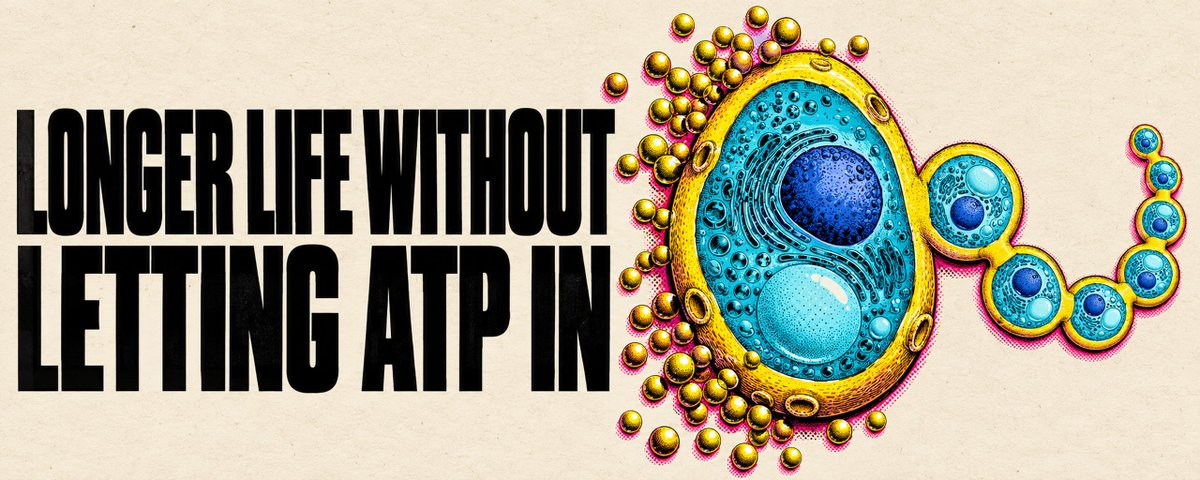
ATP falls with age in many animals, and one theory ties that to repair. Alaattin Kaya's group at @UVA fed yeast extra ATP and mother cells made 24 daughters instead of 17, even though ordinary yeast have no known way to take ATP in.