

Founder of the Institute for Medical Wellness. Licensed in New Jersey and Florida. Looking for Root causes of health/disease.therealdrstevenhorvitz.substack.com
Moorestown, NJ
Joined December 2009
- Tweets29K
- Following2.9K
- Followers9.9K
- Likes8.8K




The Real Dr. Steven Horvitz retweeted

The year is 1873. Your wife tires easily and reads too much. The doctor prescribes the rest cure: six weeks flat in bed, no books, no visitors, fed on milk, forbidden to sit up without his permission. The man who devised it is the most famous nerve specialist in America, and the women come out of it quieter, which is taken as the cure.
The year is 1915. The hospital has a new way of delivering your child. Morphine, then scopolamine, and the mother wakes two days later with a baby she cannot remember having. They call it twilight sleep. The women are strapped into padded cots so they do not hurt themselves while they scream, and the straps are the modern part. The babies arrive blue and slow to breathe.
The year is 1945. The truck comes down your street fogging DDT, and the children run behind it in the white cloud because the man on the back says it is harmless. At the beach it is sprayed over the bathers on their towels. It goes on the cattle, over the barn, and across the kitchen table.
The year is 1948. Your son has trouble with his ears. The doctor slides a rod tipped with radium up each nostril and holds it there for the best part of ten minutes, and you bring him back three more times. Hundreds of thousands of American children get the same treatment. The cancers arrive in their fifties.
The year is 1962. The health visitor tells you breastfeeding is old-fashioned and the formula is scientific. By 1972 fewer than one American baby in four is breastfed at all. The formula is skimmed milk and sugar, with the milk fat taken out and vegetable oil put in.
The year is 1971. The family planning clinic fits a small plastic crab called the Dalkon Shield. Its tail is a bundle of fibres that wicks bacteria up into the womb. 2.8 million are fitted in America before it is withdrawn, and the company goes bankrupt under the claims. It had been sold as safe and superior.
The year is 1983. The doctor says your arteries are the butter's fault. The dripping tin goes in the bin, the yolks go to the dog, the margarine goes in the fridge, and you have the heart attack anyway, on skimmed milk, having done everything right.
The year is 2001. Your 15-year-old is low, and the doctor prescribes Paxil, because the trial in the journal says it is effective and well tolerated in adolescents. The raw data, reanalysed 14 years later, shows more suicidal thinking on the drug than on the sugar pill. The company pays $3 billion to settle. Nobody rings the house.
The year is 2009. The government has spent around £500 million stockpiling Tamiflu for the pandemic, on the strength of the manufacturer's trials. When the trials are finally prised loose five years later, the drug shortens flu by about half a day and nothing shows it keeps anyone out of hospital. The stockpile goes out of date in a warehouse.
The year is 2026. The doctor has ten minutes and a screen. The number is high, so the tablet is for life. The weight is high, so the injection is for life. The meat is bad for the planet and the oil is good for the heart, and the person in the chair is as certain as everyone who ever sat in it.
Every one of those was settled, by a committee, in a journal, with a doubter somewhere being laughed at. The rest cure, the straps, the fog, the rod, the formula, the crab, the margarine, the trial, the stockpile. All of it certain, all of it printed, all of it done to somebody who had asked for help.
You were never the one who was wrong. You were the one it was done to, and the only person in the story who did as they were told every single time.
The apology comes a generation late, in a footnote, addressed to nobody.
The next one is being drafted now.


The Real Dr. Steven Horvitz retweeted

BREAKING: 3D-PRINTED FAKE MEAT and FISH have officially entered American grocery stores WITHOUT disclosing 3D-PRINTING on the packaging.
Israeli company Steakholder Foods is behind the rollout, selling the following products under the brand name PERFECTA:
“Marbled Steak”
“Filet Mignon”
“Chicken Breast”
“Salmon Patties”
“White Fish Patties”
The fake meat is printed using soy flour, rapeseed oil, modified starch, methylcellulose, gums, and artificial meat coloring.
I will NOT be eating this slop.
The Real Dr. Steven Horvitz retweeted

We found that vegan and vegetarian diets were correlated with significantly worse cancer outcomes than those whose diet included meats, poultry, fish and/or eggs.
naturopathicstandards.org/wp…

Recent observational study found that vegans have a higher risk of colorectal cancer than meat eaters.
"should be interpreted with caution" - but sure cuts against the narrative.
pmc.ncbi.nlm.nih.gov/article…

The Real Dr. Steven Horvitz retweeted
When cholesterol was demonised, Pfizer sold the statin, and it became the best-selling drug in the history of medicine.
When fat was demonised, Roche sold a pill that stops you absorbing it, and the side effect was printed on the box in a way nobody forgets.
When salt was demonised, the blood pressure tablet went on repeat prescription for a third of the over-50s.
When the sun was demonised, the chemist sold vitamin D in a bottle, for the hormone your skin had been making for free.
When liver was demonised, the chemist sold retinol, iron, copper and B12 in four separate bottles.
When eggs were demonised, the chemist sold choline, and nobody in the queue knew what it was for.
When red meat was demonised, the gym sold creatine and the chemist sold iron.
When butter was demonised, the chemist sold vitamin K2 for the arteries, which is what the butter had been doing.
When hunger was demonised, the pharmacist sold an injection to stop you feeling it, at £200 a month, for life.
Every nutrient the animal carried was declared dangerous, removed, and sold back as a molecule by a company that could patent the molecule and could not patent the cow.
The food did a dozen jobs in one bite. The pharmacy sells each job separately, with a repeat prescription and a side effect.
The animal never had a sales rep. That is the only thing it was ever missing.
The Real Dr. Steven Horvitz retweeted

Your brain switches between glucose, lactate, ketones, and fatty acids throughout the day to match energy demand. In Alzheimer's disease, this fuel flexibility is progressively lost. A Journal of Neurochemistry review reveals why the brain gets metabolically stuck.
Alzheimer's disease has long been characterized by reduced glucose metabolism visible on brain scans. The standard interpretation was that neurons couldn't access enough fuel. But a new framework from researchers at the University of Kentucky proposes something different: the brain isn't starving for energy. It's locked into a rigid metabolic program that can't adapt to changing needs.
Metabolic flexibility describes the ability of cells to sense, access, and switch between different fuel sources based on availability and demand. In a healthy brain, neurons primarily use glucose.
But they can also run on lactate produced by support cells called astrocytes.
During fasting or ketogenic diets, both neurons and glia can use ketones.
Fatty acids provide another backup fuel source.
This fuel switching happens constantly. After a meal, the brain uses glucose. During sleep, it may shift toward lactate and ketones. Under metabolic stress, cells activate alternative pathways to maintain energy production. The system stays flexible, matching fuel use to functional requirements.
In Alzheimer's disease, this adaptability breaks down.
The review argues that AD is fundamentally a disorder of metabolic inflexibility where cellular metabolism gets actively reprogrammed to support inflammatory and disease-associated processes at the cost of neuronal function.
Alzheimer's disease doesn't progress in a straight line of declining metabolism. It unfolds in two distinct phases that seem contradictory.
In the early stages, often years or decades before symptoms appear, the brain actually burns more glucose than normal. This hypermetabolism comes from immune cells ramping up their energy consumption to fight inflammation. Think of it as the brain running hot, immune cells working overtime.
Later, in the stages when cognitive decline becomes apparent, the pattern flips. The whole brain shifts into hypometabolism, burning less glucose than it should. This is the energy collapse, where neurons can't get enough fuel to maintain normal function. By this point, the metabolic machinery that would allow cells to adapt has broken down.
The shift from early hypermetabolism to late-stage collapse follows a biphasic trajectory:
• Early stage: Immune cells and support cells burn excessive glucose to fuel inflammation
• Late stage: Brain-wide energy shortage as neurons lose access to fuel
The brain's immune cells, called microglia, drive this metabolic shift. When they detect damage, they switch to a faster way of burning glucose that prioritizes speed over efficiency. This helps them respond to threats quickly. But once locked into this mode, they consume glucose at rates that starve nearby neurons of fuel.
Support cells called astrocytes normally convert glucose into lactate and deliver it to neurons as fuel. In Alzheimer's disease, these cells stop making lactate and start hoarding glucose for themselves instead. The fuel pipeline to neurons shuts down.
Both cell types lose their flexibility. They get stuck burning fuel in ways that support their own inflammatory responses but cut off the energy supply that neurons need to function.
This metabolic rigidity creates a vicious cycle. When cells can't switch fuels flexibly, they get stressed. That stress increases production of amyloid-β plaques and tau tangles, the hallmark proteins of Alzheimer's disease. These proteins trigger more inflammation, which locks cells even deeper into their rigid metabolic programs.
The damage spreads beyond individual cells. Neurons become overactive when they can't meet energy demands, throwing off the brain's excitation-inhibition balance. Network connectivity breaks down. Sleep fragments. Cognitive function declines as the whole system fails to coordinate.
System-level consequences include:
These cellular-level changes show up as system-wide brain dysfunction:
• Neurons fire erratically when starved of energy, disrupting communication patterns
• The default mode network, critical for memory and self-referential thinking, loses connectivity
• Sleep architecture deteriorates, reducing the brain's ability to clear waste during rest
• Memory, attention, and executive function decline as metabolic failure spreads across brain regions
Here's what makes this framework different from viewing Alzheimer's as simple energy failure: the metabolic programs are initially adaptive. Microglia activate glycolysis because it helps them respond to damage. Astrocytes shift fuel use to support their own functions under stress. These are protective responses.
But they become chronically maladaptive. What works as a short-term stress response traps the brain in a metabolic state that can't support normal neuronal function. The longer these programs run, the more rigid they become, and the harder it is for cells to switch back to flexible fuel use.
The critical insight from the review: metabolic inflexibility may be reversible.
Unlike permanent structural damage, metabolic programs can potentially be reprogrammed.
The authors propose that restoring metabolic flexibility could mitigate amyloid and tau pathology, reduce neuronal loss, and improve functional outcomes.
Evidence supporting reversibility comes from preclinical studies testing metabolic interventions.
Ketogenic diets, which force the brain to use ketones instead of glucose, have shown some cognitive benefits in animal models and small human trials. Compounds that enhance mitochondrial function or shift cells away from pure glycolysis are being tested.
Other approaches target specific aspects of metabolic inflexibility.
Drugs that improve insulin signaling in the brain could help cells take up and use glucose more effectively.
Interventions that reduce microglial inflammation might allow these cells to return to more balanced metabolic programs. Enhancing the astrocyte-neuron lactate shuttle could restore an important fuel pathway.
The review synthesizes human neuroimaging data showing regional patterns of hypometabolism that correlate with cognitive decline, cerebrospinal fluid studies demonstrating altered metabolite profiles, and animal research revealing the cellular mechanisms behind these changes.
Clinical trials are actively testing metabolic interventions.
Some focus on dietary approaches like ketogenic diets or medium-chain triglycerides that boost ketone availability.
Others test drugs that improve glucose metabolism or mitochondrial function.
Results so far have been mixed, but the framework suggests timing matters. Early intervention, before metabolic programs become too rigid, may be critical.
The view of Alzheimer's disease as a disorder of metabolic inflexibility reframes how we think about disease progression. It's not just about plaques and tangles accumulating. It's about the brain's support systems getting stuck in metabolic states that prioritize inflammation over neuronal support, speed over efficiency, and short-term survival over long-term function.
Those choices, made at the cellular level, compound over time. They create an environment where neurons can't get the fuel they need in the forms they can use. Network function deteriorates. Cognitive abilities decline. The brain collapses energetically not because fuel is absent, but because the metabolic machinery to access and use it flexibly has been dismantled.
Restoring that flexibility means more than just providing alternative fuels. It means helping cells regain the ability to switch between fuels based on need, rebalancing the metabolic priorities of glia to support rather than compete with neurons, and breaking the feed-forward cycles that lock the brain into rigid metabolic programs.
Whether this approach translates into effective therapies remains to be determined. But redefining Alzheimer's disease as metabolic inflexibility rather than simple metabolic failure opens new intervention points at stages of disease where structural damage may still be limited and metabolic programs potentially reversible.

The Real Dr. Steven Horvitz retweeted

¿Qué pasa cuando vacunas al 93% de una población y los decesos absolutos suben un 20%... y nunca vuelven a bajar? Singapur es el espejo de lo que está ocurriendo en todas las naciones hiper covid "vacunadas".
Los datos de SingStat no mienten. De 20.000 muertes en 2016 pasamos a una meseta brutal de entre 26,400 y 26.900 muertes anuales entre 2022 y 2025.Esta elevación permanente no es un "pico pasajero". Es la trágica nueva normalidad demográfica. ¿Por qué?
Las tres principales causas de muerte revelan la firma molecular exacta de la plataforma de ARNm/LNPs y la persistencia de la proteína Spike. No es una coincidencia estadística, es el colapso del terreno biológico: 🎗️ Cáncer: 26.5% Neumonía: 23% Isquemia Cardíaca: 20%
¿Por qué el cáncer lidera con un 26,5%? 🛑 La inoculación repetida altera la inmunovigilancia. Al forzar al cuerpo a producir anticuerpos de clase IgG4, el sistema inmune entra en tolerancia biológica. Sin patrullaje de células NK y T CD8+, los tumores latentes despiertan sin freno.
Las nanopartículas lipídicas (LNPs) no se quedan en el brazo. Su "corona proteica" las lleva a órganos altamente vascularizados. El resultado: endotelitis crónica, micro trombos capilares y una hipoxia silenciosa que explica el por qué del aumento 1 de cada 5 muertes es por infarto (20%).
La raíz del problema fue exonerar de toda responsabilidad civil y penal a los grandes fabricantes. Al eliminar las consecuencias legales, ¿se interrumpió el control de daños científico y se desmanteló la farmacovigilancia?
El secuestro celular por ARNm modificado ha creado una saturación metabólica insalvable para muchos. No es un fallo individual, es un colapso sistémico.


The Real Dr. Steven Horvitz retweeted

If you have a job that requires you to be inside all day and you do *not* want to wreck your metabolism you have to be eating lunch outside.
This is because red light from the sun lowers the blood-sugar response from eating, while artificial blue light (the light in the modern indoor environment) does the opposite and can actually raise it higher.
Longer red wavelengths stimulate the mitochondrial electron transport chain. T
his increases ATP production and raises the cell’s demand for glucose. When the body is exposed to this light before or around a meal, more of the incoming glucose is rapidly taken up and burned rather than left circulating.
Controlled human experiments show that just 15 minutes of 670 nm red light applied to the body can reduce the overall post-meal rise in blood glucose by roughly 28 percent and blunt the peak spike by about 7–8 percent.
Shorter blue wavelengths (prominent in modern LED lighting and screens) have the reverse effect.
They slow mitochondrial respiration and reduce ATP output. With less demand for glucose inside the cells, more of it remains in the bloodstream after a meal.
Studies demonstrate that blue or blue-enriched light can elevate or prolong elevated systemic glucose levels and worsen markers of glucose tolerance and insulin resistance.
So the same meal eaten under blue-dominant indoor light produces a larger and longer blood-sugar response than the identical meal eaten after real sunlight exposure that supplies the red wavelengths mitochondria need to run efficiently.

The Real Dr. Steven Horvitz retweeted

You were taught in med school by a system rife with conflicts of interest.
The Merck Manual is literally written by Merck. And as I documented in Follow the Science, it contains false information on numerous fronts including vaccine safety.
You belong to medical associations that have become little more than fronts for the pharmaceutical industry.
Your Continuing Medical Education classes are largely sponsored and taught by professionals being paid by the pharmaceutical companies their classes defend. They often contain incomplete, misleading, and false information.
You serve in a political body largely funded by, ruled by, and conflicted by vaccine industry donations. As both D and R members have stepped forward to admit (reported on Full Measure), your party leaders have been working for two decades to stop vaccine-autism hearings and inquiries.
You've surrendered your scientific curiosity and public health responsibilities to a conflicted dogma pushed out by propagandists with financial interests.
Vaccines are not a monolithic group that can be spoken of as "safe and effective." It's as silly and unscientific as saying "all medicine is safe and effective." There are different calculations for different vaccines and different people.
There is no study that has ever proven "vaccines do NOT cause autism." You're reciting false propaganda rather than medical science.
(Obviously, the vaccines that have been pulled from the market after widespread use were not safe and effective, after all.)
The government's chief pro-vaccine medical expert in court changed his mind and concluded vaccines can cause autism after all, but the govt. covered it up.
The government has been paying vaccine-autism injuries in vaccine court for decades while falsely telling the public the link is debunked.
A top CDC scientist recounted in detail multiple coverups at the agency regarding scientific studies linking vaccines and autism.
Autism appeared as a possible risk on the warning label for a vaccine that was later pulled from the market.
Thousands of scientific studies link vaccines to hundreds of disorders, including immune disorders such as diabetes, and neurological disorders such as autism.
The "experts" have proven wrong on nearly every major public health controversy in recent years.
I don't think the majority of people are buying what you're selling anymore.

I’m a doctor. This executive order is wrong. The President does not have the expertise to make these changes.
Vaccines are overwhelmingly safe. Vaccines are effective. Vaccines DO NOT cause autism.
Breaking up vaccines will mean children have to get more shots to get the same protection, not fewer shots. It will increase hesitancy and make children less safe.
Parents should listen to their child’s pediatrician about vaccines rather than listening to an inaccurate executive order. This is so wrong.
teapawt.net/axios/status/208688294…
The Real Dr. Steven Horvitz retweeted

This skit encapsulates all the problems with the modern medical system
It’s so on point
The Real Dr. Steven Horvitz retweeted

"Cholesterol Is The Most Important Molecule In The Body...Don't Blame Cholesterol For The Harm That Calcium Causes."
~Dr. Hal Huggins
"1.5% Of Arterial Plaque Is Fat & Of That 0.5% Is Cholesterol."
"90% Of The Plaque Is Calcium. So Where's The Problem...Calcium Or Cholesterol?"
Cholesterol isn’t the enemy. In fact, it’s one of the most essential substances in your body.
60% of your brain is fat & 30% of that is cholesterol. Your hormones, cell membranes & nervous system all depend on it.
The mainstream message that high cholesterol causes clogged arteries is fraudulent & wrong.
Studies show that arterial plaque is mostly calcium — not cholesterol. Only 0.5% of the plaque is cholesterol. The rest? Over 90% is calcium buildup.
Atherosclerosis Is An Inflammatory Disease, Not A Cholesterol Disease or A Statin Deficiency.
Cholesterol is not the cause of the Inflammation that turns to arterial plaque & atherosclerosis.
Eliminate The Root of The Inflammation Which Causes The Arterial Damage:
Low Vitamin D Levels
Magnesium Deficiency
K2 Deficiency
Calcium Supplements
Industrial Seed Oils
Processed Sugar
Carbohydrates
Insulin Resistance
Ultra Processed Foods
Smoking
Obesity
Environmental Toxins
Poor Sleep
Lack of Exercise
Stress
A whole food, low carbohydrate diet prioritizing nutrient dense animal foods, eliminating harmful seed oils, processed foods & sugar, provides the best healthy cholesterol profile.
This lifestyle keeps Triglycerides low & HDL high, which is one of the best biomarkers for heart health. TG/HDL ratio optimally should be less than 1.5
The Real Dr. Steven Horvitz retweeted

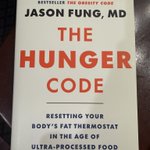
My new book The Hunger Code is launching on March 3. Pre-order now for some great bonuses. doctorjasonfung.com/gift-wit…

The Real Dr. Steven Horvitz retweeted

The accidental data that’s hard to ignore.
Bret Weinstein’s analysis of the 80 Ivermectin Court cases reveals a mind blowing statistic.
In the 40 cases where Ivermectin was permitted 38 survived.
In the 40 cases where it was not 38 died.
Using a standard statistical formula the chances that Ivermectin had no impact are roughly 1 in 20 quadrillion.
As Weinstein put it -
‘like guessing a random 15 digit number on your first try’
Yet we were denied this treatment.
This is one of the biggest medical tragedies in modern history!!
The Real Dr. Steven Horvitz retweeted
I am starting with a new patient in a few weeks whose spouse believes is on too many medications. Now I have not had our first initial visit, so I do not yet know the medical issues and/or reasons for the medications prescribed, but here is the list.
1- Acarbose
2- Clopidogrel
3- Dexlansoprazole
4- Glipzide
5- HCTZ
6- Isosorbide
7- Jardiance
8- Losartan
9- Metformin
10- Metoprolol
11- Mirabegron
12- Mounjaro -- failed Ozempic
13- Pitavastatin
14- Potassium Citrate
15- Solifenacin
16- Synthroid
17- Tamsulosin
18- Aspirin
19- Loratadine
20- Flovent
21- Proair
22- Lovaza
23- Farxiga
24- Muciprocin ointment
Oops I forgot VitD3 and CoQ10
Q1- Is this person on too little, too many or just right amount of medications?
Q2- Do I have my work cut out for me?
Q3- If you are a doc/healthcare professional who works on helping people through diet and lifestyle to reduce medications, which of the above do you feel would be the first meds to reduce, WITHOUT knowing the full history?
The Real Dr. Steven Horvitz retweeted

I am still getting people being warned off from a ketogenic diet to treat mental illness because of LDL concerns. I am not sure what you doctors need, but you have been told to catch the hell up by your own professional organizations for a long time.
Cardiology organizations have advised against using LDL cholesterol as the only marker for guiding statin prescriptions since 2013, when the American College of Cardiology (ACC) and American Heart Association (AHA) issued updated guidelines.
Those guidelines moved away from the “treat‑to‑target” LDL‑only approach and instead recommended fixed doses of moderate‑ or high‑intensity statin therapy based on overall cardiovascular risk.
What big picture are they supposed to be looking at?
Age, Sex, Race
Total cholesterol
HDL cholesterol
Systolic blood pressure
Hypertension treatment status
Diabetes
Smoking
Family history of premature ASCVD
Elevated LDL-C or non-HDL-C
Chronic kidney disease
Metabolic syndrome (and yet they won't check your fasting insulin)
Pre-eclampsia or premature menopause
Chronic inflammatory diseases
South Asian ancestry
Elevated triglycerides, Lp(a), hs-CRP, apo B (this apo B thing will change I suspect for low carb pops)
ABI < 0.9
Coronary artery calcium score (I think this should be changed to a coronary CT angiography CCTA)
CAC and CCTA both show how far the risk profile extends beyond just the LDL misnomer, yet many clinicians still default to statins without doing full risk assessment or considering metabolic and neurological impacts.
They are not even checking things properly like glucose triglyceride ratios. Why am I, a simple mental health counselor, more knowledgeable about getting a full picture than a medical doctor, even a specialist like a cardiologist? The field really needs to be embarrassed about this.
I know they are not doing this. Because my clients tell me they are reacting to their total cholesterol and handing them prescriptions.
So it's been about twelve years (since 2013) that the field has formally shifted away from relying solely on LDL as the determinant for statin use.
And yet I have doctors trying to hand statins out to my people.
Please don't give my clients statins when we are trying to heal their brains.
The Real Dr. Steven Horvitz retweeted

Patients remain unwitting participants in a vast, unspoken experiment—taking drugs that may never have been properly tested, trusting a regulator that too often fails to protect them.
One expert put it bluntly—the FDA’s threshold for evidence “can’t go any lower because it’s already in the dirt.” @thelever
See FULL story 👇👇blog.maryannedemasi.com/p/fd… @ProfTimNoakes
@DrJackKruse @Jikkyleaks

The Real Dr. Steven Horvitz retweeted

“The cage is invisible because you were born inside it — and they taught you to love the bars.” – Mark Twain
A Thread Exposing the Everyday Lies and Propaganda We’ve Been Sold🧵
1. Breakfast is NOT the Most Important Meal of the Day

