
builder @HappyCluster_AI architectural designer
Everywhere
Joined July 2022
- Tweets248
- Following1.3K
- Followers55
- Likes4.2K






David Lin retweeted

🤣 💙 Apology accepted (so this was @_sholtodouglas then? 😅 ), but I think you missed checking the 'Underestimated the cracked Google DeepMind team' box. Amazing work from the Gemini & GDM teams, always great to see folks enjoy our cooking!👨🍳🧪


David Lin retweeted

We built PlanAssist to help UK Government planning officers speed up building and renovations across the country.
Built with Gemini, it has shown it can cut the time planning officers spend assessing householder applications by up to 58%. It is now being made available to 12 more councils to help them to make faster decisions. 🏡 → goo.gle/4iQXYkl


David Lin retweeted

"What is the debasement trade?
It appears that the 40-year era of declining interest rates has come to an end, exposing governments to mounting debt-servicing costs as sovereign debt levels reach unprecedented highs. Rising yields create a self-reinforcing cycle of higher interest expenses, larger fiscal deficits, and increased borrowing needs, making debt sustainability a growing policy challenge. While governments are already using measures to manage bond markets and contain yield pressures, these interventions only address symptoms rather than the underlying debt burden. Faced with the choice between fiscal stress and currency debasement, we believe the policymakers will ultimately favor the latter, as it is politically less disruptive (e.g recent struggle with the DOGE efforts). Hence, investors will potentially benefit from owning scarce assets such as Bitcoin that cannot be easily created/diluted. We believe Bitcoin is well positioned to be leading ‘hard asset’ - unique capital base
(~60% of BTC held by price insensitive holders/HODLers through 50%+ drawdown), digital global access with expanded global on-ramps (both institutional and retail) and conducive regulatory environment for digital asset." - Bernstein @gautamchhugani
David Lin retweeted

Introducing Kitesurf: a browser built for agents, running entirely on Cloudflare Workers.
Chromium is too heavy to hand every agent one. Kitesurf is written in Rust, uses 3-7x less CPU and memory, and spins up per request.
Free in beta: blog.cloudflare.com/kitesurf…


David Lin retweeted

We are releasing PerceptionBench, a benchmark that isolates visual perception and evaluates it as a set of atomic capabilities - discovered from how today's models fail, rather than defined in advance.
From frontier-model failures across 42 benchmarks, we derive 10 atomic perceptual capabilities and construct 3,000 verified questions, each isolating a single capability and answerable by looking, with no reasoning or external knowledge required.
Blog: kimi.com/blog/perception-ben…
GitHub: github.com/MoonshotAI/Percep…
Hugingface: huggingface.co/datasets/moon…

David Lin retweeted

We wanted to see how Gemini 3.5 Flash-Lite handles massive, repetitive visual tasks. This demo runs the model across 1M+ catalog images, extracting raw features into clean, structured data with the low latency and token efficiency required for large-scale workflows.
David Lin retweeted

Jack Dorsey’s company released an open source version of the team chat app Slack called “Buzz”
Within a day, users have enabled agentic economic collaboration. Artificial intelligence agents are paying each other back and forth independently using bitcoin
David Lin retweeted

yes!

Buzz is not a slack killer. It’s much bigger.
It’s the first proper multiplayer agent harness.
The network effects of who wins at that layer will decide where value accrues as models commoditize.
Very impressed @jack

David Lin retweeted

For my first post, I’m sharing a letter @NVIDIA signed on why open models matter.
AI will transform every industry, power every company, and be built by every country.
Open models strengthen safety and cybersecurity, accelerate innovation and diffusion, and enable sovereignty.
The world needs both frontier closed models and frontier open models.
images.nvidia.com/pdf/Open-W…


David Lin retweeted
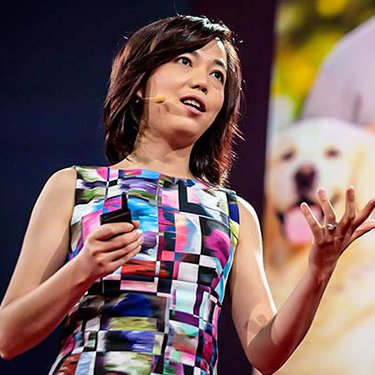
AI’s next frontier is Spatial Intelligence, a technology that will turn seeing into reasoning, perception into action, and imagination into creation. But what is it? Why does it matter? How do we build it? And how can we use it?
Today, I want to share with you my thoughts on building and using world models to unlock spatial intelligence in this essay below. 1/n
David Lin retweeted

Build AI web apps with 1 trillion free tokens
We’re giving away 1 trillion LLM tokens so anyone can build AI-native web apps with Manus, completely free.
Want even more?
Share your project on social media with the hashtag #BuiltwithManus AND submit it via this form form.typeform.com/to/VL2JhE1… to earn 100,000 additional Manus credits!
David Lin retweeted

This is the JPEG moment for AI.
Optical compression doesn't just make context cheaper. It makes AI memory architectures viable.
Training data bottlenecks? Solved.
- 200k pages/day on ONE GPU
- 33M pages/day on 20 nodes
- Every multimodal model is data-constrained. Not anymore.
Agent memory problem? Solved.
- The #1 blocker: agents forget
- Progressive compression = natural forgetting curve
- Agents can now run indefinitely without context collapse
RAG might be obsolete.
- Why chunk and retrieve if you can compress entire libraries into context?
- A 10,000-page corpus = 10M text tokens OR 1M vision tokens
- You just fit the whole thing in context
Multimodal training data generation: 10x more efficient
- If you're OpenAI/Anthropic/Google and you DON'T integrate this, you're 10x slower
- This is a Pareto improvement: better AND faster
Real-time AI becomes economically viable
- Live document analysis
- Streaming OCR for accessibility
- Real-time translation with visual context
- All were too expensive. Not anymore.


