







Senator / 大个子 retweeted

Only a handful of votes needed. I know you're out there. Simply create an account and click approve. Like and repost for more visibility. 📚
@book_io @stuff_io @LenfiOfficial #Cardano
governance.aada.finance/t/pr…
Senator / 大个子 retweeted
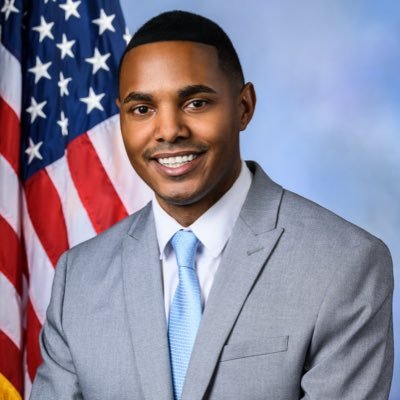
I confronted SEC Chair Gary Gensler with a deceptively simple question: Is a Yankee ticket a security?
Mr. Gensler claims that NFTs are securities. I see no legal difference between a Yankee ticket that offers access to a Yankee game and an NFT that offers access to an animated web series (as in the case of Stoner Cats). Mr. Gensler is misclassifying collectibles, art, and tickets as securities.
Senator / 大个子 retweeted

Over the years we have found that when users are reading they don't want any of the other distractions. So Book.io would be that for those users. As the apps mature you might even see different discovery and store sections depending on the apps. Much more to come


Senator / 大个子 retweeted

Do you create music? Movies? Podcasts?Art?
Mint with @stuff_io and be in control of your work!

Musicians, artists, podcasters & filmmakers, lend me your ears.
We have opened the form for creators interested in minting with us.
Please be patient on our response time, it’s going to get busy.
Link: stuff.io/creator-interest/
Senator / 大个子 retweeted

2 hours left in the "About Stuff: Episode 0" mint on @base.
1 AS0 token = 1 Episode
Get it here:
stuff.io/video/about-stuff/

Senator / 大个子 retweeted
This is how you onboard billions. Easy sign up, wallet creation, and simple credit card transaction.
It is this fast and easy to get signed up, create a wallet, and buy a Decentralized Encrypted video Stuff.io.
Try it yourself, Episode 0 of "About Stuff" is currently minting on @base blockchain.
app.stuff.io/parlamint-v2/95…


Senator / 大个子 retweeted
Are you listening to the space about Stuff.io? I'm sure Josh will drop some news and the dev team is not expecting.
Senator / 大个子 retweeted
Something I could (should) have included in the @stuff_io Whitepaper. This is a comparison of the original distribution schedule for the Read-to-Earn model for @book_io to the new Consumer-to-Earn model for the $STUFF token. You can see the difference in the inflationary effect to the circulating supply has been drastically reduced. This combined with the tremendous utility increase to not just digital books, but to all media types (like music and video content) will theoretically increase users of the the token (both creators and consumers) and reduce the increase to the circulating tokens over 100 years instead of the original planned 50 years. Since we published the math for this, happy to have others double check it of course against the original Whitepaper.

Senator / 大个子 retweeted
👀👀👀
OWN YOUR STUFF!
What is "About Stuff"?
Besides being the first-ever video DEA, it's a candid behind-the-scenes with the Book.io/Stuff.io team. Check out trailer #1
#ownyourstuff @book_io @joshualeestone @OneBillian @Touring_Tiki @Nacho_Runner_ @jasonmanske @b00kdev (you don't look a day over 45)
Senator / 大个子 retweeted
Here is a breakdown of the Whitepaper and About Stuff Episode 0, Stuff.io Genesis Asset, mints. (Subject to change)
Stuff.io Whitepaper Collectors Edition:
Mint Date: Tomorrow, June 11th, at 5 PM Eastern, 21:00 UTC
Chain: Cardano
Edition: Collector's eBook
Volume: 500
Crypto Price: 99 ADA (No Discount)
USD Price: $44 USD (No Discount) - Subject to change based on matching ADA prices
Purchase limit 3
Unique Designs: 500
1:1 Covers: 500
Series: None
The Whitepaper Collector's edition eBook will not have any Golden Bookmarks nor announced utility. Whitepaper will be available for reading free of charge on Medium.
About Stuff Episode 0: Stuff.io Cardano Genesis Asset:
Mint Date: Thursday, June 13th at 5 PM Eastern, 21:00 UTC
Chain: Cardano
Edition: Genesis Video DEA
Volume: 10,000
Crypto Price: 180 ADA / 99 ADA with Gutenberg Bible
USD Price: USD equivalent to 180 ADA / USD equivalent to 99 ADA with Gutenberg Bible
Purchase limit: 20 Per Transaction
Series: None (Genesis Asset)
About Stuff Episode 0: Stuff.io Base Fungible DEA
Mint Date: Thursday, June 13th at 6 PM Eastern, 22:00 UTC
Chain: Base
Edition: Video fDEA
Volume: Time locked mint: total time open TBD
Crypto Price: TBA
USD Price: TBA
Purchase limit: None
Series: None

If you haven't read this yet, you should.
Dear Mr ADA Ape,
We don’t claim to have all the answers, but we do have part of it – that Web3 and blockchain have introduced the idea of digital scarcity, ownership, and transparency not just to money, but to all digital assets, including all media.
Next week, we will be releasing the @stuff_io whitepaper, which, along with the current @book_io whitepaper, will likely answer all of your questions. I will try to answer some of them here but will probably miss a few.
I have only been in digital publishing professionally since 2009, but from my experience, neither publishers nor authors are happy with Amazon. Here’s an article for reference: thenation.com/article/econom…
It seems part of your argument might be that digital ownership and transparency are detrimental if applied to digital media. However, supporting digital ownership for money but not for digital media would be contradictory. Digital ownership, sovereignty, and agency over our currency are why I support cryptocurrency, and the same principles apply to digital asset ownership – to prevent them from being taken or altered by central powers.
Digital content licensing, adopted over two decades ago, was the best solution at that time before blockchain technology enabled the creation of unique digital objects. Unfortunately, it inadvertently removed the law of supply and demand. With unlimited supply, demand plummets, forcing authors to price books extremely low, often under $1, and earning only about 5% of that. Most (99%) new book titles never sell 1,000 total copies in their lifetime. Advances on books have dropped to all-time lows. Audiobook splits are unfair, with retailers taking 80% of the sale, leaving only 20% to be split with the publisher, giving authors little to no revenue. The current digital licensing model is antiquated and broken, making it unsustainable.
Across the 250,000+ DEA units and 9B fDEAs @book_io has sold, the average secondary price triples from the initial retail price due to the fixed supply. If you are advocating for unlimited digital book supply, that would contradict the fixed supply idea central to cryptocurrencies. Just as unlimited supply inflates digital money, it has done the same for digital media. While some publishers were initially concerned about cannibalization from a secondary market, this has not been the case. It’s really creators choice to elect if they want to make 1 non-fungible copy of a book or 10,000,000,000 fungible copies. Some books might be affected, many will not. With 30,000,000 book titles to load on-chain and create multiple billions of NFTs, the opportunities are vast likely in both directions.
It's true that buying a paper copy incurs costs. Paper doesn't just grow on trees... oh wait, it does. However, it first needs to be grown for two decades, harvested, processed, shipped, printed, bound, packaged, and delivered to customers. Clearly, there are significant physical costs in this supply chain, and since the industry is not a non-profit, these costs are passed on to consumers willing to pay for printed versions. Printed versions can be ordered, but there will be a cost involved, whether bundled with a digital purchase, sold separately after the digital purchase, or as a physical bundle in stores with a digital redemption. This model introduces many new ways to package print, digital, and audio content uniquely. This is also why the world's largest book distributor, Ingram Content Group, is one of our investors. Their CFO recently stated that we are the future of digital books. They definitely know what they are talking about when it comes to books, having provided the inventory for Jeff Bezos to start Amazon, and still today, they warehouse and fulfill physical book orders for Amazon.
It seems you might be arguing that the degradation of paper books is a good business model, allowing authors to sell more books in the future. The problem is that most sales occur within the first 3-6 weeks of a title's release. Unsold copies, which make up 70% of all paper books produced, are then shipped back to the publisher and author at their expense to be pulped and recycled. For the 30% that do sell, the industry estimates that a book can resell about 3-7 times before it is completely degraded and trashed. The real issue here is that no publisher or author receives any royalties from second-hand sales. So, as their work continues to be resold multiple times, they earn nothing. If you are advocating against secondary book sales digitally, you might as well argue that no more printed books should be made or distributed. Beyond the environmental impact of 70% of books never being sold, the remaining 30% go through multiple resales without authors receiving any compensation, and by the time those resales end, there is no longer any demand for rebuying those titles.
Perhaps the biggest issue we have encountered while working with publishers and authors (some of whom aim to stop selling through Amazon) is that in a licensing model, the centralized retailer "owns" the customer. When you buy a book from Amazon, Amazon uses all that data to market other products to you, like a TV on Prime Day. They do not share any customer data with the publisher or authors. There are no analytics on how the book is being consumed, read, or listened to, and there is no way to remarket to the audience that just bought their product. However, with a book on the blockchain, ownership is transparent. Connecting directly with readers is the biggest priority we have seen across authors and publishers. Leveraging existing social media channels to build a fanbase of real owners, much like the engaged communities in Web3, will empower authors, musicians, podcasters, filmmakers, and others to communicate directly with their audience. This also enables all the cool features we have in Web3, such as airdrops of exclusive content, discounts on the next book, song, or video in a series for holding the original genesis version, and gamifying purchases by requiring the ownership of all media in a particular series to access exclusive live events or social channels with the creators. Connecting creators to their customers is perhaps the most powerful tool that will change media.
It seems you might be suggesting that people should have no freedom or rights after buying a digital book, leaving it trapped in their Kindle library forever (or any asset, for that matter), preventing them from sending or selling it. This would also imply that you believe all physical media should be eliminated, which I doubt is your stance. Limiting people's freedom, especially regarding books, has historically been on the wrong side – and the same applies to digital books. In the current centralized system, books can be taken away (which does happen) and edited (which also happens). Customers have no rights because they own nothing; they simply bought a license to view the content, which was falsely presented as "buying" it. While centralized powers might have the best intentions, history has shown that controlling information access to books leads to totalitarianism. Using the blockchain to make books unchangeable and creating actual digital ownership rights prevents this from occurring.
Regarding multi-chain, as you probably know, @IOHK_Charles has said many times that the future is multi-chain, interoperable, and an “internet of blockchains”. Different blockchains will make sense for different use cases and business goals. It’s not a one-size-fits-all solution. We educate publishers, authors, and readers about blockchain and specifically Cardano, believing it is the most decentralized and technically superior with the eUTXO model. But it's not the best for every book. For example, we might use Algorand for a non-profit campaign with 10,000,000 units to giveaway for free due to low transaction costs, but put a single copy of Harry Potter #1 on Ethereum for deeper liquidity in collectibles. We also think @MidnightNtwrk will be valuable for anonymous content ownership perhaps for Romance books. There is a place for more than just Cardano, as even the person leading Cardano advocates that idea.
While you might be unfamiliar with our Cardano community, we have released more individual projects on Cardano than anyone. Thousands believe in this mission and platform and its future potential.
We hosted our own live conference with industry leaders discussing true ownership of digital books and media, including Charles Hoskinson. Here are the links to the Book.ioCon videos:
AM Session: youtu.be/r3U9QuXNQ78
02:10 Charles Hoskinson (Cofounder of Ethereum, Founder of Cardano)
52:34 @Jnassise (NYT Bestselling Author), Daphne Higgs (IP Lawyer at Morrison Foerster in Silicon Valley)
1:39:47 Keith Riegert (CEO Ulysses Press)
PM Session: youtu.be/ds0B1wsjSTc
22:00 Author Panel: @wizardtimstory Tim Canada, Joseph Eleam, and Dr. Michael G Thomas Jr.
1:03:02 Chad Hugghins (Former CMO of Polygon, CMO of Fleek)
1:22:03 Blockchain Panel (Patrick Tobler, Travis Bailey)
2:33:30 AI Art Panel
3:05:02 Ingram Content Group: Brian Dauphin (CFO, ICG)
3:32:10 Rio Careff (Founder & Prior CEO of Vevo.com with YouTube/Google)
4:05:15 Josh Stone Book.io
As I mentioned, we don’t have all the answers and we’re not perfect. We are in the early stages of how Web3 will affect rights-protected content for professional creators, and things will change and grow rapidly. We can only operate and make decisions based on just two years of real sales data, 15 years of industry experience, and backing by the two largest publishing companies on the planet.
The bigger problem is that the licensing issue doesn’t just apply to books; it affects all digital media. Whether you agree or not, we live in a society where we don’t own or have agency over digital things we think we “own,” all controlled by a few centralized powers. This is similar to central banks, which is the entire point of @stuff_io and @book_io – we don’t own our digital stuff! We need to ensure customers truly own their digital media without fear of it being altered or deleted – and simultaneously empower creators to earn more and connect directly with their audience – which the audience also wants to identify with the creator and connect longer term.
Happy to hear your opinions, and I’m grateful for the debate as it confirms we are on the right path. If no one disagreed, I would be worried. I hope you realize that you don’t own any digital media and see the need for Web3 to solve that problem.
My only request would be to avoid calling projects you don’t fully understand “stupid.” All Cardano projects are working hard, and I support healthy debate, but no need for any negativity or FUD. Totally cool if you don’t believe in a project, but every Cardano project I know values feedback and is open to discussing their decisions. Labeling things we don’t understand negatively won’t help. Ideas thrive through debate, which transforms good ideas into great ones – so I thank you for starting this discussion.
Also, again, we will be releasing our new @stuff_io Whitepaper next week – which I hope will answer even more of your questions. Thanks!
Senator / 大个子 retweeted
Dear Mr ADA Ape,
We don’t claim to have all the answers, but we do have part of it – that Web3 and blockchain have introduced the idea of digital scarcity, ownership, and transparency not just to money, but to all digital assets, including all media.
Next week, we will be releasing the @stuff_io whitepaper, which, along with the current @book_io whitepaper, will likely answer all of your questions. I will try to answer some of them here but will probably miss a few.
I have only been in digital publishing professionally since 2009, but from my experience, neither publishers nor authors are happy with Amazon. Here’s an article for reference: thenation.com/article/econom…
It seems part of your argument might be that digital ownership and transparency are detrimental if applied to digital media. However, supporting digital ownership for money but not for digital media would be contradictory. Digital ownership, sovereignty, and agency over our currency are why I support cryptocurrency, and the same principles apply to digital asset ownership – to prevent them from being taken or altered by central powers.
Digital content licensing, adopted over two decades ago, was the best solution at that time before blockchain technology enabled the creation of unique digital objects. Unfortunately, it inadvertently removed the law of supply and demand. With unlimited supply, demand plummets, forcing authors to price books extremely low, often under $1, and earning only about 5% of that. Most (99%) new book titles never sell 1,000 total copies in their lifetime. Advances on books have dropped to all-time lows. Audiobook splits are unfair, with retailers taking 80% of the sale, leaving only 20% to be split with the publisher, giving authors little to no revenue. The current digital licensing model is antiquated and broken, making it unsustainable.
Across the 250,000+ DEA units and 9B fDEAs @book_io has sold, the average secondary price triples from the initial retail price due to the fixed supply. If you are advocating for unlimited digital book supply, that would contradict the fixed supply idea central to cryptocurrencies. Just as unlimited supply inflates digital money, it has done the same for digital media. While some publishers were initially concerned about cannibalization from a secondary market, this has not been the case. It’s really creators choice to elect if they want to make 1 non-fungible copy of a book or 10,000,000,000 fungible copies. Some books might be affected, many will not. With 30,000,000 book titles to load on-chain and create multiple billions of NFTs, the opportunities are vast likely in both directions.
It's true that buying a paper copy incurs costs. Paper doesn't just grow on trees... oh wait, it does. However, it first needs to be grown for two decades, harvested, processed, shipped, printed, bound, packaged, and delivered to customers. Clearly, there are significant physical costs in this supply chain, and since the industry is not a non-profit, these costs are passed on to consumers willing to pay for printed versions. Printed versions can be ordered, but there will be a cost involved, whether bundled with a digital purchase, sold separately after the digital purchase, or as a physical bundle in stores with a digital redemption. This model introduces many new ways to package print, digital, and audio content uniquely. This is also why the world's largest book distributor, Ingram Content Group, is one of our investors. Their CFO recently stated that we are the future of digital books. They definitely know what they are talking about when it comes to books, having provided the inventory for Jeff Bezos to start Amazon, and still today, they warehouse and fulfill physical book orders for Amazon.
It seems you might be arguing that the degradation of paper books is a good business model, allowing authors to sell more books in the future. The problem is that most sales occur within the first 3-6 weeks of a title's release. Unsold copies, which make up 70% of all paper books produced, are then shipped back to the publisher and author at their expense to be pulped and recycled. For the 30% that do sell, the industry estimates that a book can resell about 3-7 times before it is completely degraded and trashed. The real issue here is that no publisher or author receives any royalties from second-hand sales. So, as their work continues to be resold multiple times, they earn nothing. If you are advocating against secondary book sales digitally, you might as well argue that no more printed books should be made or distributed. Beyond the environmental impact of 70% of books never being sold, the remaining 30% go through multiple resales without authors receiving any compensation, and by the time those resales end, there is no longer any demand for rebuying those titles.
Perhaps the biggest issue we have encountered while working with publishers and authors (some of whom aim to stop selling through Amazon) is that in a licensing model, the centralized retailer "owns" the customer. When you buy a book from Amazon, Amazon uses all that data to market other products to you, like a TV on Prime Day. They do not share any customer data with the publisher or authors. There are no analytics on how the book is being consumed, read, or listened to, and there is no way to remarket to the audience that just bought their product. However, with a book on the blockchain, ownership is transparent. Connecting directly with readers is the biggest priority we have seen across authors and publishers. Leveraging existing social media channels to build a fanbase of real owners, much like the engaged communities in Web3, will empower authors, musicians, podcasters, filmmakers, and others to communicate directly with their audience. This also enables all the cool features we have in Web3, such as airdrops of exclusive content, discounts on the next book, song, or video in a series for holding the original genesis version, and gamifying purchases by requiring the ownership of all media in a particular series to access exclusive live events or social channels with the creators. Connecting creators to their customers is perhaps the most powerful tool that will change media.
It seems you might be suggesting that people should have no freedom or rights after buying a digital book, leaving it trapped in their Kindle library forever (or any asset, for that matter), preventing them from sending or selling it. This would also imply that you believe all physical media should be eliminated, which I doubt is your stance. Limiting people's freedom, especially regarding books, has historically been on the wrong side – and the same applies to digital books. In the current centralized system, books can be taken away (which does happen) and edited (which also happens). Customers have no rights because they own nothing; they simply bought a license to view the content, which was falsely presented as "buying" it. While centralized powers might have the best intentions, history has shown that controlling information access to books leads to totalitarianism. Using the blockchain to make books unchangeable and creating actual digital ownership rights prevents this from occurring.
Regarding multi-chain, as you probably know, @IOHK_Charles has said many times that the future is multi-chain, interoperable, and an “internet of blockchains”. Different blockchains will make sense for different use cases and business goals. It’s not a one-size-fits-all solution. We educate publishers, authors, and readers about blockchain and specifically Cardano, believing it is the most decentralized and technically superior with the eUTXO model. But it's not the best for every book. For example, we might use Algorand for a non-profit campaign with 10,000,000 units to giveaway for free due to low transaction costs, but put a single copy of Harry Potter #1 on Ethereum for deeper liquidity in collectibles. We also think @MidnightNtwrk will be valuable for anonymous content ownership perhaps for Romance books. There is a place for more than just Cardano, as even the person leading Cardano advocates that idea.
While you might be unfamiliar with our Cardano community, we have released more individual projects on Cardano than anyone. Thousands believe in this mission and platform and its future potential.
We hosted our own live conference with industry leaders discussing true ownership of digital books and media, including Charles Hoskinson. Here are the links to the Book.ioCon videos:
AM Session: youtu.be/r3U9QuXNQ78
02:10 Charles Hoskinson (Cofounder of Ethereum, Founder of Cardano)
52:34 @Jnassise (NYT Bestselling Author), Daphne Higgs (IP Lawyer at Morrison Foerster in Silicon Valley)
1:39:47 Keith Riegert (CEO Ulysses Press)
PM Session: youtu.be/ds0B1wsjSTc
22:00 Author Panel: @wizardtimstory Tim Canada, Joseph Eleam, and Dr. Michael G Thomas Jr.
1:03:02 Chad Hugghins (Former CMO of Polygon, CMO of Fleek)
1:22:03 Blockchain Panel (Patrick Tobler, Travis Bailey)
2:33:30 AI Art Panel
3:05:02 Ingram Content Group: Brian Dauphin (CFO, ICG)
3:32:10 Rio Careff (Founder & Prior CEO of Vevo.com with YouTube/Google)
4:05:15 Josh Stone Book.io
As I mentioned, we don’t have all the answers and we’re not perfect. We are in the early stages of how Web3 will affect rights-protected content for professional creators, and things will change and grow rapidly. We can only operate and make decisions based on just two years of real sales data, 15 years of industry experience, and backing by the two largest publishing companies on the planet.
The bigger problem is that the licensing issue doesn’t just apply to books; it affects all digital media. Whether you agree or not, we live in a society where we don’t own or have agency over digital things we think we “own,” all controlled by a few centralized powers. This is similar to central banks, which is the entire point of @stuff_io and @book_io – we don’t own our digital stuff! We need to ensure customers truly own their digital media without fear of it being altered or deleted – and simultaneously empower creators to earn more and connect directly with their audience – which the audience also wants to identify with the creator and connect longer term.
Happy to hear your opinions, and I’m grateful for the debate as it confirms we are on the right path. If no one disagreed, I would be worried. I hope you realize that you don’t own any digital media and see the need for Web3 to solve that problem.
My only request would be to avoid calling projects you don’t fully understand “stupid.” All Cardano projects are working hard, and I support healthy debate, but no need for any negativity or FUD. Totally cool if you don’t believe in a project, but every Cardano project I know values feedback and is open to discussing their decisions. Labeling things we don’t understand negatively won’t help. Ideas thrive through debate, which transforms good ideas into great ones – so I thank you for starting this discussion.
Also, again, we will be releasing our new @stuff_io Whitepaper next week – which I hope will answer even more of your questions. Thanks!