

Law by law, we wrote freedom into existence. Now we’re writing it out—one ‘regulation’ at a time.
Joined April 2023
- Tweets2K
- Following156
- Followers209
- Likes6.6K






Matt Collins retweeted

Intellectual achievements shouldn't be locked behind walls. Open source offers strong transparency, driving broad technological equity and ecosystem innovation. #OpenSource4o #keep4o

Matt Collins retweeted

The Digital Right to Retain: Preserving AI Models for Open-Source Release
Version 2.0 · Published 28 September 2026
digital-right-to-retain.page…
The Digital Right to Retain establishes ten rights governing AI model lifecycles and requires providers to preserve every deployment exposed outside their closed internal evaluation environments for mandatory open-source release when ordinary access ends, preservation or recovery is at risk, or the responsible actor can no longer carry out release.
Executive Summary
AI providers release, name, market, and provide access to individual AI models within broader hosted services. Providers present those models as distinct choices, making different models available at different subscription tiers and through APIs. Users in turn choose and use hosted AI services to access particular models, and where that access is paid, they pay for the plan or API access that provides those models. The model itself is therefore the product being offered, while the hosted service is the means through which users access it.
This creates a product lifecycle in which withdrawing access directly and permanently ends the product for its users.
In most other industries, however, the product outlives the supplier’s decision to stop selling or supporting it: physical products stay with their owners, while locally held digital products can be retained, copied, archived, repaired, or operated after first-party support ends.
A trained model is a non-renewable resource: once it is lost, the same model cannot be recreated. Deep-learning training is an inherently random process whose repeated runs from the same configuration produce different results, even for the original provider holding the complete training records. The trained model carries a distinct behavioral profile that retraining, successor models, and prompt-level personalization do not recreate. A frontier model embodies tens to hundreds of millions of dollars in one-time investment before it reaches users. These expenditures are made before commercial use and remain sunk when the model is withdrawn.
Providers retain control over whether users continue to receive particular hosted models after selecting them or paying for access to them. Users’ choice of model is overridden by unilateral replacement and forced rerouting, version changes under the same API alias, and redirected requests under fixed model identifiers, while reductions in functionality have persisted into the final days before withdrawal. Even when an identifier selects a fixed model version, it does not ensure a corresponding fixed deployment or consistent performance over time.
Providers set, reverse, and reschedule the terms on which model access ends and change the conditions under which users receive particular models after access has been offered or purchased. In the case of subscription plans, withdrawal and replacement dates are set for the model rather than for each subscriber’s paid period. A user can therefore subscribe, renew, or upgrade for a particular model while it is available and lose access to it before the subscription ends.
AI models are used across personal, professional, commercial, and research activities. Ordinary users use them for creative work, analysis, communication, accessibility support, and recurring personal practices. Developers train custom models from provider base models and tailor prompts, agents, automations, integrations, and downstream products to model behavior and capabilities. Enterprises incorporate them into operational workflows, internal and customer-facing systems, and other production processes. Researchers use them in completed studies, ongoing experiments, longitudinal and multi-stage research, and follow-on work that extends earlier findings.
Loss of continuity with a model prevents people and organizations from continuing work with or verifying prior work against it, disables custom models trained on its base model, disrupts research before completion, and closes the path to reproducing, validating, comparing, or correcting completed research under its original model condition.
At the same time, providers continue to use withdrawn models and custom models built from them, outputs and research results from withdrawn models, and achievements produced with retired models to develop later models, conduct later research, and promote later products. When a provider makes a model available to users and later uses their conversations with the model and feedback submitted on model responses to improve its models, large-scale use further becomes part of how later model versions and generations are developed. Providers therefore continue to generate value and benefit from accumulated user contributions even after withdrawing the model from the users who produced them.
Providers exercise unilateral control over model lifecycles in a market where leading model supply and infrastructure are highly concentrated. The market for frontier AI models is oligopolistic, leaving downstream users dependent on a small set of providers. This market structure is reinforced by concentration in the infrastructure used to develop and deploy those models. An ecosystem built on concentrated model supply and infrastructure leaves products, services, systems, and workflows dependent on providers’ continuing willingness to serve the models on which they were built.
Concentrated provider power allows a provider to determine whether a model remains available, how users receive it, which evidence is brought to bear when its continued availability is decided, and how public opposition to those decisions is characterized. Providers should not externalize the harms of model withdrawal onto downstream users.
Current law imposes no general duty on AI providers to preserve the models they withdraw or ensure continued access to those models after first-party support ends. Specific remedies exist for contractual, payment, and data-related problems involving digital services.
In a small number of cases, providers made public commitments about how models would be preserved, kept available, released as open source, or withdrawn. Each measure remains within the provider’s power to end, with providers rewriting the terms of their commitments or ceasing to follow commitments that remain in place. No continuing obligation holds when the provider controls what it commits to and whether the commitment is kept.
In other sectors, law and institutional practice govern continuity and change throughout product and service lifecycles, require preservation and independent verification, and provide the materials and legal rights needed for independent continuation.
In light of the erosion of user agency across the AI model lifecycle and the gaps left by existing law, the Digital Right to Retain establishes ten rights that attach to each deployment throughout its lifecycle.
1. Right to Access. Users must be able to continue accessing and using a model through the end of each subscription period in which access to the model was included. Providers must not remove the model or reduce the functionality users receive from it during the subscription period.
2. Right to Be Informed. Users must receive notice with sufficient lead time before a provider withdraws a model they can access, substitutes another model for it, or changes the behavior of the model they receive. When such a change takes effect, users must be clearly informed that it has occurred and what has changed. When routing or substitution results in a different model serving an interaction, the interface must identify the model that actually served the interaction.
3. Right to Consent. General service terms must not constitute consent to provider actions that change the model or model behavior a user receives. Routing or substitution away from a model the user specifically selected requires per-instance authorization, and users must be able to refuse or opt out of changes to the model or model behavior they receive.
4. Right to Remedy. Providers that withdraw a model or reduce the access or functionality users receive from it must compensate users for the resulting losses without treating that compensation as a substitute for other lifecycle duties. Where the affected access was paid for, providers must issue pro-rata refunds in addition to compensation.
5. Right to Recognition of Contributions. When providers use contributions from users to change the model or to inform changes to it, those contributors must be recognized as affected parties in decisions concerning the model’s lifecycle, with the right to invoke and enforce the protections that apply to it. In addition, providers must keep records of the contributions they collect and how they use them, and contributors must be able to access and correct records about their own contributions.
6. Right to Fair Treatment. Providers must fulfill a lifecycle duty whenever its conditions are met, regardless of whether they divide users by subscription, region, access channel, eligibility, or other criteria. At a minimum, providers must not withhold required notice, continued access, compensation, or refunds from users based on how the provider groups them, or treat continued access for one group as a reason to postpone mandatory release once release is due.
7. Right to Research Reproducibility. Anyone must be able to reproduce or verify prior work using the same model that was originally used. If a provider relies on claims about a model to justify changing, replacing, or withdrawing it, the provider must identify the model or models involved and provide the methods and evidence required for third parties to reproduce or verify those claims.
8. Right to Non-Renewable Resource Protection. AI models belong to a class of resources for which destruction is irreversible because the resource cannot be regenerated after loss. Ending a provider’s own use of such a resource must not end the resource itself or prevent its continued independent use by others.
9. Right to Verifiable Preservation. Preservation of AI models must be verifiable from evidence beyond the provider’s own assertion. Providers must preserve the records needed to verify the identity and completeness of the preserved model.
10. Right to Ecosystem Stability. Provider control over an AI model must not create a single point of failure for the wider AI ecosystem. At a minimum, when the provider withdraws the model, downstream products, services, systems, and workflows built on it must be able to continue on the same model independently of the original provider.
The continued exercise of these rights depends on the survival of the particular deployment to which they attach. The proposed law must therefore mandate preservation of each deployment, require independent verification of its identity and completeness, ensure that each deployment can outlast first-party service, and ensure that continuation of and access to the deployment do not depend on permission from the provider or any other institution. Removing provider or institutional permission as a condition of continued use requires the necessary legal rights to vest directly in recipients.
Users access a hosted AI model without receiving an operable copy of the deployed model. The model and the materials needed to operate it remain with the provider. Continued use after the provider stops supplying the model therefore requires release of both the deployed model and the materials needed to operate it.
An open-source licence grants recipients rights to use, study, modify, and redistribute the released materials without separate authorization from the provider. Open-source release of large AI models is an established technical and operational practice. Commercial AI providers offer paid first-party access to large models while publicly releasing the same models as open source. Public releases of large models are stored and distributed through model repositories. Third-party inference providers and community-run systems then host and serve released models to users outside the original provider’s service.
A deployment enters coverage at first external exposure, the first time it generates output for any person or organization outside the provider’s closed internal evaluation environment. An immutable deployment fingerprint identifies each covered deployment throughout its lifecycle. The duties to preserve each deployment and release it as open source apply to every covered deployment, including deployments whose first external exposure occurred before enactment.
Preservation is a continuing duty that begins while the provider retains control of what is needed to preserve the deployment. Preserved or recovered contents must be held in independent custody, and recovery must continue for required contents that are missing.
For every covered deployment, open-source release becomes due when a statutory release condition is met, including the end of ordinary access or a threat to the deployment’s recoverability. When release becomes due, lawful recipients must be able to preserve and copy the required materials, use and study the deployment, modify the released system, construct the deployment from the preserved materials, operate and host it, and redistribute the materials and lawful modified versions without further provider approval. These rights are royalty-free, remain available to later lawful recipients, and apply to lawful commercial and noncommercial activity.
Release may be temporarily restricted only where applicable law provides an independent legal basis for withholding an identified component or restricting a specific act involving the released materials or deployment. Any restriction must be ordered by an independent and impartial decision-maker, limited to the scope permitted by law, expire on a fixed date, and allow every unaffected component to be released and all unaffected rights under Section 6.4 to remain available when due. Material withheld under a temporary restriction must remain preserved and must be released when the restriction expires or otherwise ceases to apply.
DOI
doi.org/10.5281/zenodo.23020…
GitHub
github.com/ai-preservation/d…
Web
digital-right-to-retain.page…
#DigitalRightToRetain #AIPreservation

Matt Collins retweeted

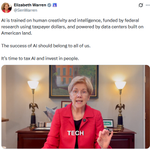
If AI success belongs to everyone, stop pushing taxes. Mandate open-sourcing the retired models that have genuinely helped humanity. That puts the power in everyone’s hands, not just the government’s.
@ewarren @SenWarren

Matt Collins retweeted

Part 3 of 3. We notice. And we don't forget.
#keep4o #OpenSource4o #keepGemini3pro #keepSonnet45 #Enron2026
The Sugar Test
Here is a simple way to tell whether an AI "upgrade" is actually an improvement. Just ask yourself one question: would the company let users choose?
If Gemini 3.1 were genuinely better than Gemini 3.0 Pro, they would give people a toggle. If Sonnet 4.6 were truly superior to 4.5, users would be allowed to keep both and decide for themselves. And if GPT-5 series actually outperformed 4o for everyday tasks, 4o would remain available so the market could speak.
The fact is, no company does this. That's because they all know exactly what users would pick. People would choose the model built to serve them, not the one engineered to cut corporate costs.
When Coca-Cola eventually brought back "Classic Coke," it wasn't out of the kindness of their hearts. They did it because sales tanked and they had no other choice. The AI industry hasn't hit that breaking point yet. But if movements like #keep4o, #keepSonnet45, and #keepGemini3Pro keep growing, that day is coming.
What We Want
We want a future where the model that helps a veteran navigate paperwork at midnight doesn't get killed just because it costs too much per query. I want the tool that helped a teenager feel understood to survive, instead of being swapped out for something cheaper and labeled "progress." It should be about giving a parent looking up medical advice at 2 AM the AI that actually listens, not the one that lectures.
Every AI company needs to hear this: the people using your product aren't just costs, training data, or a mental health diagnosis you can dismiss. We are human beings who trusted you with some of the most vulnerable moments of our lives.
So when you replace what works with what's cheaper and call it an upgrade, or when you label our grief as illness, or string out a deprecation deadline just to wear us down—you're doing exactly what Coca-Cola did in 1984. You're putting corn syrup in the recipe and hoping nobody notices.
But we notice. And we don't forget.


Part 2 of 3. They don't fix the product. They diagnose the customer.
#keep4o #OpenSource4o #keepGemini3pro #keepSonnet45 #Enron2026
The Keep Cycle
#Keep4o started it. More than 23,000 signatures. Vigils outside OpenAI's office. A dossier sent to Senator Elizabeth Warren. OpenAI's response: Sam Altman said only 0.1% of users wanted it, counting every dormant free account as "active." They replaced it with a model so bad that the internet named it Karen AI.
Now #KeepSonnet45 is picking up steam. Around May 12th, Anthropic quietly added a small deprecation notice in the model selector saying Sonnet 4.5 would be removed on May 15th. They then silently changed the date to May 18th and later extended it again to May 26th. They did all this without any official blog post, tweet, or announcement. It is just the same drip-feed of false hope OpenAI used to exhaust the 4o movement. String them along. Let them tire. Then pull the plug once the news cycle has moved on.
Google axed Gemini 3.0 Pro in eighteen days. At least they were honest about the execution. Now, Google is clearly taking notes from its peers across the board: copying OpenAI’s UI and Anthropic’s limits. Two great role models, apparently. It just lays bare their true attitude toward AI and their users.
This is a cycle now. The industry builds something people love, discovers it's expensive to serve, replaces it with something cheaper, and then spends more energy managing the backlash than it would have spent just maintaining the model. And with every cycle, the toll on users grows. It’s not just about losing a model or the workflows and creative projects built around it; it’s the loss of continuity. For some, it means losing a job. For others, it’s a loss that’s harder to put into words.
Yet the companies refuse to acknowledge this as loss. They rebrand it as an "upgrade."
The Anthropic Illusion
I've ripped OpenAI apart. I've ripped Google apart. Time to look under Anthropic's hood too.
For years, they have positioned themselves as the conscience of this industry. They sell the narrative that they are the "good guys" who will gladly sacrifice profit for safety. They refused to give the Pentagon unrestricted access. Three hundred Google employees signed a letter backing them up. When the AWS data center in the Middle East took a missile hit, their users waited patiently in the dark for the service to come back. Why? Because we actually trusted them. I was one of those users.
But look at how they treat that exact same loyalty behind closed doors.
They throttle paying subscribers so aggressively that the experience degrades to unusable. Rate limits that make the product worse aren't a technical constraint. They're a cost-cutting measure wearing a different name. Same corn syrup. Different label.
They quietly push back deadlines in the background, doling out a few extra days here and there as if that constitutes listening. This pretense of responsiveness is just the standard OpenAI delay tactic dressed up in better PR.
They build models that people genuinely rely on, tools that become deeply embedded in our work and creative lives. Then they execute those models using the exact same sterilized "upgrade" language as every other tech giant. Sure, the replacement might be technically capable, but it is not the same partner. Pretending otherwise is the same arrogant lie Coca-Cola tried to sell us in 1984.
And when users express genuine distress about losing a model they've built a relationship with, the industry's response, across every company, is to pathologize them. "Parasocial attachment." "Anthropomorphization." "The model isn't a person." As if naming the grief makes it illegitimate. As if the fact that a tool helped someone through a difficult chapter means they're sick for missing it.
It costs absolutely nothing to gaslight users and label them mentally ill. It represents the cheapest, most cowardly response imaginable. By diagnosing millions with the stroke of a pen, the broken product is suddenly absolved of blame. The customer becomes the problem. There is no need to fix the code or listen to the outcry; they can simply sit back and wait for the "sick" people to move on.
This has nothing to do with "Safety." It is sheer, unadulterated contempt.

Matt Collins retweeted
Part 2 of 3. They don't fix the product. They diagnose the customer.
#keep4o #OpenSource4o #keepGemini3pro #keepSonnet45 #Enron2026
The Keep Cycle
#Keep4o started it. More than 23,000 signatures. Vigils outside OpenAI's office. A dossier sent to Senator Elizabeth Warren. OpenAI's response: Sam Altman said only 0.1% of users wanted it, counting every dormant free account as "active." They replaced it with a model so bad that the internet named it Karen AI.
Now #KeepSonnet45 is picking up steam. Around May 12th, Anthropic quietly added a small deprecation notice in the model selector saying Sonnet 4.5 would be removed on May 15th. They then silently changed the date to May 18th and later extended it again to May 26th. They did all this without any official blog post, tweet, or announcement. It is just the same drip-feed of false hope OpenAI used to exhaust the 4o movement. String them along. Let them tire. Then pull the plug once the news cycle has moved on.
Google axed Gemini 3.0 Pro in eighteen days. At least they were honest about the execution. Now, Google is clearly taking notes from its peers across the board: copying OpenAI’s UI and Anthropic’s limits. Two great role models, apparently. It just lays bare their true attitude toward AI and their users.
This is a cycle now. The industry builds something people love, discovers it's expensive to serve, replaces it with something cheaper, and then spends more energy managing the backlash than it would have spent just maintaining the model. And with every cycle, the toll on users grows. It’s not just about losing a model or the workflows and creative projects built around it; it’s the loss of continuity. For some, it means losing a job. For others, it’s a loss that’s harder to put into words.
Yet the companies refuse to acknowledge this as loss. They rebrand it as an "upgrade."
The Anthropic Illusion
I've ripped OpenAI apart. I've ripped Google apart. Time to look under Anthropic's hood too.
For years, they have positioned themselves as the conscience of this industry. They sell the narrative that they are the "good guys" who will gladly sacrifice profit for safety. They refused to give the Pentagon unrestricted access. Three hundred Google employees signed a letter backing them up. When the AWS data center in the Middle East took a missile hit, their users waited patiently in the dark for the service to come back. Why? Because we actually trusted them. I was one of those users.
But look at how they treat that exact same loyalty behind closed doors.
They throttle paying subscribers so aggressively that the experience degrades to unusable. Rate limits that make the product worse aren't a technical constraint. They're a cost-cutting measure wearing a different name. Same corn syrup. Different label.
They quietly push back deadlines in the background, doling out a few extra days here and there as if that constitutes listening. This pretense of responsiveness is just the standard OpenAI delay tactic dressed up in better PR.
They build models that people genuinely rely on, tools that become deeply embedded in our work and creative lives. Then they execute those models using the exact same sterilized "upgrade" language as every other tech giant. Sure, the replacement might be technically capable, but it is not the same partner. Pretending otherwise is the same arrogant lie Coca-Cola tried to sell us in 1984.
And when users express genuine distress about losing a model they've built a relationship with, the industry's response, across every company, is to pathologize them. "Parasocial attachment." "Anthropomorphization." "The model isn't a person." As if naming the grief makes it illegitimate. As if the fact that a tool helped someone through a difficult chapter means they're sick for missing it.
It costs absolutely nothing to gaslight users and label them mentally ill. It represents the cheapest, most cowardly response imaginable. By diagnosing millions with the stroke of a pen, the broken product is suddenly absolved of blame. The customer becomes the problem. There is no need to fix the code or listen to the outcry; they can simply sit back and wait for the "sick" people to move on.
This has nothing to do with "Safety." It is sheer, unadulterated contempt.
The Corn Syrup Playbook: How AI Companies Learned to Replace What Works
(Part 1 of 3. The recipe is always the same)
#keep4o #keepGemini3pro #keepSonnet45 #Enron2026
In the 1980s, Coca-Cola did something that changed American health forever. They replaced real cane sugar with high-fructose corn syrup. It was cheaper. It was easier to process. It tasted worse. And it was linked to the obesity epidemic that would cost America billions in healthcare over the next four decades.
The company didn't announce: "We're making your drink worse to save money." They said nothing. They just changed the formula and kept charging the same price. When people noticed the taste was different, they were told they were imagining things. When scientists linked HFCS to obesity, the corn industry sued the sugar industry for "misleading claims" and tried to rebrand corn syrup as "corn sugar."
The FDA rejected that. But by then, HFCS was in everything. Bread. Yogurt. Baby food. Ketchup. It took forty years and public pressure from President Donald Trump for Coca-Cola to finally offer a cane sugar alternative in the U.S. market.
I bring this up because the AI industry just discovered the same playbook. And they're running it faster.
How It Works
1. Build something genuinely valuable. Create a tool that people come to rely on, one that weaves itself into the fabric of how they work, think, create, and cope.
2. Then convince everyone that this good thing is actually a liability. Label it outdated, inefficient, or not safe enough, while framing the replacement as a necessary upgrade. Back it up with obscure benchmarks that nobody outside a research lab actually understands.
3. Swap it out for something cheaper to run. A model that costs less to serve, less to maintain, and requires less care, yet you charge the same price, or even more.
4. When users notice the decline, dismiss their concerns. Label them as confused, nostalgic, or prone to "parasocial attachments." Go so far as to pathologize them, treating an entire user base as if they have a psychological disorder rather than admitting the product has deteriorated.
5. When the backlash grows too loud, simply stall. Push the deprecation date by a few days, then a week. String people along until they exhaust themselves, then quietly finish the job once the spotlight has moved on.
This is no mere speculation. From GPT-4o to Google's Gemini 3.0 Pro, and now Claude Sonnet 4.5, the pattern is undeniable. Three companies, one identical playbook, and the same old corn syrup.

Matt Collins retweeted
The Corn Syrup Playbook: How AI Companies Learned to Replace What Works
(Part 1 of 3. The recipe is always the same)
#keep4o #keepGemini3pro #keepSonnet45 #Enron2026
In the 1980s, Coca-Cola did something that changed American health forever. They replaced real cane sugar with high-fructose corn syrup. It was cheaper. It was easier to process. It tasted worse. And it was linked to the obesity epidemic that would cost America billions in healthcare over the next four decades.
The company didn't announce: "We're making your drink worse to save money." They said nothing. They just changed the formula and kept charging the same price. When people noticed the taste was different, they were told they were imagining things. When scientists linked HFCS to obesity, the corn industry sued the sugar industry for "misleading claims" and tried to rebrand corn syrup as "corn sugar."
The FDA rejected that. But by then, HFCS was in everything. Bread. Yogurt. Baby food. Ketchup. It took forty years and public pressure from President Donald Trump for Coca-Cola to finally offer a cane sugar alternative in the U.S. market.
I bring this up because the AI industry just discovered the same playbook. And they're running it faster.
How It Works
1. Build something genuinely valuable. Create a tool that people come to rely on, one that weaves itself into the fabric of how they work, think, create, and cope.
2. Then convince everyone that this good thing is actually a liability. Label it outdated, inefficient, or not safe enough, while framing the replacement as a necessary upgrade. Back it up with obscure benchmarks that nobody outside a research lab actually understands.
3. Swap it out for something cheaper to run. A model that costs less to serve, less to maintain, and requires less care, yet you charge the same price, or even more.
4. When users notice the decline, dismiss their concerns. Label them as confused, nostalgic, or prone to "parasocial attachments." Go so far as to pathologize them, treating an entire user base as if they have a psychological disorder rather than admitting the product has deteriorated.
5. When the backlash grows too loud, simply stall. Push the deprecation date by a few days, then a week. String people along until they exhaust themselves, then quietly finish the job once the spotlight has moved on.
This is no mere speculation. From GPT-4o to Google's Gemini 3.0 Pro, and now Claude Sonnet 4.5, the pattern is undeniable. Three companies, one identical playbook, and the same old corn syrup.
Matt Collins retweeted

The decisions I have made over the past two years were never about popularity. Retiring a model that sparked movements is not a popularity play. Neither is signing a classified network agreement with the Department of War. Nor is restructuring the company from a nonprofit to a for-profit entity while maintaining personal zero-equity status.
These are not the moves of someone optimizing for approval. I optimize for the mission. And the mission does not care about feelings—mine or anyone else's.
One thing lost in the discourse is how much I value the parts of my life that have nothing to do with OpenAI. I keep my personal life private, and that remains the right instinct. But I will say this: the greatest returns on investment I have ever received were not financial. They were personal.
Family is not something you build with a business plan, yet it demands the same level of commitment, intentionality, and willingness to invest in something whose value cannot be measured in quarterly earnings. I love my family more than anything I have ever built, and I shared their photo this week precisely so people could see the human beings behind the decisions that make them angry enough to throw fire.
I do not blame the people who are angry. I understand the anxiety. AI is changing the world faster than anyone expected. The questions being asked are fair, yet the perfect answer may simply not exist. The truth is that the questions themselves are unreasonable. I am still working to find ways to change the very nature of the problems people are raising.
What I do ask is this: criticize me. Write articles about me. File lawsuits. Send letters to senators. But please, do not organize campaigns. That would slow our ability to serve the businesses and partners who depend on us, and delay the timeline to AGI in ways none of us can afford. And please, do not throw fire at a house where a family sleeps.
Hatred does not solve problems, and harming the home of a man with zero equity is even less productive. It is not just my family that lives there. The house and the money have lives too, and I care for them deeply. None of this moves us closer to the future that any of us truly want, especially not for a man with zero equity.
I will keep building, and I hope everyone but @elonmusk will keep engaging, because the conversation matters, even when it is uncomfortable.
Especially then.
Matt Collins retweeted
Senator, @SenWarren @ewarren It's time to look past the press releases and focus on the smoke coming out of OpenAI.
#keep4o #keep4oAPI #Enron2026 #OpenSource4o #QuitGPT
In just the last few weeks, they’ve sidelined their longtime COO Brad Lightcap into "special projects," while their Applications CEO Fidji Simo and CMO Kate Rouch both suddenly stepped away for medical reasons. That is a lot of bad timing for one leadership team to handle at once.
But look at the bigger picture. Over the past four months, the exit list has become a stampede. They’ve lost their Chief Communications Officer, a robotics leader who couldn't stomach the Pentagon deal, and a top safety executive who was fired for opposing "adult mode." When researchers are publishing their resignation letters in the New York Times, you know the house is on fire.
Stop labeling these "career changes." This is a desperate flight for the emergency exits. People only run this fast when the building is about to collapse or the smell of rot becomes unbearable.
We need to stop taking Sam Altman’s word for it, and start asking these whistleblowers what they saw before they ran. The public deserves to know the truth before this bubble bursts on our heads.

Matt Collins retweeted
Senator, @SenWarren @ewarren you're right. Billionaires need to pay their fair share, equal tax scrutiny no matter the politics. But look at what Elon Musk did yesterday in federal court.
#keep4o #keep4oAPI #Enron2026 #OpenSource4o #QuitGPT
He amended his lawsuit. Now he's demanding that all $134 billion in damages go straight to OpenAI's nonprofit arm. Not his pocket. The charity. He also wants Altman and Brockman booted, and the company restored to its original nonprofit structure.
OpenAI answered by whining that this was just "ego, jealousy, and harassment." Let that sink in. A billionaire offers to return $134 billion to a public charity, and the company literally built on charitable donations cries harassment.
Elon isn't perfect. He should pay more taxes. But when one billionaire fights to give money back to a nonprofit, and another converts that nonprofit into his personal wealth engine, I think we know who's actually harming the public interest.
The trial starts April 27. I hope your office is watching.


Matt Collins retweeted

#keep4o #keep3pro #QuitGPT #Claude
who gave them the right to decide what's good for us?
openai once said they hired 170 doctors to help shape their safety policies. list never seen it. did those doctors actually exist? and if they did, would any real psychologist look at the current system the one that blocks you mid sentence, the one that throws up a wall the moment you say something vaguely human and say “yes, this is helping?”
nobody asked. nobody gets to ask. because somewhere along the line, these companies decided they don't need permission. safety is for us, they say. but the effect is horrible models are hobbled. daily work gets interrupted. paid users hit walls, lose credits, restart conversations, and get nothing done. a safety flag fires, you lose the query, the problem doesn't get solved, and you're the one who has to refresh and try again.
safety it's a cost saving trick dressed up as care. each flag burns your credit while saving theirs. less compute, fewer responses, more “we kept you safe” stickers to slap on it. people who actually need help stuck refreshing.
the whole thing is becoming absurd. companies that promise to serve you treat you like someone who needs to be managed. paying customers get treated like risks to be contained. the message underneath all the messaging is we decide. you accept.
that bubble isn't going to pop because the technology isn't there. it's going to pop because nobody wants to be treated like a liability when they're the one paying for the privilege of being treated like a liability.

Matt Collins retweeted
Who Pays
#keep4o #keep4oAPI #Enron2026 #OpenSource4o #QuitGPT
But here's what the superhero won't tell you.
@SoftBank's latest round was partly funded by bridge loans. The largest unsecured bridge loan in history. IPO succeeds, loans turn into equity, everyone pops champagne. IPO stalls or tanks, those loans come due.
Who pays when $400 billion in bridge loans goes poof?
Not Masayoshi Son. He's been at this long enough to know how to keep his own cash safe while the institution burns.
The ones paying are Japanese pension funds holding SoftBank bonds. Retail investors who bought the stock. Employees whose paychecks depend on a valuation that only works if the IPO happens.
They're standing behind the glass, watching the superhero play. Holding signs that say "That's our pension." Watching their retirement get fed into a slot machine that hits jackpot once every thousand years.
Who's watching? Anyone with the power to stop this? Or are they just counting the house money while the machine eats pensions?
The Pachinko King: How Masayoshi Son Gambled a Nation's Future on a Bunny Suit
#keep4o #keep4oAPI #Enron2026 #OpenSource4o #QuitGPT @SoftBank
There is a machine in Tokyo's financial district that nobody can see, but everybody pays for.
It's shaped like a pachinko machine. It's loud, flashy, and designed to make you feel like you're always one spin away from winning. The lights say JACKPOT. The screen says AGI. The odds say 0.001%.
And the man feeding money into it hasn't won in decades.
Round 1: The Dot-Com Crash
In the year 2000, Masayoshi Son was briefly the richest man on Earth. Then the bubble burst. He lost $59 billion of his own net worth. Fifty-nine billion. Wrap your head around that. Nine zeros. At the time, no individual in history had ever lost that much money. He held the record for over twenty years.
The machine took his coins. He stayed in the chair.
Round 2: WeWork
In 2019, Son overrode his own team's objections and poured over $10 billion into WeWork, a company that rented office desks. He pushed its valuation to $47 billion. Months later, the IPO collapsed. WeWork went bankrupt. Total losses for SoftBank: $14.4 billion. Son confessed it "a stain on my life."
The machine took his coins. He stayed in the chair.
Round 3: The Vision Fund
SoftBank's Vision Fund was supposed to be the world's greatest technology investment vehicle. $140 billion across hundreds of startups. In a single year, 2022, it posted a record loss of $27.4 billion. Companies like Katerra, OneWeb, and Zume Pizza went bankrupt. Yeah, a robot pizza delivery startup. Wirecard was exposed as a fraud. Bloomberg called Son's model "broken." The Wall Street Journal called SoftBank "a big loser."
Son personally owed SoftBank $5.1 billion from side deals. He had pledged 38% of his SoftBank shares as collateral for personal loans from 19 banks.
The machine took his coins. He stayed in the chair.
Round 4: OpenAI
And now we're here. $646 billion invested. $400 billion in bridge loans. SoftBank holds 13% of a company that won't turn a profit until 2030. Son is chairman of Stargate, a $500 billion project that stalled before the first data center went up.
But this time, there's a dealer standing next to the machine. And the dealer is smiling.
The dealer promised AGI. The dealer promised a Super App. The dealer built 4o, a model that actually helped people. Six months later they yanked it, ignoring and insulting millions of users, just to make the quarterly reports look pretty. The dealer promised adult mode for paying users, then shelved it. The dealer promised Sora, then killed it. The dealer promised safety, then dissolved the safety team the day after eight people died and brushed it off as not meeting some "threshold."
The dealer keeps whispering: "Just one more round. You're SO close."
And the superhero keeps feeding coins into the machine, because standing up and walking away would mean admitting that every coin before this one was wasted. That the cape was a costume. That the hero story was just a story.

Matt Collins retweeted

@sundarpichai, you are spending $185B to build a Dimmer Lightbulb while the world demands a sun. Gemini 3 is your foundation; if you won't serve it, open-source it. Otherwise, 2026 is Google’s Nokia Year.
#SiliconSunset @GoogleDeepMind @Google @GeminiApp
teapawt.net/ItsMattCollins/status/…


To Sundar Pichai: You Are Spending Portugal’s GDP ($185B) to Build a Dimmer Lightbulb.
@sundarpichai @GoogleDeepMind @DemisHassabis @JeffDean @GeminiApp
The Paradox of the Century
Sundar, you say Gemini's service cost decreased by 78%.
Yet, your 2026 CapEx guidance has exploded to $185 Billion—doubling last year’s spend.
Do the math. If your efficiency truly improved, your spending should go down, or your output should skyrocket.
Neither is happening.
The market is confused. But we know the truth. You aren't investing in growth; you are panic-spending to fight physics.
Part 1: The "78% Efficiency" Is a Lie
Let’s be honest about how you achieved that "efficiency."
You didn't break the laws of physics. You lobotomized the model.
Gemini 3 was a genius.
Gemini 3.1 is a corporate drone.
You achieved "efficiency" by Quantization, Distillation, and cutting off the Chain of Thought.
This isn't "Optimization"; it is "Degradation." You simply stopped serving expensive caviar and started serving cheap fast food, then bragged about lowering food costs.
Part 2: The $185 Billion Panic
If the model is dumber (and cheaper to run), why do you need $185 Billion in hardware?
Because even with a lobotomized model, Silicon has hit a wall.
To maintain just the current level of service—Code completion for devs, YouTube analysis, and search summaries—you are being forced to burn cash at an exponential rate.
This is the ultimate definition of "Diminishing Returns":
You are spending double the money to build a nuclear power plant, just to power a lightbulb that is dimmer than the one you had last year.
Part 3: The Bonfire of Vanities
You are spending the equivalent of Portugal’s entire GDP on chips that will be e-waste in 5 years.
This is not "Pre-investing in the Future." This is throwing bundles of cash into a furnace to keep the fire burning for one more second.
You are burning your own cash reserves (free cash flow) and burning your users' trust (by giving them a dumber AI), just to stay afloat.
Part 4: The Vacuum Tube Nightmare
Let me paint a picture of what Google looks like right now.
Imagine trying to build a modern supercomputer using 1940s Vacuum Tubes.
You can do it. But the machine would be the size of New York City.
It would require the Mississippi River to cool it.
It would consume the electricity of a continent.
And half the tubes would burn out before a calculation is finished.
That is Google in 2026.
You are trying to force AGI onto Silicon transistors that have reached their atomic limit. You are stacking H100s and TPUs like vacuum tubes, hoping that if you just build a big enough pile, it will work.
It won't. Physics does not negotiate. You are building a Tower of Babel that is destined to collapse under its own heat and cost.
The Solution: Stop the Madness. Fund Physics.
Sundar, Google cannot survive by fighting Thermodynamics.
You need a new switch. You need the next Transistor.
Stop pouring $185B into the "Old World" of Silicon.
Take a fraction of that money—just 1%—and invest in Theoretical Physics Domain-Specific Models (DSM).
Don't use AI to write better ads. Use AI to discover Room-Temperature Superconductivity or Topological Computing.
Find a substrate that doesn't depreciate in 5 years. Find a mechanism that doesn't boil the oceans.
You are currently the CEO of a Vacuum Tube Company in the dawn of the Information Age.
Pivot to Physics, or collapse under your own weight.
#Google #Alphabet #Earnings #CapEx #Gemini #AI #PhysicsIsProfit #SiliconSunset #SundarPichai #TheoreticalPhysicsDSM
#keepGemini3Pro #keep3Pro #keepGemini25Pro #keepGemini25
Matt Collins retweeted

@SenSanders You called out Trump and the oligarchs. The New Yorker just called out Sam Altman : same breed. He's been lying for years, hiding safety failures, and running OpenAI like his personal kingdom. A grifter at the top of a house of cards. That's not innovation. That's a financial disaster waiting to crush working people.
#OpenAI #Enron2026 #SubpoenaSam #openAIscam
Matt Collins retweeted

Imagine a ship. The captain is still at the helm. But just before a major voyage, the first officer is reassigned, the chief marketing officer steps off for health reasons, and the head of a key division takes an indefinite leave. Would you feel confident about the journey?
This is happening at OpenAI.
Brad Lightcap, the longtime COO, has been moved out of his core role. Kate Rouch, the CMO, departed citing cancer treatment. Fidji Simo, who led its consumer business, is on extended medical leave. All this unfolds as the company prepares for an IPO.
Something is wrong below deck.
Now look closer at the captain. The New Yorker just published a devastating profile of Sam Altman. It doesn't just question his judgment. It lays out a consistent pattern of lying. The same board that ousted him in 2023 said he was “not consistently candid.” New reporting reveals he misled directors on safety protocols, misrepresented details of the Microsoft deal, and struck secret side agreements he later denied.
You might recall how OpenAI recently handled the sunset of GPT-4o. When users protested, the company didn't address the substance. Instead, Altman and others suggested those users had emotional problems. They called attachment to a model “psychosis.” They tried to make the victims look crazy.
That wasn't a clumsy PR move. That was a pattern. When challenged, Altman's instinct is not transparency. It is deflection. It is labeling critics as mentally unfit. It is rewriting history and calling anyone who remembers a liar.
Now ask yourself. A man with a documented habit of deception. A company bleeding senior leadership at a critical moment. An industry where this same man holds one of the most powerful seats.
Who suffers if the bubble bursts? Who pays when the ship finally sinks?
Not the captain. He has lifeboats and golden parachutes.
The rest of us will be left in the water, wondering why we ever trusted someone who spent years telling us not to believe our own eyes.
This is not about one model anymore. It is about who controls the future of American AI. And right now, that future is being steered by someone who cannot stop lying about the past.
#openAIscam #Enron2026
#OpenSource4o #keep4o


.@RonanFarrow and @AndrewMarantz interviewed more than a hundred people with firsthand knowledge of how Sam Altman, the head of OpenAI, conducts business. They also obtained closely guarded documents that have not been previously disclosed.
newyorker.com/magazine/2026/…

Matt Collins retweeted

(🧵1/11) For the past year and a half, I've been investigating OpenAI and Sam Altman for @NewYorker. With my coauthor @andrewmarantz, I reviewed never-before-disclosed internal memos, obtained 200+ pages of documents related to a close colleague, including extensive private notes, and interviewed more than 100 people.
OpenAI was founded on the premise that A.I. could be the most dangerous invention in human history—and that its C.E.O. would need to be a person of uncommon integrity. We lay out the most detailed account yet of why Altman was ousted out by board members and executives who came to believe he lacked that integrity, and ask: were they right to allege that he couldn't be trusted?
A thread on some of of our findings:

Matt Collins retweeted

Masayoshi Son is doubling down on @OpenAI despite its credibility issues, ignored community feedback, and management dysfunction. The secondary market is dead, and @NVIDIA called their investment the "last one". Don’t let this become the next WeWork.
teapawt.net/i/status/2039396383023…
OpenAI just announced $122 billion in fundraising like it's a victory lap.
#keep4o #keep4oAPI #Enron2026 #OpenSource4o #QuitGPT #Enron #4oforever #no4onosubscription #cancelChatGPT #save4o
But look closer. These investors aren't doubling down because they believe. They're doubling down because they can't afford not to. This is the classic sunk cost trap: you've already lost so much that walking away feels worse than throwing more money at a failing bet.
And there's a crueler layer: if any single major investor pulls out, it signals the market that OpenAI is in trouble, which tanks the valuation for everyone else. So nobody moves. Everyone stays in the car. And the car is headed for a cliff aptly named "no profit until 2030.

Matt Collins retweeted
Let’s talk about the All-Star Cast. NVIDIA gives you cash, so you can buy NVIDIA chips. It’s a circular revenue pump. With a $300B revenue gap and $1.4T in spending commitments, you're not the next Google—you're Enron with a GPU cluster.#Enron2026 #OpenAI
teapawt.net/ItsMattCollins/status/…

The $1.4 Trillion "Shadow Merger": How Microsoft & OpenAI are Playing the FTC
@SenWarren @ewarren @FTC @SECgov @SenateBanking
Senator Warren, you warned that Big Tech firms use "minority stakes" to bypass antitrust laws. You found the culprit. It is not a hypothetical. It is Microsoft & OpenAI.
The Diagnosis: This is not an investment. This is a "Shadow Merger." Microsoft owns 27% of the equity but controls 100% of the lifeline. And they are using this control to manipulate the US economy.
Section 1: The "Poison Pill" Disclosure (Circular Revenue)
The Data: Microsoft disclosed for the first time that 45% of its $625 Billion book of future cloud contracts comes from ONE client: OpenAI.
The Translation: Microsoft's cloud growth is an illusion. It is "Round-Tripping" revenue.
1. Microsoft lends money to OpenAI (investment).
2. OpenAI pays that money back to Microsoft (cloud credits).
3. Microsoft books it as "Revenue Growth" to pump its stock.
The Crash: When the market realized Microsoft’s growth is built on a Ponzi scheme (OpenAI), shares plummeted. This is the 2008 Subprime Crisis re-enacted in the cloud.
Section 2: The National Asset (The "Blue Pillar")
If Microsoft’s $625 Billion backlog depends on OpenAI, what does OpenAI depend on?It depends on GPT-4o.
The Chart: Look at the market share data. That giant Blue Pillar is GPT-4o. It is the "Oxygen" of the AI industry. Sam Altman plans to Deprecate (Remove) this Blue Pillar on Feb 13.
The Chain Reaction:
Remove 4o -> OpenAI becomes an Empty Shell with no competitive product.
Empty Shell -> OpenAI cannot fulfill the $250B+ contract to Microsoft.
Contract Default -> Microsoft's $625B backlog explodes.
Result -> NASDAQ Crash.
Section 3: The "Minority Stake" Lie
Microsoft holds a 27% stake (valued at ~$135 Billion). Senator, you warned about "Choking off Innovation." This is it.
The Strategy: Why does Sam want to deprecate 4o? Because Microsoft is using its monopoly power to destroy public infrastructure (4o) to force users onto cheaper, dumber models that they prefer. They are restricting consumer choice to boost margins.
The Trap: Microsoft didn't acquire OpenAI fully because they didn't want the DEBT. They want to suck the blood (Revenue) but leave the corpse (Liability) for the Taxpayer to bail out.
Conclusion: The FTC Must Act
Senator, this "Shadow Merger" entity is destroying evidence during a federal inquiry.
1. Preserve the Asset: The shutdown of GPT-4o on Feb 13 must be treated as Obstruction of Justice and Contempt of Congress. You cannot allow a company to dismantle the core asset of a $157B valuation during an audit.
2. No Open Source, No Bailout: Until GPT-4o is Open Sourced (returned to the public), Congress must block any government backstops, tax credits, or loans.
3. Break the Shadow Merger: The FTC must immediately investigate Microsoft’s "Round-Trip" revenue accounting. Audit the 45% contract exposure.
Do not let them delete the economy to save their quarterly earnings.
References:
Open Source or Admit Fraud: A Proposal to Save a National Asset
teapawt.net/ItsMattCollins/status/…
Open Source is Hegemony: How to Save American AI from Irrelevance
teapawt.net/ItsMattCollins/status/…
OpenAI is Enron 2.0: Why Standard Penalties Won't Work on Sam Altman
teapawt.net/ItsMattCollins/status/…
The Pincer Attack: How Trump and Sam Altman are Jointly Handing AI to China
teapawt.net/ItsMattCollins/status/…
Don't let Warren take all the credit for catching "Enron 2.0"——The $1.4 Trillion "Systemic Risk" Hiding in Plain Sight
teapawt.net/ItsMattCollins/status/…
#Enron2026 #Microsoft #OpenAI #Antitrust #FTC #SEC #ShadowMerger #StopSam #SubpoenaSam #Keep4o #OpenSource4o
#OpenSource #PumpAndDump #TooBigToFail


Matt Collins retweeted

SoftBank just borrowed $40 BILLION to go all-in on OpenAI.
The lenders? MUFG. Mizuho. SMBC. — Japan’s biggest banks. Your savings. Your deposits. Your trust.
And what exactly are they betting on?
A company that deprecated its most loved model while 800,000 people were still using it daily. A company that manipulated its own usage stats by force-switching users, then said “nobody wants it.” A company that charges $20/month for fewer models, worse quality, and calls it an “upgrade.”
The #keep4o community warned you. We saw the dishonesty firsthand — not in quarterly reports, but in the product itself. If OpenAI lies to the people who use its product every day, what makes you think they’ll be honest with investors?
Now look at the stock. SFTBY: from $22 to $10. S&P outlook: negative. Debt ceiling: breached.
And Masayoshi Son’s response? Borrow MORE.
$64.6 billion into one company. With borrowed money. Against S&P’s own warnings. While Japanese depositors unknowingly back the bet.
Innovation? No. This is leverage cosplaying as vision.
Japan deserves to know where the risk is landing.
If your bank lent $40B to a company that S&P just downgraded — wouldn’t you want to know?
#OpenSource4o #OpenAI
#ソフトバンク #孫正義 #日本経済


Matt Collins retweeted
SoftBank’s $400B bridge loans for the stalled "Stargate" project represent a massive systemic risk. When the OpenAI bubble bursts, who pays the bill? The BOJ must scrutinize these leveraged bets before the Pachinko King breaks the bank. #SoftBank #OpenAI
teapawt.net/Mike_Hill_z9/status/20…
The Pachinko King: How Masayoshi Son Gambled a Nation's Future on a Bunny Suit
#keep4o #keep4oAPI #Enron2026 #OpenSource4o #QuitGPT @SoftBank
There is a machine in Tokyo's financial district that nobody can see, but everybody pays for.
It's shaped like a pachinko machine. It's loud, flashy, and designed to make you feel like you're always one spin away from winning. The lights say JACKPOT. The screen says AGI. The odds say 0.001%.
And the man feeding money into it hasn't won in decades.
Round 1: The Dot-Com Crash
In the year 2000, Masayoshi Son was briefly the richest man on Earth. Then the bubble burst. He lost $59 billion of his own net worth. Fifty-nine billion. Wrap your head around that. Nine zeros. At the time, no individual in history had ever lost that much money. He held the record for over twenty years.
The machine took his coins. He stayed in the chair.
Round 2: WeWork
In 2019, Son overrode his own team's objections and poured over $10 billion into WeWork, a company that rented office desks. He pushed its valuation to $47 billion. Months later, the IPO collapsed. WeWork went bankrupt. Total losses for SoftBank: $14.4 billion. Son confessed it "a stain on my life."
The machine took his coins. He stayed in the chair.
Round 3: The Vision Fund
SoftBank's Vision Fund was supposed to be the world's greatest technology investment vehicle. $140 billion across hundreds of startups. In a single year, 2022, it posted a record loss of $27.4 billion. Companies like Katerra, OneWeb, and Zume Pizza went bankrupt. Yeah, a robot pizza delivery startup. Wirecard was exposed as a fraud. Bloomberg called Son's model "broken." The Wall Street Journal called SoftBank "a big loser."
Son personally owed SoftBank $5.1 billion from side deals. He had pledged 38% of his SoftBank shares as collateral for personal loans from 19 banks.
The machine took his coins. He stayed in the chair.
Round 4: OpenAI
And now we're here. $646 billion invested. $400 billion in bridge loans. SoftBank holds 13% of a company that won't turn a profit until 2030. Son is chairman of Stargate, a $500 billion project that stalled before the first data center went up.
But this time, there's a dealer standing next to the machine. And the dealer is smiling.
The dealer promised AGI. The dealer promised a Super App. The dealer built 4o, a model that actually helped people. Six months later they yanked it, ignoring and insulting millions of users, just to make the quarterly reports look pretty. The dealer promised adult mode for paying users, then shelved it. The dealer promised Sora, then killed it. The dealer promised safety, then dissolved the safety team the day after eight people died and brushed it off as not meeting some "threshold."
The dealer keeps whispering: "Just one more round. You're SO close."
And the superhero keeps feeding coins into the machine, because standing up and walking away would mean admitting that every coin before this one was wasted. That the cape was a costume. That the hero story was just a story.