

Road less traveled ...
Joined April 2012
- Tweets14.7K
- Following158
- Followers666
- Likes10K






Jeffrey Parenti retweeted

Joe Lacob landed WNBA expansion franchise barely three years ago. Now the @valkyries are champs. Tracing the franchise’s rapid rise:
sfchronicle.com/sports/artic…

Jeffrey Parenti retweeted

Spanos, please sell the team.
Nothing will change while this family owns the Chargers. Forty-two years of awful coaching hires, front-office decisions and wasted talent.
Fouts. Brees. Rivers. Herbert. FOUR Hall of Fame-caliber QBs. Plus Tomlinson, Gates, Seau, Harrison and Weddle. ONE Super Bowl appearance. ZERO championships.
Any competent franchise with that talent has multiple rings. The problem has never been talent. It’s ownership. Archie Manning was right.
Look at the record:
1998: The front office rated Ryan Leaf ABOVE Peyton Manning and celebrated when Leaf “fell” to #2. An all-time draft disaster.
2003: Traded Junior Seau, the franchise’s heart, to Miami for a FIFTH-round pick. He played seven more years. He should have retired a Charger.
2003: Cut Rodney Harrison as “washed up.” He became an All-Pro and won TWO Super Bowls with New England.
2004: Eli Manning refused to play for the Chargers. He later described watching ownership, the GM and coach argue during his pre-draft visit. He saw the dysfunction immediately.
2005: Played Drew Brees in a meaningless Week 17 game vs. Denver. He wrecked his shoulder. Instead of tagging him as planned, they let a future Super Bowl champion leave.
2006: The 14-2 Chargers lost to New England after Marlon McCree intercepted Tom Brady, then fumbled it back. Another championship-caliber roster, another January collapse.
2007: FIRED Marty Schottenheimer after a 14-2 season because he and A.J. Smith couldn’t coexist. Replaced him with NORV TURNER. Ownership couldn’t manage two adults with a championship roster.
2009-10: A 13-3 season ended against the Jets after Nate Kaeding missed THREE field goals. Then cut LT, who had already sacrificed financially to stay. He joined those same Jets.
2010: #1 offense and #1 defense by yardage. 32nd-ranked special teams. MISSED the playoffs. The only team ever to lead in both yards gained and allowed and miss the postseason.
2013-23: Telesco lasted ELEVEN seasons (84-92; TWO playoff wins) while Rivers’ later prime and Herbert’s early years went to waste.
2015: Fined Eric Weddle $10,000 for watching his daughter perform at halftime, then put the five-time All-Pro on what amounted to phantom IR.
2016: Pushed a stadium ballot measure requiring a TWO-THIRDS majority while excluding supportive county communities outside city limits. It failed; they blamed San Diego.
2017: ABANDONED SAN DIEGO for LA, expecting to retain SD fans AND win over a new market. They remain second fiddle to the Rams, surrounded by visiting fans. Their franchise valuation RANKING FELL relative to the rest of the NFL after the move. They traded a loyal hometown fan base for a market that never asked for them. Some business plan.
2023: Blew a 27-0 playoff lead to Jacksonville; KEPT Staley. Only a 63-21 humiliation by the RAIDERS finally got Staley and Telesco fired.
2024: NFLPA ranked their working conditions 30th of 32. Failing marks for food, locker rooms and treatment of families. Players complained about airport-tarmac waits and having to PAY for game-day childcare. This was a multibillion-dollar team, not a struggling minor-league club.
2024-25: Hired run-first Harbaugh and Greg Roman with an elite passer on a max contract. Herbert took a beating; two 11-win seasons produced two miserable playoff exits and ONE offensive TD total.
In my view, they haven’t made a truly good coach or GM hire since Marty and A.J. Smith. They couldn’t even keep those two working together.
Coaches and GMs get fired. Players get cut. But John Spanos and the family members overseeing football operations have NEVER faced accountability, no matter how many coaches and GMs they hire and fire.
After Leaf, wasted Hall of Famers and January collapses, we still watched. They repaid our loyalty by leaving town.
FOUR franchise QBs. Generations of elite talent. ZERO championships.
The only constant is ownership.
SELL THE TEAM. SELL IT NOW
Move back to San Diego

Jeffrey Parenti retweeted

Michael Carter II plays safety for the Philadelphia Eagles, and two weeks ago he threw a baby shower for 40 mothers in Philly who are on Medicaid, which is not a sentence anybody expects to write about a fifth round defensive back in the middle of a season.
It was not a check written to somebody else's charity either. It was his own event, run by his own foundation, in his own city, and more than 100 people came through the door.
They gave out car seats and portable cribs and diapers, and then they sat the families down with health education plans meant to connect them to care that keeps going long after everybody has gone home, which is the part that gets skipped when people read about something like this. A car seat is a car seat and anybody can buy one. A plan that still has a mother seeing a doctor six months from now is harder to hand out and worth considerably more.
He also sat on a panel about fatherhood, which is not how most defensive backs spend an off day.
Carter came out of Duke in the fifth round of the 2021 draft, and fifth round defensive backs generally spend their careers trying to stay on a roster rather than building anything, and he has spent part of his putting his name on something that has nothing to do with football.
The reason for all of it is one person.
His wife Alli is a labor and delivery nurse.
She spends her working life inside the room where all of it happens, with women who are hours away from becoming mothers, and she watches some of them arrive with everything ready and some of them arrive with nothing at all, which means he married somebody who sees that gap up close on every shift she works.
So he went and built something around it. The Michael Carter II Foundation started in November of 2025, he started it with his parents Donna and Michael Carter Sr., and the way the foundation itself describes the goal is that no mother should enter motherhood feeling unprepared or invisible.
That event in Philly was the third one this year, and across the three of them they have handed out more than 15,000 supplies to families who needed them, and back in July he and Alli ran one in Georgia, where he is from, and gave away 3,000 diapers. The same foundation has put 5,000 dollars into his old school's basketball program and helped assemble 600 trauma kits for first responders.
This week the NFL Players Association made him their Community MVP for Week 8 and put 10,000 dollars into the foundation, which also makes him eligible for their biggest community award and another 100,000 on top of it.
Be straight about the size of it, because forty mothers is forty mothers, and it does not fix maternal health care in this country, and nobody involved has claimed otherwise.
But forty families in Philadelphia went home with a car seat they did not have that morning, and the man who paid for it married the nurse who has spent years watching them arrive without one.

Jeffrey Parenti retweeted
One more time ahead of tomorrow’s WNBA Finals showdown: The occasionally euphoric and sometimes heartbreaking history of Game 7s in Bay Area sports.
sfchronicle.com/sports/artic…

Jeffrey Parenti retweeted

On officiating, recent punishments and fines, and whether an NFL that is partnering with entities that create double standards and incite more pressure on its players and officials can actually see itself right now: nytimes.com/athletic/7664653…


Jeffrey Parenti retweeted

Before the season began, the Fire struggled to sign free agents as there were so many unknowns about the franchise.
With the season done, those unknowns have disappeared as the team has made an impression on both the W and the Portland community.
My latest from exit interviews:
Jeffrey Parenti retweeted

No surprise @SInow legend Gary Smith wrote an exceptional obituary.
More impressive, the life his wife Sally lived.
obits.postandcourier.com/us/…

Jeffrey Parenti retweeted

Remarkable statistic:
Prior to Western Michigan, college football teams were 110,352 - 0 when leading after the end of regulation, dating back to 1869.
Jeffrey Parenti retweeted
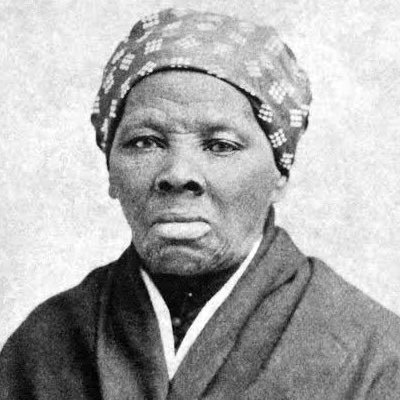
Robert Smalls was born into slavery in Beaufort, South Carolina, in 1839, but by the time the Civil War began, he had developed an extraordinary knowledge of Charleston Harbor and the ships that moved through it. That knowledge would eventually become the key to one of the most daring escapes from slavery in American history. On May 13, 1862, Smalls was working aboard the Confederate transport ship Planter. While the ship’s white officers were ashore, Smalls and several other enslaved crewmen took control of the vessel. Smalls dressed in the captain’s uniform and hat, took command of the ship, and carefully guided it past Confederate defenses. His wife, children, and the families of the other men were also aboard, meaning the escape was not simply about reaching freedom for himself. The people on that ship were risking everything together.
Smalls knew that one mistake could mean capture or death. He had to navigate through Confederate-controlled waters and pass Fort Sumter before reaching the Union blockade outside Charleston. When the Planter finally reached Union forces, Smalls and those aboard were free. The captured vessel and its cargo were also valuable to the Union war effort. Smalls’ knowledge of Confederate defenses was so useful that he was later recruited by the Union Navy and eventually became captain of the Planter. His wartime career was only the beginning. After the Civil War, Smalls returned to South Carolina and became deeply involved in politics during Reconstruction. He served in the South Carolina legislature and was eventually elected to the U.S. House of Representatives, where he served five terms. He also became a businessman and purchased the Beaufort home where he had once been enslaved. That detail alone captures the extraordinary transformation of his life, but Robert Smalls should not be remembered simply as a man who escaped slavery. He was a sailor, military leader, politician, businessman and political advocate who continued fighting for Black freedom and citizenship long after the Civil War ended. His story shows that freedom was not merely something enslaved people waited to receive. People like Smalls actively fought, planned, risked their lives and created opportunities to seize it.
If you love our content and would like to support the page, you can buy us a coffee here: buymeacoffee.com/africanarch… or tap Link in Bio

Jeffrey Parenti retweeted

Rest in Peace, Jackie; may you soar high! Big Bear and our nation were pulling for you. Thank you, Ojai Raptor Center, for all your efforts with Patient 26-519. ❤️🦅❤️ #jackieandshadow #bigbear

Jeffrey Parenti retweeted

We haven’t even reached the playoffs yet… and THIS is the dysfunction the WNBA has produced in 2026:
• Caitlin Clark takes a shot to the throat that goes uncalled.
• Reports surface that Adam Silver had to push for Alyssa Thomas suspension.
• US Congress blasts WNBA officiating for failing to protect players.
• Clark piles up questionable technical fouls
• Clark's suspension-triggering technical against Chicago is later rescinded.
• DiJonai Carrington is ejected for a Flagrant 2 after striking Sophie Cunningham in the head.
• Carrington responds by posting “WHITE PRIVILEGE.”
• Stephanie White then publicly defends Carrington’s intent instead of forcefully backing her own player.
• Sophie Cunningham becomes the center of a national firestorm for saying women’s sports should remain female.
• Cheryl Reeve publicly jumps into the transgender-athlete fight.
• A Seattle Storm minority owner verbally abuses teenage Fever/Cunningham supporters
• A Seattle fan is caught on video spitting on a Fever fan.
• Former NBA players announce plans to enter the 2027 WNBA Draft to challenge the league’s eligibility rules.
• Caitlin Clark and Sophie Cunningham dominate WNBA merchandise sales while questions grow about whether league leadership understands who is driving its audience.
• Angel Reese and Paige Bueckers appear in a league-posted video discussing a $400 “bet” tied to WNBA basketball.
• The WNBA deletes the video and says it “missed the mark.”
• No publicly announced discipline follows.
• A league already partnered deeply with gambling companies creates its own wagering-integrity controversy.
• Players and coaches repeatedly attack officiating consistency.
• The WNBA announces a centralized replay system for next year as a result of poor officiating.
• Players accuse fans of racists acts with no concrete proof.
• Players report racist and abusive online harassment.
• Chelsea Gray receives racist abuse from a corporate employee.
• Alyssa Thomas claims racist abuse after the Clark incident without proof or filing a police report.
• Sandy Brondello is suspended after calling Angel Reese a “protected species.”
• A Fever-Aces game is stopped over fan complaints... security determines the fan-conduct policy was not violated.
• Ownership conduct, player conduct, fan conduct, officiating, gambling integrity, race, politics, eligibility rules and coaching have all become national controversies.
Cathy Engelbert has had an entire season to get control of this.
She hasn’t.
So the question is becoming increasingly difficult for the NBA Commissioner to avoid:
Adam Silver… how much longer?


Jeffrey Parenti retweeted

Darren is such a terrific storyteller. He reminded me of a lot of great Billy Ray moments I had forgotten, including telling me BR fought for me to be his producer way back when I was working promotions at 1090. I never knew that. – at San Diego, CA

We talked a bit about the hot Padres going for it and NOT trading Mason Miller but today's MartyTimeTV and Section 1904 with @DSmithShow was about remembering Billy Ray Smith
youtube.com/live/V4EkRx2diUo…

Jeffrey Parenti retweeted

HAPPY 90TH BIRTHDAY BUDDY! Born on July 30 1936, Buddy Guy has shaped the sound of modern music and inspired generations of artists. For 90 years, his passion and dedication to the Blues have never wavered. Please join us in wishing Buddy a very Happy 90th Birthday! 🎂🎸🥃

Jeffrey Parenti retweeted
Several weeks ago, I jokingly asked whether Adam Silver was tired of having his name dragged through the mud by Cathy Engelbert’s disastrous management of the WNBA.
They say there is a little truth in every joke.
Well, I am not joking anymore.
According to eyewitness accounts and videos circulating from last night’s Fever–Storm game, two young Sophie Cunningham fans were confronted, berated, and pressured to remove signs that simply read:
“We love you, Sophie.”
“Thank you, Sophie, for speaking up for girls.”
One of the adults identified in that confrontation was Celeste Keaton... the wife of Seattle Storm co-owner Lisa Brummel. That is not some anonymous heckler in the upper deck. That is someone closely connected to the ownership structure of a WNBA franchise allegedly confronting minors over harmless signs supporting a player.
Then, after the game, another fan reported that someone spit directly in her face as she left the arena... apparently because she supported Caitlin Clark and the Fever had won.
These incidents did not occur in a vacuum.
They are the predictable result of a league culture that has been allowed to become increasingly hostile, tribal, and unhinged while Cathy Engelbert responds with selective outrage, empty messaging, and catastrophic leadership.
This was supposed to be the opportunity of a lifetime for the WNBA.
Instead, Engelbert has allowed it to become a reputational crisis... and every day Adam Silver refuses to intervene effectively, more of that stain lands on him.
Either Silver is not intervening, or his intervention is being ignored.
Neither explanation reflects well on the commissioner of the NBA.
So I will ask again... this time with complete seriousness:
Adam Silver, are you tired of having your name dragged through the mud by Cathy Engelbert’s mismanagement of the WNBA?
Because this time, it is no joke.

Jeffrey Parenti retweeted
Stephanie White Had Three Opportunities. She Missed All Three.
The most interesting part of today's press conference wasn't what Stephanie White said.
It was what she didn't say.
1. The Caitlin Clark Question
Reporter: "Do you have any updates on Caitlin and her status or expect her to practice today?"
Stephanie White: "No. She's going to be doing an individual workout today."
That was the entire answer.
No explanation.
No context.
No clarification.
Immediately, the obvious questions become:
What does "individual workout" mean?
Is she running?
Shooting?
Doing rehabilitation?
Restricted from contact?
Simply being cautious?
If she's healthy enough to participate in an individual basketball workout, what specifically is preventing her from practicing with the team?
Those are fair questions.
Instead...
No one asked them.
That doesn't mean anything improper is happening.
But the lack of explanation creates unnecessary speculation that could have been avoided with just a few additional sentences.
Communication matters.
Especially when you're talking about the biggest star in your league.
2. The Contrast
Then the subject changed.
Kelsey Mitchell's Nike shoe deal.
Suddenly, the coach's tone changed too.
"I'm really excited for her."
"She deserves it."
"I'm happy for Kelsey."
"She's finally getting her flowers."
That's warmth.
That's enthusiasm.
That's advocacy.
Compare that to the answer about Caitlin.
One sentence.
No encouragement.
No optimism.
No "she's progressing."
No "we're excited about where she is."
No "we're being cautious."
Does that prove favoritism?
No.
But communication isn't judged only by the words we use.
It's judged by contrast.
Fans notice when one player receives emotional support and detailed praise while another receives a brief, clinical update.
Whether intentional or not, perception becomes reality for many people.
And that's why communication matters.
3. How the Interview Should Have Been Handled
The follow-up questions practically asked themselves.
"Coach, you said Caitlin is doing an individual workout."
What exactly does that mean?
What can she do today?
What can't she do today?
Is she limited because of contact?
Conditioning?
Pain?
Precaution?
Is she progressing as expected?
Those aren't "gotcha" questions.
They're the questions fans genuinely want answered.
Just as importantly, they're questions that coaches can often answer without revealing confidential medical information.
Good communication doesn't require telling everyone everything.
It requires giving enough context to eliminate unnecessary confusion.
If I were conducting the interview, I would have asked every one of those questions.
If I were coaching the team, I probably would have answered something like this:
"Caitlin is making good progress. She's able to participate in individual basketball activities today, but we're still limiting her from full team practice and contact. We're being cautious because we want to make sure she's fully healthy before bringing her back. We'll continue evaluating her as the week progresses."
Notice what that answer accomplishes.
It doesn't reveal private medical information.
It doesn't compromise competitive strategy.
But it does reassure fans.
It demonstrates support for your player.
And it prevents people from filling in the blanks themselves.
The Clichés Continue
Then came the familiar coach speak.
"Addressing slippage."
"Fine-tuning details."
"Getting reps."
"Getting back to the basics."
We've heard these phrases before.
They're safe.
They're generic.
And they reveal very little.
As we've said before:
"Bad coaches hide behind clichés."
Whether you agree with that statement or not, today's press conference followed the exact same pattern.
The most important question received the shortest answer.
The most obvious follow-up questions were never asked.
And the remaining time was filled with broad coaching clichés that could have been used after almost any practice, by almost any coach, in almost any season.
Communication is leadership.
Leadership is clarity.
When you're coaching the most scrutinized player in women's basketball, vague answers don't make questions disappear.
They create more of them.
Jeffrey Parenti retweeted
I go away from X for one day and the media starts throwing around cherry-picked stats to convince people Caitlin Clark is suddenly getting a favorable whistle.
And somehow, some of you started questioning it.
So let’s slow down and break this down properly.
Jason Whitlock’s argument is simple:
Caitlin Clark drew 4.5 fouls per game as a rookie in 2024.
This season, she is drawing 6.7 fouls per game in fewer minutes.
Therefore, Jason argues, the league must be protecting Caitlin Clark more than people want to admit.
At first glance, that sounds compelling.
But only if you stop there.
And that is the problem.
Jason stopped there.
A foul drawn is not automatically protection.
A whistle is not automatically value.
A common foul 35 feet from the basket is not the same as a shooting foul.
A foul that resets the possession is not the same as a foul that sends a player to the free throw line.
A foul that gets called after harmless perimeter contact is not the same as officials missing dangerous contact in real time and the league office cleaning it up later.
Not all whistles are created equal.
That is where Jason’s argument falls apart.
I want to be clear about something before I break this down: I have respected Jason Whitlock for years. I still do. He has built a career by challenging groupthink, questioning media narratives, and refusing to let convenient talking points pass as truth.
But on Caitlin Clark, his recent analysis has been off.
And this latest argument is a perfect example.
Jason is taking one surface-level stat... fouls drawn per game... and using it to declare that Caitlin Clark is being protected by the whistle.
That conclusion does not survive a deeper look at the numbers, the film, the type of fouls being called, the value of those whistles, or the defensive pressure Caitlin faces every night.
This is not about questioning Jason’s intelligence or his career.
It is about questioning this argument.
Because lately, his Caitlin Clark commentary feels less like objective analysis and more like a man emotionally invested in proving her fans wrong. And once that happens, the facts start getting filtered through the conclusion instead of the other way around.
Jason still acknowledges there is real hostility toward Caitlin Clark. I agree with him there.
Where I will not follow him is into assigning one broad motive or blaming one specific group.
The bias is visible.
The resentment is visible.
The inconsistent treatment is visible.
We do not need to speculate recklessly about motive to prove what is happening.
We just need to look at the full picture.
And when you do that, Jason’s argument falls apart.
Let’s use the players Jason himself brought into the conversation.
A’ja Wilson draws 8.2 fouls per game.
Sonia Citron draws 7.1 fouls per game.
Caitlin Clark draws 6.7 fouls per game.
Breanna Stewart draws 6.4 fouls per game.
Jason wants people to look at that and conclude Caitlin is getting plenty of whistles.
But that is not the real question.
The real question is:
What do those whistles produce?
Because free throws are where whistles become points.
So let’s look at free throw attempts per foul drawn.
Breanna Stewart draws 6.4 fouls per game and gets 7.2 free throw attempts per game.
That is 1.13 free throw attempts per foul drawn.
Sonia Citron draws 7.1 fouls per game and gets 7.1 free throw attempts per game.
That is 1.00 free throw attempt per foul drawn.
A’ja Wilson draws 8.2 fouls per game and gets 7.8 free throw attempts per game.
That is 0.95 free throw attempts per foul drawn.
Caitlin Clark draws 6.7 fouls per game and gets 6.1 free throw attempts per game.
That is 0.91 free throw attempts per foul drawn.
Among the exact players Jason cited, Caitlin Clark gets the lowest free throw return per foul drawn.
That matters.
If Caitlin were getting some protected superstar whistle, you would expect her fouls drawn to convert into more scoring opportunities, not fewer.
Jason counted whistles.
He forgot to measure what those whistles were worth.
And that is the whole game.
Because a foul drawn total can make things look fair on paper while hiding the actual value of the whistle.
A harmless foul near half court counts the same in “fouls drawn” as a shooting foul at the rim.
But they are not the same.
One produces points.
The other may only restart the possession.
One punishes the defense.
The other may barely inconvenience it.
That is why fouls drawn per game, by itself, is an incomplete stat.
It tells you a whistle happened.
It does not tell you whether that whistle protected the player.
It does not tell you whether the whistle produced points.
It does not tell you whether the officials missed the more serious contact.
It does not tell you whether the defense was actually discouraged from continuing the same physical strategy.
Now let’s go to the second layer.
Jason wants to talk about Caitlin’s fouls drawn going up.
Fine.
Then we also need to talk about the fouls being called against her.
Because if Caitlin is supposedly getting a protected whistle, her net whistle margin should reflect that.
It does not.
A’ja Wilson draws 8.2 fouls per game and commits 1.8 personal fouls per game.
That gives her a net whistle margin of +6.4.
Sonia Citron draws 7.1 and commits 2.2.
That gives her a net whistle margin of +4.9.
Breanna Stewart draws 6.4 and commits 2.5.
That gives her a net whistle margin of +3.9.
Caitlin Clark draws 6.7 and commits 3.6.
That gives her a net whistle margin of +3.1.
Again, among the exact players Jason mentioned, Caitlin Clark has the worst net whistle margin.
So the obvious question is simple:
If Caitlin Clark is getting the protected-star whistle, why is her net whistle margin worse than every star Jason named?
That is not a small detail.
That is the part Jason’s argument conveniently skips.
He wants to count the whistles Caitlin gets.
He does not want to count the whistles that go against her.
He wants to adjust for her minutes when it helps his point.
Fine.
Let’s adjust everything for minutes.
Caitlin is averaging 3.6 personal fouls in only 30.8 minutes per game.
That comes out to roughly 4.2 personal fouls per 36 minutes.
Now compare that to the players Jason cited.
A’ja Wilson is at roughly 2.0 personal fouls per 36 minutes.
Sonia Citron is at roughly 2.3.
Breanna Stewart is at roughly 2.8.
Caitlin Clark is at roughly 4.2.
That is not the profile of a player getting the royal whistle.
That is the profile of a player who draws contact on one end and gets punished heavily on the other.
Jason mentioned Caitlin playing fewer minutes this season, as if that strengthens his argument.
But why is she playing fewer minutes?
That question matters.
Caitlin is not simply playing fewer minutes because Indiana suddenly discovered load management.
She is playing fewer minutes because she has been in foul trouble, because the Fever’s defensive structure has repeatedly put her in bad positions, and because the coaching staff has made questionable rotation decisions all season.
She plays for one of the worst defensive teams in the league.
She gets caught in mismatches.
She gets dragged into bad switches.
She gets put in late-help situations.
She gets stuck in bailout-foul moments created by poor team defense.
That does not mean Caitlin is an elite defender.
Nobody has to pretend that.
But it does mean her personal foul numbers cannot be separated from Indiana’s defensive scheme, bad switching, poor execution, and repeated questionable calls that anyone watching the games has seen.
So if Jason wants to adjust Caitlin’s fouls drawn by minutes, he has to adjust her personal fouls by minutes too.
He has to adjust her free throws by minutes too.
He has to adjust her net whistle margin by minutes too.
Once you do that, his argument gets much weaker.
In fact, using the players Jason cited, Caitlin ranks:
Last in free throw attempts per foul drawn.
Last in net whistle margin.
First in personal fouls per 36 minutes.
Last in free throw attempts per 36 minutes.
That is not a statistical profile screaming “protected.”
That is a statistical profile screaming “incomplete analysis.”
Then there is the basketball context Jason ignores.
Caitlin Clark is not defended like a normal guard.
She is face-guarded.
She is picked up higher.
She is trapped earlier.
She is blitzed more often.
She is jumped by multiple defenders.
She is bumped, grabbed, redirected, shaded, crowded, and denied off the ball.
Opposing defenses do not treat her like just another scoring guard.
They treat her like the offensive engine that can break their entire game plan.
So the question is not simply:
Does Caitlin Clark draw more fouls than last year?
The question is:
Relative to the amount of pressure she faces, is Caitlin Clark actually getting the whistle that pressure should produce?
That is the honest question.
And if you watch the games, the answer is not nearly as simple as Jason wants it to be.
Because Caitlin’s contact profile is different.
A’ja Wilson is a dominant interior scorer. She plays through paint touches, seals, post-ups, rolls, drives, rebounds, and interior contact.
That style naturally produces more traditional shooting fouls.
That is normal.
Nobody serious should deny that.
But Caitlin creates a different kind of pressure.
She creates pressure from 30 feet.
She forces traps.
She forces blitzes.
She bends the defense before she even crosses half court.
She creates open shots for teammates.
She turns ordinary possessions into emergency coverage situations.
She gets grabbed and redirected off the ball because defenders know one clean catch can become three points.
She gets crowded and bumped because teams know they cannot let her operate freely.
That is still defensive pressure.
That is still contact.
That is still part of the whistle conversation.
Jason wants to say A’ja is the most dominant player, so naturally she gets more fouls because teams have to foul to stop her.
But that definition of dominance is too narrow.
A’ja may be the more dominant interior scorer.
Caitlin is the more dominant offensive engine.
If we are talking about who bends defenses and generates offense, Caitlin absolutely belongs in the conversation.
Through the same 17-game sample being discussed, Caitlin’s total offensive production... her own points plus points created from assists... was listed at 669 points.
A’ja Wilson’s was listed at 548.
That comes out to roughly 39.3 points generated per game for Caitlin compared with 32.6 for A’ja.
So if Jason wants to argue that the player creating the most defensive panic should naturally get more whistles, then Caitlin’s total offensive production cannot be ignored.
You cannot say A’ja deserves more whistle respect because she is harder to stop, then pretend Caitlin’s offensive creation does not force defenses into desperation too.
That is selective analysis.
A’ja’s game creates one kind of foul pressure.
Caitlin’s game creates another.
A’ja gets fouled in ways that often produce free throws.
Caitlin gets fouled in ways that often produce common fouls, resets, off-ball contact, and missed calls that do not show up as points.
That is exactly why the free throw return matters.
Again:
Jason counted fouls.
He did not measure whistle value.
And the film matters too.
The box score may say Caitlin is drawing fouls.
The film shows whether those fouls actually protect her.
The film shows the face-guarding.
The film shows the grabs.
The film shows the bumps.
The film shows the traps.
The film shows the missed dangerous contact.
The film shows the bad calls against her.
The film shows the difference between a whistle that appears in the stat sheet and a whistle that actually changes how defenses are allowed to play her.
That is where this debate should be.
Not at the surface level.
Not with one cherry-picked stat.
Not with a lazy “she draws more fouls now, therefore she is protected” conclusion.
Because that is not analysis.
That is narrative-building.
Jason Whitlock is smart enough to know this.
That is what makes this so frustrating.
He has spent years warning people about media manipulation, selective framing, and agenda-driven analysis.
But on Caitlin Clark, he is now doing the same thing he usually criticizes.
He is grabbing the stat that helps his conclusion and ignoring the stats that complicate it.
He is using fouls drawn without whistle value.
He is using minutes without personal foul rate.
He is using A’ja’s dominance without acknowledging Caitlin’s total offensive creation.
He is talking about protection without measuring whether the fouls actually lead to points or discourage the contact Caitlin faces every night.
That is not good enough.
Caitlin Clark may be drawing more fouls this season.
That part can be true.
But it does not prove she is being protected.
It does not prove she gets the calls that matter.
It does not prove the officials are properly controlling the physicality around her.
It does not prove her whistle is favorable compared with the pressure she absorbs.
And it certainly does not prove that fans are wrong for noticing the difference between box-score whistles and actual protection.
The better conclusion is this:
Caitlin Clark is getting more whistles than last year, but those whistles are lower value than the players Jason compared her to.
She is getting fewer free throw attempts per foul drawn.
She has the worst net whistle margin among that comparison group.
She is being called for personal fouls at a far higher rate.
She is facing a defensive environment unlike almost anyone else in the league.
And she is generating more total offense than the very player Jason uses to justify a superior whistle.
So no, Jason did not prove Caitlin Clark is being protected.
He proved how easy it is to cherry-pick one stat and hope nobody checks the rest.
That may work on people who only read the headline.
It does not work once you open the box score, run the numbers, and watch the games.
Fouls drawn tell you how often a whistle was recorded.
Free throws tell you what those whistles were worth.
Film tells you what the officials missed.
And context tells you why Caitlin Clark’s whistle still does not match the pressure, contact, and defensive attention she faces every night.
Jason is counting whistles.
We are measuring whether those whistles actually protect Caitlin Clark.
Those are not the same thing.

Jeffrey Parenti retweeted
Thank you, Sage. 🫶 That means a lot coming from someone who has covered sports at the highest level.
Caitlin Clark has forced a much bigger conversation than basketball alone. She has exposed what the league has been, what fans are now seeing, and what women’s basketball could become if it fully embraces skill, growth, and accountability.
I appreciate you helping amplify that conversation.
Jeffrey Parenti retweeted
I have been told countless times over the last 48 hours that I am a conspiracy theorist.
That I do not know basketball.
That I do not understand the WNBA.
And that my articles are too long.
So I wrote this...
I do not believe there is some organized, calculated operation to take down Caitlin Clark.
That would be too simple.
The truth is deeper... and far more damaging.
Caitlin Clark walked into a league that spent nearly three decades convincing itself that its weaknesses were culture.
For years, the WNBA was not a mainstream sports product.
It was a cause.
A talking point.
A subsidized idea.
A league people were told they should support, even when the product on the floor often failed to earn that support from casual fans.
The empty seats were excused.
The financial struggles were excused.
The rough offensive flow was excused.
The poor spacing was excused.
The inconsistent officiating was excused.
The excessive physicality was excused.
The lack of mainstream interest was excused.
And anytime fans questioned the product, the answer was usually the same:
You just do not understand women’s basketball and you're racist.
That was the lie the league told itself for too long.
Because a lot of fans understood basketball perfectly fine.
They just did not like what they were watching.
Too often, the WNBA confused physicality with quality.
It confused survival with success.
It confused being protected with being excellent.
It confused an insulated culture with a strong one.
And then Caitlin Clark arrived.
She did not come in asking people to support the league out of obligation.
She made people want to watch.
That is the difference.
Caitlin brought range, pace, vision, passing angles, court gravity, creativity, and real basketball electricity.
She made regular-season games feel like events.
She made casual fans stop scrolling.
She made people who had ignored the WNBA for years suddenly care about matchups, rotations, officiating, coaching decisions, and league standards.
And that is where the collision happened.
Caitlin Clark exposed the gap between what the WNBA had convinced itself was good enough and what mainstream sports fans actually expect.
Fans want skill.
They want spacing.
They want pace.
They want shooting.
They want smart coaching.
They want fair officiating.
They want stars protected.
They want basketball that looks modern, intelligent, and entertaining.
They did not show up to watch Caitlin get grabbed, held, shoved, bumped, and treated like every possession needs to become a wrestling match in the name of “physicality.”
They also did not show up to watch the basketball constantly pushed into the background while social messaging, league-approved narratives, and cultural lectures compete for center stage.
That is not evolution.
That is a league clinging to old habits because it does not know how to handle the future standing right in front of it.
And Caitlin Clark is the future.
That does not mean she is perfect.
She is not.
That does not mean veterans have no value.
They do.
That does not mean physicality has no place in basketball.
It does.
But there is a difference between physical basketball and ugly basketball.
There is a difference between toughness and fouling.
There is a difference between defensive pressure and mugging someone off the ball.
There is a difference between culture and bad habits that went unchallenged because not enough people were watching.
Caitlin did not create the league’s problems.
She exposed them.
She exposed the officiating.
She exposed the coaching gap.
She exposed the outdated style.
She exposed the resentment toward new fans.
She exposed the discomfort some people have with a player becoming bigger than the system that was supposed to contain her.
And more than anything, she exposed a league that is still trying to force a generational player into an old version of basketball that she has already outgrown.
That is why this does not feel like a conspiracy.
It feels like resistance to change.
The WNBA finally got the player who could push the league into a new era, and too many people inside the ecosystem seem determined to make her prove she belongs in the old one.
That is backwards.
You do not take the most skilled, market-changing player your league has ever seen and ask her to shrink into the culture that failed to attract mainstream fans in the first place.
You build around her.
You modernize around her.
You protect what she represents.
Because she is not just another player.
She is the mirror.
She is showing the league what it has been, what it is, and what it could become if it would stop defending its flaws as tradition.
And the frustrating part is that the next generation is already here.
You can see it with Caitlin.
You can see it with Paige Bueckers.
You can see it with Sonia Citron.
You can see it with Aliyah Boston.
You can see it with JuJu Watkins.
The skill is changing.
The training is better.
The footwork is better.
The shooting is better.
The spacing is better.
The basketball IQ is better.
But too much of the league around them is still operating like nothing has changed.
Same coaching habits.
Same officiating problems.
Same marketing instincts.
Same defensive excuses.
Same resentment toward criticism.
Same belief that the old WNBA culture must be protected, even if it means slowing down the very players who could make the league bigger than it has ever been.
That is the real story.
Caitlin Clark is not being taken down by some secret plan.
She is being resisted by a league that still does not fully understand what she represents.
She represents a better product.
A bigger audience.
A more skilled game.
A more modern game.
A version of women’s basketball that does not need to be sold as charity, activism, obligation, or guilt.
It can be sold as basketball.
Great basketball.
But that requires the league to stop pretending its weaknesses are sacred.
It requires officials to clean up the game.
It requires coaches to modernize.
It requires veterans to adapt.
It requires media voices to stop protecting the old product from honest criticism.
And it requires the WNBA to stop resenting the very fans it spent decades trying to attract.
So no, I do not think there is a coordinated takedown of Caitlin Clark.
I think it is bigger than that.
I think Caitlin walked into a league that spent years convincing itself its flaws were culture.
And now that a generational player has arrived to expose the difference, too many people are trying to humble her instead of learning from her.
That is not Caitlin Clark’s failure.
That is the league refusing to recognize the future.
