

🇹🇭 Quantum Researcher in 🇩🇪 | Cat's slave | Bier lover | Free-time investor
Bangkok, Thailand
Joined October 2018
- Tweets6.7K
- Following690
- Followers113
- Likes3.1K





Jirawat S. retweeted

@IBM announces IBM Quantum Nighthawk r3, a new processor to support 10k quantum operations on 520 programmable qubits.
A new managed workflow experience on the IBM Quantum Platform brings classical and quantum compute together in a single environment: newsroom.ibm.com/2026-11-11-…

Jirawat S. retweeted

ปี 2019.. ข่าว Jeff Bezos นอกใจภรรยาออกมา.. หลังจากนั้น $AMZN market cap เพิ่มขึ้นเกือบ $2 trillion
ปี 2021.. ข่าว Bill Gates นอกใจภรรยาออกมา.. หลังจากนั้น $MSFT market cap เพิ่มขึ้นอีกราวๆ $2 trillion
ล่าสุด Jensen Huang เพิ่งออกมายอมรับว่านอกใจภรรยา..
Backtest: 2 observations
Win rate: 100%
Expected upside: +$2 trillion
Sample size น้อยไปหน่อย.. แต่ผมว่า model นี้มีอนาคต
Long $NVDA 🤣

Jirawat S. retweeted

Today Physical Superintelligence PBC is announcing a proof of the Aaronson-Ambainis conjecture, one of the central open problems in quantum complexity, with major implications for quantum computing speedup.
psi.inc/research/aaronson-am…
Thread 👇

Jirawat S. retweeted

ผมเป็นคนนึงที่เคยให้คุณค่ากับ “ของมันต้องมี” ตอนสมัยวัยหรุ่น (กว่านี้) เคยอยากได้รถ นาฬิกา ซึ่งรถคันแรกคือ Honda Accord สมัยนั้นเท่ห์มากๆ
แล้วผมก็เคยคิดว่า นี่แหละ “พอแล้ว”
พอทำงานมาถึงจุดนึง ก็รู้สึกอยากได้รถยุโรป ซื้อเบนซ์สองประตูมาหนึ่งคัน ตอนนั้นก็รู้สึกเหมือนเดิม คือ ขับแล้วเท่ห์ มีความสุข
แล้วผมก็เคยคิดว่า นี่แหละ “พอแล้ว”
พอขับไปซักพัก มันก็เป็นแค่รถธรรมดา คันนึง จนได้ตัดสินใจซื้อ Porsche สองประตู และก็คิดว่าขับแล้วมันเท่ห์มากๆ
จนวันนึงผมขับรถไปเจอพาร์ทเนอร์ เจอพี่ๆ ที่ทำงาน ทำธุรกิจด้วย ที่มีหลักหลายพัน หลักหมื่นล้าน ซึ่งพอจอดรถคู่กับเค้า ที่ขับรถธรรมดาๆ สิ่งที่เรารู้สึก ไม่ใช่ความเท่ห์ หรือความรวย แต่คือความ “เขิน”
มนุษย์ชอบของที่แพง และดูรวย เพราะเราเคยชินกับ Norm หรือค่านิยม ของคนส่วนใหญ่ คือให้คุณค่ากับของแบรนด์เนม ของราคาแพง รถหรูๆ pool villa พอมีแล้วมัน “ดูดี” ดู “น่าชื่นชม”
แต่เมื่อเราล้อมตัวเราด้วยกลุ่มคนที่ ให้คุณค่ากับการ “เก็บสะสมความมั่งคั่ง”, “การสร้างธุรกิจที่มีกำไร”, “การสร้าง productivity สร้างงาน สร้างรายได้” เราจะถูกให้คุณค่าแบบเปลี่ยนไป
คุณจะดูดีมากๆ น่าชื่นชมมากๆ ถ้าคุณสร้างธุรกิจ สร้างรายได้ สร้าง productivity สร้างความมั่งคั่ง และคุณจะดูแปลกแยก ถ้าคุณสะสมของที่ลดความมั่งคั่ง ใช้เงินแบบไม่เกิด productivity
และ Norm ของเราจะค่อยๆ เปลี่ยนไป จนเราพยายามแสวงหา ความมั่งคั่ง สร้างธุรกิจที่เกิด real productivity เพื่อแสวงหาการยอมรับ ของสังคมใหม่
Jirawat S. retweeted

เฟมินิสต์ยุคบูมแรกๆ ถ้าผช.มาทรีตพิเศษ สละที่นั่งให้, เลี้ยงข้าว etc. : นี่เห็นเพศฉันอ่อนแอหรอ พวกปิตา ผญ.หน่ะดูแลตัวเองได้ ผญ.ไม่ใช่เพศอ่อนแอ
Meanwhile ชาวทวิตสมัยนี้ที่โว้กนักโว้กหนา พอผช.ไม่ลุกให้นั่ง ไม่เลี้ยงข้าว: red flag กระจอก loser eqไม่ผ่านนะคะ เรื่องแค่นี้คิดหยุมหยิม ดูแลเราไม่ได้
1ใน2กลุ่มนี้มีพวกเฟมปลอมๆ 🤷
คือเอาจริงๆนะ ไม่ขายขี้หน้าเขาหรอ ไม่cringeกันหรอ เอาแนวคิดเอาชื่อกลุ่มเขามาใช้เพื่อผลประโยชน์ตัวเองกัน เขาขับเคลื่อนกันให้มองผญ.เป็นเพศที่ดูแลตัวเองได้ไม่ต้องพึ่งผช.มาเป็นproviderเป็นช้างเท้าหน้า อันนี้อะไร หาเหตุผลสารพัดสารเพ สุดท้ายก็แค่อยากจะเป็นเจ้าหญิง
คุณอยากได้คนดูแลไม่ผิด คนที่เขาไม่ได้ชอบดูแลคนอื่นอยู่ฝ่ายเดียวเขาก็ไม่ผิดเช่นกัน การไปแปะว่าเขาแปลกเขาred flagเขาอย่างงั้นอย่างงี้ อันนี้อ่ะตัวเองred flagละ แนวคิดชีวิตคู่ไม่เหมือนกันก็แค่แยกย้าย นู่นพฤติกรรมไม่ดีนู่นค่อยไปred flag
Jirawat S. retweeted

Putting @Alice__Bob results in context, and a little rant/primer about quantum resource estimation.
Disclaimer: I have huge respect for @Alice__Bob and their top notch scientists, I don't mean to suggest they're doing anything misleading. But headlines of the form "new architecture reduces the number of qubits necessary to break RSA" come up with some frequency, and I think most people, even experts, don't have enough context to put them in perspective.
In quantum resource estimation, we count the number of qubits and gate layers necessary to implement a given quantum algorithm. The point is to estimate how large and how fast quantum computers need to be to solve useful problems.
The standard approach is to baseline the estimates on noise levels from small-scale lab demos, i.e. if in your lab you have a ten-qubit QC with 2Q gate error rate epsilon, duration t, and certain connectivity, you compile the algorithm assuming that same noise level, speed, and connectivity pattern - more qubits. That's why @GoogleQuantumAI's papers assume 1e-3 error rate and 1 us cycle time and nearest-neighbour connectivity, and why the recent @IonQ_Inc paper assumes 1e-4 error rate and 200 us 2Q gate time and long-range transport.
So in the standard approach, what you have to believe is, in essence, that QCs can be scaled in qubit count without compromising performance. This is of course a BIG if, and there are all kinds of reasons why this is hard (yield, I/O, power...), but it's difficult to do resource estimation without this assumption.
However, not every architecture has a good lab demo to baseline on. Sometimes we want to think about some very futuristic qubit (e.g. cat qubit, majorana) or component (e.g. long-range coupler) that doesn't yet exist in the lab - or it does, but is so early on that the numbers are embarrassing to even mention. In those cases, the authors still have to assume something for its performance, but there isn't any reasonable experimental evidence to ground this assumption on.
What you usually get from that is a result of the form "assuming as usual that we can scale qubit count without compromising performance, and further assuming that we have access to this particular MAGIC FUTURISTIC COMPONENT THAT DOESN'T EXIST, we find that we need XXX qubits to break RSA-2048".
Nothing wrong with this so far! In a nutshell, results like this one tell us inform us about the trade-off between complexity at the physical level, and the overheads of QEC - so the headline should read "study finds that if a MAGIC FUTURISTIC COMPONENT THAT DOESN'T EXIST can be built, quantum computers can be X times smaller and Y times faster".
In practice, however, nobody likes to shout about the MAGIC FUTURISTIC COMPONENT THAT DOESN'T EXIST. Thus, the headline gets abbreviated to "study finds method to make quantum computers X times smaller and Y times faster". And while technically correct, this headline creates an impression of a major conceptual breakthrough in QC architecture, whereas most of the heavy lifting is done by the change in *ambition* about the raw hardware performance.
[I say most rather than all because these compiling for MAGIC FUTURISTIC COMPONENT THAT DOESN'T EXIST is often nontrivial and requires new techniques and thinking, so it might be unfair to ascribe all speedup to the hardware noise baseline. In practice, it is sometimes a challenge to disentangle the impacts of new ideas vs shifting assumptions about hardware performance]
Let's take a very dumb example to make sure the point is clear. @CraigGidney says Google needs ~ 1 million qubits to break RSA-2048. Let's say I have an idea for a new qubit that has 1e-16 physical error rates. In this case, I might not need QEC at all, and I can break RSA with ~ 2000 qubits. I am welcome to make a headline "Maciej believes his qubit design can make QCs 500x smaller" - but saying "Maciej discovered a new method to break RSA with 500x lower qubits" would be misleading, right?
This brings us to today's annoucement from Alice and Bob - breaking RSA-2048 with 23k qubits. While A&B uses regular superconducting chips, they run a very unusual architecture where the qubit is encoded in "cat states" with many many photons. Those qubits are peculiar because they're very easy to dephase, but very hard to bit-flip (sort of like classical bits!). This stems from the fact that most physical processes subtract/add photons one at a time, but their bit flip requires many many such events to happen in quick succession.
To model this, the paper assumes that 2Q gates have Z-type (dephasing) error rate of ~5e-4 (would be world class for superconducting qubits, but not crazy), but that the X-type (bit flip) error rate is literally zero. While it might sound reasonable on paper, to my eye, this is a classic MAGIC FUTURISTIC COMPONENT THAT DOESN'T EXIST.
Why do I say that? Well, first of all, there are no published results on 2Q gates on those qubits. Second, the cat qubits have - by design - very high dephasing rates, so the ability to match or exceed the performance of "standard" qubits is something aggressive. Third, while there is little doubt that cat qubit operations will have a noise bias (more Z than X errors), the ratio will be finite. The world is littered with proposals where "in theory, process ABC should be suppressed 10^10 times, but in practice, it's only suppressed 10^2 times" - and the burden of proof is on A&B to provide evidence that this baseline is reasonable.
In the past, A&B did great experimental work on idling qubit noise bias, and put out good theory papers on biased gates - but lab data on gate bias remains to be released. I hope it's coming soon!
In a nutshell: standard theory of fault-tolerant computation does a lot of heavy lifting to ensure that QEC corrects all, and not just some, low-weight errors. The cat qubit architecture avoids a lot of this overhead by assuming that errors are all of Z type. So the real headline is: "study finds that QCs could shrink 50x if they manage to eliminate bit-flip errors" - but that's a big if!
Let me finish with a more positive spin on the results. First, A&B significantly improved their own estimate from a couple of years back, which is great. Second, the assumption of no bit flips is the bosonic equivalent of the standard QEC assumption that errors are exponentially suppressed with Pauli weight. If QEC papers assumed that for years before experimental demos, maybe A&B is justified in doing so as well? Third, "scaling qubit count without compromising performance" is much more believable when you're building a 20k qubit QC than a 1M qubit QC.
Once again - this is context, not criticism. Building QCs is hard, and I am very happy to see so many folks approaching it from so many novel angles. I wish for A&B to succeed in their effort - the biased qubit angle is very interesting and could have huge payoffs down the line.

Breaking RSA-2048 with 23,000 cat qubits. 🐈 In 3.14 days
This is the finding of our new paper, the latest resource estimate for Shor’s algorithm, the benchmark the whole field uses to compare quantum hardware 📄
The results are a record low for total quantum resources at this speed of execution, about 40 times fewer physical qubits than @GoogleQuantumAI 's Craig Gidney 2025 estimate. 🏁
RSA-2048 is the lock behind secure websites, banking and software updates 🔐 Shor's algorithm has been able to break it, on paper since 1994. Nobody has built the machine yet, but every year the estimate of how big it needs to be gets a little smaller.
In 2019, the best estimate was 20 million qubits. In 2024, ours was just under 100,000. Now 22,593, in 3.14 days. Yes, pi 🥧
Small isn't enough. Fast isn't enough. The new study optimizes for both. 😼
Bitcoin, Ethereum and most blockchains aren't secure either, about 30,000 qubits would be needed to crack a Bitcoin key in about an hour ₿ ⏳
How we got here, what it means for cryptography, and when it all converges, our CEO Théau Peronnin talks about it in the blog 👇
📝 Blog - alice-bob.com/blog/our-estim…
📄 Paper - eprint.iacr.org/2026/2665
Stay curious, more info coming soon 👀
#QuantumComputing #CatQubits #ShorsAlgorithm #PostQuantumCryptography #Cryptography #FaultTolerance #DeepTech

Jirawat S. retweeted
ตลกพวกที่บอกว่าคนมี black card อย่าง Lisa ไม่คิดเรื่องเงินหรอก bla bla bla..
มี black card กันเหรอ? ถึงเข้าใจความคิดของพวกคนมี black card?
ถามนี่ได้… ผมมี black card.. และใช่ครับ.. ผมยังคำนึงถึงเรื่องเงินอยู่

Jirawat S. retweeted

So some elaboration on this -
ETH is a much stronger statement than P≠NP. It's a bit surprising that it's not true but it doesn't really break much.
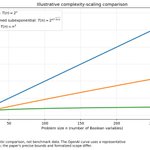
The bounds are technically sub-exponential, but "2^n / complicated log sqrt expression" is still very close to exponential.
Given how well SAT solvers work in practice, and have for decades, some slightly tighter bounds aren't extremely surprising. There are SAT solvers which have been proven to be <O(2^n) for a long time, just with exponents smaller than 2.
What this amounts to is that for any function O(k^n), there's some algorithm that can do better than any value k, if you make n absurdly big. That's a cute result, but we already knew that many NP problems are easier to solve in practice than in theory, and n really doesn't need to be very big for this to be a pretty meaningless statement in practice.
Ultimately though, and this is something I have some unpublished work on myself that I need to get out there soon, the difficulty of NP problems really has dramatically more to do with the structure of the problem than it does the number of variables. You can have small NP problems that are almost as hard as brute force, and you can have others with millions of variables that can be solved quickly. With NP problems in particular, it's clear that the tools we're applying are simply dramatically too primitive to understand what's actually going on.


The computer science collaboration will understand and explain a result concerning the Exponential Time Hypothesis (ETH), a longstanding conjecture about the computational complexity of Boolean formula satisfiability, a problem deeply related to the P vs. NP problem.
Surprisingly, our system has recently proved that the ETH is false, a result that was subsequently verified in Lean.
The refutation of the ETH reopens questions about how much faster these tasks could become, and may help guide the search for better algorithms. Finding such algorithms, and turning theoretical advances into practical improvements, will require significant further research.
Our system found its natural language disproof for the ETH we reached out to to @rrwilliams. Ryan will form a collaboration with Russell Impagliazzo and Ramamohan Paturi to verify and shepherd this result. Impagliazzo and Paturi, along with Francis Zane, are the original proposers of the Exponential Time Hypothesis, and Williams has refuted strong versions of the ETH, used ETH for hardness results, and connected algorithms and lower bounds.
This group asked us to make all raw data of the results public to facilitate independent verification by the community, which we have done by posting the natural language proof and Lean formalization to our GitHub repo. The group also invites the community to help organize an open examination of the ETH claim and to discuss the broader questions that AI-generated breakthroughs raise about verification, access, credit, and the future of research.
github.com/openai/math/blob/…


Jirawat S. retweeted

ประเทศไทยจะเจริญเมื่อไหร่ไม่ต้องดูจากตัวเลขเศรษฐกิจอะไรซับซ้อน
เอาเป็นว่าวันไหนมีกระแส
"ห้ามปลูก ห้ามขายกะเพรา เดี๋ยวโดนจับ"
แล้วมากกว่า 8 ใน 10 คนถามว่า จริงหรือ ขอที่มา ขอเหตุผล
ต้องได้แบบนี้ก่อนถึงจะมีหวังว่าประเทศจะเจริญ
แต่ถ้าเป็นแบบปัจจุบันนี้
อยู่กันไปแบบนี้แหละดีแล้ว
Jirawat S. retweeted
เด็กพวกเรียนเก่งๆเหรียญทองมันไปไหนหมดวะทำงานเมืองนอกเหรอ
ใช่
เพราะจะทำวิจัยอะไรอยู่เมืองไทยต้องให้ชาวบ้านใช้ฟรี
ถ้าขายหรือทำงานให้นายทุนคือคนเหี้ย 🤣
Jirawat S. retweeted

ไม่มีใครสนใจการจดทะเบียนพืชพันธุ์ใหม่ ของพริกบ้างเหรอ ไหนจะแตงโม แตงกวาอีก 😅 เราจะรู้ได้ไงในตลาดที่เค้าขายๆกันพันธุ์อะไร
หรือเพราะบริษัทอื่นที่ยื่น ไม่ใช่นายทุน?
doa.go.th/pvp/?page_id=939
ratchakitcha.soc.go.th/docum…


Jirawat S. retweeted

ถ้าเราไม่คุ้มครองคนสร้างนวัตกรรม ประเทศไม่มีทางก้าวหน้า พวก NGO ปั่นกันสนุก ชาวบ้านก็เป็นเหยื่อ ในขณะที่ลูกจ้างจักรวรรดิบางกอกเงียบ นี่แหละที่ทำให้ประเทศได้ GDP 2%

ข้อเท็จจริงเรื่อง ซีพีแรม จดทะเบียนพันธุ์กะเพราที่เขาพัฒนาสายพันธุ์ขึ้นมา มีข้อเท็จจริงที่ต้องรู้คือ
1.พันธุ์ที่เขาพัฒนาขั้นมาและขึ้นทะเบียนนั้น เขาพัฒนาขึ้นมาเพื่อใช้เองสำหรับทำข้าวกล่องของเขาส่งขายใน 7-11 ไม่ได้จำหน่ายพันธุ์ให้บุคคลภายนอก
2.เขาเอาเมล็ดพันธุ์ให้ลูกไร่ปลูกแล้วส่งให้โรงงานเขา
3.ถ้าเขาจำหน่ายเมล็ดพันธุ์ให้กับเกษตรกรในอนาคต เกษตรกรก็เอาผลผลิตไปขาย ไปกินได้ตามปกติ เขาห้ามเฉพาะเอาไปเพาะเมล็ดมาขายเป็นเมล็ดพันธุ์แข่งกับเขา ส่วนจะเก็บเมล็ดไปปลูกต่อ ถ้าปลูกแล้วงอก หรือ ปลูกขึ้นได้ ก็ไม่ใช่เป็นข้อห้าม
เราไม่ชอบนายทุน หรือ ไม่ชอบซีพีได้
แต่ข้อเท็จจริงก็คือข้อเท็จจริง
และการพัฒนาพันธุ์ เพื่อเพิ่มผลผลิต เพื่อต้านทานโรค มันมีความจำเป็น และคนที่พัฒนาพันธุ์ต้องใช้ทั้งเวลา ทั้งเงินทุน ใครลงทุนพัฒนาเขาก็มีสิทธิ์ที่จะเป็นเจ้าของพันธุ์ที่เขาพัฒนาขึ้นมา
ถ้าไม่มีสิทธิ์ในพันธุ์ที่ลงทุนพัฒนาขึ้นมาแล้วจะมีใครพัฒนาพันธุ์พืช ใครจะสร้างทรัพย์สินทางปัญญาขึ้นมา
แล้วระบบการผลิตของบ้านเราจะอยู่กันอย่างไร ถ้าต้องปลูกต้องผลิตแต่พันธุ์พื้นเมือง
การขึ้นทะเบียนพันธุ์พืชของเอกชนที่เขาพัฒนาพันธุ์ขึ้นมาแล้วเอกชนเป็นเจ้าของ ไม่ได้มีเพียงซีพีขึ้นทะเบียนกะเพรา เรายังมีบริษัทอื่นที่ขึ้นทะเบียนพริก มีบริษัทที่ขึ้นทะเบียนพันธุ์มะละกอ ขึ้นทะเบียนพันธุ์มะเขือเทศ
ถ้าเราตั้งแง่เหมือนกับการขึ้นทะเบียนกะเพรา ต่อไปเราจะกลัวการไม่ได้กินส้มตำหรือไม่
ซึ่งมันก็ไม่ใช่ เราก็ไม่เห็นไปกลัวว่าใครจะฮุบเอาพริก เอามะละกอ

Jirawat S. retweeted

บทเรียน CP จดทะเบียนกะเพราสายพันธุ์ที่ CP คิดค้นขึ้นมา เกษตกรไทย ควรจะใช้วิทยาศาสตร์ เทคโนโลยี คิดค้นสายพันธุ์ให้สามารถเพาะปลูกในที่ต่างๆ ทั่วโลกได้ เราจะได้ส่งเมล็ดพันธุ์ไปขายบ้าง
สมัยสัก 40 ปีที่แล้ว จำได้ว่าอ่านบทความนึงในไทยรัฐ เขียนบอกว่า กล้วยน้ำว้าไทยคือสุดยอด ตปท.ไม่สามารถปลูกได้
นี่อยู่อเมริกามาจะ 30 ปีแล้ว เห็นแต่กล้วยน้ำว้าเวียดนามส่งมาขาย จนเดี๋ยวนี้เขาปลูกเองได้แล้ว
มะม่วงน้ำดอกไม้ เขียวเสวย อกร่อง ใครจะเชื่อว่าปลูกได้ในอเมริกา ตอนนี้ที่ฟลอริดาก็มี อร่อย เนื้อเยอะ ข้าวหอมมะลิปลูกที่อเมริกาถูกกว่าไทยอีก
ทุเรียน เงาะ ลำไย ก็เริ่มปลูกที่Mexico
ออกจากกรอบความคิดเดิมๆ กันได้แล้ว
Jirawat S. retweeted

ในฐานะที่เคย implement ระบบคิว (virtual waiting room) ทั้งกับ Queue-it, Cloudflare Waiting Room รวมถึงเขียนเองมาบ้าง จุดประสงค์สำคัญคือ "บริหารต้นทุน และทรัพยากรทั้งระบบ"
- ป้องกันระบบล่มทั้งกระดาน ปัญหาไม่ได้อยู่ที่จำนวนคนเข้าเว็บ แต่อยู่ที่คนจำนวนมากเข้าพร้อมกันในวินาทีเดียว ถ้าไม่มีคิว ทุกคนจะกด refresh รัว ๆ โหลดยิ่งพุ่ง ระบบยิ่งช้า คนก็ยิ่งกดซ้ำ วนจนระบบล่ม (thundering herd) ผลที่ตามมาคือการจองค้างครึ่งทาง เช่น ตัดเงินแล้วแต่ไม่ได้ที่นั่ง หรือได้ที่นั่งแล้วแต่ชำระเงินไม่ผ่าน ซึ่งเคลียร์ทีหลังได้ยากมาก
- ระบบทั้งหมดเร็วได้เท่าจุดที่ช้าที่สุด ระบบจองบัตรอาจขยายได้เอง แต่ payment gateway, ธนาคาร, เครือข่ายบัตร (Visa/Mastercard) และ PromptPay ไม่ได้ขยายตามเรา gateway มี rate limit ต่อร้านค้า และธนาคารผู้ออกบัตรก็มีขีดจำกัดของตัวเอง ช่วงพีค SMS OTP อาจมาช้าหลายนาที หรือหน้ายืนยันของธนาคารอาจค้าง ทั้งที่ระบบจองบัตรไม่ได้มีปัญหาอะไร คิวจึงต้องปล่อยคนเข้าในจำนวนที่ระบบชำระเงินรับไหว ไม่ใช่แค่ที่หน้าเว็บรับไหว
- ลดภาระระบบบัญชีหลังขายจบ หลังเปิดขายต้องกระทบยอด (reconcile) อย่างน้อยสามแหล่ง คือ ออเดอร์ในระบบจองบัตร, รายงาน settlement จาก gateway (มักได้รับ T+1 หรือ T+2) และรายการเดินบัญชีธนาคาร การคุมจำนวนคนผ่านคิวช่วยลดรายการที่ไม่ตรงกัน เช่น จ่ายแล้วไม่ได้บัตร หรือตัดเงินซ้ำ ไม่ให้กลายเป็นระเบิดเวลาหลายพันรายการที่ต้องตามแก้และคืนเงินทีหลัง (ไม่ใช่ไม่มี แต่ทำให้เกิดน้อยที่สุด)
- บริหารต้นทุน การเตรียมเซิร์ฟเวอร์ให้รับคนล้านคนพร้อมกัน เพื่อใช้แค่ 10–20 นาทีที่บัตรขายหมด ไม่คุ้มค่า คิวทำให้โครงสร้างพื้นฐานขนาดปกติรับงานพีคได้ และส่วนใหญ่ใช้บริการสำเร็จรูปและจ่ายตามความต้องการลูกค้าเป็นสำคัญ

Jirawat S. retweeted

คนที่อินประท้วงที่ฝรั่งเศสนี่อย่าให้รู้นะว่าเมื่อไม่กี่สิบปีก่อนยังแชร์วาทกรรม "ควายแดงเผาบ้านเผาเมือง" อยู่เลยนะ มันปลอมมาก


Jirawat S. retweeted

Linus Torvalds to the anti-AI crowd: stop using compilers if you want to prove they’re REAL programmers. LOL.
“you had better not use an editor to write that commit message either.
The kind of expectations *I* have is that people do their best and I expect people to understand what they are doing.
But that understanding has very little to do with what tools they use.
And quite honestly, in my experience, the people I respect and call intelligent are not the ones that shy away from using new and interesting tools.”


Jirawat S. retweeted

Before debating whether a PhD is worth it, I think it’s important to ask: What is the purpose of a PhD?
Historically, it has served different purposes:
— Before 1100 AD: In early Christianity, the title doctor was associated with teachers of theology.
— 1100–1800 AD: Universities awarded doctorates to certify scholars as qualified to teach.
— 1800 AD onward: PhDs increasingly focused on producing new knowledge through original research.
Today, one of the main goals of a PhD today is to train independent researchers. But the opportunities to develop those skills have changed, especially in today’s era.
Research papers and open-source code are more accessible than ever. Of course, becoming an independent researcher still requires good mentorship, collaborators, compute, and the freedom to explore difficult problems. A PhD can provide that environment, but so can a strong industry research lab.
For me, pursuing a PhD made sense. I had spent four years working in industry in India, where getting access to the kind of frontier research environment I wanted was difficult. A PhD opened that door, and I’m glad I went for it.
A PhD was the right choice for me, but that doesn’t mean it’s the right choice for everyone. Before committing several years to a PhD, I think it’s worth asking: What do I actually want to get out of it, and is it the best way to achieve that?

