

The Judicial Service Commission is a Constitutional body established under Article 146 of the Constitution of the Republic of Uganda, 1995.
Kampala, Uganda
Joined October 2016
- Tweets784
- Following377
- Followers15.9K
- Likes785









Scenes from the National Court Open Day📸
📍: Kololo Ceremonial Grounds
Join us at the JSC tent now and have your questions answered, the team is ready for you⚖️
#NationalCourtOpenDay #AccessToJustice #JSC
#MoJCA


Judicial Service Commission Uganda retweeted

Leero! Today! Ereizoba!
We are bringing THE ENTIRE JUSTICE CHAIN to you at the Kololo Independence Grounds.
▶️ Do you need to understand a court process? @JudiciaryUG will be here!
▶️Do you need FREE legal aid? @LaspnetUganda will be here!
▶️ Do you need help with land, succession, or human rights? @MoJCAUG @UHRC_UGANDA @JSCUganda @TaxAppealug will be here!
▶️ Do you want to know how a case moves from @PoliceUg to Court? @ODPPUGANDA will be here!
All your justice needs, in one place for the Court Open Day starting at 8am - 5pm.
We are not just talking about justice. We are delivering it to you. Come visit our stall! #JusticeForAll

Judicial Service Commission Uganda retweeted

Today, the @MoJCAUG joins hundreds of other justice service providers at Kololo Ceremonial Grounds for the 3rd National Open Court Day.
The event brings together key justice sector institutions to engage with the public, showcase the services they provide, and promote greater access to justice.
Visit the MoJCA exhibition tent and learn more about our services and how we serve you.
@JSCUganda @URSBHQ


Your Bridge To Justice⚖️
The Judicial Service Commission will be exhibiting tomorrow at the National Court Open Day.
Visit our stand tomorrow and have your queries answered, from how to file a complaint, accessing our different offices across the country, and more.
🗓️Thursday 10th September 2026
🕗8:00 am
⚖️Kololo Ceremonial Grounds
#NationalCourtOpenDay #AccessToJustice
#MoJCA

Judicial Service Commission Uganda retweeted

On air: Mr Joseph Ssinabulya, Judiciary’s Principal Information Management Officer, and Ms Patra Alinda, Legal Officer at the Judicial Service Commission, are live on UBC Uganda, sensitising listeners about the upcoming 3rd National Court Open Day.
They are highlighting Judiciary services and reforms, while encouraging members of the public to attend the event on Thursday, 10th September 2026, at Kololo Ceremonial Grounds.
The Open Day will provide an opportunity for the public to interact directly with Judicial Officers and justice-sector stakeholders, ask questions, seek information and learn more about justice services.
youtube.com/live/j8e2Tiomn7s…

Judicial Service Commission Uganda retweeted
Earlier: HW Timothy Lumunye, Chief Magistrate, Buganda Road Court sitting at LDC Court, was hosted on “Akaboozi Radio” to sensitise listeners about the upcoming 3rd National Court Open Day, scheduled for Thursday, 10th September 2026, at Kololo Ceremonial Grounds.
He was joined by Ms Hajira Naula, Senior Legal Officer at the Judicial Service Commission, and together they highlighted court services, justice-sector reforms and the opportunity the event presents for members of the public to engage directly with justice institutions.
They encouraged members of the public to turn up in large numbers, ask questions, seek information and learn more about the services available across the justice sector

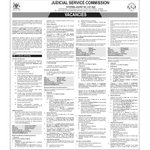
Jobs 🚨
Applications are invited from suitably qualified and eligible citizens of Uganda to fill the vacant posts available in the Judiciary Service
as specified below.
Please read Mandatory Instructions before submission.


Judicial Service Commission Uganda retweeted
Every headline has consequences.
Accurate and ethical reporting protects investigations, safeguards the rights of victims and suspects, and strengthens public confidence in the justice system.
Responsible journalism strengthens justice. Today the Directorate of Forensic Services @PoliceUg , in partnership with the GSP Secretariat @JLOSUganda and with support from @UNODCEastAfrica is convening a one-day Media Engagement and Training on Responsible Crime and Justice Reporting.
The training will equip journalists and editors with practical knowledge on crime scene reporting, evidence integrity, legal and ethical considerations, and responsible reporting throughout the criminal justice process.
Today's engagement brings together journalists and criminal justice practitioners to build a shared understanding of responsible crime and justice reporting and strengthen collaboration for the public good. #ResponsibleReporting
#JusticeForAll


Judicial Service Commission Uganda retweeted

I was honored to attend the Annual Stakeholders’ Forum of the Judicial Service Commission @JSCUganda at @JudiciaryUG Supreme Court which focused on “Transforming Justice Delivery through Merit, Accountability and Innovation”. @GCICsecurity @JLOSUganda – at Kampala, Uganda


“The Service Delivery Standards have been developed in response to increasing public expectations for fairness, accountability, and a citizen-centred justice delivery system.
As these standards are implemented, the Judicial Service Commission must take into account the growing demands placed upon it. These include addressing human resource gaps, strengthening disciplinary processes to uphold integrity, expanding judicial and public legal education, and responding effectively to broader government priorities.
The Service Delivery Standards establish measurable benchmarks for efficiency, transparency, effectiveness, and accountability in the Commission’s operations and service delivery.
The shift towards digital service delivery and automated workflows is no longer optional—it is an essential requirement for improving institutional performance. Efficient administration, fair disciplinary processes, and ethical leadership remain central to Uganda’s development aspirations. The implementation of these Service Delivery Standards should therefore provide renewed momentum for achieving these objectives.”
Dr. Theopista Mary Wenene


“The Client Charter establishes a social contract between the Judicial Service Commission and the people of Uganda. It clearly outlines the Commission’s obligations to the public, the standards of service that clients should expect, and the mechanisms available for lodging complaints and providing feedback. It is an important instrument for building public confidence and strengthening trust between the Commission and those it serves.
It is evident that the Commission makes a significant contribution to Uganda’s socio-economic transformation through its commitment to strengthening justice, improving service delivery, and promoting accountability.
Allow me to add a personal observation.
Many members of the public may not immediately appreciate the relationship between the Judiciary and economic development. However, when one considers the value of commercial disputes, land matters, investment-related cases, and other litigation handled by the courts, it becomes clear that an effective justice system plays a critical role in supporting economic growth and investor confidence.
Behind that justice system stands the Judicial Service Commission, whose work in recruiting, disciplining, and overseeing judicial officers contributes directly to the quality and integrity of justice delivery. Although this relationship is sometimes not immediately visible, it is both important and significant.
I take this opportunity to congratulate the Chairperson, the Deputy Chairperson, and all Members of the Commission for the leadership you have demonstrated in developing these important documents.
I also commend the Permanent Secretary/Secretary to the Commission for his leadership, commitment, and stewardship throughout this process.
My appreciation also goes to the Human Resource Department and all members of staff who participated in the development of these documents.
It is our expectation that both Commissioners and staff have developed a shared understanding of the standards and commitments contained in these documents, and of their respective responsibilities during implementation.
I further commend the Commission for taking the time to engage stakeholders during the launch of these documents. Such engagement promotes ownership, transparency, and accountability.
I encourage all stakeholders to make full use of these documents by demanding quality services from the Commission and providing constructive feedback to support continuous improvement.
Finally, I call upon the Permanent Secretary/Secretary to the Commission to ensure that the Service Delivery Standards and Client Charter are widely disseminated so that all clients and stakeholders are aware of their rights, responsibilities, and the standards of service they should expect.
For God and My Country.”
Head of Public Service and Secretary to the Cabinet
Dr Theopista Mary Wenene


“As part of our mandate, we conduct inspections of courts across the country. During these inspections, we assess compliance with the Constitution, the Judicial Service Act, and other applicable laws. We also examine how incidents of corruption and misconduct are handled so that we can identify gaps and recommend appropriate interventions.
In addition to inspections, we undertake community sensitisation programmes to educate members of the public on their rights, available reporting mechanisms, and the role of the Commission.
Through these activities, we have identified several emerging issues that I wish to share with this meeting. We have proposed solutions to address them, and we also welcome further guidance on how these challenges can be tackled more effectively.
Sophisticated Nature of Corruption
The first emerging issue is that corruption has become increasingly sophisticated.
Today, corruption rarely involves a person directly approaching a judicial officer with money. Instead, complex networks have developed through which illicit payments are channelled. Intermediaries are used, making it much more difficult to identify the source of the corruption or the individuals involved.
The challenge before us is therefore to develop effective mechanisms for identifying and dismantling these networks so that corruption can be addressed at its source.
Corruption has also become increasingly digital. Financial transactions are now commonly conducted through electronic and mobile money platforms, making traditional methods of investigation less effective.
We are currently following up a number of investigations in which electronic money transfers appear to have been used to facilitate corrupt transactions. While the existence of a transfer alone does not prove corruption, these financial trails provide useful leads that enable investigators to establish relationships, identify patterns, and gather supporting evidence.
Another emerging concern is that corruption is inherently a two-way transaction.
In many cases, individuals who willingly participate in corrupt dealings only come forward to report the matter after disagreements arise or after the expected outcome is not achieved. Often, complaints are made only after judgment has been delivered because the person who paid the bribe feels they have been cheated.
By the time such reports are received, valuable evidence has already been lost, making investigations significantly more difficult.
The Commission therefore continues to encourage members of the public to report suspected corruption promptly so that investigations can begin while evidence is still available.
Unfortunately, delayed reporting often results from fear. Many people worry that if they report corruption, they may face retaliation, harassment, or victimisation.
Another important issue is the implementation of whistleblower and witness protection measures.
Many people remain reluctant to report corruption because they are unaware of the legal protections available to them or they lack confidence that those protections will be effectively enforced.
There is therefore a need to strengthen whistleblower and witness protection mechanisms while increasing public awareness of the existing legal framework. Building public confidence in these protections is essential if more people are to come forward with information.
The Commission has also observed concerns regarding attempts to influence judicial processes.
Such influence is not always direct or overt. It may arise through personal relationships, family connections, friendships, or other informal channels that create pressure on judicial officers.” Mr. Geofrey Ntaro, Deputy Registrar, Anti Corruption. JSC

Sensitive matters, particularly corruption-related cases, present additional challenges. Individuals who possess important information may fear reporting because they believe they could lose their employment or suffer other personal consequences.
Accordingly, there is a need to strengthen institutional capacity and build public confidence so that individuals can report misconduct without fear of retaliation.
As I conclude, I wish to highlight some of the measures the Commission is undertaking.
The Commission is developing a comprehensive anti-corruption strategy. This strategy is not only focused on combating corruption externally but also on strengthening integrity within the Commission itself. We are examining our own leadership, investigative processes, accountability systems, and internal procedures to ensure that we uphold the standards we expect of others.
The strategy will also strengthen the Commission’s whistleblower policy by introducing clearer mechanisms for protecting witnesses and whistleblowers and building public trust in the reporting process.
In addition, the Commission is increasingly using information technology as a tool in the fight against corruption. Since corrupt actors are adopting digital methods, our investigative approaches must also become more technology-driven.” Mr. Geofrey Ntaro, Deputy Registrar, Anti Corruption. JSC
“Finally, we continue to invest in institutional capacity building by training Commission staff on the effective use of technology, modern investigative techniques, networking, and improved case management so that the Commission is better equipped to fulfil its mandate.”
Mr. Geofrey Ntaro, Deputy Registrar, Anti Corruption. JUDICIAL SERVICE COMMISSION

“If we are to increase access to justice, the first step is to increase public awareness and knowledge of the law.
One area that particularly stands out is the administration of estates. I believe there is hardly anyone who is not affected by this area of law—either as a beneficiary, a personal representative, or a member of a family whose estate must be administered after the death of a loved one. In one way or another, every family is likely to encounter this process.
Unfortunately, when a family member dies, relatives often act out of grief, misunderstanding, or self-interest by taking possession of or laying claim to the deceased’s property before the prescribed legal procedures have been followed. This frequently prejudices the lawful beneficiaries.
The situation is further compounded by the limited availability and accessibility of legal representation, particularly for vulnerable persons who lack the financial means to obtain legal services or who are simply unaware of their legal rights.”
Ag. Registrar LEPAR JSC Mr. Samuel Mugisa

It is notable that relatively few cases relating to the administration of estates come before our courts, despite the large number of people who require these services. This suggests that many people either do not know the appropriate legal procedures or are unable to access the justice system.
The Commission therefore recommends increased public education and sensitisation on the law governing the administration of estates. People need to understand their rights, the legal implications of succession, and the procedures for administering estates so that beneficiaries are adequately protected.
Another area of concern relates to prisoners who have mental health conditions and are facing criminal charges.
These are individuals who, because of their mental condition, are unable to stand trial or adequately participate in criminal proceedings.
We acknowledge that the Judiciary has made progress in addressing this challenge. However, significant gaps remain.
I am aware of a case in which an accused person with a mental health condition was never committed to the High Court after being transferred from a local prison to Butabika National Referral Mental Hospital for medical assessment. Unfortunately, the relevant case file was misplaced during the process. Although it is encouraging that the High Court is now following up the matter, the individual has remained within the justice system since 2024 without being committed for trial, and we are now in 2026.
Recent prison visits indicate that the Judiciary’s interventions have reduced the number of such cases. However, because we have not visited every correctional facility, we cannot conclude that the problem has been completely eliminated.
We must therefore remain vigilant and avoid assuming that the issue has been fully resolved.
There is a continuing need for closer coordination among all institutions responsible for criminal justice in order to safeguard the rights and welfare of this particularly vulnerable category of persons.
The Commission also observes that the existing legal framework governing criminal proceedings involving persons with mental health conditions requires greater clarity. The respective responsibilities of the various agencies should be clearly defined to ensure prompt action, protect the rights of affected persons, facilitate timely mental health assessments, and ensure access to appropriate treatment.
Accordingly, the Commission recommends that the legal framework governing litigation involving persons with mental health conditions be reviewed to provide greater clarity, better protect the rights of affected persons, and facilitate timely access to care and treatment.
Prison congestion remains one of the most significant challenges affecting the administration of justice in Uganda.
During our engagements with the Uganda Prisons Service, we found that almost all correctional facilities visited were operating at more than twice their intended capacity.
Such overcrowding increases the risk of unrest, makes it difficult to maintain minimum standards for the treatment of prisoners, exposes inmates to serious health and safety risks, undermines rehabilitation programmes, compromises human dignity, and affects the enjoyment of constitutionally protected rights.
Several factors continue to contribute to prison congestion, including:
Prolonged pre-trial detention;
A limited number of High Court criminal sessions;
Delays in hearing criminal appeals;
Inadequate deployment of State Attorneys; and
Limited use of non-custodial sentencing and alternative justice measures.
The Commission is of the view that this situation has reached a critical stage.
During our prison visits, we observed inmates sleeping in extremely overcrowded conditions…
Mr. Samuel Mugisa
“Given the country’s growing population and prevailing economic pressures, there is every reason to expect that prison populations may continue to increase unless decisive action is taken.
It is therefore urgent for Government to invest in additional prison infrastructure while simultaneously implementing practical measures to reduce prison congestion.
The Commission further recommends increasing the frequency of High Court criminal sessions and, where practicable, conducting criminal trials on a continuous basis, similar to the approach adopted in Kampala. This would help reduce case backlogs, shorten pre-trial detention, and ease congestion in correctional facilities.
For the Commission, one of the challenges is that you do not have offices across the entire country. This inevitably limits your accessibility and the ease with which members of the public can engage with the Commission and report their concerns.
However, I appreciate that you coordinate with other government institutions through delegated structures and inter-agency meetings. Even so, this remains a challenge that requires continued attention and practical solutions.
We must work together to improve access to the Commission’s services and strengthen coordination with relevant stakeholders.
We also appreciate the observations that have been made during today’s discussions. There is a clear need to ensure that misconduct is addressed promptly and that appropriate sanctions are imposed where necessary.
At the same time, we recognise that disciplinary processes involving judicial officers must respect the constitutional safeguards and protections afforded to them. Nevertheless, this should not prevent timely action where misconduct has been established.”
Ag. Registrar LEPAR Mr. Samuel Mugisa
“The disciplinary mechanism is one of the ways through which judicial officers are subjected to checks and balances. Within the Judicial Service Commission (JSC), the Commission has delegated the disciplinary function to the Disciplinary Committee. It is one of the Commission’s committees, and I am privileged to chair it together with three other Commissioners.
During the Financial Year 2025/2026, as the Chairperson has already indicated, several reforms were introduced in the handling of disciplinary matters. The purpose of these reforms was to ensure that every complaint, from the time it is received by the Commission until it is concluded, remains under the oversight of the Commission.
The role delegated to the Disciplinary Committee is not absolute. The Committee only makes recommendations to the full Commission, and no decision of the Committee takes effect without the approval of the full Commission. Therefore, the Committee itself is also subject to oversight.
The Disciplinary Committee operates independently in conducting its work, meaning that the Chairperson and other Commissioners do not interfere with its proceedings. However, every decision of the Committee is scrutinized by the full Commission before it is communicated or implemented.
Furthermore, the Judicial Service Commission Regulations provide that where the Committee recommends a disciplinary sanction against a judicial officer or another member of the Judiciary staff, the Attorney General must be notified before the decision is implemented, where the law so requires.
Performance During FY 2025/2026
During the last financial year, the Committee handled a total of 397 disciplinary matters.
At the preliminary evaluation stage, some complaints were closed because they fell outside the Commission’s mandate. These included complaints against other justice sector actors such as police officers, prosecutors, and other agencies. Such complaints were referred to the appropriate institutions for action.
The Chairperson has already highlighted the reforms undertaken by the Commission. These reforms streamlined disciplinary processes, resulting in greater efficiency and improved case management.
One major reform was increasing the Committee’s sittings from three meetings per quarter to 48 meetings per year. This enabled the Committee to review more cases, conduct more hearings, and submit more recommendations to the full Commission for approval.
As a result of these reforms, the Commission registered significant institutional achievements. The disciplinary case backlog was reduced by over 35 percent. I am also pleased to report that by the end of the financial year, all backlog cases had been cleared.
The Committee also prioritized disciplinary matters involving officers who had already left the Commission’s service. This helped prevent prolonged unresolved cases while promoting fairness, accountability, integrity, and timely disciplinary processes.
Another important reform was enhanced collaboration with stakeholders.
The Committee has strengthened its working relationship with:
The Office of the Attorney General;
The Judiciary; and
The Judiciary’s own Disciplinary Committee.
A stakeholders’ meeting between the Judicial Service Commission’s Disciplinary Committee and the Judiciary’s Disciplinary Committee was held to formalize this collaboration. A number of important issues were discussed, and we expect to report even greater achievements during future stakeholder engagements.
Going forward, we also intend to strengthen collaboration with other institutions, including:
As the Hon. Chief Justice has often emphasized, we are all serving one Government with limited resources. Therefore, it is important that institutions coordinate their efforts rather than duplicate them.”
Hon. Attorney General Sam Mayanja

“Following approval by the full Commission, several disciplinary sanctions were imposed, including:
Dismissal;
Removal from service;
Reprimands;
Retirement in the public interest; and
Other sanctions provided for under the Judicial Service Commission Regulations.
Throughout all disciplinary proceedings, the Committee strictly adhered to the principles of natural justice. Every officer was accorded a fair hearing, the right to be heard, and, where applicable, the right to legal representation by counsel.
Despite these achievements, the Committee continues to face several challenges.
The most significant challenge is inadequate human and financial resources.
The current staffing structure was established in 2021, before the Judiciary expanded following the coming into force of the new administration framework. Since then, the Judiciary has recruited many judicial officers together with administrative and support staff, significantly expanding the Commission’s disciplinary mandate.
The Judiciary itself has continued to grow, with more courts, divisions, departments, and personnel. However, the staffing levels of the Judicial Service Commission, particularly within the disciplinary function, have not increased proportionately.
To address this challenge, the Commission proposed a restructuring of its staffing establishment. That proposal has been approved, and implementation is expected soon, which should significantly strengthen the Commission’s human resource capacity.
Financial constraints remain another challenge. This is not unique to the Commission but affects many public institutions.
To address resource limitations, the Commission intends to deepen collaboration with stakeholders. Many activities can be jointly undertaken with partner institutions, thereby reducing costs while improving service delivery.
Another challenge is the withdrawal of complaints by complainants after disciplinary proceedings have already reached advanced stages. In some cases, witnesses have already been summoned and substantial resources invested before complainants lose interest or withdraw their complaints. This delays the disposal of cases and affects the efficient administration of justice.”
Hon. Attorney General Sam Mayanja


“Performance management is essential if we are to build an efficient and accountable Judiciary. Every judicial officer should have measurable performance indicators. When an officer appears before a promotions or appraisal committee, the committee should be able to review objective performance data and determine whether that officer has met the required standards.
In this way, promotions will be based on evidence rather than perception. Officers will also be able to assess their own performance and identify areas that require improvement. Performance measurement should therefore become an important tool in transforming justice delivery.
If we are truly committed to transforming the administration of justice, we cannot continue relying solely on traditional and outdated methods of operation. Innovation is the catalyst that will propel our justice system into the future.
The Judiciary has already embraced technology through the rollout of the Electronic Court Case Management Information System (ECCMIS). This digital platform has streamlined case filing, reduced unnecessary physical interactions, enhanced transparency, and improved efficiency in the administration of justice.
Innovation also extends to the way disputes are resolved. We must continue promoting Alternative Dispute Resolution (ADR) mechanisms, including mediation, plea bargaining, and other appropriate forms of dispute resolution. Not every disagreement requires a lengthy court process.
By encouraging ADR, we reduce case backlogs, save both time and financial resources, and promote social harmony within our communities.
On the part of the Judicial Service Commission, technology should likewise be embraced to ensure that recruitment, appointments, promotions, and disciplinary processes are conducted transparently, efficiently, and within reasonable timelines.
I am aware of one of the challenges that has already been mentioned—the fact that Commissioners serve on a part-time basis. Given the Commission’s expanding constitutional mandate, this presents a significant challenge.
Today, the Commission is responsible not only for appointments and discipline but also for several additional functions assigned to it by law. It is therefore becoming increasingly difficult to discharge all these responsibilities effectively within the current structure.
While this arrangement is established by the Constitution, we should continue exploring practical ways of strengthening the Commission’s institutional capacity, including the possibility of increasing full-time support where appropriate.
Transforming justice delivery requires close collaboration between the Judiciary and the Judicial Service Commission. More importantly, it requires a whole-of-justice-sector approach.
I therefore call upon all justice sector institutions—including the Office of the Director of Public Prosecutions, the Uganda Police Force, the Uganda Prisons Service, the Ministry of Justice and Constitutional Affairs, the Uganda Law Society, and the private Bar—to continue working together in seamless partnership.
We must harmonise our processes, share information, and strengthen coordination. For example, where there are security threats affecting judicial officers or court operations, institutions responsible for intelligence and security should identify those risks early and work collaboratively to address them before they disrupt the administration of justice.
Working together in this manner will help eliminate bottlenecks, reduce case backlogs, improve public confidence, and strengthen the rule of law.
Above all, our goal must remain clear: to ensure that every Ugandan, regardless of social or economic status, has access to timely, affordable, and impartial justice.
As I conclude, I reaffirm the Judiciary’s commitment to upholding the highest standards of integrity, accountability, professionalism, and innovation.”

“The Judicial Service Commission remains an indispensable partner in this endeavour, and we shall continue working closely together to strengthen institutional capacity and improve the administration of justice.
Let us leave this forum with renewed commitment and a shared vision of building a justice system that every Ugandan can trust and take pride in.
I thank you all for your dedication, your continued partnership, and your unwavering commitment to justice.
I also encourage us to make these stakeholder engagements a regular feature of our work. Continuous dialogue will strengthen cooperation across the justice sector.
For example, one of the Commission’s important mandates is public education and civic awareness. Whenever the Judiciary conducts outreach programmes or court open days, the Judicial Service Commission should be involved so that it can engage directly with the public. Where resources are limited, we should pool them and undertake joint activities rather than working separately.
The same collaborative approach should extend to staff development, public service initiatives, and other programmes that cut across institutions. By working together, we can maximise the use of public resources and achieve better outcomes for the people we serve.
With those remarks, I once again thank you for your presence and your participation in this important forum.
May God bless you all, and may God bless the Republic of Uganda.”
His Lordship, The Hon. Chief Justice

