

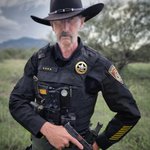
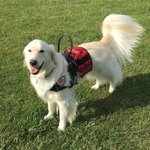
Neuroscientist. Mom of @sampson_dog Sampson the SD. Making STEM inclusive. A proud wife of a Marine, and the Marshal of Tombstone, Arizona.
- Tweets1.9K
- Following951
- Followers2.8K
- Likes6.5K






ALT Current higher-ed policies primarily outline steps for the exclusion of student service dog handlers (SSDH) Identify barriers Outline guidelines

ALT Barriers to Laboratory Access Identify barriers: Most academic service dog (SD) policies either do not address laboratory access or focus only on guidelines for exclusion Outline guidelines: Provide student service dog handlers equal access while protecting the integrity of the lab environment with safety at the forefront

ALT Protocols for Inclusion Identify barriers: General guidelines on the admission of SDs into chemistry & microbiology labs have been developed & stipulate that an SD wear similar PPE that would be required for any student Outline guidelines: A university-wide inclusion policy could include a set of skills necessary for an incoming SD and made available to incoming SSDHs

ALT Graduate Research Identify barriers: The unknown that surrounds a service dog's function and training can create an aversion to hiring the handler Outline guidelines: Scientific problem-solving is a group effort; by integrating diverse social spectrums you get differences in perspective and life experience


ALT Adam Miller, an Asian man smiling wearing a suit and tie smiling holding the Sampsons Legacy Foundation award. he is standing next to Joey, a Caucasian female wearing a tan suit, and smiling. Behind them is the image of the book INSISTENT.


ALT Summary: While the BMBL offers a framework for guiding entities in the development of policies for safe laboratory operations, it is not a regulatory document and does not address all potential scenarios, such as the presence of service animals in laboratory spaces. The sixth edition BMBL states that “Animals and plants not associated with the work being performed are not permitted in the laboratory,” reflecting a widely accepted best practice in laboratory settings. However, this provision must not be construed as superseding applicable laws regarding service animals. When entities conduct risk assessments and establish policies that accommodate service animals, such practices should comply with all applicable federal, state, and local laws and regulations. Importantly, the BMBL lacks the authority to mandate changes to institutional practices or policies and should not be used as a basis to deny reasonable accommodations or service requests.

ALT Adam Miller, wearing a blue suit and red tie is holding the Sampsons Legacy Foundation Paw Prints for Humanity Award, he is smiling standing alongside Joey. Joey is wearing a tan suit with a black shirt, she is smiling. Behind them, projected on a screen is the book INSISTENT.

ALT Pax, a black Labrador wearing a red service dog vest is sitting at the base of a beautful sweeping marble staircase. The carpet leading up to the ramp is red and glod, there are gold rails alongside the ramp.


ALT A woman in a grey long sleeve shirt is laying in bed under a gold comforter. There is a Black Lab cuddled up with her on one side and a white Golden Retriever nestled in near her legs.

ALT Pax, a black Labrador Sampson a Golden retriever, Eowyn and Aragorn two Irish Wolfhounds are sitting in front of a Christmas tree, they are wearing red and green knitted Christmas collars - they all are looking up and howling.

ALT A woman sitting in the passenger seat of a convertible pointing to her ball cap, which reads, "But did you die?" Over her shoulder are two Vultures perched on a fence.

ALT A white Sheep has its nose stuck deep into a blue plastic cup that a man is holding.

ALT Sampson laying upside down in the grass holding his blue octopus toy on his paws.

ALT Mom is sitting on a bench wearing green pants, and a black tank top. She is looking thoughtfully off to the side. Sam is sitting between her knees wearing his service dog vest and looking to the other side. Mom has her hands on his sides.

ALT A smiling woman with long gray hair and gray business attire stands in a large hallway next to a smiling person wearing glasses and a blue business suit. Between the people is a fluffy white dog wearing a red service dog vest looking up at the woman with long gray hair.

ALT A female Deputy in sunglasses and a black ball cap holds a brindle Dutch Shepherd wearing a badge on her collar.

ALT A man in a Police uniform sits in a chair across from a man in a suit, also seated in a car. There are cameras and lights around them, with a cameraman filming. The room is large and open with wood floors and large picture windows.

ALT Three law enforcement officers are standing in an old west town and a fluffy white service dog wearing a red service dog vest is standing in front of them.

ALT A law enforcement officer is sitting with a black Labrador retriever

ALT A law enforcement officer wearing a black cowboy hat is sitting in a police car. He is holding a wooden plaque that says, “Grand Marshal. 16th Annual Tombstone Wild West Days 2024 Jim Adams.”

ALT Two Irish Wolfhounds, a black Labrador retriever, and a fluffy white dog are sitting together in a kitchen.

ALT A white Golden Retriever sirs next to a black Labrador on a decorative rug in front of an antiqued brick wall. Both dogs are smiling big with their tonques hanging out.

ALT A woman with long gray hair and a blue floral dress is sitting on the lap of a man with gray hair and glasses. They are holding tropical drinks. Behind them is a cruise ship and blue water

ALT A small sailing ship on emerald green waters against a blue sky. In the foreground is a bird standing on a very light sandy beach.

ALT A happy-looking fluffy white dog is lying on a couch with a person's outstretched legs, wearing, bright, colorful plaid-type pajama pants, and dog socks.