

Former U.S. Army China Foreign Area Officer. Currently studying and writing about ancient Chinese strategic texts. Climber of Mt. Villingili.
Joined April 2022
- Tweets6.1K
- Following917
- Followers13.6K
- Likes919





"[The good health care professional] drives them as if they were a herd of sheep; he drives them this way and that, but they know not where they are going. Drive them to carry out tasks, but don't tell them the reasons why; keep them in the dark; don't tell them about the harm."

Wang Jianzheng (1997): "When humanity enters the 21st century, should new connotations be given to 'spy'? In the world of today, the struggle between states has already evolved from the military confrontation, political standoff, and ideological opposition of former days into ...

‼️ retired PLA major general Wang Jianzheng (王建政) ‼️
August Hanning, the former head of Germany’s answer to MI6, who has been arrested on suspicion of passing highly classified information to a foreign spy agency, is also feared to have provided sensitive details to a high-ranking Chinese military official.
Hanning, 80, who ran the BND intelligence service from 1998 to 2005, is facing charges of attempted treason and espionage on behalf of a foreign country in one of Germany’s most serious spy scandals since the Second World War.
He is accused of obtaining nearly 2,000 internal documents through his former chief of staff, Manfred Dankesreiter, from 2010 to 2012. He is alleged to have used some of them to prepare an analysis for an officer from a foreign intelligence agency, reported to be Azerbaijan.
The German public prosecutor general’s office also claimed that Hanning was in “close contact” with an employee from another foreign spy agency and supplied him with confidential “political information”, partly based on the BND files, over several years.
This employee was reportedly Wang Jianzheng (王建政), a retired Chinese army major general who had also spent 23 years as a military diplomat in Germany, Austria and Switzerland.
Wang had first been posted to East Berlin in 1987-90, at the end of the socialist German Democratic Republic, and returned twice after reunification, most recently from 2009 to 2013.
Now regarded as one of Beijing’s most influential experts on Germany, he continues to work for the China Institute for International Strategic Studies, a state think tank under the aegis of the Chinese military.
Wang, who had thanked Hanning for his “insights and explanations” in the foreword to a 2017 book, appears to have met the former BND president at several conferences. They also sat together on the board of advisers for a German-Chinese “eco-park” in Qingdao, Shandong province.
thetimes.com/world/europe/ar…


Lu Xun (1925): "Advocates of reading the classics know full well that reading the classics is not enough to save the country ... but they do play tricks and treat the people as muddled fools, and 'reading the classics' is merely the tool occasionally used for this trick."

"It is necessary to fully recognize the 'insane' nature of U.S. imperialism. U.S. aggression against China is determined by its imperialist nature and is independent of human will, possessing inevitability; however, when will it invade? How will it invade?


"On the Korean battlefield, the United States had 'plenty of steel but little spirit.' Today, we firmly believe that this tradition will play a decisive role [in a future war against America]. To build confidence in daring to fight and being sure to win, we can no longer base ...

Yes, China is planning to fill the vacuum. That is what the multiple aircraft carriers are for.
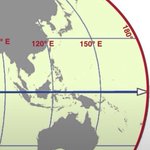
Zhang Wenmu (2004): China’s eastern security boundary must extend to the mid-Pacific, i.e., 150 degrees east longitude, to ensure sustainable security; if China’s security boundary …

Asserting that “vacuum’s get filled” is hardly a compelling critique. Why do you have so little faith in the ability of Asian countries to balance? You offer little evidence they can’t. And how exactly do you plan to change first island chain bases from targets to assets given what we just watched in the Middle East? You can call my report fantastical and suggest that I’ve never looked at a map but refusing to grapple with the limits of U.S. military power and the lessons of its failure against Iran is equally deluded. That you think this is China’s dream plan suggests you also don’t really understand the complicated view China has of U.S. military presence in Japan and Korea, as a restraint on the militarization of these powers and the proliferation of nuclear weapons.


Lu Xun: “But after all, it is the foreigners who are detestable, insisting on talking about some sort of ‘science.’ Although science has brought us many wonders, it has also ruined many of our sweet dreams.”
-- Idle Talk at the End of Spring (1925)
nytimes.com/2026/09/23/world…

For outsiders I would argue that you need to be familiar with Mao’s Selected Works because it’s so fundamental to the modern CCP’s perception of itself, but fully concur that everyone should also read Gao Hua’s “How the Red Sun Rose” which expertly demolishes the myth-making.


Jiang Zemin (1995): “Worldwide economic competition and competition in comprehensive national power manifest themselves to a large extent as competition in high and new technology. Nations and peoples whose science and technology lag behind cannot prosper nor stand independently”

China criticises idea it is in 'malicious competition' over AI bbc.in/4yw3IoI
In this contest, nations must cope not only with military threats but also, and even more so, with challenges stemming from economic, scientific, and technological aspects. Sometimes, economic security is far more important than military security.

Mao Zedong (March 5, 1949): "We are not only good at destroying the old world, we are also good at building the new."
chathamhouse.org/publication…

"By the early days of the Chinese Revolutionary War, it seems that Mao Zedong had not yet read Sun Tzu's Art of War. According to Wu Lengxi's recollection, Mao Zedong said that when he formulated the '16-character Formula' for guerrilla warfare, he had not read the Art of War.

Later, when the leaders of Wang Ming's Left opportunist line mocked the '16-character Formula' as having originated from the outdated Sun Tzu while the counter-campaigns against 'encirclement and suppression' were modern warfare, he finally went to find a copy of Sun Tzu to read"


