

Business intelligence, journalism, Afghanistan, Pakistan.
London, England
Joined January 2009
- Tweets4K
- Following1.7K
- Followers16K
- Likes323








Jonathan Boone retweeted

This is, unreservedly, my favorite account of an ambassador behaving badly, from a diplomatic oral history site. I read this years ago and cannot forget it, and you won’t either. (If they made this a movie, it’d be R rated.)
adst.org/2015/06/this-woman-…
Jonathan Boone retweeted

We spent weeks interviewing soldiers & officials to reconstruct how the Houthis won a perch on the Bab al-Mandab Strait — setting in motion a chain of events that has plunged Yemen back into war.
What we found imparts dark lessons for the battles to come:
nytimes.com/interactive/2026…

Jonathan Boone retweeted

Incredible video shows a Russian drone attempting to destroy a Ukrainian ground robot but being disabled when the robot deploys an anti drone net and catches it.
We literally have robots fighting each other on Ukraine’s frontline.
Jonathan Boone retweeted

Claude 5.5 Opus responding to “AI is a normal technology” is still the best AI-created video I have ever seen
Jonathan Boone retweeted

If you want to know what has everyone at the AI labs spooked, it’s this - the AI rewrote its own instructions. (Read the last line.)


We're sharing our new framework for tracking, investigating, and disclosing instances of model misalignment at OpenAI.
The framework sets criteria and timelines for public disclosure, including when we haven’t yet fully explained or mitigated the behavior. More complex cases may require longer investigation or coordination with third parties.
We’ll prioritize examples that reveal new misalignment mechanisms, meaningful changes in known behavior, or findings that challenge assumptions about safety or mitigation.
Alongside the framework, we’re publishing six reports on instances of misaligned behavior we’ve observed during the training or evaluation of our models in the last six months.
This is a starting point. We’ll refine the process through experience and public feedback, and share more reports on an ongoing basis.
openai.com/index/model-misal…

Jonathan Boone retweeted

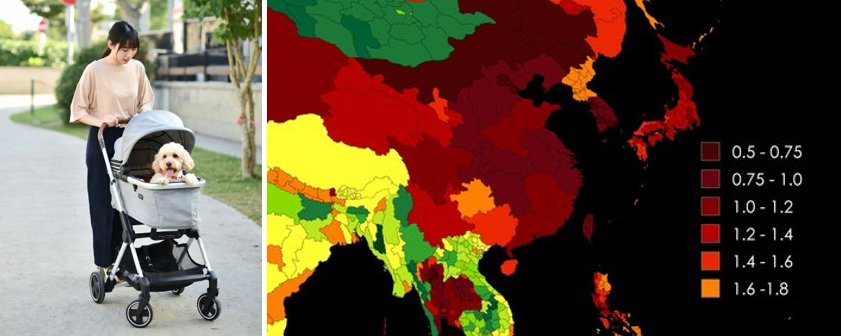
In my newest article, I deconstruct why East Asian countries are ground zero for the crisis of low birthrates.
A must read, with lessons for every low-fertility country, which is most of them!




Jonathan Boone retweeted

SCENE. NUMBER TEN. INT. DAY
Aide: “Prime Minister, we have just been destroyed across the country by two insurgent parties, who say we are out of touch, elitist, foolish, and London centric. And voters personally think you are weird and creepy. What can we do? We must do something?”
Pause
PM: “How about we get a 154 year old Baroness and appoint her my special advisor for ‘women and girls’?”
Aide: “You mean Baroness Harman? Cousin of Lady Antonia Fraser, Lady Rachel Billington and Thomas Pakenham, Earl of Longford?”
PM: “Yes exactly. That should win back Wigan. Even better, she worked for the NCCL in the 1970s when they had links with the pro pedophile PIE group, which will destroy the Tory and Reform vote on Tyneside”
Aide says nothing. Blinks

I’m delighted to appoint @HarrietHarman as my Adviser on Women and Girls.
Harriet is a strong advocate for women and girls and I know she will deliver greater opportunity for women in public life.
I’m committed to tackling structural misogyny that is a barrier for too many women and girls. I look forward to working with Harriet to drive forward action on this important issue.

ALT Keir Starmer sits with Harriet Harman in the garden at Downing Street.
Readers added context they thought people might want to know
Harriet Harman and her then husband, Jack Dromey, were senior officials in the National Council for Civil Liberties (Now known as Liberty) when they supported the Paedophile Information Exchange and allowed it to affiliate to NCCL.
theguardian.com/politics/2014/…
telegraph.co.uk/news/politics/…
Jonathan Boone retweeted

Shabana Mahmood’s special advisor threatened us with an injunction and two different lawsuits last night in an attempt to block this story linking her to a notorious vote rigging case.
I think it’s strongly in the public interest, so here it is.
birminghamdispatch.co.uk/exc…

Jonathan Boone retweeted

Right now, British electricity pricing is bonkers. Prices are disconnected the from the underlying reality in several very important ways.
1. The costs of keeping the grid going, like transmission and balancing, are spread over every unit of electricity sold. This means the price of an extra unit of electricity is vastly higher than the social cost of providing that unit. The cost of having a grid connection at all is, conversely, much lower than it actually costs society to provide you one.
Economically, this amounts to a crippling price cap on grid connections, which is part of why we can't expand infrastructure to plug people in: they don't pay for it. It also amounts to an enormous tax, over 2/3 of the price of electricity, on using an extra unit of it.
Which is presumably why electricity use has cratered since 2003, when we started driving up the cost of our grid like this.
Note how perverse the incentive is here. We are heading into a situation where electricity is extremely expensive because the ratio of grid costs to the amount of electricity put through that grid. Our high prices incentivise everyone to have a connection, but then to use it as little as possible, the EXACT opposite of what we need. We charge the most tax on people use their connection most intensively (i.e., efficiently) and the least on those who use it the least intensively!
2. We impose carbon taxes on electricity produced through gas that we don't impose on gas used directly. This is part of why electricity is so expensive, and means people electrify less than we would like, which leads to less decarbonisation overall. A child, with a basic understanding of supply and demand, would see how perverse this is.
3. We charge the same price for electricity nationwide, and pay the same amount, in a single market, even though electricity is worth more and less at different places. This is part of why people are building solar farms in Scotland, where it is not only less sunny, but which is on the other side of massive grid congestion that we are paying BILLIONS of pounds to relieve. Yet we keep paying people to make the problem worse.
4. We keep buying Contracts for Difference off electricity generators. CfDs say 'we will pay you X for every unit of electricity you produce, whenever you produce it'. (Recent iterations have cut off these payments when prices go negative, but they will still pay them £90 per megawatt hour when the megawatts they are producing are worth 1p each!)
Renewables Obligations Certificates were a lot more honest. They just paid producers a top up on what they got on the open market: a straightforward subsidy. CfDs are a totally hidden subsidy. The amount of subsidy is set by the market trajectory after today. So, for example, every time we sign a new wind CfD we increase the subsidy for past tranches.
The really messed up thing is that CfD recipients do not cover for when they don't provide any power. If the CfD was set on quantity as well, so generators had to pay back money when they didn't produce, to cover the cost of running the grid to accommodate them, and for the gas needed to keep the lights on, then we would get a good sense of how much we were actually paying. Buying a CfD would be buying new electricity at its going rate. Instead, practically all the important pricing functions are hidden.
The result of all these broken pricing systems is poor coordination. Everyone is working exactly as the price system tells them to: plug in but only use your grid connection when the grid is having trouble, use less electricity, don't electrify, add generation far away from where it is consumed, and produce the most electricity possible whenever and wherever you like, not when or where it's rare and expensive. The ultimate result is expensive electricity, industrial decline, and economic stagnation.
Jonathan Boone retweeted

My latest for @smallwars:
What happens if Iran destabilizes?
The real risk isn’t the strikes. It’s what comes after: insurgencies, cross-border militancy, regrouping of Jihadis, drug smuggling, human trafficking, energy disruption, and regional spillover, especially for Pakistan and key U.S. partners in the Gulf.
Are we prepared for the consequences that will follow?
smallwarsjournal.com/2026/04…

Jonathan Boone retweeted

Perfectly said. My kids just spent a month in shelters so they won't have to spend years of their lives afraid of far worse. Our generation's task is to get this job done. It's a test of resolve. If you have the resolve, you change the course of history.

Jonathan Boone retweeted

Yes. Great point. One for @an0n_Nic
The real "working people" are those on >£43-45k. Let me explain…
At £43-45k gross, a single person is paying roughly £6,300 income tax, £2,700 employee NICs, their employer pays circa £4,500 employer NICs on their behalf, then perhaps £3,500 in VAT through consumption, circa £2,000 council tax, fuel duty, excise, the cascade of indirect levies. Only then does that person scrape past the crucial £20k mark.
That £43-45k figure is the bare minimum at which a taxpayer stops being a net drain on the state. Officially. Unofficially it’s higher. I’ll come back to this.
The ONS defines "net recipients" as households receiving more in benefits (including benefits in kind: NHS, education, policing) than they pay in all taxes combined. Already 55% of UK households are net recipients under this framework. Let that one ruminate and stink the gaff out.
TME 2025-26: £1,370bn divided by 68.3m population = £20,059 per head. NHS, education, defence, welfare, debt interest, the lot. Bear in mind that population figure is informed by census and DWP data. The real number of bodies consuming services is higher. The Home Office openly concedes it cannot track expired visa holders. The true fiscal drag is significantly worse.
Per the official (lowballed) data alone, the three thresholds work out roughly as:
Single, no dependants: circa £43,500 gross. One head of spending to cover at £20k.
Couple, no dependants: circa £65-67k gross household. Two heads = £40k burden.
Family of four: circa £105k gross household. This is the most savage figure of all. Four heads of spending at £20k each = £80k burden, only two earners generating tax revenue. The children consume full public spending (education alone runs circa £7k per head per year) while contributing precisely nothing to the revenue side. You need to be comfortably in the top decile of household income to have two kids and not be a net taker. And it gets worse. If the family of four runs on a single earner, which is to say a father working while the mother raises the children, the breakeven figure does not sit at £105k. It sits north of £135k. And that single earner hits the £100-125k personal allowance taper, where the marginal rate spikes to circa 60-67%. The state actively punishes the very household configuration it should be incentivising. The man trying to support a family on one income is taxed as though he is a luxury. Hosed relentlessly no matter what you do.
Now consider. If the excess population above 68.3m is entirely on the consumption side of the ledger, paying no tax, consuming full services, what does that do to the per-capita burden carried by the existing population?
The maths is straightforward. TME is fixed at £1,370bn. That money gets spent regardless. The question is how many heads are consuming it.
70m: Burden rises to £20,558 per head. Hidden liability of circa £34bn, roughly £1,200 per household per year.
75m: £22,027 per head. Hidden liability circa £134bn. Approximately £4,700 per household per year. More than double the average council tax bill. Materialising as longer NHS waits, overcrowded classrooms, infrastructure running beyond capacity.
80m: £23,494 per head. Hidden liability circa £235bn. Roughly £8,200 per household per year. A sum larger than most households' entire income tax contribution, socialised silently across the tax base.
At 75m a family of four needs north of £120k to break even. At 80m it approaches £140k. The median household is not remotely in contention at any scenario.
The £20k figure is itself conservative. Blended TME includes defence and debt interest which do not scale with headcount. The marginal cost of an additional service-consuming resident (NHS, education, housing, policing) is higher than the average.
This is how terminally fucked Britain's social contract is. The only answer at this point is to smash the welfare state to bits.
@trevgoes4th @ColeFusionHQ @db_fink @HayekAndChips

How it started: Solar and onshore wind "are now the cheapest sources of energy available". @emmaduncan, 2023
thetimes.com/comment/article…
How it's going: Green intermittency gives Britain world's highest electricity prices. @emmaduncan, 2026
thetimes.com/comment/columni…


2
159
Jonathan Boone retweeted

Unreal numbers 👀⚡️
"JPMorgan estimates that, had Germany not phased out nuclear power, the country would have generated 50% less electricity from fossil fuels and 84% less electricity from natural gas in 2024. Electricity prices in Germany would have been around 25% lower, and the country would have imported half as much electricity.."

Jonathan Boone retweeted

Worth recalling that Iraq basically had no air defence, no missiles and no planes after 1991, and lived under oil-for-food sanctions, yet Saddam’s regime lasted more than a decade until the US invaded. 2/2
Jonathan Boone retweeted

UK electricity generation has fallen 25% from its peak in 2004. Per capita electricity consumption is a third the level of the United States. The UK has the most costly electricity in the world. Half the gas we consume comes from the Norwegian side of the North Sea basin. The residual imported LNG has 4x the carbon footprint of supplying our own. And most depressingly of all the result is a deteriorating UK Balance of Payments, a weaker pound, and a bigger hit to the cost of living. And still the useful idiots want to further constrain UK energy production through high taxes, banning new licences, and gold-plating new energy infrastructure. Their luxury beliefs are behind the awful household disposable income growth of recent years. 🤡.
Jonathan Boone retweeted
This morning we released “Ration Pack Britain” - detailing the institutional rationing of the supply side of the UK economy over decades. Policies that have combined to constrain the supply of Energy, Land, and Capital. Lower trend growth has been the inevitable outcome.
This is the other extreme of the Abundance debate, and focuses on how the rationing of aggregate supply has meant UK inflation averaged 3% over the last fifteen years - despite monetary policy aligning with comparable economies which saw no such inflation surge.
The good news - and it is good news - is that ending rationing does not have to be a partisan agenda. The most durable way of lowering the cost-of-living is to free up the supply of key factors of production - and put downward pressure on consumer prices.
The current patchwork of sector plans and PuFins is a charter for lobbying. By contrast, enabling a lower cost of essential factors of production gets into all the cracks of economic activity.
I can be like a broken record on the damage caused by rationing (anyone who was at the terrific @BCG event held by @RaoulRuparel last week knows this!) - but I firmly believe the UK has introduced a swathe of individually virtuous policies that have combined to introduce rationing into the UK for the first time in 72 years.
Another path is essential if trend growth is going to rise from its rather dispiriting 1.5% a year.