

Actor (@stranger_things @cwtvd) Von List in @callofduty #Vanguard Ironhide in Transformers. Author: How to Be Miserable and Alone. Cigars, whisky, Chesterton
Joined September 2010
- Tweets19K
- Following1.9K
- Followers26.5K
- Likes25.5K


Kaiser Johnson retweeted
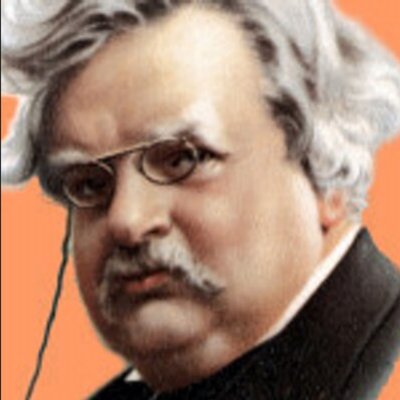
Vindictiveness is a disease, and when it is once generated it rages, not only until it has killed its enemies, but until it has killed its possessor.
Kaiser Johnson retweeted

Since there’s a lot of discussion about kids at church, I have to tell you my favorite story.
It didn’t happen to me but to a dear friend of mine who was celebrating mass at the parish next to me.
When he elevated the Blessed Sacrament and the bells rang, a little boy jumped up on his pew, pointed and started shouting
“He’s saving the world! He’s saving the world!”
The priest told me he simply couldn’t put the host back on the altar.
He held it there.
People wept.
My friend said he didn’t know how long the moment lasted, but it felt like a blessed eternity.
God uses those little angels. Their souls are aware of what’s going on, maybe more so than the souls of some of the adults in the congregation.
We are blessed to hold fast to this beautiful, ancient faith.
Kaiser Johnson retweeted
The answer to anyone who talks about the surplus population is to ask him whether he is the surplus population, or if he is not, how he knows he is not. That is the answer which the Spirit of Christmas gives to Scrooge.
Kaiser Johnson retweeted

I'm a Jew in NYC and I made friends with a Palestinian in Gaza this week. Using @Snap Maps I was able to build a personal connection with a complete stranger and learn from their first-hand experience of whats happening on the ground in real-time. Heres the story + some takeaways
Kaiser Johnson retweeted
This is also why the new novels die so quickly, and why the old fairy tales endure forever. The old fairy tale makes the hero a normal human boy; it is his adventures that are startling; they startle him because he is normal. But in the modern psychological novel the hero is abnormal; the centre is not central. Hence the fiercest adventures fail to affect him adequately, and the book is monotonous. You can make a story out of a hero among dragons; but not out of a dragon among dragons. The fairy tale discusses what a sane man will do in a mad world. The sober realistic novel of today discusses what an essential lunatic will do in a dull world.
Kaiser Johnson retweeted
The curse of all journalism, but especially of that yellow journalism which is the shame of our profession, is that we think ourselves cleverer than the people for whom we write, whereas, in fact, we are generally even stupider.
Kaiser Johnson retweeted

A sign of emotional intelligence is moving from “You made me feel” to “This is how I reacted.”
Our emotions aren’t caused by other people’s actions. They’re shaped by our interpretations.
Blaming others gives them power over our feelings. Taking responsibility empowers us.
Kaiser Johnson retweeted
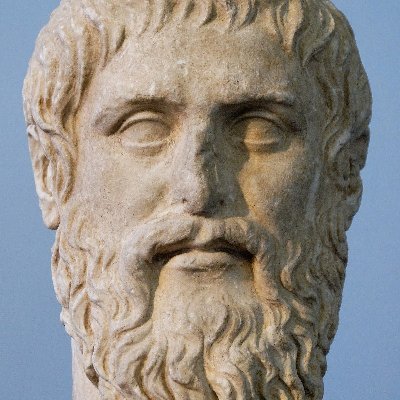
Exactly 112 years ago today a man called Vincenzo Peruggia walked into the Louvre and stole the Mona Lisa.
It is the most famous art theft in history, and it's what made the Mona Lisa the most famous painting in the world.
And the man who stole it only spent 6 months in prison.
The Mona Lisa was commissioned in 1503 by a cloth merchant from Florence called Francesco del Giocondo. He asked none other than Leonardo da Vinci to paint a portrait of his wife, Lisa.
But Leonardo — a famously slow worker — didn't finish the painting. When he went to work for the King of France he took it with him, finished it, and gave it to his new employer as a gift.
So the subject of the world's most famous painting, Lisa del Giocondo, never actually saw it herself! The Mona Lisa remained in the possession of French royalty, at the Palace of Fontainebleau and then at Versailles, for nearly 300 years.
But in 1797, after the French Revolution, it was moved the Louvre. Still, it wasn't a particularly famous painting at the time. In the later half of the 19th century certain critics started to acclaim the Mona Lisa as a masterpiece, but it wasn't popular with the public.
Until the 21st August 1911.
Vincenzo Peruggia was an Italian tradesman who had moved to Paris in 1907 in search of work. He got a job at the Louvre, cleaning and reframing paintings.
There he learned how many Italian works of art Napoleon had taken from Italy and brought to France. Inspired to reclaim his country's heritage, Peruggia decided to steal the Mona Lisa.
Of course, although so many works of art all around the world were stolen or at least have murky history, the Mona Lisa was in France legitimately — Leonardo had given it to King Francis as a gift. Whether Peruggia knew this or not is still unclear.
How did he steal it? For what is probably the most famous art theft in history, it was remarkably easy. He entered the Louvre on the morning of 21st August, 1911, on a day when it was closed to the public, dressed like his fellow workers in a white smock.
He went to the Salon Carré, the room in which the Mona Lisa was kept, and simply took it off the wall when nobody was looking. Then he wrapped it in his smock and left the Louvre. Simple as that.
It wasn't until the next day that anybody realised the Mona Lisa was missing, at which point the authorities were alerted, the press heard about it, and the theft became an international phenomenon reported in newspapers all over the world.
The police were clueless. They arrested the poet Guillaume Apollinaire, who implicated Pablo Picasso — he was then brought in for questioning. But they were both released and the case remained unsolved for two years.
The American businessman and art collector J.P. Morgan was even suspected of having commissioned the theft. There was a fear in France at the time that French art and heritage was being bought up by Americans, and the loss of the Mona Lisa was seen as a national disgrace.
Tourists came flocking to the Louvre to see the empty spot where the Mona Lisa had been — a relatively unknown portrait had suddenly become the world's most talked-about painting.
All the while Peruggia had the Mona Lisa in a suitcase in his Parisian apartment. In December 1913 he took it to Florence with him, hoping to sell it. At which point an art dealer called Alfredo Geri received a mysterious letter offering to sell him the Mona Lisa...
Immediately suspicious, Geri contacted the director of Florence's Uffizi Gallery, Giovanni Poggi. They pretended to go along with the sale, met up with Peruggia, verified the painting — and then contacted the police.
Peruggia was arrested, newspapers all around the world reported that the Mona Lisa had been recovered, and after being displayed for two weeks in Italy it was returned with great pomp and ceremony to the Louvre.
Thereafter the Mona Lisa became, and has remained, the world's most famous painting. It is undoubtedly a masterpiece, not least because of Leonardo's revolutionary use of a technique he called "sfumato", in which he blurred the colours and lines of the Mona Lisa's face to make it more realistic. But many people rightly wonder why it is *so* famous when there are many other paintings that are more important, interesting, and beautiful.
Well, it's all thanks to Vincenzo Peruggia, whose theft gave the Mona Lisa a unique place in the public consciousness. The Mona Lisa isn't famous because it's the best work of art ever made; it is the world's most famous painting... simply because it's so famous. A self-perpetuating cycle.
What happened to Peruggia? His trial took place in June of 1914, six months after having being first arrested — but by July he had been released.
See, Peruggia was hailed as a patriot and a hero in Italy, and there was immense public pressure for a lenient sentence. There had even been a campaign to raise money for him. He later served in the First World War, during which he was captured and imprisoned by the Austrians. After the war he returned to France, under a different name, and died there in 1925.
So, although he didn't precisely achieve his aim, Peruggia did succeed in making an Italian painting the most famous work of art in the world.

Kaiser Johnson retweeted

In 1997, at the age of 27, Matt Damon won his first Academy Award for Best Screenplay (“Good Will Hunting”).
After Damon won the Oscar, he went home, sat down on his sofa, and looked at the award.
As he looked at it, he was suddenly overwhelmed by a heartbreaking thought:
“I remember very clearly looking at that award and thinking,
‘Imagine chasing that, not getting it, and then getting it finally in your 80s or your 90s with all of life behind you and realizing what an unbelievable waste of your life.’
It can't fill you up. If that's a hole that you have, that won't fill it.”
“My heart broke,” Damon said. “I imagined another one of me [not getting that award until I was] an old man, and going like, ‘oh my god, Where did my life go? What have I done?’ And then it's over.”
Takeaway 1:
Many rich and celebrated people talk about chasing money and recognition, getting it, and realizing that it didn't feel like they thought it would. That it didn't, as Damon said, fill the hole they had.
One of my favorite analogies for this pattern comes from Sam Hinkie.
Hinkie was asked about what he's learned from reading Robert Caro's books—about some very rich and famous people.
“I think of it like the Pacific Salmon,” Hinkie said. “They spend their whole life making this journey upstream to spawn in this one spot. And as soon as they do, they die. That's largely what Caro shows you.”
The outcome is always a tiny percentage of the total experience.
Matt Damon stood on that Oscars stage for eighty-one seconds. That’s 0.0000641% of the four years he spent working on Good Will Hunting. To let 0.0000641% of an experience determine one’s happiness or satisfaction, as Damon said, is an unbelievable waste of your life.
Takeaway 2:
If not things like money, awards, and celebrity, what should we strive for?
“When we were writing 'Good Will Hunting,'” Matt Damon said, “Ben [Affleck] and I always talked about just wanting to love it.
We would say, 'If it's just a tape on our mantel that no one ever watches, we want to love it.' We kind of stumbled into a very wise strategy, which is to try to get most of the rewards from the work itself.”
Since you control the process, the effort, the work more than the outcome, Ryan Holiday once told me,
“The work has to be the win. Ultimately, you have to love doing it. You have to get to a place where doing the work is the win and everything else is extra.”
- - -
“It's such a gift to be able to do something and to love it for the sake of it.” — Rodney Mullen
Follow @bpoppenheimer for more content like this!

Kaiser Johnson retweeted

So, how big of a problem is losing $8B/yr?
For context, Amazon’s net income:
• In 2021: $33.36B
• In 2022: -$2.72B
But there’s a conundrum bigger than money:
Amazon could RUN OUT of people to hire in its US warehouses by 2024.
Kaiser Johnson retweeted

Meet Carol and Graham, a mother and son from Vermont, who ventured to Paramount Pictures today to take part in the studio’s guided tour of the grounds.
That is, until they saw picketers gathered outside the front gate.
With tour guides ready to take them inside, the duo refused to cross the picket line, instead joining demonstrators as part of the ongoing #ActorsStrike + #WritersStrike
📸 Rosy Cordero/Deadline


Kaiser Johnson retweeted

A reality show where CEO’s have to drive a 2001 Honda Civic with no air conditioning from the valley to Santa Monica, wait an hour next to 12 CEO’s who look just like them just to try and nail one line in a Crest commercial before driving back to the valley to wait tables.
Kaiser Johnson retweeted

For all my fellow SAG-AFTRA members on strike who need financial support during this time, please check out this article. #UnionStrong
latimes.com/entertainment-ar…
Kaiser Johnson retweeted
In 1975, Sylvester Stallone wrote the screenplay for "Rocky."
He shopped the script to every producer and studio in Hollywood, but he was repeatedly rejected.
Eventually, one production company, Chartoff-Winkler Productions, expressed interest.
But there was one condition...
They didn't want Stallone to play Rocky.
They wanted a "more marketable actor" for the leading role.
In fact, they were so desperate for Stallone to *not* play Rocky that they kept offering him increasingly large sums of money to go away.
"It went up to $360,000," Stallone said, "to go away, to 'get off my lawn boy.'"
Stallone didn't take the money for 2 reasons:
1) “I had learned to manage on very little money,” Stallone said. “I had it down to a science. I really didn't need much to live on.”
“But more than that...”
2) “There was something about the idea of unrealized dreams,” Stallone said. “I knew that if I sold the script—even for $500,000—I knew that after the money was gone, I would have become very bitter if I never realized my dream.”
Takeaway 1:
“The trick is,” Tom Rothman (CEO of Sony Pictures Motion Picture Group) says, “to be fiscally responsible so you can be creatively reckless.”
Hollywood is a ruthless business. If Rocky failed, that likely would have been the end of Stallone’s acting career.
But because he had his fiscal responsibilities down to a science, Stallone could make the reckless decision to turn down the money and gamble his career on Rocky.
Takeaway 2:
Stallone turned down the money because he feared the bitter person he would have become if he never went for his dream.
The screenwriter Brian Koppelman (Rounders, Ocean's Thirteen, Billions, etc.) talks about why, after many years of putting it off, he finally started writing:
“What I finally realized was that if I allowed these creative impulses to die, it would be like a real death, and like any form of death, it would be toxic and this toxicity would ooze out of me onto everyone and everything.”
- - -
"If you don’t take money, they can’t tell you what to do, kid…Money’s the cheapest thing. Liberty, freedom is the most expensive.” — Bill Cunningham
Follow @bpoppenheimer for more content like this!

Kaiser Johnson retweeted

What happened to the good ol’ days of casting different actors to portray characters at various stages of their life? bit.ly/3XxAsNc

Kaiser Johnson retweeted

“Squid Game” increased the value of Netflix by an estimated $900 million.
It also made South Korean writer and director Hwang Dong-hyuk famous — but not rich.
In his contract, he had forfeited all intellectual property rights and received no residuals. latimes.com/world-nation/sto…

Kaiser Johnson retweeted
Colin Jost & Michael Che are the longest-tenured Weekend Update anchors in SNL history.
But after their first few episodes back in 2014, an NBC executive called a meeting with SNL producer, Lorne Michaels.
“Do you think Jost and Che are working?” the exec asked.
Michaels said,
"No."
"Oh," the exec said, "you know?"
Yes, Michaels said. He said he was well aware that his new Weekend Update anchors were not performing all that well.
"But it's a thing," Michaels told the exec. "People have to be bad before they can be good."
He likes to use the analogy of an ugly baby:
"All babies are ugly (unless they're your baby), but after three months, everyone says, 'What a beautiful baby.' You just have to live through that period of people not being good."
Takeaway 1:
Lorne Michaels said people are bad before they are good. And what's true of people is true of just about all creative work.
The co-founder of Pixar Ed Catmull, for instance, calls early mock-ups of Pixar movies—coincidentally—“ugly babies.”
“They are not beautiful, miniature versions of the adults they will grow up to be,” Catmull writes.
“They are truly ugly: awkward and unformed, vulnerable and incomplete. They need nurturing—in the form of time and patience—in order to grow.”
Takeaway 2:
Colin Jost and Michael Che, Lorne Michaels told the NBC exec, just needed some time to get through the period of being bad.
The record producer Rick Rubin talks about how it’s an underrated ability: the ability to sit with discomfort through that period of being bad.
Talking with his fellow multi-Grammy-winning producer Finneas O’Connell, Rubin said, “There’s a great deal of patience involved."
Because, he said, everything is bad for a while before it gets good.
Finneas agreed, saying,
“I think it’s shocking every time how bad things can be on their way to being good.
It blows my mind.
It’s like when someone’s solving a Rubik's Cube, and it looks like they’re so far from solving it right before they solve it.
When you’re in the middle of something—you listen to it, and you’re like, ‘Tomorrow, this might get amazing, but today, it’s so bad.’
The exciting thing is that it’s every time.”
“Every time,” Rubin repeats.
- - -
“You’re only as good as you’re willing to be bad…You’re never going to get good unless you’re willing to be bad.” — Randall Stutman
Follow @bpoppenheimer for more content like this!

Kaiser Johnson retweeted
On the 27th straight day of filming “Forrest Gump,” Tom Hanks was tired & worried.
During a scene on the famous park bench, Hanks stopped & said to director Bob Zemeckis,
“Hey, Bob…is anybody going to care about this movie? I don’t think anybody’s going to care.”
Bob replied,
“It’s a minefield, Tom. You never know what’s good…It’s a minefield! It’s a goddam minefield! We may be sowing the seeds of our own destruction.”
Tom Hanks told this story after he was asked, “When I ask for a memory from your career, what’s the first thing that comes to mind?”
He said that what Zemeckis said was true of every movie he’s worked on:
“There’s never any guarantee...You do not know if it is going to work out.”
Takeaway 1:
Hanks is the 5th-most highest-grossing actor of all time.
And yet, the stickiest memory of his career is the feeling of uncertainty.
Rarer than talent or work ethic, the poet John Keats wrote, is the ability to step into and push through doubts and uncertainties.
In 1817, Keats wrote a letter to his brothers to share this exciting realization.
“At once it struck me,” Keats wrote, “what quality went to form a Man of Achievement … Negative Capability.”
Keats explains that “Negative Capability” is “when a man is capable of being in uncertainties, mysteries, doubts, without any irritable reaching after fact and reason.”
Takeaway 2:
Those who possess Negative Capability, who can sit with uncertainty, who can spend months or years in the minefield that is working on something while knowing that there is a real possibility no one will care about it—they often possess another quality.
They do what they do, not as a means to some end (money, fame, awards, etc.), but for the sake of doing it.
When asked about one of his movies that commercially failed, Hanks said,
"I loved making that movie. I loved writing it, I loved being with it. I love all the people in it."
As Ryan Holiday once told me, "The work has to be the win."
You control the effort, he says, not the results.
"So ultimately, you have to love doing it. You have to get to a place where doing the work is the win and everything else is extra.”
- - -
“Life is like a box of chocolates: you never know what you're going to get.” — Forrest Gump
Follow @bpoppenheimer for more content like this!
