

Cardiac electrophysiologist. Proud Girl dad. AI, global health & human rights. Exploring faith through reason, conscience & compassion. #HumanityFirst
Charlotte, NC
Joined February 2009
- Tweets86.5K
- Following1.5K
- Followers52.4K
- Likes49.9K





Pinned Tweet
I’m sometimes asked why I speak about “political issues” when my job is medicine.
For me, the answer is simple.
I became a physician to protect life. That responsibility doesn’t begin or end in the hospital. Speaking up for human life — wherever it is threatened — isn’t politics to me. It is central to the ethical foundation of medicine.
🤖 Made with AI

Kashif Chaudhry retweeted

Cyprus, actually, is a good example of a "two-state solution" — a distant dream for Israel-Palestine.
The island’s Greeks are not under “Turkey’s occupation of Cyprus.” They have their own state, which is bigger and richer, and an EU member. And almost no bloodshed since 1974.


Kashif Chaudhry retweeted

He is so good at this. A once in a generation political talent, whatever else you may think of him (and I have many many agreements and many more disagreements with him).

Kashif Chaudhry retweeted

Pakistan ki history sahi karnaye ka waqt aagiya hai...


The Quran repeatedly urges humanity to study the universe, reflect on how creation began, observe the celestial bodies, examine plants and animals, and contemplate the natural world.
How can one read such a scripture without developing a passion for science, research, and discovery?
The great scholars of Islam’s Golden Age understood this invitation. They made extraordinary contributions to mathematics, medicine, astronomy, optics, and philosophy. For many of them, the pursuit of knowledge was itself an expression of faith.
Yet, over time, religious authority became a substitute for independent thought. Rigid orthodoxy discouraged questioning, inherited interpretations became virtually untouchable, and intellectual curiosity was increasingly treated with suspicion. The causes of the Muslim world's scientific decline were complex, but the suppression of free inquiry certainly did not help.
We must awaken from this intellectual slumber and rediscover something central to the Quranic message: reason, reflection, observation, inquiry, and the relentless pursuit of knowledge.
Quite frankly, I find it difficult to comprehend how anyone can deeply reflect on the Quran, encounter its repeated invitations to observe and understand the natural world, and not develop an overwhelming passion for science.
Just as you teach your kids the rituals of Islam, teach them to worship God by seeking Him through science.

Kashif Chaudhry retweeted
Anti-Islam propaganda, like any hate agenda, is built on cherry-picked facts and sometimes blatant lies.
Here is one such lie: Al-Fatiha, the Qur’an’s opening chapter, does not “literally” condemn Christians and Jews. It doesn’t mention them at all.

It is sad how Islam prevents Muslims from even living the simplest human moments of compassion and solidarity.
Muslims in Jordan are showing their support for their Christian brothers after the attack today by reciting Al-Fatiha, which literally describes Christians as those who are lost and Jews as those who are under the wrath of Allah.
To whom it may concern: Posting about how your scripture tells you to feed the hungry, clothe the needy, shelter the homeless, welcome the stranger, embrace the outcast, care for the orphan, protect the widow, visit the sick, defend the oppressed, show mercy to the vulnerable, forgive those who wrong you, and love your neighbor is one thing.
Actually living those teachings is quite another.
I will take your devotion to scripture seriously when I see it reflected in how you treat others.
I stand in solidarity with Jordan’s Christian community and mourn alongside the families who have lost loved ones.
May the victims rest in peace, may their families find strength, and may those responsible for this heinous act of terrorism be brought to justice.

“But Imam Abu Hanifa said…”
“But Shah Waliullah believed…”
I respect the great scholars of the past. But their interpretations are not revelation, nor are they beyond question.
We honor their scholarship by continuing the pursuit of truth, not ending it. They interpreted scripture through the knowledge, intellectual frameworks, and circumstances of their time. We inevitably do the same. And those who come after us will have access to knowledge and insights that we cannot yet imagine. They, too, should be free to question our conclusions.
The Quran itself challenges uncritical adherence to inherited beliefs and traditions.
Remember this principle: Revelation is divine. Interpretation is human. Inquiry must remain free.


Kashif Chaudhry retweeted

If these were 400 Jewish families ordered by ANYONE to leave their homes, it would be THE BIGGEST HEADLINE IN THE WORLD.


Kashif Chaudhry retweeted
I’ve been trying to get to Hebron for the past 24 hours, but almost every checkpoint and gate across the West Bank has been shut down by the occupation
Palestinians in the West Bank are locked inside their own villages (and some are unable to get home)

A war is coming to the West Bank
Yesterday Palestinian resistance fighters conducted a surgical strike against Israeli occupation soldiers, fully in accordance with international law.
In response, Israeli government immediately announced that they will do war crimes and started doing war crimes.
All the Palestinian villages in the West Bank are under siege, the city of Hebron is under siege. IDF is demolishing house after house, raiding family after family. They said they want to turn Hebron into Rafah.
More than 250 families were kicked out into the streets with nothing. People slept on the street last night.
The Israeli election is in 3 days, and the Netanyahu-Smotrich government is going to use this to start a war in the West Bank.
The only way to stop this is pressure from all directions. We know it works. International pressure worked for the besieged house in Qusra, which still belongs to the Palestinians because of the all-around attention. It can work for Hebron too.
But it will require EVERYONE reading this doing everything they can to stop this. Call your representative, hold a demonstration, organise direct action against the occupation’s assets abroad. Keep attention on the West Bank.
ACT NOW.
Kashif Chaudhry retweeted
I’m free, but the Israeli police took my phone, and I still can’t access my other socials.
So for now follow me here.
The West Bank is about to be even more on fire than it already was.

We do not have the freedom to choose every thought that enters our consciousness. But we do have the capacity to examine those thoughts, recognize which ones reflect our higher moral commitments, and decide which we allow to become actions.
The Quran offers a beautiful illustration of this.
Impulse: A thought, desire, or emotional reaction arises, often without conscious choice.
Reflection (تَذَكَّرُوا): Rather than reacting automatically, we become aware of the impulse and recall our values, moral responsibilities, and consciousness of God.
Clarity and choice (مُبْصِرُونَ): We regain perspective, allowing us to respond deliberately rather than impulsively.
Neuroscience offers an interesting parallel. The prefrontal cortex plays a crucial role in executive control, helping us evaluate impulses, anticipate consequences, and inhibit automatic responses.
Neuroscientist Benjamin Libet proposed the concept of “free won't”: even if an impulse to act begins unconsciously, conscious awareness may sometimes allow us to veto the action before it occurs. Between impulse and action lies the possibility of reflection. And within that possibility lies an important dimension of human freedom.

Beautiful. ❤️ This is what we dream of as physicians: touching lives, giving people more time with their loved ones, and making a difference that lasts a lifetime.
What a remarkable legacy. Congratulations, Dr. Hasan!

World-leading cardiac surgeon Asif Hasan was surrounded by the children who received the gift of life thanks to his unerring skills at the emotional climax of another memorable Pride of Britain ceremony. 🥹
Now 70 years old, Mr Hasan has just retired after 35 years of service at the Freeman Hospital in Newcastle upon Tyne, but just after receiving his Lifetime Achievement Award, he had an extra special surprise: a cast of patients who would not be alive without him. ❤️
Kashif Chaudhry retweeted

We spent a week in the Occupied West Bank:
We saw bloody settler attacks, Palestinian homes demolished & tense interactions with Israeli soldiers
Here's a short clip ⬇️
Including our attempt to reach a Palestinian family besieged by "hilltop youth" settlers - before we were violently stopped
With @MillyTeasdale @MackesonPaul Ayman Abu Ramouz & Nava Mizrahi
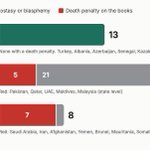
By one count, 47 countries are Muslim-majority. Of those:
* 13 have predominantly secular legal systems (e.g., Turkey, Albania, Azerbaijan, Senegal).
* 8 have legal systems largely based on their interpretations of Sharia (e.g., Saudi Arabia, Iran, Afghanistan, Yemen, Brunei).
* 26 apply Sharia-based family law (marriage, divorce, inheritance, child custody), with some extending further (e.g., Morocco, Egypt, Malaysia, Indonesia).
While 12 sadly have the death penalty for apostasy or blasphemy on the books, Iran is the only country known to have carried oneout one in the last 10 years.
The notion that the Muslim world is uniformly governed by a radical interpretation of Sharia is simply false.
Mixing religious and secular law is also hardly unique to Muslim countries.
Israel: Religious courts govern marriage and divorce. Jewish citizens go through rabbinical courts applying Halakha, and Muslim, Christian, and Druze citizens have their own courts. There is generally no domestic civil marriage.
The Philippines: A predominantly Christian country where Catholic teachings have shaped family law. General civil divorce remains unavailable. One notable exception is Filipino Muslims, who can divorce under a code drawn from Islamic law.
India: A Hindu-majority country that recognizes religion-specific personal laws governing marriage, divorce, and inheritance.
Sources: Humanists International, Pew Research Center.

Did you know that blasphemy laws aren't unique to Muslim countries?
According to @USCIRF, 95 countries have blasphemy laws on their books.
Of these, approximately: 48 were Christian-majority (51%), including Italy, Germany, Spain, Poland, Brazil and the Philippines. 36 were Muslim-majority (38%), including Pakistan, Saudi Arabia, Indonesia and Egypt. 11 had another religious majority or no clear majority (11%), including India, Israel and Thailand.
My position is consistent: No government, Christian, Muslim, Hindu, Jewish or otherwise, should criminalize criticism of religion.
Freedom of religion must include freedom to question and criticize religion.
Sources: USCIRF (2023); Pew Research Center (2025).

Enforcement of blasphemy laws varies enormously, with penalties ranging from fines and imprisonment to death.
According to USCIRF, 81% of documented state-enforcement cases worldwide between 2014 and 2018 occurred in just ten countries.
Embarrassingly, my country of birth, Pakistan, tops the list for documented enforcement, while Iran remains the only country to have carried out an execution for blasphemy in the last 10 years.
What a disgrace. No one should face imprisonment, persecution, or death for questioning or criticizing religion.

Can you refuse to let photons bouncing off a particular arrangement of skin and flesh activate ancient neural circuits and dictate your thoughts or actions?
Your brain may be wired with millions of years of evolutionary impulses. But you also have a prefrontal cortex, and the capacity to exercise conscious self-control.
It takes conscious effort. It takes practice. But you can train your mind. You can discipline your soul. You can choose how to respond. This doesn’t mean denying your impulses. It means refusing to become their slave. And I’d be lying if I claimed to have mastered this art. Far from it. But I certainly hope I am making progress on this life-long journey.
This fascinating intersection of neuroscience, free will, and spiritual growth is something I explore in greater depth in my forthcoming book, Rational Religion, particularly in my discussion of the soul and moral conscience.
