

AI + Math @MIT, compbio stuff @broadinstitute, prev: research @togethercompute
Joined February 2017
- Tweets2.8K
- Following903
- Followers1.2K
- Likes81.2K






Pinned Tweet
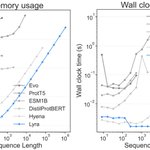
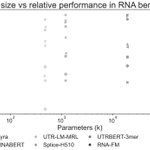
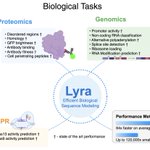
🧬 Meet Lyra, a new paradigm for accessible, powerful modeling of biological sequences. Lyra is a lightweight SSM achieving SOTA performance across DNA, RNA, and protein tasks—yet up to 120,000x smaller than foundation models (ESM, Evo). Bonus: you can train it on your Mac.
read our paper here: arxiv.org/abs/2503.16351

H-net supremacy, we’re so back! H-net has always been a conceptually appealing idea, and looking at this new release it’s clear how much effort and thought has been put into investigating empirical and interpretable advantages it materializes. (At matched compute!)

I've always believed that intelligence should come from simple, general building blocks that learn their own abstractions directly from raw data; in other words, the bitter lesson. I think we're finally seeing a real step towards AI that can learn from all data.
Language modeling on raw bytes is a microcosm of this ideal, and to me it's a central problem in AI: if we can't build LLMs that learn end-to-end from bytes, how will we handle the rest of the world's data that we understand even less?
Last year we introduced hierarchical networks (H-Nets) as a first step. Our new version finds up to 3-5x efficiency gains in controlled scaling law experiments, and at larger scale matches an open-source model trained on 11T tokens with ~10x less data and compute. The posts below walk through what we found and why we think it works.
Krithik Ramesh retweeted

FYI bad binder design accounted for ~3% of Phase 2/3 trial failures in the past decade
That is to say, the drug failed specifically because it was unable to bind to the target. This is what AlphaFold, Chai, Boltz, RFDiffusion, etc models are built and optimized to solve.
These models are clearly incredibly useful but they don't address 97% of later-stage failures !!!

Krithik Ramesh retweeted

Today, in collaboration with Anthropic, we’re excited to share rapid initial progress towards an antibody treatment for food allergy, which affects over 200 million people worldwide, discovered with the help of Claude.
At Divergence Labs, we believe that AI can unlock the next generation of antibody therapeutics with more effective mechanisms than before. Such mechanisms are urgently needed in food allergy, which involve overcoming one of the tightest affinity protein pairs in immunology, IgE and its receptor FcεRI, on mast cells.
Treatment with Xolair—the only approved antibody for food allergy—sequesters circulating IgE, but mast cells remain sensitized for weeks to months due to the extraordinarily slow dissociation of IgE from FcεRI.
We envision a treatment that actively pulls IgE off of FcεRI, without waiting for natural dissociation. Like picking a lock, this requires the right combination of geometry and force.
Our research team, working with Claude, ideated on mechanisms to accomplish this disruption, and converged on an antibody format with two arms with different functions and epitopes. Within one month, we designed, synthesized, and experimentally confirmed the biophysical function of the two arms, which we are now assembling into full therapeutic formats.
Krithik Ramesh retweeted

Can we track how the virus is spreading in the Ebola outbreak in DR Congo? Claude Science is providing bioinformatics support to scientists at @inrb_kinshasa responding to one of the most pressing global health challenges right now:
virological.org/t/reproducti…
Drs. Placide Mbala Kingebeni, Tony Wawina Bokalanga, Collins K. Tanui, Emmanuel Lokilo, Princesse Paku, their team, and I used Claude Science to analyze >800 virus genomes and infer the most likely ‘virus family tree’ to reveal when the outbreak started, how and where the virus is spreading, and whether spread is increasing or slowing.
Claude Science enables researchers to run complex bioinformatics workflows, including Bayesian phylodynamic inference, and go from sequences to public health insights in minutes (or hours for BEAST X analyses). It also allowed us to compare how stable the results are across >20 different phylodynamic workflows and data subsets, and easily rerun analyses as new data comes in: our current report shows results for genomes released up to last Saturday.
Our results are further corroborated by this preprint, posted one day after the initial Claude Science results, which independently estimated the viral effective population size for genomes collected through mid-August and finds the same early growth rate and slowdown since June: medrxiv.org/content/10.64898…


Krithik Ramesh retweeted

💥 Introducing Warp Sciences, a new company applying AI and robotics to help the world develop new medicines faster.
We’ve raised a $215M Series A led by @lightspeedvp to bring frontier AI out of the browser and into the lab, and build scientific capacity here in America.
I co-founded Warp with my long-time friend @dpatil, FAIR co-founder @manohar_paluri, and drug hunter Sol Reisberg. The early team is full of incredible people like @bkspears9, who helped achieve Q>1 fusion at LLNL.
Let me know if anyone is in Austin for the F1 race! Would love to catch up anything MLSys, Bio, or just for fun :)
4
328
Genuinely does anyone know good writing models? I’m so fed up trying to ideate sentences with 5.5 / Astra.
2
3
439
Krithik Ramesh retweeted

The passing of a legend. Less well known is that she coded and simulated the ODEs that Lorenz ended up using for the “Lorenz” system (with Linda Fetter).

We’ve lost an icon. Margaret Hamilton, a computer science pioneer best known for her work at MIT leading development of the flight software for the Apollo missions to the moon, has died at 90. Read about her legacy via MIT News: news.mit.edu/2026/margaret-h…

ALT Margaret Hamilton is reclined inside a NASA spacecraft module, surrounded by control panels and switches.
Krithik Ramesh retweeted

Honored to be named a 2026 STAT Wunderkind 🎉!
The profile covers a question driving our work at the @broadinstitute/@Schmidt_Center: how can we connect ideas generated by AI to experiments that actually test them?
Grateful to our collaborators and the mentors who have supported me along the way. Thank you to @statnews for highlighting this work!
Check out my profile here:
statnews.com/wunderkinds/yas…
#STATWunderkinds

Krithik Ramesh retweeted

was so fun whiteboarding what i'm seeing robotics companies focus on from specific to general intelligence and embodiments/form factors with @clairejyz

How do you know which robots are ready for the job?
Robotics companies test their models on different tasks and datasets. Lightspeed Partner @theamberyang sees a need for better ways to compare them, especially when customers are making decisions about safety.
She maps the robotics market by how general or specialized companies’ models and hardware are.
As models become more adaptable, Amber sees an opportunity for companies that specialize in deployment.
She calls them “DeployCos”: businesses that could pair existing models with different kinds of embodiments to handle work in places like factories or restaurants.
0:00 Why Older Robotics Companies Struggled
0:40 Mapping The Robotics Landscape Across Two Axes
1:16 Model Layer Breakthroughs From VLAs To World Action Models
4:20 One Brain Many Bodies And The Value Of Specific Models
5:27 In-Context Learning And How Robotics Companies Collect Training Data
7:40 Hardware Developments And Dependence On China
9:24 Specific Model Specific Embodiment Quadrant
13:05 The Deploy Co Angle And Open Router For Robotics
13:55 General Model Multiple Bodies Quadrant
15:50 General Model Specific Embodiment Quadrant
17:24 Where Things May Be Commoditized And Infrastructure Opportunities
20:45 Robotics Observability And Evaluation
22:33 Learning From Autonomous Vehicles
@clairejyz
Krithik Ramesh retweeted

Controlled experiments are standard in biology. BUT AI x Bio research is rarely held to same standards!
Instead they often appear years later as sanity checks by the community.
The burden of proof should be with developers!

Krithik Ramesh retweeted

More basic controls need to be present in ML papers, especially ML x bio papers. Many cool architectural ablations---but we should always baseline against the simplest possible models and explanations when possible.

I want to give such a big shoutout on the development of this plugin! He has worked incredibly hard to deliver tools inside of Codex / Rosalind that are genuinely useful toolset and menus that also integrate seamlessly with their models. Wonderful work Chris!

In honor of Dev Day, try out the Molecular Structure Viewer plugin (newly updated and improved!). You can do some really cool stuff with it! Videos coming soon


1
11
1,901
Krithik Ramesh retweeted

Genomes are full of dark matter of unknown functions.
We present Minerva, a new method for discovery guided by genome language models. Minerva reveals the interactions hidden in non-coding DNA, pointing to hundreds of new putative RNAs and repetitive elements per bacterial genome. Minerva allows us to find and study elements invisible to traditional methods at orders of magnitude greater scale than before.
Krithik Ramesh retweeted

We're hosting a protein design competition with @adaptyvbio. We'll be providing up to $1M in Claude credits, and additional funding to experimentally validate 5k designs submitted by the community. All results will be published openly and participants keep ownership of their designs.
We've selected five problems that push the boundaries of what is possible with today's capabilities: species cross-reactivity, pH-sensitivity, and peptide-MHC specificity, and difficult targets such as GPCRs.
@modal will provide compute credits and @TwistBioscience will provide DNA.
Apply here: docs.google.com/forms/d/e/1F…


To show what these optimizations make possible, we’re partnering with Adaptyv Bio on a protein design competition. Together, we’ll be experimentally validating over 5,000 designs.
We're providing up to $1 million in Claude credits plus funding alongside Adaptyv for experimental validation. Modal is contributing up to $250,000 in compute and Twist Bioscience is providing DNA.
Learn more on Adaptyv’s Proteinbase: proteinbase.com/competitions…
And sign up for the competition here: docs.google.com/forms/d/e/1F…

Krithik Ramesh retweeted

Thrilled to share that Delphy is out yesterday in @Nature 🎉
Led by Patrick Varilly and built with Ben Fry and the @fathominfo team, Delphy brings scalable, near-real-time Bayesian phylogenetics to outbreak response, combining a radically faster inference engine with an intuitive, interactive interface.
Paper: nature.com/articles/s41586-0…
Try it: delphy.bio/
@sabetilab @broadinstitute @fathominfo @acegid_igh
1/15

Absolutely incredible work by Chris, the field needs more accessible resources to learn bioAI :)
Learning resources play a key role in shaping where talent goes. Today I’m launching my side project, BioTorch, in public beta to give researchers a clearer path into biological AI.
LLMs have a wealth of great tutorials, courses, and minimal implementations from great teachers. They make the path from curiosity to contribution easy to see and offer researchers from fields like math or physics a legible roadmap to transition into AI research.
In bio AI, that path is much harder to piece together. That friction can mean fewer researchers entering the field, fewer startups getting built, and less investment allocated to promising ideas. This ultimately leads to fewer life-saving cures being discovered than would otherwise be possible.
BioTorch is my attempt to help change that.
It starts with 116 PyTorch exercises and 17 model guides. You implement the building blocks, test your code, and see how the pieces fit into seminal models like AlphaFold2, ESM2, and RFdiffusion.
The goal is to make influential papers in bio AI something you can understand and build on, bringing researchers up to the frontier as rapidly as possible.
I want more people working on biology’s hardest problems. My mission is to help researchers find their way into the field, and BioTorch is the result of that ambition.
BioTorch is completely free while in beta.
Try your first problem now!
biotorch.chrishayduk.com

Krithik Ramesh retweeted

Personal update! This is my last week at Meta.
When I joined FAIR, Joelle, now ex-ex-Head of FAIR, sent me a kind-hearted congratulatory message. Like a young apprentice, wonder-eyed and eager, I responded:
> "It feels like a dream come true."
Being at the forefront of innovation was my dream job.
Now nearly 5 years later, I’m delighted to have made the most of my time at FAIR.
From creating the Flow Matching line of work with incredible long-time collaborators and growing it into a foundational recipe for generative modeling across {image, audio, video, molecules, materials, text, multimodal}; to seeing these ideas scale across Meta and broadly across frontier models; and more recently being a core part of the TBD team training Muse Image and Muse Video from scratch and learning firsthand about all the messy plumbing it takes to make these models work in practice.
Most of all, I’m extremely grateful for the brilliant and diverse group of people I’ve had the chance to work alongside.
It was a fun five years.
Excited to start a new adventure, and to see what else there is to discover 😁
Krithik Ramesh retweeted

misleading paper title, and even the phrasing in the tweet is still a misnomer. this is not about "post-training" but "retrofitting" (cross-architecture distillation)
fwiw i've been bearish on distilling Transformers to recurrent models for a while, they're too different; architectural innovations just need to be trained from scratch

Simple beats complicated:
We show that switching to a sliding-window attention mask with attention sinks (at no cost) beats linear attention post-training.
Huge thanks to my collaborators @RheaSukthanker, @CameronPashmina, and @Emy_Aze.
Paper: arxiv.org/abs/2608.28444

Krithik Ramesh retweeted

Note that this is a very particular setup, where you take a (strong) pretrained softmax transformer and then post-hoc modify the architecture to SWA or linear attention and finetune/distill on little data.
I think the underlying observation might just be that if you take a very strong pretrained model, the best variant after adaption + distillation is (biased to) the one with least invasive adaption. Clearly, switching to linear attention is a much more invasive change than switching to SWA. So the takeaway is more: if you want linear attention, pretrain on linear attention.
Simple beats complicated:
We show that switching to a sliding-window attention mask with attention sinks (at no cost) beats linear attention post-training.
Huge thanks to my collaborators @RheaSukthanker, @CameronPashmina, and @Emy_Aze.
Paper: arxiv.org/abs/2608.28444