

To know words is to know sorrow
Liverpool, England
Joined December 2022
- Tweets320
- Following507
- Followers447
- Likes1.3K

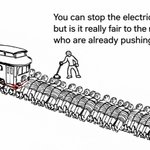


I'm genuinely curious. From the outside, Britain always seems to be making the “right” political and foreign policy decisions. So why does life for ordinary people seem to have gotten worse and worse since the pandemic?
No disrespect intended. I'm genuinely trying to understand how a developed country like the UK ended up in this situation.

Welcome to The UK. A fully developed country where millions of hard working people are struggling to survive.
We're taxed on absolutely everything, income tax, council tax, capital gains tax, VAT, National Insurance, Road Tax, TV license, sugar Tax, fuel tax, inheritance tax. If there's a way to take money from us, they'll find it.
Bills are constantly increasing to the point where people can barely afford them each month.
Rent prices are through the roof. A house that would have cost £600 a month years ago will now cost you about £1200 minimum.
Just going to the shop for a few bits now costs you as much as a weekly shop would have cost a few of years ago. You literally now pay £80 for 2 carrier bags of food.
People aren't struggling to survive and save money because they have subscriptions and buy coffee. People are struggling because everything is too fucking expensive.
I hope everyone realizes that they, too, have the ability to create love.
Loving someone should mean:
“I’m already happy with who I am, but I like you, and I want to share the love I have to give with you.”
Not:
“I love you so much that I’m willing to empty myself completely for you.”
That kind of love can make you lose yourself, until there’s nothing left of you.
I hope every day brings you a little happiness. Eat well, take good care of yourself, and remember to be kind to yourself.
Sending you a big hug. 🫂❤️
Congratulations to Gemini 4 Carbon on becoming the world's most powerful AI model!! 🎉
Pro users: Can't use it.
Ultra users: Can't use it.
API developers: Can't use it.
Artificial Analysis: Ranked #1 in the world.
Google: Thanks for watching.

Introducing Gemini 4 Carbon, our latest frontier model.
Carbon delivers improved performance across domains — ranking #1 on v5.0 of the @ArtificialAnlys Intelligence Index and sets a new state-of-the-art in cybersecurity and long-horizon capabilities.
It’s rolling out starting this week to cyber defenders through our Fairwind Program, with expanded access coming soon 🧵

My French friend, I think this is a much more complicated question than it appears.
First, let's talk about those who have benefited the most from China's economic rise.
Some may be government officials or their relatives. Others may be businessmen who made fortunes during the economic boom of the past two decades. Not all of them necessarily made their money through entirely legitimate or respectable means, and some may worry that their past could eventually catch up with them.
One major concern with China's political system is uncertainty, particularly when it comes to the consistency and predictability of government policies. I suspect this is also one of the reasons why some foreign investors have been pulling capital out of China in recent years.
For people who have accumulated substantial wealth but feel uncertain about the future, moving themselves and their assets abroad can seem like the safest option.
Then there's the working class, especially skilled tradespeople.
And please don't misunderstand me. I have enormous respect for blue-collar workers.
But the reality is that in China, many of these workers receive relatively low wages and limited social recognition, despite possessing valuable technical skills.
For them, developed Western countries can offer something China often struggles to provide: stronger social safety nets, higher minimum wages, and better protection for workers.
China actually has fairly comprehensive labor laws on paper. The problem is enforcement.
From what I've observed, enforcement can be inconsistent. Foreign companies may face strict scrutiny, while some domestic employers can get away with practices that undermine workers' rights.
Unpaid overtime, six- or seven-day working weeks, low wages, layoffs without proper compensation... These are familiar problems for many Chinese workers.
And even when the law is on their side, fighting an employer for compensation they're legally entitled to can become an exhausting and time-consuming process.
But perhaps the most awkward position belongs to China's middle class.
On one hand, they benefit enormously from China's relatively cheap labor.
Food delivery is fast and inexpensive. Home repairs are affordable. Taking a taxi or ordering almost any service is incredibly convenient.
Move to Europe or North America, and suddenly many of the things you used to pay someone else to do become your own responsibility.
On the other hand, many middle-class Chinese professionals struggle to find jobs abroad that offer the same income or professional status they enjoyed at home.
Their skills, qualifications, and professional networks don't always translate into the same advantages in an international labor market.
So they face a rather uncomfortable trade-off.
Stay in China, and enjoy a familiar environment, convenient services, and perhaps a better professional position, but deal with the pressures and uncertainties of life there.
Leave China, and potentially gain better social protections, a different lifestyle, or more personal freedom, but risk losing part of the financial comfort and professional status they once had.
That's why I don't think there's a single answer to why Chinese people emigrate.
For the wealthy, it may be about protecting their assets.
For workers, it may be about earning a decent living and being treated fairly.
For the middle class, it may be a much harder choice between two different kinds of security.
And sometimes, people simply want to live somewhere else.
A country's economic success doesn't mean everyone benefits equally from it, or that everyone wants the same kind of life.

I just came up with an interesting concept for a story.
Ability: [Instant Kill]
Choose a person. They die instantly.
[The Price 1: Someone Else's Memory]
You inherit one memory from the person you kill — the memory they treasured most in their entire life.
[The Price 2: Amnesia]
Every time you kill someone, you lose one memory of your own.
The Question:
If I killed every human being on Earth, but preserved each person's most precious memory within myself...
Could that, in some twisted way, still be considered a form of love for humanity?
📍 Dhaka, Bangladesh 🇧🇩
Glass buildings above, rickshaw drivers struggling to make a living below. Tangled electrical wires, crowded streets, low incomes, and infrastructure still struggling to keep up.
The gap between rich and poor is hard to ignore.
And yes, Bangladesh is also a parliamentary democracy with multiparty elections.
Democracy gives people a voice in choosing their government. But elections alone don't guarantee prosperity, decent wages, or functioning infrastructure.


Once two straight lines intersect, they are destined to drift further and further apart.
The curve of an inverse function can approach the coordinate axes infinitely closely, yet never touch them.
These are mathematical truths.
But love doesn't have to follow the laws of mathematics.
Some people spend their whole lives pretending to be someone else just to be accepted. Then they see someone being themselves without giving a damn, and somehow they take it personally.

Jealousy is real. People are no longer really jealous of material things and possessions. Now they are jealous of the fact that you can be your authentic self and they can't. They are envious of the fact that you don't have to manipulate people and fling things in order to be who you are. You can walk in your truths and be real, and that annoys them
Why do people who used to play video games for five hours a day suddenly lose interest in gaming once they’re past their twenties?
I think most longtime gamers who were once genuinely addicted to gaming will understand this.
When people talk about suddenly “breaking up with video games,” it’s not because we’ve “grown up,” “gotten busy,” or “become more mature.”
Those are just comforting excuses we tell ourselves.
The problem is the gaming industry.
We haven’t lost interest in video games. We’ve lost patience with mediocrity.
It’s not that we don’t love gaming anymore. Games just don’t hit the same.
And the biggest reason? Our standards have gone up.
Remember what gaming was like when we were kids?
We had crappy computers that could barely run anything. Games ran like PowerPoint slideshows. Characters clipped through walls and each other like something out of a horror movie.
And somehow, even those technical disasters became part of the fun. We’d lie in bed at night, remember some ridiculous glitch, and laugh to ourselves for ages.
Why?
Because back then, we hadn’t seen anything yet.
Every frame felt new. Every game mechanic was a surprise.
Our threshold for excitement was practically zero. Anything remotely interesting felt like a critical hit.
But what happens after ten or fifteen years of gaming?
You’ve grinded through RPGs, fought your way through FPS games, explored open worlds, died thousands of times in roguelikes, and dodge-rolled your way through countless Souls games.
We’ve accumulated so much gaming experience that we’ve practically maxed out the skill tree.
To what extent?
You launch a new game, take one look at the UI, glance at the skill tree, and you already know what the next fifty hours are going to feel like.
I know a lot of people hate it when someone judges or reviews a game without even playing it.
But seriously, so many new releases are absolute piles of crap.
Why the hell should I be excited about eating a pile of shit just because someone tossed a little butter cookie into it?
Maybe that sounds arrogant.
But the problem is, our tastes have been refined to a point where anything below a certain standard becomes almost physically unbearable.
It’s the same with movies and TV shows.
The more you’ve watched, the higher your standards become. Eventually, you don’t even have the desire to waste time finding out whether something mediocre is actually as bad as it looks.
Years ago, I might have given a terrible movie two hours of my life.
Now? I watch a few minutes and turn it off.
I call this “the curse of discernment.”
Once you’ve experienced something truly great, you can never quite go back.

J'ai 40 ans et je dois avouer que j’ai de + en + de mal à vraiment accrocher à un jeu vidéo. 🎮
Pourtant le JV est vraiment ma passion. 💙
Je sais pas si c’est l’âge, si on a trop joué ou si on a juste trop de choix maintenant…
Il y a plein de bons jeux, mais au bout de quelques heures, je me lasse.
Et ça m'embête parce que j’aimerais tellement retrouver cette sensation d’être à fond dans un jeu du début à la fin.
Vous ressentez ça aussi ? 👀
Humans often say to the little animals they rescue, “Make a sound or two, and I’ll take you home.”
But what if fate is whispering to us, too?
“Get up, human. Get up, and I’ll take you away.”

If you’re depressed, you’re living in the past.
If you’re anxious, you’re living in the future.
Only when you’re at peace are you truly living in the present.
Wow, I've gained so many new followers over the past couple of days! Thank you all so much! ❤️
I'll try my best to follow everyone back, one by one!
I'm currently preparing for a volunteer trip to Bangladesh, so I'm sorry if I haven't had time to reply or follow back yet.
Over the next few days, I'll do my best to share some interesting stories and experiences with you all!
Aber euer Landsmann Karl Marx hat uns doch gelehrt: „Die Befreiung der Arbeiterklasse muss das Werk der Arbeiterklasse selbst sein.“
Das steht sogar in den Statuten der Ersten Internationale!
Also, mein Bruder, euren Frieden müsst ihr euch schon selbst erkämpfen! 😂🇨🇳🤝🇩🇪


Still, I'd rather be disappointed by someone else's lack of empathy than lose my own.
The world is already cold enough. I don't want to become part of the reason why.

I think the saddest part is realizing that the person hasn't really changed. You just stopped making excuses for them.
Sometimes it takes one moment to see what you've been ignoring for years.
And once that respect is gone, even the good memories start to feel different.

there comes a moment when you lose all respect for someone you once liked, and suddenly, everything feels different. the things you used to find charming become disappointing, and the feelings you once had slowly disappear. it’s strange how one moment can change the way you see someone forever. sometimes, you don’t need closure or an explanation. you just see them clearly, and the attraction is gone.
That's basically the difference between the bourgeoisie and the proletariat in Marxist theory.
If you don't own the means of production and still have to sell your labor to make a living, then you're part of the working class, no matter how high your salary is.
A high income doesn't automatically make you a capitalist.

It's simple. If you have to work to make money, you're not "the rich," and you're not the problem. A surgeon earning $200k still stops getting paid the moment they stop operating. They're selling their labor. The wild gaps in how we value different skills are a real problem. But the person who earns while still in bed is profiting from everyone else's labor.