








El-Sayed comes off terribly here. Arrogant and patronising.

Michigan's Democratic candidate for Senate Abdul El-Sayed confronted @jamesmatthewsky, telling him he wouldn't answer his questions as he wants "zero" votes in the UK.
Watch the heated exchange between the two.
Watch our live coverage of the US midterms➡️ trib.al/BikRSb2
This is why industrial strategy so often falls short, and talk of ‘procurement for innovation’ is cheap.
If you want to crystallise your advanced manufacturing sector, to get greater returns to public investments in the science system, to crowd in that elusive private capital, to build those ecosystems - then at some point you have to put your money where your mouth is, and consistently apply the approach where the heuristics hold.

Despite a direction from me when Defence Secretary that the Skynet 6A , £2bn contract was too important to the UK space industry to offshore to Lockheed Martin it looks as if Wes is preparing to place the contract overseas. The damage it would do to Stevenage and the UK satellite industry would be irreversible and it was always assessed it could mean the end of the sector. Lockheed’s promises of factories in Newcastle were skin deep. The differences between types on offer were marginal. No.10 could, and should stop this. @AirbusDefence @wesstreeting @larisamlbrown @kevinbonavia @haynesdeborah
Lùcas M retweeted

A male Siberian tiger being released onto a nature reserve in Kazakhstan to join a female in hope that the species can flourish in the country after 70 years of extinction

Lùcas M retweeted

Me mandaron ayer esta foto desde la redacción del periódico 'Novaya Gazeta', cerrado por el gobierno ruso. El despacho de Politkovskaya, intacto desde su asesinato en 2006, ya está metido en cajas: "Ahora mismo estamos viviendo un naufragio. Nos mudamos con urgencia, embalamos las cosas que nos importan, sacamos el gabinete-museo de Politkovskaya y la biblioteca. Todavía no hemos tenido mucho tiempo para pensar en ello porque todo está ocurriendo muy deprisa. La próxima semana hablaremos en detalle sobre el último número. Después, cuando nos hayamos mudado y hayamos cerrado, pensaremos cómo salvar al equipo y cómo seguir viviendo", me cuenta una persona que lleva media vida trabajando allí.
t.me/javierovichOK/1531
Moscú, 2026.


In almost a decade at the OECD there have been many things about my job that I’ve enjoyed, but perhaps none more so than the steady drip of attending random football games in the FSU.
Tonight in Yerevan, where the ticket office kindly told me in advance via email that I needn’t worry about getting a ticket.


I like Dan Wang’s book. It’s good, and interesting.
That said, another way of putting this entire article is that both China and the USA derive their dynamism from their size, which is… obvious. That they have lots of cities and therefore centres of competing power is just a function of this.
The discussion of Europe is glib. That Vienna or Prague are so much larger than their second cities is an issue for many reasons, but the functional economic area, and therefore the one that defines much of science, innovation and technology, is Europe. Same with UK.

We’re delighted to announce that @danwwang is making his debut as a contributor, with a column for this issue of @WorksInProgress.
worksinprogress.co/issue/sic…
Few people understand the China–US contrast as well as Dan Wang, and fewer still write about it with so much talent. His book Breackneck has introduced the now famous meme of China as a “country of engineers” and United States as a “country of lawyers,” to explain the differences in building capacity and physical world stagnation we are seeing between the two polities.
In his new column for us, he takes up one specific thread in the long-running debate over how China and the US compare and argues that both owe part of their power to being polycentric.
One observation is that both the American and US capitals are not their biggest cities. Vienna, London, Seoul and Paris dwarf their countries’ second cities, by four to seven times. By contrast, Beijing isn’t China’s largest city, and DC isn’t even in the top five in the US. Does this make US and China lame, for having smol capitals? No! On the contrary, Dan thinks that this friction between political and economic centers is important and at least partially explains why both countries can combine dynamism with strong states.
But the two countries are polycentric in very different ways. China’s regions are culturally distinct and are shaped heavily by geography. While coastal provinces tend to look outward, mountain areas like Sichuan and Chongqing are characterized by evading the center’s edicts. Dan also points out some misconceptions: yes, China has central control, but it is weaker than it look. Local officials often ignore or quietly subvert senseless directives from Beijing, with enforcement thinning out quickly beyond the big cities.
The characteristic feature of American polycentrism is how well it sorts people into domains and “sends” them to specific cities: this is reminiscent of the point @patio11 has made around “The Sort.” In America, the smartest and most driven tend to cluster in a handful of cities, above all New York and San Francisco, with Washington and Boston are slightly behind them. More than this: each field has an obvious center: AI has its capital in SF, for policy and politics you have DC, for finance New York and for biotech Boston and more recently, SF.
Different cities in America also prize different things: Miami values looking good, Boston being intelligent and bookish, LA how famous you are and New York how rich you are. There is so much variety in terms of who you can choose to become in America. And the city you decide to live in might end up shaping who you are, moreso than in any other country!

Lùcas M retweeted

FC Augsburg believes it's quite terrible to have 17 other Bundesliga clubs sitting on a bunch of the league's limited supply of points.


Lùcas M retweeted

It’s a really a neurosis. Even if it were true—which it isn’t no matter how often you grunt and point at firm ranked by market cap—why do Americans care? Why is much of American discourse obsessed with asserting triumphalism by comparison?
There are venture capital fascists in Silicon Valley, MAGA finance bros in Dallas and accountants in Virginia who have opinions about knife crime in London, French immigration stats and EU AI regulations. It’s not just that these opinions are bogus—these people know even less about the world outside American than the average American but are persuaded that they know everything—but that they hold them so strongly, repeat them excessively and make them a key part of their worldview.
Why this insane insecurity and jingoism and the tendency to face outwards? It’s always a sign of internal decay. It’s never changed. And it is part and parcel of the same ideological metastasis that drives the dumb and dying ogre into disastrous wars and to amp up its subjugation in its own hemisphere. The Panslavism and foreign policy adventurism in late Tsarist Russia come to mind, but there are many other examples.

Anyone who thinks this isn’t also the position of German, Italian, French corporates is deluded.


Lùcas M retweeted

Des voyageurs attendant leur train de banlieue à #Dnipro, deux jeunes filles de 15 ans à #Tchernihiv… voilà ceux que les drones russes visent et tuent. Cynisme et crimes de guerre.

Lùcas M retweeted

"They killed us."
Russia's renowned newspaper Novaya Gazeta says it is formally shutting down, a day after it was evicted from its longtime Moscow editorial offices. (the paper had pretty much stopped publishing after the invasion of Ukraine)
t.me/novaya_pishet/60821

Lùcas M retweeted
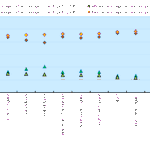
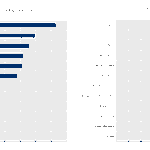
Few thoughts on regional productivity issues in the UK as a precursor for some later thinking on implications for the devolution (and science/innovation/technology) agenda(s).
Data from OECD STAN and where necessary ONS.
First:
Over past decade(ish - various vintages at play here due to lags with ONS and OECD), growth in 'lagging' regions in terms of GVA per worker has been pretty strong, but from a very low bar; leading regions lead, lagging regions lag, even if they're getting better.

Lùcas M retweeted
Re-reading the late, great Loren Graham’s ‘Lonely Ideas’, his history of Russian science and technology.
Am struck by how much this passage anticipated and speaks to something I have been thinking about recently: how the incompatibility of the political economy of technology in Russia with private sector led innovation in the space sector as seen in the US (and increasingly Europe) is creating a structural moat (technological but related my financial) may erode one of the few remaining domains (the other perhaps being nuclear) where the country could claim some geopolitically important leadership.

Lùcas M retweeted
Alternatively, we shouldn’t be looking to periodic ‘fiscal events’ to address long run structural issues in the U.K. economy, and the political incentives embedded into these cycles makes addressing those issues almost impossible.

Alternatively, we shouldn’t be looking to periodic ‘fiscal events’ to address long run structural issues in the U.K. economy, and the political incentives embedded into these cycles makes addressing those issues almost impossible.
Lùcas M retweeted

“It was that they could not get a real, live human being to speak to them. Ever. About anything.”
This is why we have to think about whether technology is making us more or less human, not just more or less efficient.

This is such a bleak story about what it's like to try to land a job right now. nytimes.com/interactive/2026…

Lùcas M retweeted

The GRU hacked into Jared Kushner's iPhone. Dutch military intelligence (MIVD) then recruited a GRU spy who gave them access to the hacked phone. What MIVD discovered was that Kushner had access to two bank accounts --one Azerbaijani, the other Israeli --where Saudi Crown Prince Mohammed bin Salman and Emirati ruler Mohammed bin Zayed deposited money. It sounds like a slightly far-fetched episode of "Slow Horses," but it's real. And it proves just how eye-poppingly corrupt this administration was and continues to be as its "special envoy" decides the fate of tens of millions in Europe in the Middle East. Simply incredible reporting by Matthew Cole, drawn from his new book on Kushner. vanityfair.com/story/jared-k…
