

Ministry of Agriculture, Animal Industry and Fisheries (MAAIF)
Uganda
Joined March 2026
- Tweets312
- Following171
- Followers1.2K
- Likes15


PUBLIC FOOD SAFETY ALERT: Poisonous seeds found mixed with beans in local markets
MAAIF has received complaints and verified evidence that rubber tree seeds (Hevea brasiliensis) are being fraudulently mixed with beans sold in some markets, notably in Agago District, posing a potential risk to public health.
1. HOW TO IDENTIFY THEM:
-Beans are flat or kidney-shaped. Rubber seeds are round like a marble.
-They have a shiny grey-white colour with dark brown/black spots and stripes.
-They have a small white dot where they were attached to the pod.
-See photos attached. If you see them, they are NOT beans.
2. WHY THEY ARE DANGEROUS:
These seeds are *NOT FOOD*. They are not edible.
I. They contain natural poison (cyanogenic glycosides) that can cause food poisoning.
II. If eaten raw or cooked with beans, they can cause: severe stomach pain, vomiting, dizziness, headache, weakness and diarrhoea.
III. Children are at higher risk. Chickens and pigs can also die if they eat many.
This is a case of *Food Adulteration*- accidental or intentional mixing of non-food items with food, which is illegal and dangerous.
3. WHAT CONSUMERS SHOULD DO:
Before buying:
I. Pour the beans on a flat tray and look through them before you pay.
II. Buy from trusted traders who clean their beans.
Before cooking:
-Sort thoroughly on a table or large plate. Remove ALL round mottled seeds, stones, and broken beans.
-Wash beans 2-3 times with clean water.
- Do not cook if you are not sure-bring a sample to your extension worker or Health Centre.
If someone has eaten them:
-Do not wait. Go immediately to the nearest Health Centre/Hospital and carry some of the seeds to show the health workers.
4. WHAT TRADERS AND MARKET LEADERS SHOULD DO:
I. Never store beans in sacks that were previously used for rubber seeds or other non-food items.
II. Always clean and sort beans before putting them on sale.
III. Market leaders ( SAS, Agricultural Police & Market Masters) should inspect produce regularly.
5. MAAIF APPEAL:
We call upon all LC1, LC2, Parish Chiefs, and VHTs to spread this message. Food safety is everyone's responsibility.
Eat Safe. Stay Healthy. Sort Your Beans Before Cooking!


From seedlings to billions: Buvuma oil palm farmers cashing in!
The promise of oil palm is becoming a reality for smallholder farmers in Buvuma Hub.
Since harvesting commenced on 1 October 2024, farmers from the first cohort enrolled in 2021 have collectively earned over UGX 3 billion from their oil palm harvests, demonstrating the transformative impact of commercial agriculture on rural livelihoods.
The momentum continues, with the next harvest expected to generate an additional UGX 500 million in farmer earnings.
Even more opportunities lie ahead. In the next six months, smallholder farmers in Mayuge Hub are expected to begin harvesting, unlocking new income streams and strengthening household resilience across rural communities.
Through the National Oil Palm Project (NOPP), inclusive rural transformation is gaining pace, with expansion into Masaka Hub, Mukono/Buikwe, and the new Busoga Hubs.
Empowering farmers. Creating wealth. Transforming rural communities.


Unlocking Africa’s blue economy potential
State Minister for Fisheries, Hon. Robert Migadde Ndugwa, together with officials from the Department of Fisheries, is participating in the conference on Fisheries management and aquaculture development in Africa in Addis Ababa, Ethiopia.
Held under the theme, “Realising the Potential of Fisheries and Aquaculture in Africa: Pursuing the CAADP Kampala declaration and Agenda 2063,” the conference brings together policymakers, experts and stakeholders to advance sustainable fisheries management, strengthen aquaculture development, and harness the sector’s contribution to food security, livelihoods and economic growth across the continent.


Parliament scrutinizes new fisheries regulations as MAAIF defends key reforms
This morning, officials from the Ministry of Agriculture, Animal Industry and Fisheries (MAAIF), led by the Minister of State for fisheries, Hon. Robert Migadde Ndugwa, have appeared before the Parliamentary Committee on Subsidiary Legislation to brief MPs on the status and operationalization of the Fisheries & Aquaculture Act, Cap 314.
The Minister revealed that nine new regulations have been drafted to strengthen governance of Uganda’s fisheries sector, covering fishing capacity management, fish quality assurance, aquaculture development, and protection of breeding areas, among others.
Migadde assured legislators that once approved, the 2026 fisheries & aquaculture regulations will provide a solid foundation for sustainable fisheries management, supporting food security, livelihoods, employment, and national development.
He confirmed that the regulations will be tabled before Cabinet next week, and later laid before Parliament early next month.
MPs raised concerns about the proposed reduction of boats to 33/66, questioning its impact on fishers at landing sites.
The Minister explained that the adjustment was technical, noting that many fishers had refused to register, and urged MPs to mobilize their communities to register for licenses to enable proper planning across all landing sites.


"World-wide, coffee is the most widely traded commodity, second to petroleum". Permanent Secretary MAAIF, Maj. Gen. David Kasura-Kyomukama.
Masaka leaders urge Government to fast-track mukene fishing ban review
The Minister of State for fisheries, Hon. Robert Migadde Ndugwa, together with MAAIF officials today, visited Ddimo Landing Site in Masaka and Kasensero Landing Site in Kyotera District to engage fishing communities on sustainable fishing practices and aquaculture development.
During the outreach, fishers, particularly women involved in silver fish trade, highlighted the economic hardships caused by the ban on silver fish fishing.
While acknowledging past use of illegal fishing methods, they pledged to comply with the new fisheries regulations and appealed to Government to lift the ban to restore their livelihoods.
Leaders from the region, including Masaka District Woman MP Joan Namutaawe and Kyotera District Woman MP Fortunate Nantongo, called for an expedited review of the ban, citing growing economic challenges and migration among fishing households in search of alternative livelihoods.
Responding to the concerns, Hon. Migadde assured the communities that Government is finalising the process of presenting the new fisheries regulations to Cabinet. He noted that, subject to Cabinet approval, the ban could be lifted in the coming weeks.
The Minister also urged fishing communities to work closely with Government in eliminating illegal fishing practices and destructive gear use to safeguard fish stocks and secure the future of Uganda’s fisheries sector.


Mukene fishing to resume as ban is lifted next month
State Minister for Fisheries Hon. Robert Migadde Ndugwa has issued a stern warning to all landing site committee members across the country to stop engaging in illegal fishing or face immediate dismissal.
While meeting fishermen at Ggolo and Kamaliba (Mpigi District) and Lambu (Masaka) landing sites, Migadde announced that starting next month, any committee member found involved in illegal fishing will be removed from leadership.
“We are going to dismiss leadership of landing site committees that fail to meet expectations,” Migadde said.
During the engagements, the Minister also delivered long‑awaited news for silver fish (Mukene) fishers. He confirmed that government plans to lift the Mukene ban next month, following completion of new regulations.
“The issue of Mukene was about regulations, which are now done. Once they are presented before Cabinet this month, the ban will be lifted next month,” he assured.
Mukene fishers nationwide have repeatedly appealed to government to lift the ban to sustain their livelihoods.
Migadde, together with MAAIF officials, is currently traversing the country to promote proper fishing practices and strengthen aquaculture development.


Uganda’s Push for aquaculture: Minister Migadde champions fish farming at Silver Hutch launch
The State Minister for Fisheries, Hon. Robert Migadde Ndugwa has rallied Ugandans to embrace fish farming as the country’s next big frontier for food security, jobs, and export growth.
This was during the launch of Silver Hutch Uganda Ltd at Bigaaga Village, Nkanja Sub‑county, Kyegegwa District.
Fish farming: High demand, low supply.
Migadde noted that both local and international markets are hungry for fish, yet Uganda’s supply remains low.
He emphasized government’s commitment through climate‑smart aquaculture programmes and other support initiatives to help farmers scale production and allow natural lakes to recover.
Crackdown on fake fingerlings
The Minister issued a stern warning to individuals selling fake or poor‑quality fingerlings, saying such practices discourage farmers and undermine the sector.
Shift from capture fishing
He urged communities living near lakes to transition from capture fishing to aquaculture, calling it the sustainable path for Uganda’s fisheries.
Foot‑and‑Mouth Disease appeal
Migadde also encouraged farmers nationwide to support the Foot‑and‑Mouth Disease (FMD) control programme, reminding them of the small fees involved:
Shs 8,000 per cow/pig. shs 4,000 per goat/sheep. He stressed that paying these charges protects farmers from devastating livestock losses.
Silver Hutch Calls for Government support
The Silver Hutch CEO, Tumuhimbise Silver appealed to MAAIF to support Bigaaga aquaculture park with a fish‑feed pellet machine and ensure the park is developed in line with environmental and legal standards.


Uganda takes irrigation agenda to the global stage at the Rome water dialogue 2026
Hon. Dr. Bright K. Rwamirama, Minister of State for Animal Industry together with Maj. Gen. David Kasura-Kyomukama, PS‑MAAIF have amplified H.E. Yoweri Kaguta Museveni’s irrigation campaign at the Rome Water Dialogue 2026.
Uganda underscored its commitment to:
Expanding irrigation infrastructure to boost year‑round production.
Improving water access for livestock and aquaculture.
Scaling climate‑smart agriculture and efficient water use.
Strengthening planning through data, technology and evidence-based systems.
Special focus was placed on Karamoja, where Uganda is transforming climate shocks into investment opportunities for irrigation, livestock water systems and fisheries development.
Hon. Rwamirama called for stronger support from FAO, development partners and the private sector to accelerate these interventions, noting that water security is central to food security, resilience and rural prosperity.


How Farmers Can Stay Financially Strong in Hard Seasons
Times are tough. Here are some practical solutions to farmers;
1. Go back to basics: Focus on food, shelter, clothing, medical care and school fees. Expensive perfumes, wigs, latest phones etc. are optional unless they are part of your profession.
2. Stay at the farm: During times of financial stress, one of the smartest decisions a farmer can make is staying at the farm. Remaining in the garden keeps you focused, grounded, and away from unnecessary social pressures that lead to unplanned spending.When you stay on the farm, you begin to notice gaps in daily operations, mistakes by workers, neglected tasks, or areas where efficiency can be improved. Correcting these issues early helps you cut losses, boost productivity, and increase profits. Sometimes, the best way to survive tough financial seasons is simply staying close to your source of income and managing it better.
3. Postpone social pressure: Avoid unnecessary contributions, pledges and fundraising drives. Don't pledge to impress. Wait until you have, or stay quiet if you are unable. True friends will understand.
4. Normalise public transport: No one ever died because they used a taxi or bus. Your car can rest.
5. Downsize the car: If your 3000cc car is stressing you, get a Passo, Vitz, Raum, or Demio. You cut your fuel bill by over 60%.
6. Park your lunch: Pack your breakfast and lunch from home. This is normal for Europeans and Americans. It saves millions. Fruits like apples, bananas are cheap and healthy.
7. Normalise cooking at home: Restaurants increase your feeding bill by over 400%. Home food is healthier and cheaper.
8. Give what you can: Tithes, offertory and building funds are for the able and blessed. It is no crime if you don't have. In the Bible, the poor widow who gave a small coin was praised more than the rich who gave for show.
9. Learn to say NO: Beggars and dependants have no limits. You cannot save everyone when you are drowning yourself.
10. Lend wisely: Only lend money you can afford to lose. And if you can't, say NO politely.
11. A weekend at home is normal: You don't have to be out every weekend spending. Rest, bond with family, plan.
12. Don't follow the Joneses: Your income, responsibilities and opportunities are different. Comparison is the thief of peace.
13. Faith without work is dead: Praying and fasting alone won't solve a financial crisis. Pray, then go out and look for opportunities and practical solutions.
14. No one is coming to fix it for you: The economy won't adjust to you. You must review your options and react appropriately.
15. Track every shilling: If you don't budget, you will wonder where the money went. Write your income vs. expenses.
16. Have one small side hustle: Even 20k a day extra changes the game. Sell something, offer a skill.
17. Protect your peace: Financial stress brings anxiety and shame. Talk to someone you trust. Don't suffer in silence.


Minister of State for Fisheries, Hon. Robert Migadde Ndugwa, has shared key insights from the just‑concluded MAAIF-District leaders conference, highlighting the major resolutions taken to strengthen Uganda’s fisheries sub‑sector.
He emphasized the renewed commitment to better regulation, improved governance, and collaborative action with district leaders to ensure sustainable management of fisheries resources across the country.
Unified push for water security as 15 sub‑regions set Uganda’s agriculture priorities
Day two of the MAAIF-District leaders engagement saw a strong push toward unified sector planning as 15 sub‑regions delivered their presentations, building on yesterday’s group discussions.
The Ministry will now consolidate all submissions into a single, comprehensive report to guide national agricultural planning and investment.
These coordinated efforts are part of Uganda’s broader agenda to shift from subsistence to commercial agriculture, ensuring higher productivity, stronger value chains, and improved livelihoods.
Joint push for water security & climate resilience
In his closing remarks, the Minister of Water and Environment, Maj. Gen. Kahinda Otafiire, applauded MAAIF for convening a national conference that brought together district political leaders and technical teams to align on key sector priorities, especially water for agricultural production and Foot and Mouth Disease prevention.
He revealed that he and the Minister of Agriculture, Hon. Frank Tumwebaze, have agreed to jointly tackle water for agricultural production as the country’s top priority.“Without water, there is no life because there will be no food. This is the time for us to focus on our priorities,” he said.
Maj. Gen. Otafiire noted that the Ministry of Water will focus on delivering bulk water, while MAAIF will guide how much water farmers need to boost food production nationwide.
He also highlighted new environmental protection efforts, including growing bamboo in dry regions like Karamoja, where drought has become routine, a strategy aimed at restoring ecosystems and strengthening climate resilience.
@KagutaMuseveni
@mkainerugaba
@Parliament_Ug


Driving Uganda’s farm transformation: Leaders unite at MAAIF conference
The two‑day MAAIF-District leaders conference at Imperial Royal Hotel has attracted full participation, bringing together leaders committed to accelerating Uganda’s shift from subsistence to commercial agriculture.
Discussions are focusing on key achievements, practical strategies, and the next steps needed to empower farmers, boost productivity, and strengthen agro‑industrialisation across the country.
@StateHouseUg @KagutaMuseveni @mkainerugaba @Parliament_Ug


MAAIF will host District leaders to discuss strategies to transform the agricultural sector from subsistence to commercial farming from 7-8th October, 2026 at Imperial Royal Hotel Kampala.

Buvuma oil palm growers SACCO launched: A new era of farmer empowerment!
A major milestone unfolded on 1 October 2026 as the Buvuma oil palm growers SACCO was officially launched at the Buvuma Hub Offices, marking a new chapter in strengthening farmer savings, financial access, and agribusiness growth.
Presided over by Hon. Kyofa Kabuye, Minister of State for Kampala, and Hon. Robert Migadde Ndugwa, Minister of State for Fisheries, the launch underscored the power of saving for development and investing in proper oil palm garden management to secure long‑term productivity and better livelihoods.
On behalf of MAAIF, Hon. Migadde handed over a motorcycle and desktop computer to boost the SACCO operations and improve service delivery to farmers.
The event also celebrated two years of oil palm harvesting in Buvuma, a testament to the district’s growing contribution to Uganda’s oil palm value chain.
The day concluded with the official opening of the SACCO office in Kitamiro, giving farmers a dedicated space to save, access financial services, and collectively drive the future of oil palm farming.
Saving today. Investing in our farms. Building a sustainable future for Buvuma’s oil palm farmers.
@FrankTumwebazek @PS_MAAIF @NOPP_UG @KagutaMuseveni @mkainerugaba @StateHouseUg @UgandaMediaCent @GCICUganda


MAAIF providing micro-scale irrigation equipment via a cost-sharing model to boost farm productivity. Ugift phase 2 loading....
Minister Migadde intensifies crackdown as more illegal fishing gears destroyed in Entebbe
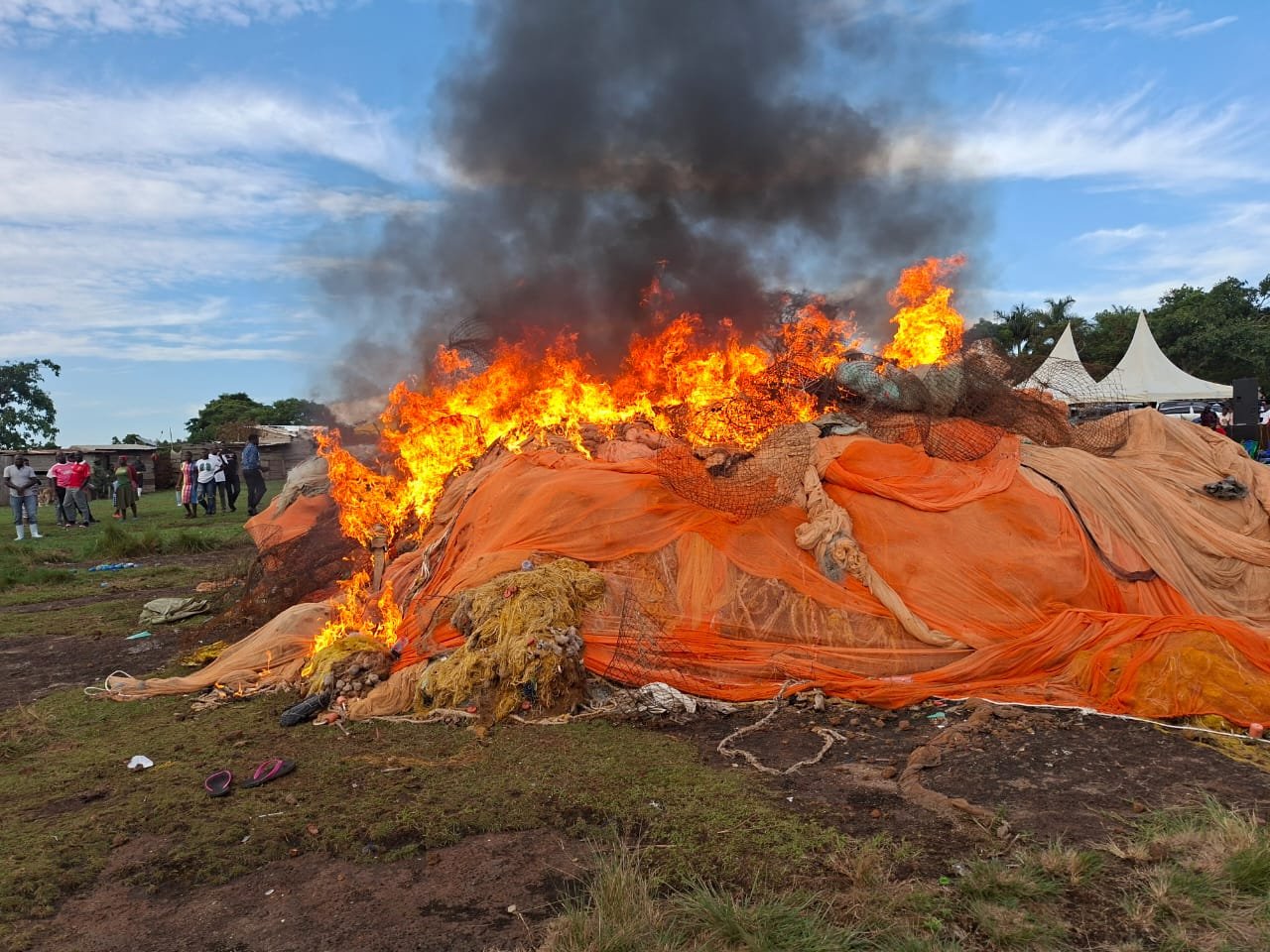
The State Minister for Fisheries, Hon. Robert Migadde Ndugwa has stepped up the nationwide campaign against illegal fishing, destroying more illegal gears worth millions at Mayanzi Village, Kigungu Landing Site in Katabi Sub‑county, Entebbe Division B, Wakiso District.
Migadde applauded the Kigungu landing site community, the landing site committee, and the district enforcement team for their vigilance in confiscating illegal gears.
“Today we have disposed of thousands of illegal fishing gears with the help of the community. These gears show how rotten the lake has become, and we must work together to clean it". The Minister emphasized.
He urged the public to continue sharing information on illegal gear importation and storage to support ongoing operations.
Entebbe Municipality RDC Frank Kyazze rallied fishermen to unite in protecting Lake Victoria: “We must work together to protect and clean the lake. We are its main beneficiaries, and teamwork is the new chapter in fighting illegal fishing.” he said.
Wakiso RDC Justine Mbabazi called on fishermen nationwide to abandon illegal fishing practices to safeguard their livelihoods. She also encouraged regular HIV/AIDS testing, noting the high prevalence in fishing communities.
The engagement was attended by top officials from the MAAIF Fisheries Department, reinforcing government commitment to restoring Uganda’s fisheries sector.
@FrankTumwebazek @PS_MAAIF @KagutaMuseveni @UgandaMediaCent @mkainerugaba


MPs back new fisheries reforms as Government moves to restore Uganda’s fish stocks
Uganda’s fisheries reforms have gained strong backing from Members of Parliament after State Minister for Fisheries, Hon. Robert Migadde Ndugwa, convened a high‑level engagement at Kajansi Aquaculture Research & Development Centre in Wakiso.
The Minister, together with senior Fisheries officials, briefed MPs from districts surrounding major water bodies on the new Fisheries & Aquaculture Regulations soon to be presented to Cabinet.
The reforms aim to strengthen fisheries management, rebuild fish stocks, and promote sustainable harvesting.
MPs welcomed the long‑awaited regulations, noting that fishing communities have repeatedly demanded clear guidelines to operationalize the Fisheries Act.
Kyotera Woman MP Fortunate Nantongo raised concerns about persistent insecurity in Kasensero, saying the new regulations should help restore order and allow fishers to work peacefully.
Mukono Woman MP Sheila Amaniyo urged government to announce the exact enforcement date, stressing that thousands of people remain jobless after fishing activities were halted.
Kyamuswa County MP Carol Birunji applauded government for prioritizing fishermen’s concerns, noting the Minister’s assurance that the matter is already before Cabinet.
Minister Migadde emphasized that MPs must be fully involved in the regulatory process, given their close interaction with fishing communities.
@FrankTumwebazek @PS_MAAIF @KagutaMuseveni @mkainerugaba @UgandaMediaCent @StateHouseUg


The Minister of State for Animal Industry, Hon. Bright Rwamirama was represented by the Commissioner for Animal Health and Production, Dr. Anna Rose Ademun during the World Rabies Day commemoration today in Luwero District.
In his remarks, the Minister urged Ugandans to ensure that their dogs and other pets are vaccinated annually to prevent the spread of rabies and reduce the financial burden on Government.
He said Uganda spends more than UGX 7 billion every year on anti-rabies treatment for humans, in addition to more than UGX 1 billion on rabies vaccines for animals.
He added that controlling rabies would enable Government to redirect these resources to other priority areas, including building schools and improving teachers’ salaries.
He noted that, between 2022 and 2025, the Ministry of Health recorded:
-67,393 suspected human bite cases
-190 human deaths, equivalent to approximately 47 deaths annually
-3,770 suspected rabies cases in dogs
-356 suspected animal deaths
-36 animal samples confirmed positive for rabies at the National Rabies Diagnostics and Epidemiology Centre (NADDEC)
The Minister said vaccinating a dog against rabies costs only UGX 4,000 per year, while post-exposure treatment for a person who has been bitten can cost approximately UGX 200,000 or 50 times more.
This means that vaccinating one dog costs just 2% of the cost of treating one exposed person, while helping prevent human suffering, deaths and economic losses.


