

Joined January 2018
- Tweets6K
- Following2.6K
- Followers50.2K
- Likes11.1K


Jason Kam retweeted

⚡️今晚 19:00,168X 对话 Folius Ventures Founder Jason Kam @MapleLeafCap:Crypto & AI,这个周期怎么看?
本篇由 @BITstocks_CN 赞助播出,10/21 起,168X 每天抽出 1 位成功通过 168X 链接注册的用户,送出 $30!
AI Cycle 正在主导 Crypto Cycle,而真正值得长期持有的 Crypto 资产,正在从 Narrative 转向 Cash Flow、Market Share 和 Value Accrual
这场会聊:
• Folius 上一轮 Crypto Cycle 收获如何?现在为什么进入 Harvest Mode
• Crypto VC 到 2030 年还会存在吗?什么样的基金才能活下来
• AI、半导体与中国 AI,Jason 现在真正看什么
🎙 嘉宾:Jason Kam @MapleLeafCap, Founder of Folius Ventures
🎤 主持人:Mr. Z @168MrZ
10/21 19:00 香港时间
xitter.cf/i/spaces/1dKrPrX…




Jason Kam retweeted

4 more shows are now on the record:
- 苔藓之火 by @gentlemanzhao
- Frictionless w/ @LoganJastremski
- @counterpartytv by @notthreadguy
- @edge_pod by @DeFi_Dad and @Nomaticcap
BidClub now covers 44 shows and 3,131 episodes—with full transcripts and bilingual summaries, free for you + your agents.

Jason Kam retweeted

Today, Carnegie Mellon University and Ken Griffin, founder and CEO of Citadel and founder of Griffin Catalyst, announced a historic $3 billion gift to elevate Carnegie Mellon in Pittsburgh and launch Carnegie Mellon University Miami. #CMUMiami
Learn more: cmu.edu/news/stories/archive…
Jason Kam retweeted

绝大多数上一代互联网生意基本都有first mover advantage 因为有network effect 且边际成本接近零; 但是LLM的生意可能是个later mover advantage, 虽然first mover 可能会有economic of scale 但是边际成本巨大且很有可能是凸性的现在看来.. 这个和过去有economic of scale的颠覆性创新生意又不同 (电力/汽车)


Jason Kam retweeted

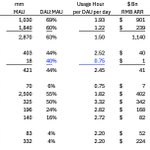
HERE'S ANTHROPIC NET ARR: Anthropic Gross ARR reported to be $65B in July '26 and at $10B net new ARR / month you get $85B Q3'26 and $115B Q4'26.
If you remove:
- Meta ($5B ARR)
- Payout to AWS Bedrock / GCP (20-25% API volume assume 20% take rate
- 2% of all API volume is Chinese labd distilling.
You get to:
$62B Net ARR Q3'26
$82B Net ARR Q4'26.
At 20x EV/ARR that implies $1.3T Q3'26 numbers and $1.6T Q4'26.
Makes the pre-IPO price of $1.4T on @prestocks make sense.


Anthropic pre-IPO gamesmanship post. Pure speculation but sharing as curious for thoughts.
Anthropic shifted from gross to net ARR accounting and stripped out both Meta and Chinese distillation from their $65 billion ARR number. Meta speculated to be over $5 billion in ARR so taking them out means they can easily weather it when Meta turns them off shortly after being public, which is widely expected. Also decreases the odds of Meta turning them off, watermelon quality dependent. All smart.
Then release Fable 5.1 so OpenAI feels confident releasing Astra. Vibes here on Astra are really good btw. I think that Astra was probably better than Anthropic was expecting.
Now there are whispers that Anthropic has solved Navier-Stokes, which would be super impressive.
Anthropic probably releases Fable 5.2, which should be better than Astra unless something is awry, sometime before the IPO. Likely also planning on showing a significant reacceleration in ARR in September which will of course leak to the press.
Grok 4.7, Meta’s Watermelon and ChatGPT 6.1 all likely coming in the next 6 weeks as well. All those labs are confident about their roadmaps in a way I have not seen in the last 18 months. And we will see about Gemini 4. Competitors get a vote in all these plans.
Grok Bot feels like the best agentic harness yet for enterprise use cases and Instinct is a promising agentic harness for consumer use cases. Should see variations of both from competitors soon. Grok Bot remains transformational for my use cases.
And all this is happening into a continued acceleration in overall AI demand.
Wild times.
As an aside, I think Krishna might turn out to be an exceptional CFO. His former Blackstone colleagues speak super highly of him. Going to be important as communicating clearly to Wall Street if they decide to shift their compute from inference to training will be difficult to digest the first time. Probably worth studying Amazon’s invest and then “check-in” margin strategy from 2010 through maybe 2016, which investors eventually understood.


Jason Kam retweeted

试了一下 @Jhy256 老板做的 NBA 实体卡交易平台 @MarketCardsHQ
抽中了一张保罗的衣物卡
还支持实体卡给你邮寄到家,我看台湾的兄弟 @_jimmy_chang 抽了一大堆已经收到实体卡了。
这个东西确实有点上头啊,而且比乱七八糟的 NFT 还是靠谱一些。
网站链接我放在评论区了 ⬇️

Jason Kam retweeted

如何利用这两个宝藏网站快速研究美股:
pod-exp.pages.dev/
bidclub.ai/
一个方法是,输入你研究的公司名、人或关键词,找出相关的播客。
这两个网站给出了文本、提炼。
属于高质量一手信息。
目前我对这两个网站的价值挖掘程度成还不到1%。
再次感谢@bidclubai @MapleLeafCap @0xmidman
以及@Jhy256 在前两周播客中的分享,打开了一扇门。

这期播客的嘉宾Jason Kam 分享了自己做的播客podcast文本提取和翻译聚合网站 bitclub.ai,太有价值了!强烈推荐。
xitter.cf/MapleLeafCap/status/20…
再次强烈推荐这期播客:xiaoyuzhoufm.com/episode/6a8…


Jason Kam retweeted

这轮 Qwen、DeepSeek、Kimi 旗舰开源模型给我最大的启发,不只是参数量继续增长,而是:
Open-weight ≠ easy to self-host。
过去企业所谓的 self-host,基本是:
买一台 Dell/HPE/Supermicro 8卡 OEM AI server
→ 下载权重
→ vLLM/SGLang
→ 挂一个内部 API。
但现在,部分满血或 FP8 frontier model 已经跨过单个 8-GPU NVLink domain 的显存边界;另一些即使勉强装得下,也几乎不给 KV cache、长上下文、并发和 HA 留空间。
真正的生产部署开始需要:
16/32张GPU、多节点高速网络、TP/PP/EP、prefill-decode separation、KV/state routing、调度、监控和故障恢复。
Self-host 的最小单位,正在从 single-node OEM AI server 变成 multi-node AI factory。
这并不意味着 OEM AI server 没有市场。FP4、Flash、蒸馏版、企业领域模型、RAG 和 Agent 仍然适合单节点部署。但想运行满血 frontier open model,企业买的已经不是一台服务器,而是一套 rack-scale infrastructure。
这也解释了为什么 open-source 不一定会削弱 NBIS、CRWV 等 Neocloud,反而可能强化它们:
模型权重被民主化了,但 frontier infrastructure 没有被民主化。
NBIS 和 CRWV 最新财报验证了几个趋势:
需求已经从训练扩散到 post-training、managed inference、open models 和 enterprise;
旧一代 GPU 仍可以承接 FP4、推理、RAG、Agent 和 batch workloads;
GPU 的“技术前沿寿命”可能只有1–2年,但“经济产生现金流的寿命”可以达到5年以上;
真正稀缺的不是单张GPU,而是已经通电、联网、可调度、可交付的 AI cluster。
所以 NVIDIA 的 moat 也不应只理解为 CUDA,而是:
GPU + NVLink/NVSwitch + Networking + Communication Libraries + Serving Stack + OEM/Cloud ecosystem。
同时,NVIDIA 数据中心业务正在“期货化”:
未来的 token 需求
→ AI客户签长期算力合同
→ Neocloud获得预付款和融资
→ 提前购买GPU和网络设备
→ NVIDIA今天确认收入。
NVDA赚的是短 duration,Neocloud承担的是长 duration。
这对 NVIDIA 未来12–24个月是 bullish:远期需求被提前锁定,收入可见性提高。
但长期风险也被推迟了:如果 active capacity 和真实 token demand 无法接住已经提前建设的 contracted capacity,最先出问题的不会是 NVIDIA,而是 Neocloud 的融资成本、客户预付款、GPU续租价格和 active MW 转化,之后才会传导成 NVIDIA 的订单悬崖。
因此分析 Neocloud 不能只看 Adjusted EBITDA,因为它剔除了最重要的折旧和利息。真正要看的是:
active MW、客户预付款、项目回收期、折旧、利息、再融资和股权稀释。
我的结论是:
Open-weight 正在民主化模型,但没有民主化 frontier compute。
Frontier self-host 正从 server-level deployment 升级成 cluster-level infrastructure。这个趋势对 NVIDIA、Neocloud 和 AI networking 都是长期利好,但股票选择取决于你愿意承担哪一种风险:
CRWV 是高杠杆、执行更成熟的 AI utility;
NBIS 是资产负债表相对更干净,但更依赖未来 capacity 兑现、估值和融资的 AI cloud growth stock。
$NVDA $NBIS $CRWV

看完了梁圣的演讲和很多twitter上面的观点,我先说下我的把。首先。GPU 五年折旧是合理的,CUDA 的单点锁定正在变弱,但 NVIDIA 的护城河并没有消失,而是从“软件锁定”升级成了“Token Economics+AI Factory 全栈”。
五年折旧不代表一张 GPU 五年后仍处于技术前沿,而是它在五年内仍能持续产生经济收益。新卡最初服务前沿训练、强化学习和最高端推理,随后逐步下沉到模型后训练、微调、RAG、企业 Agent、客服、文档处理、视觉 AI、批处理和开发测试。技术领先期可能只有两年,但经济寿命完全可以达到五年甚至更长。
H100 在 B200、GB200 和 B300 推出后仍然存在真实租赁需求,大型 H100 集群也可以在 xAI、Meta、Anthropic 等不同客户和工作负载之间重新配置。中国影子市场甚至愿意为受限制、缺乏官方支持的 NVIDIA GPU 支付显著溢价。这说明 NVIDIA GPU 不是一次性消耗品,而是具备通用性、流动性、可转租性和二级残值的生产资产。真正需要判断的不是第五年还能不能运行,而是第五年的租金、利用率和电力成本能否继续产生正贡献。
AI 从 hyperscaler 向 enterprise、银行、政府、医疗、制造和主权客户扩散,会进一步强化这条折旧逻辑。前沿模型公司永远希望获得最新 GPU,但大多数企业推理任务不需要最新一代架构。大量稳定、延迟要求适中、模型规模有限的企业工作负载,正好为旧 GPU 创造“第二生命周期”。因此,enterprise inference 不仅扩大 AI 算力需求,也会降低旧卡闲置率,延缓租金下滑和资产减值。
从 Neocloud 角度看,最理想的商业模式是:先通过 hyperscaler 和模型实验室的长期合同锁定基础收入,用这些锚定合同完成融资、建设数据中心和采购 GPU;再把剩余容量出售给 enterprise、政府、金融、医疗、机器人和 AI-native 客户,提高利用率和租金上限。大客户负责保底,长尾客户负责提高 ROIC。
这也是为什么 NVIDIA GPU 对 Neocloud 比专用 ASIC 更有价值。Neocloud 的核心能力不是只服务一个固定内部工作负载,而是把同一批算力在不同客户、模型和行业之间反复变现。今天可以租给 Meta,明天可以租给 Anthropic,之后还可以拆分给银行、医疗、企业软件和推理客户。通用 CUDA 生态、NVLink、网络、通信库、模型兼容性、OEM 支持和二级租赁市场,共同提高了资产流动性。
Dell、HPE、Supermicro 最近的订单、backlog 和客户结构,也在验证 AI 正从少数科技巨头向 enterprise 和 sovereign 客户扩散。Hyperscaler 有能力开发 TPU、Trainium 或其他 ASIC,也有足够的软件和编译器团队承担迁移成本;普通银行、政府和制造企业没有。它们更关心的是能否由 Dell、HPE、SMCI 或 Cisco 直接交付,能否满足安全、数据主权、合规、可靠性和运维要求,出现问题时由谁负责。在这种 OEM 驱动的企业市场里,NVIDIA stack 仍然是风险最低、部署最快、生态最完整的默认选择。
梁文锋关于 CUDA 的判断有一部分是对的。TileLang、Triton 和 AI 编程正在降低 Kernel 开发和跨平台迁移难度,所以“客户因为代码无法迁移而永远离不开 CUDA”的护城河确实在变浅。但 CUDA 从来不只是写 Kernel。真正的平台还包括驱动、编译器、cuDNN、cuBLAS、TensorRT、NCCL、NVSHMEM、NVLink、InfiniBand、Spectrum-X、调试工具、集群调度、故障恢复、OEM 认证和云端支持。
Jensen 很早就开始把 NVIDIA 的竞争标准从“单颗 GPU 和 CUDA 锁定”上移到 AI Factory 的整体经济性:tokens per watt、cost per token、revenue per megawatt、集群利用率、部署速度和可靠性。
旧的 NVIDIA 护城河是:
你很难离开 CUDA。
新的 NVIDIA 护城河是:
你即使可以离开,也未必能获得更好的 Token ROI。
因此,真正威胁 NVIDIA 的,不是竞争芯片能够运行同一个模型,而是竞争平台能够同时做到接近的模型效果、tokens/watt、cost/token、集群可靠性、部署速度、OEM 支持和跨客户流动性。在此之前,CUDA 的单点锁定可能继续变弱,但 NVIDIA 作为 AI Token Factory 和 enterprise AI Factory 默认平台的系统级护城河仍然存在。
Jason Kam retweeted

The reality is what we are seeing unfold is Nvidia speedrunning the creation of a synthetic hyperscaler.
Apologies in advance to all the investors who are stuck in their priors that this will trigger.
But what is a hyperscaler? Strip it down and it’s a scaled infrastructure collective of CPUs, networking, storage with a development platform on top. It fulfills two purposes. Financial: it pools and smooths the financial obligations of its users, renting infrastructure as opex instead of capex. And Operational: it builds software that makes consumption the underlying primitives simple by abstracting them away.
The hyperscaler makes a healthy 35-40% operating margin by buying hardware at bulk pricing, pooling scale to get a lower cost of capital, and driving utilization of that hardware with software that shares and shards workloads across many customers.
But in the age of AI, the atomic units of compute changed. Training (massive coherent clusters) and inference (agentic workloads) - require a fundamentally different configuration of resources. These new workloads require dramatically more accelerated compute, shifting the design target from multi-tenant utilization (the cloud era) to absolute workload performance (the AI era). The economics of the data center inverted. A giant, redundant fleet of Amazon Basics CPUs and storage doesn’t work when the job is synchronous training and one straggling node stalls the entire cluster. For inference, tokens per watt and time to first token dominate the economics, not how many VMs you can pack in a box. And none of it works in a world of limited power (at least in the West. Maybe in China).
As Nvidia built more compute and sold it to the hyperscalers, it faced a fundamental problem. The hyperscalers had classic innovator’s dilemma - expecting 35-40%+ op margin, along with an underlying desire to commoditize Nvidia's 75% GMs with their Amazon Basics equivalent. Pay an ASIC vendor a 25% margin instead of Jensen’s 75%, then stack your own 40% on top! They owned the customer relationships too, enterprises developed on AWS, Azure, GCP and their data was captive there too. But most important of all, these companies moved at their own pace. They were not scrappy or hungry to operate at the pace Nvidia or the AI labs felt was necessary to build out compute to fulfill the demand in front of them. They would never look at retrofitting a 35MW site outside of Ashburn, Virginia!
Meanwhile, a group of hungry entrepreneurs noticed the fat margins the hyperscalers earned renting what was basically stock Nvidia hardware with limited software on top, and started building businesses around it. Nvidia - skeptically at first - recognized that working with these partners would lead to faster development cycles and competitive fires and pressures for the ecosystem. Thus the neoclouds were born.
The software these neoclouds co-developed with Nvidia were purpose built for the new workloads. They solved the new problems and requirements operating the new infrastructure needed. They were ready with hotswaps, they did predictive maintenance, they built new storage software that was built for training with cheaper ingress and egress fees, because their competitive drive was to win workloads, not to lock in enterprise data on their platform. And it was working - AI labs started preferring to work with them over the hyperscalers. Common complaints on the incumbents: too slow, too particular with how their clusters were built, virtualization and networking overlays that made GPU clusters underperform stock Nvidia reference designs. Neocloud bare metal was cheaper too as their teams built AI software, not a cloud data warehouse business. And they were happy to run at half the margin (~20%) that the big guys would never accept.
But the hyperscalers still had one structural advantage: their balance sheets. Investment grade. Able to fund speculative capacity ahead of demand and rent it out at much higher spot rates. The neoclouds couldn’t play that game as lenders would only finance hardware that was already contracted with offtake. And more expensive if that offtake were the labs which at an earlier point were much more speculative. If only they could build ahead of demand, they could maybe earn the kind of returns Elon is achieving on Colossus.
But the twist is that balance sheet edge is eroding in real time. Google just printed its first negative-FCF quarter and raised $50B equity. Microsoft is carrying $329B of leases signed but not yet commenced. Even the IG balance sheets hit the wall - more capital had to come from somewhere else.
And that's how we got to where we are today. Look at what Nvidia has actually built. The operational half of a hyperscaler: DSX OS and Mission Control to run and operate GPU fleets, DSX reference designs and Omniverse digital twins as hardened playbooks for building a data center itself. Dynamo for inference serving. All the old secret sauces of the hyperscalers built specifically for new age data centers that they have led the way in architecting. Offered to any hungry, technically competent team with a serviceable site.
And then the financing half: the revenue share and credit support model that smooths utilization across a distributed fleet the way multi-tenancy used to. Support the operator, release capacity to demand, share in upside, and now bring $500B of third-party capital to the table. Nvidia standardized the asset with reference designs, proved the compute was “fungible and transferable across customers and operators” and showed infrastructure investors DD unlevered yields across 7-8% hurdles. Those investors wet their beaks on early special situation financings, saw the paybacks, and understood the demand was global. That’s why Jensen spent 2025 flying around Europe, the Middle East, and Southeast Asia - these are the ground zero for new compute sites. The reality is that this didn’t happen just over the last 3 months. CoreWeave master agreement in 2023, the $6B spot reserve backstop in 2025 (to sponsor capacity for the inference clouds), the Blackrock AI Infrastructure Partnership in 2024, Brookfield’s $100B fund with Nvidia in 2025, KKR Helix with Nvidia in 2026. And now six independent financing platforms. Chess!
So now the three fears by name. Circularity? Monday was the opposite with Apollo, BlackRock, Blackstone, Brookfield, Goldman Sachs, and KKR bringing third party capital, independently underwritten apart from one another, replacing Nvidia’s balance sheet rather than just extending it. Useful lives / underwritability of these assets? CoreWeave just disclussed A100s, 6 year old silicon contracted through 2029 and pushed 25% price increase on its fleet in July. The collateral is aging more like an aircraft than a smartphone as feared. Market share? If you don’t see that the platform of Nvidia and the fungibility of this compute is the reason why this is even possible - the skeptics themselves are making the bull argument. The complaint that these platforms keep capital tethered to Nvidia and away from other ASICs / accelerators… $500B that can only buy Nvidia reference architecture is a moat dressed up as a risk.
So what were you doing when the first synthetic hyperscaler was built under your nose? :)
All views expressed are my personal views. Does not reflect the views of Altimeter or Nvidia or anyone else. Full disclosure I/we may hold positions in companies mentioned. Purely for discourse and thinking - no financial advice.
Jason Kam retweeted

My seventh conversation with @GavinSBaker.
It's about the gap between what the market is doing and what companies are seeing. It's been a tough month or so for public AI names, but there's no sign of a slowdown on the ground in Silicon Valley.
We discuss:
- Why old GPUs are getting more expensive
- Open source vs the frontier
- Claude as Wall Street's Walter Cronkite
- Whether the buildout gets funded out of cash flow or debt
- SpaceX as a data center company
- And more
Enjoy!
TIMESTAMPS
0:00 Intro
1:17 AI Selloff vs. Fundamentals
10:20 Financing the AI Buildout
18:18 GPU Prices Keep Rising
24:23 Claude Moves Markets
29:01 What Could Break the Thesis
36:59 The Memory Supply War
42:08 Nvidia’s New Playbook
50:14 China and Open Source
61:51 Data Centers and Regulation
71:11 SpaceX and Orbital Compute


Jason Kam retweeted

Want to get paid $100 for one video ad? 🎬💰
We're running our first performance-based campaign.
Here's the deal:
You make a 30-60 second video ad.
We approve it.
We run it on Facebook and Instagram Reels with real ad spend.
You get $100 for every call that gets booked from your ad.
Unlimited submissions. No end date. Real data on what actually works.

Jason Kam retweeted

Today we are thrilled to announce that we are launching @trasiaxyz and have received $1.75M seed stage funding from Multicoin. We are grateful for the strategic support that Multicoin provides in the process.
Trasia is a non-custodial, Asia-first trading platform that was purpose-built to serve Asian traders with localized mobile trading interface. And we’re just getting started: through our upcoming HIP-3 protocol, we'll bring entirely new Asian markets on-chain.
You can already trade ample equity perps on Hyperliquid - most equity perps pairs are more liquid than those on the top centralized exchanges. Yet the vast majority of Asian traders, especially those who live and breathe CEXs, still aren't here. People are looking for a mobile trading experience that has no difference than trading on Binance or OKX, and that’s what we are going to offer: a mobile-app with CEX-like experience. Our team's ample experience building mobile interfaces will empower the delivery.
And the timing couldn't be better. The world is buzzing about CXMT, DeepSeek, and Unitree - but there are 100x more high-quality assets in the region: AI tigers, robotics champions, and the companies that will participate in shaping the next decade. We're extremely bullish that some of these companies will be the engine of regional market growth in the years ahead.
Our team also have deep roots in many local trading communities in the region - many of whom aren't on any DEX, yet. We will match what these traders want with what we offer on our Asia-first HIP-3 markets. It is about the pairs we choose to list, but it’s also about the traders we aim to serve. The market choice and the target audience both matter, and together the flywheel becomes the moat.
The web version is already live and the mobile frontend is coming soon this summer.
Trade Asia with Trasia.


Jason Kam retweeted

再聊聊这波下跌的触发点: 从年初小龙虾这种个人 agent 开始引领的 tokenmaxxing 故事线的冷却吧.
DeepSeek 被说是中国国运的来源应该是黑神话悟空的冯骥的微博, 而为什么 DS 份量这么重, 当时 2025/1/20 其实很多人都没有意识到它超出自身技术之外的, 对世界经济主线的影响, 我记得当时出来后很多人最大的乐趣是问它关于 "天安门广场" 的问题, 看着就很无语. 还是那句老话: 很多时代转折点出现的时候, 处于时代漩涡中心的人们大多数人只会认为自己度过了一个平凡的下午.
在今天市场开始 focus 在 "AI 头部公司还有没有钱烧"上面的时候, 回头看这一切的开始其实就是 2025/1/20 前后 DS R1 公开"蒸馏"技术的那个时间点. OAI 变得完全闭源其实也是从 O1 模型开始, 当他们内部发现"蒸馏"技术后, 应该立刻意识到了这意味着什么, 所以不惜毁掉自己 "Open AI" 的牌坊也要转向闭源, 如果这个技术一直没有公开流出, 甚至出来时间晚个1,2 年, 其实美国经济这边处理最难处理的债务问题会游刃有余很多.
最好的剧本是:
美国星际之门计划成功 (估计很多人已经忘记这玩意儿了) -> 头部科技公司 CAPEX + 政府资金 = AI 基建资金洪水
-> 投资带动就业 + 消费, 数据中心的建设带动相关制造业产业链回归 (芯片, 电力, 房地产, 半导体设备, 原材料 and etc)
-> Opus 4.5 诞生, 进入 AI agent 时代
-> token 卖出高价, 全世界公司买单, 为什么? 因为你不买单你对手买单, 你对手的员工产出可以高你 10 倍. 人没办法一天写几千行代码, AI 可以轻松做到, 如果其他公司不焦虑, 华尔街可以用 AI 写一堆带着诱人 ROI 数字的研报让你们焦虑, 买单
-> 卖 token 开始带来大量盈利, token 经济开始正循环, 赚钱 -> 加大投入 -> 出现更好模型 -> 画更大的饼 -> 世界买单 -> 赚更多钱, 债务问题那时候提出来就只会让人想笑了.
而这个可行性很高的剧本没有实现, 到今天市场开始焦虑 token 投资回报率问题, 一切的起点只是因为 DS 公开了蒸馏技术, 而只要基础架构还是基于 transformer, 没有根本上的技术突破, 那蒸馏就是梦魇, 会一直缠绕着美国这边的头部 AI 模型公司.
那为什么中国要选择这种路线? DS 的开源如果说是梁文锋的个人选择, 后续的 qwen 开源, 到今天的 glm 开源权重, 这背后可以说是中国 ai 技术界的整体选择. 因为对中国来说, 只要需要硬刚工业基础的竞争都是舒适区, 开源模型权重, 那剩下的只是比拼和竞争对手的工业基础建设的成本问题了(小到一个变压器成本, 大到一条芯片生产线成本), 而这一点上美国相对中国的劣势是很大的, 而如果选择闭源, 等于是放着自己的枪不用去和对手冷兵器对砍, 当然不会这么做. 而且中国那边押注 AI 更大的押注是赌这波 LLM 代表的 AI 最强能力 -- 更高级别, 带自主决策能力的自动化 -- 普及后, 最受益的是自己最擅长的新兴制造业: 机器人, 新能源汽车, 各种智能穿戴设备 and etc.

