

Assistant Professor @EmoryUniversity @EmoryGenetics, interested in Human Accelerated Regions, transposable elements, brain evolution, prostate cancer
Joined March 2012
- Tweets1.3K
- Following3.1K
- Followers290
- Likes2.3K


Pinned Tweet
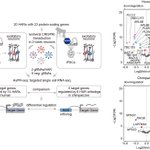
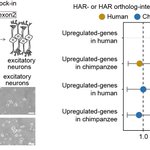
How did humans develop unique traits despite sharing nearly identical genomes with other primates like chimpanzees? Together with Han Yang (@HanYang_Henry), our new study on human accelerated regions (HARs) sheds light on this question @ nature.com/articles/s41586-0…. 1/12
Xiekui Cui retweeted

New Article! Trace-n-Seq combines retrograde fluorescent tracing with sorting and single-cell sequencing of innervating peripheral neurons dlvr.it/TVZr3z

Xiekui Cui retweeted

🦉 Tumor genes can matter most through the cells next door.
Most CRISPR screens ask which genes make a cancer cell survive. This preprint asks a more interesting question: which tumor genes determine what the surrounding immune cells actually do?
Using match-seq, a viral barcode system that records cellular proximity, the authors coupled spatial relationships to CRISPR perturbations and single-cell RNA-seq in mouse tumors.
The striking result is that different tumor genes rewired different immune neighborhoods. Tgfb1 loss recruited CD8 T-cell/macrophage activity; Traf7 loss favored a CD4 response; Nectin3 loss triggered NK-cell immunity.
More importantly, Tgfb1 and Nectin3 barely affected cancer-cell fitness in the pooled screen, yet deleting them across the tumor suppressed growth.
That exposes a blind spot in conventional functional genomics: a target can look dispensable when fitness is measured cell by cell, while being crucial because it controls the immune ecosystem around those cells.
The biology is still preclinical and match-seq itself needs broader validation, but the conceptual shift is useful—some of the better immunotherapy targets may be hiding not in tumor-intrinsic dependency maps, but in the spatial relationships those screens usually destroy.
#immunotherapy #CAR_T #CRISPR
👉biorxiv.org/content/10.64898…

Xiekui Cui retweeted

Now online! Gliomas phenocopy an inborn error of metabolism to drive neuronal activity and tumor growth dlvr.it/TVVTZ4

Xiekui Cui retweeted

Microglia as integrators of brain-associated molecular patterns cell.com/trends/immunology/a…

Xiekui Cui retweeted

Neural niches are recurrent features of human cancer that may relay signals to nearby cells, to the immune system, + to the brain. So what’s in these niches, and what happens when cancer cells barge in? We take a look under the hood in our new preprint 1/ biorxiv.org/content/10.64898…

Xiekui Cui retweeted

So proud of @Yoon_Seok_Kim and @Shawn_M_Gill and the whole team @Stanford & @hhmi_science! (This study was a 10- year odyssey.) Fascinating neuroligin-3 signaling mechanisms in 🧠non-neuronal cells #OPC #myelin #DIPG #DMG #GBM

Excited to share our new work revealing a novel insight of how neuronal activity drives glioma growth through neuroligin-3 (NLGN3)!
We identify a 'mechanotransduction' pathway reframing how activity-dependent signals are translated into tumor growth.
nature.com/articles/s41593-0…

Xiekui Cui retweeted

This new review of cancer and neuroscience lays out all current clinical trials and the potential for rebooting neural circuits and change tumor metabolism, blood vessel supply and immune function @ScienceTM
science.org/doi/10.1126/scit…

Xiekui Cui retweeted

Online now: Human-specific SRGAP2 paralogs synchronize neotenic microglial maturation and synaptic development dlvr.it/TTlbRC

Xiekui Cui retweeted

Strands of DNA-like thread coil, loop, and spill upward, evoking the genome's dynamic three-dimensional architecture within the nucleus of a living cell.
This special issue, with papers in Science and @ScienceAdvances, features single-cell and multiomic studies from the National Institutes of Health Common Fund's 4D Nucleome Program, which examines a fourth dimension of nuclear organization—how this folded structure shapes cell identity, shifts across development and aging, and goes awry in disease.
Learn more: scim.ag/4wZDL05
Xiekui Cui retweeted

Brain Prize winner 2025, Frank Winkler, recently delivered The Brain Prize Lecture: Neural Influences on Brain Tumor Growth and Therapy Resistance, at the 12th Congress of the European Academy of Neurology in Geneva.
@EANeurology
#BrainPrize #CancerNeuroscience #EAN


Xiekui Cui retweeted

From Shanghai to Modena, our journey continues west.
Today, we are in Lanzhou, a gateway to western China for centuries, where travelers have always paused before continuing towards wider, drier and more remote landscapes.
The #MaseratiGrecale and #MaseratiGranTurismo spend a few hours moving through the city's historic landmarks, where pagodas and courtyards offer a new backdrop, parting from the roads that brought them here.
A brief pause to appreciate where the road is about to take us next.
Because, beyond Lanzhou, the scenery changes dramatically.
And the best part of the journey is still ahead, as always with Maserati.
#Maserati


Xiekui Cui retweeted

AFAY is honored to invite National Academy of Sciences members and emeritus HHMI investigators, Professor Lily Jan and Professor Yuh-Nung Jan from UCSF to give three talks at Yale on their research and on “Scientific Excellence, Mentorship, and Equity”. (1/3)


Xiekui Cui retweeted

I’m truly honored to host Professor Lily Jan and Professor Yuh-Nung Jan in one of their three @AFAYale invited talks. As first-gen immigrants, Lily and Yuh-Nung have run a highly successful joint laboratory for over forty years, maintaining world-class scientific output and both becoming HHMI investigators and National Academy of Sciences members. They have over 100 former trainees who have become independent scientists leading their own research labs. In this talk titled "Scientific Excellence, Mentorship and Equity", Lily and Yuh-Nung discussed their insights and observations on these topics, including a “Bamboo Ceiling” and underrepresentation of Asian biomedical scientists in the U.S. in research prizes and in school leadership positions.


Xiekui Cui retweeted

If you are interested in single-cell splicing QTLs, it will be worth trying our new tool ISSAC.
Sharing my talk at the Biology of Genomes 2026.
Preprint: medrxiv.org/content/10.64898…
Xiekui Cui retweeted

Online Now! Human PSC-derived sinoatrial node-cardiac plexus assembloids model innervation-associated maturation of pacemaker systems dlvr.it/TSYZR1 #stemcells

Xiekui Cui retweeted

nature.com/articles/s41586-0… -> organ specific ECM shapes identities of intrinsic nervous systems. v cool!

Xiekui Cui retweeted

Currently my favorite video from the lab...
Mapping of blood vessels and nerves in whole embryos of rhesus macaque.
They form scale-free fractals of dimensions 3 and 2, independently of development stage.
More here: biorxiv.org/content/10.64898…
Xiekui Cui retweeted

Excited to share our @natgenet.nature.com study showing that epigenetically rewired transposable elements control AML leukemia stem cell properties and patient outcome.
Grateful to the team & collaborators. nature.com/articles/s41588-0…

Xiekui Cui retweeted
A twist in cancer neuroscience with many studies showing hijacking of neurons to promote cancer—melanoma growth slowed by nerve fibers in skin
cell.com/neuron/fulltext/S08…
