
Any posts are of my own opinion and not a specific endorsement. Advocate for truth, empathy, and respect.
United States
Joined June 2011
- Tweets14.8K
- Following109
- Followers301
- Likes7.2K




mikeMD retweeted

The real reason McCullough is lying about vaccine shedding is to sell his followers supplements.
mikeMD retweeted

1.6K of you read our analysis of Retsef Levi & Dr Joseph Ladapo’s Florida study.
So you know about the 3 MAJOR flaws in the study’s methodology that completely dismantle claims of Pfizer "toxicity".
Here is what the data REALLY shows 🧵👇 (1/4)

Did Retsef Levi & Joseph Ladapo prove Pfizer vaccines caused excess deaths?
MISLEADING. Florida study shows an observational gap, not proof of mortality. @jsm2334 notes negative controls failed to rule out bias.
Fact check 👇
techarp.com/fact-check/retse…

mikeMD retweeted

RFK Jr. fired all 17 members of the CDC’s vaccine advisory committee. He said industry ties had undermined public trust.
Two days later, he named replacements. Two had done paid expert work for people suing a vaccine manufacturer.
Whose financial ties counted? 🧵
🤖 Made with AI

mikeMD retweeted

When Baby Gwen was born, her parents decided not to have her receive a vitamin K injection, though it’s been standard practice for decades, and gave her drops instead.
What followed was as heartbreaking as you can imagine.
propublica.org/article/vitam… @deldeib

mikeMD retweeted

I have written an article critically assessing what we can and cannot conclude from Levi and Ladapo's recently published Florida Pfizer vs. Moderna all-cause deaths study.
Updating a preprint they published in April 2025, Levi, Ladapo, and colleagues have published a paper in Global Epidemiology reporting substantially higher mortality among Florida residents who received Pfizer rather than Moderna during the initial COVID-19 vaccination campaign: a 40% higher all-cause mortality hazard, 37% higher mortality not attributed to COVID, and nearly twice the hazard of COVID-attributed death. These are substantial associations that warrant serious consideration, but their interpretation depends on how much of the difference is causal, what produced it, and whether either vaccine actually increased mortality relative to remaining unvaccinated.
I raised a number of concerns in the earlier version of the paper. The authors have since made worthwhile improvements, and their matching scheme is reasonable. Nevertheless, important uncertainties remain, and the evidence presented does not establish that Pfizer caused deaths through direct vaccine toxicity. Even if the mortality difference were entirely causal, it could reflect Moderna providing greater protection against COVID and its complications rather than Pfizer causing harm.
Before getting into the details, I want to raise four questions that are important to keep in mind when interpreting these findings.
1. How much of the Pfizer–Moderna difference is causal? The authors controlled for several important demographic, geographic, and vaccination-related factors, but do not establish whether the groups were balanced on important comorbidities, frailty measures, and underlying medical risks. The unusually large COVID-death difference relative to other studies raises additional concerns about possible residual confounding, which could explain some substantial portion of the observed associations.
2. What would a causal difference represent? Other studies have found that Moderna provided better protection against several COVID outcomes. Greater protection could prevent deaths officially attributed to COVID, but also deaths following infections and complications that were never recorded as COVID-related. Florida's expanded sensitivity analysis meaningfully addresses deaths following documented infections, but cannot account for infections that went unrecorded, a potentially important issue during the state's intense Delta wave. Any difference arising through this pathway would represent better COVID protection with Moderna, not direct Pfizer toxicity.
3. Does the same mortality pattern recur elsewhere? Other large studies failed to reproduce a Pfizer disadvantage approaching 37–40% in non-COVID or all-cause mortality. Several direct comparisons found much smaller differences, sometimes in opposite directions, including a recent English study following over one million matched booster recipients for nearly a year. Although these are not exact replications, the lack of consistent independent corroboration weakens the interpretation that Florida identified a large, persistent, broadly applicable harmful effect of Pfizer.
4. Did either vaccine actually increase mortality relative to remaining unvaccinated? The Florida study cannot determine this. Both vaccines could have reduced mortality, with Moderna reducing it more. Claims that both vaccines increase deaths imply an even larger harmful effect from Pfizer relative to no vaccination, which is difficult to reconcile with large population studies reporting substantially lower observed mortality among vaccinated individuals, including over longer follow-up periods. These comparisons are susceptible to healthy-vaccinee bias and other confounding, but very large hypothesized harmful effects would require correspondingly substantial and persistent bias or offsetting benefits to explain the observed results.
These questions are essential because the interpretation of the Florida findings has often gone well beyond what the evidence establishes.
Much public commentary has treated the results as proof that Pfizer caused deaths through vaccine toxicity, or even as grounds for withdrawing both mRNA vaccines. Yet whether the observed difference is causal, whether any causal difference reflects vaccine harm rather than greater protection with Moderna, and whether either vaccine increased mortality compared with no vaccination are fundamentally different questions. The Florida study does not resolve them, and the broader evidence provides little corroboration for a large, persistent nonspecific harmful effect. These uncertainties need to be acknowledged before assigning a definitive causal interpretation to the findings.
The article linked below explores these questions in detail, and discusses what we can and cannot conclude from this study based on the evidence it provides.
@RetsefL @FLSurgeonGen @HHSGov @SecKennedy @NIHDirector_Jay @APPCPenn @UPennDBEI @PennMedCSO @PennMedicine @UPennIBI

mikeMD retweeted
Thanks for linking.
I have already critically assessed a previous version of this paper and highlighted several key issues, particularly inadequate adjustment for medical comorbidities and other important mortality-related confounders, limitations of the negative-control and sensitivity analyses, and the inability to infer vaccine-related harm simply from differences between two vaccinated groups.
The revised paper makes some meaningful improvements, including starting follow-up at the first dose, adding negative controls, and conducting additional sensitivity analyses.
However, the central concerns remain. The authors still cannot adequately account for major individual-level mortality risk factors, including comorbidities, frailty, and healthcare utilization. Their negative controls and sensitivity analyses do not rule out meaningful residual confounding, especially given the ones they chose are unlikely to share similar confounding structure with the primary analysis, which is a necessary property of an effective negative control analysis (plus one of them showed an effect almost as large as their primary effect, 1.22 vs. 1.34). And differential protection against COVID mortality and post-COVID sequelae could still contribute to the observed differences.
The study legitimately demonstrates an association between vaccine brand and subsequent mortality in a selected matched Florida cohort. It does not establish that these differences are causal, much less that they reflect vaccine-related harm.
An unvaccinated comparator isn't necessary to investigate comparative effects between vaccine brands. But without establishing the effects relative to no vaccination, one cannot conclude that either vaccine increases overall mortality, since both could reduce mortality, but to different degrees.
My earlier critique with some more details:
teapawt.net/jsm2334/status/1918083…

MIT Professor of Operations Management @RetsefL and Florida Surgeon General @FLSurgeonGen have published a medRxiv preprint paper presenting results from a matched cohort study of Florida residents comparing Pfizer and Moderna mRNA vaccines with respect to all cause deaths, cardiovascular deaths, covid attributed deaths, and non-covid attributed deaths within 12 months after receiving 2nd dose of vaccine in 2021.
The study has some very strong elements, including
1. Constructing cohorts of Pfizer and Moderna residents matched 1-to-1 based on 5-year age bins, sex, race/ethnicity, vaccination site, census tract, and calendar month of 2nd vaccine (and also apparently SVI scores for socioeconomic status and housing/transportation, although that is not mentioned in the methods section of the paper).
2. Assessing residual confounding via one negative control outcome (death by suicide/homocide) and an "E-value" analysis to assess how strong unmeasured confounders would have to be to make the results non-significant.
3. Sharing of code/scripts to run their models
They found the Pfizer vaccinated cohort had higher death rates for all cause deaths (OR=1.38), as well as for the various cause specific death categories:
covid attributed OR=1.88
non-covid attributed OR=1.36
cardiovascular OR=1.54
They interpreted these results as indicating differential non-specific death effects between the two vaccine brands, and conclude that this indicates "potential concerning adverse effects on all-cause and cardiovascular mortality"
The paper has some minor weaknesses and at least two key ones:
1. Failure to account for medical (co-morbidity) confounders
2. Lack of comparison to unvaccinated death rates.
These limitations may be a consequence of the data they had available to them, since:
1. they did not have medical co-morbidities
2. while they had death data for unvaccinated residents, they may not know the correct denominator or have measurements of the demographic confounders.
Nonetheless, these weaknesses limit the strength of their conclusions.
The lack of knowledge of unvaccinated death rates for this population limit the conclusions they can make about vaccine safety from this study.
Without a comparison with unvaccinated death rates, it is unclear whether:
1. Both vaccinated groups' death risk are greater than unvaccinated death risk
2. Pfizer death risks are greater than unvaccinated death risks but Moderna's are lower.
3. Both vaccinated groups' death risk are lower than the unvaccinated death risk.
The conclusions drawn from this study about potential vaccine safety depend heavily on which of these 3 cases apply.
If #1 (or #2) apply, then I could see concluding the study raises safety concerns
But if #3 applies, then I don't see how they can state that the simple fact that Pfizer had higher death risk than Moderna raises vaccine safety issues.
While their conclusion in the paper is more carefully worded, the author's x.com posts on this paper suggest stronger conclusions, with Levi claiming the results "raise concerns regarding the impact of COVID-19 mRNA vaccination on all-cause mortality and Ladapo stating "these products do not receive the safety scrutiny they should", and the study being forwarded on social media suggesting it demonstrates the mRNA vaccines increase all-cause mortality.
I don't agree that results merely comparing the two different vaccine brands are sufficient to raise concerns about impact of mRNA vaccine on all cause mortality, without knowledge of how they compare with the unvaccinated death risk.
Especially considering the fact that there are numerous existing data sets and studies (UK, Canada, Norway, Hungary, to name a few) comparing all cause mortality between vaccinated and unvaccinated in 2021, and to my knowledge all of them found lower all-cause mortality in vaccinated than unvaccinated of the same age group (and several of the studies also adjusted for other comorbidites)
While this paper has many strengths and provides interesting results to consider in relative death rates for Pfizer and Moderna vaccinated Florida residents, its conclusions that the results raise safety concerns about mRNA vaccines increasing all-cause deaths are not justified.


mikeMD retweeted
MIT Professor of Operations Management @RetsefL and Florida Surgeon General @FLSurgeonGen have published a medRxiv preprint paper presenting results from a matched cohort study of Florida residents comparing Pfizer and Moderna mRNA vaccines with respect to all cause deaths, cardiovascular deaths, covid attributed deaths, and non-covid attributed deaths within 12 months after receiving 2nd dose of vaccine in 2021.
The study has some very strong elements, including
1. Constructing cohorts of Pfizer and Moderna residents matched 1-to-1 based on 5-year age bins, sex, race/ethnicity, vaccination site, census tract, and calendar month of 2nd vaccine (and also apparently SVI scores for socioeconomic status and housing/transportation, although that is not mentioned in the methods section of the paper).
2. Assessing residual confounding via one negative control outcome (death by suicide/homocide) and an "E-value" analysis to assess how strong unmeasured confounders would have to be to make the results non-significant.
3. Sharing of code/scripts to run their models
They found the Pfizer vaccinated cohort had higher death rates for all cause deaths (OR=1.38), as well as for the various cause specific death categories:
covid attributed OR=1.88
non-covid attributed OR=1.36
cardiovascular OR=1.54
They interpreted these results as indicating differential non-specific death effects between the two vaccine brands, and conclude that this indicates "potential concerning adverse effects on all-cause and cardiovascular mortality"
The paper has some minor weaknesses and at least two key ones:
1. Failure to account for medical (co-morbidity) confounders
2. Lack of comparison to unvaccinated death rates.
These limitations may be a consequence of the data they had available to them, since:
1. they did not have medical co-morbidities
2. while they had death data for unvaccinated residents, they may not know the correct denominator or have measurements of the demographic confounders.
Nonetheless, these weaknesses limit the strength of their conclusions.
The lack of knowledge of unvaccinated death rates for this population limit the conclusions they can make about vaccine safety from this study.
Without a comparison with unvaccinated death rates, it is unclear whether:
1. Both vaccinated groups' death risk are greater than unvaccinated death risk
2. Pfizer death risks are greater than unvaccinated death risks but Moderna's are lower.
3. Both vaccinated groups' death risk are lower than the unvaccinated death risk.
The conclusions drawn from this study about potential vaccine safety depend heavily on which of these 3 cases apply.
If #1 (or #2) apply, then I could see concluding the study raises safety concerns
But if #3 applies, then I don't see how they can state that the simple fact that Pfizer had higher death risk than Moderna raises vaccine safety issues.
While their conclusion in the paper is more carefully worded, the author's x.com posts on this paper suggest stronger conclusions, with Levi claiming the results "raise concerns regarding the impact of COVID-19 mRNA vaccination on all-cause mortality and Ladapo stating "these products do not receive the safety scrutiny they should", and the study being forwarded on social media suggesting it demonstrates the mRNA vaccines increase all-cause mortality.
I don't agree that results merely comparing the two different vaccine brands are sufficient to raise concerns about impact of mRNA vaccine on all cause mortality, without knowledge of how they compare with the unvaccinated death risk.
Especially considering the fact that there are numerous existing data sets and studies (UK, Canada, Norway, Hungary, to name a few) comparing all cause mortality between vaccinated and unvaccinated in 2021, and to my knowledge all of them found lower all-cause mortality in vaccinated than unvaccinated of the same age group (and several of the studies also adjusted for other comorbidites)
While this paper has many strengths and provides interesting results to consider in relative death rates for Pfizer and Moderna vaccinated Florida residents, its conclusions that the results raise safety concerns about mRNA vaccines increasing all-cause deaths are not justified.
mikeMD retweeted
This statement is incorrect and not supported by the study:
It's an observational study comparing 2 different mRNA vaccines - you cannot claim "no one should be taking mRNA vaccines" when you only compared 2 mRNA vaccines. There is no other control. /1

As I said in January 2024, no one should be taking mRNA COVID-19 vaccines because of their terrible safety profile. But for those who had to take one, Florida’s public health data strongly implies that thousands of Floridians died as a result of receiving Pfizer instead of Moderna. The number of lives lost in the U.S. and internationally is staggering, based on this analysis. The culture of approving vaccines without adequate safety testing and assuming “innocent until proven guilty” with these products absolutely, positively needs to end.
mikeMD retweeted

Studies from Europe and North America show higher LDL cholesterol raises heart attack and stroke risk in a clear, consistent, dose-dependent way. Genetic data, long-term population studies, and drug trials all confirm this link and that lowering LDL cuts risk proportionally.
For people who already have cardiovascular disease, guidelines target LDL under 70 mg/dL, or under 55 mg/dL for those at highest risk, because further lowering reduces future events.
mikeMD retweeted

Science is under siege. @nytimes has launched a major project examining how Trump is dismantling the research enterprise. It's not just medical research. There are “potentially grave consequences for the future of national defense.”
First installment:
nytimes.com/2026/10/31/scien…

mikeMD retweeted
Yes. The McCullough Foundation report is a self-published, non-peer-reviewed document uploaded to Zenodo. Co-authors include Andrew Wakefield (1998 Lancet paper fully retracted for fraud; medical license revoked) and Peter McCullough (Chief Scientific Officer of The Wellness Company). Lead author Hulscher and McCullough have multiple other paper retractions or withdrawals. The Wellness Company markets supplements and kits positioned as treatments for vaccine injury and related claims.
mikeMD retweeted
Yes. Autopsy series and CDC data show SARS-CoV-2 infection produced the ARDS, diffuse alveolar damage, thrombosis and multi-organ failure that accounted for the large majority of attributed deaths. Early ventilator mortality tracked disease severity rather than the machines; remdesivir and other agents showed neutral-to-modest benefit in trials, not widespread fatal harm.
mikeMD retweeted
The retraction was more than justified and long overdue.
That paper had absurd fatal flaws in design and analysis that would result in a failing grade if even submitted as a college research project.
The errors and flaws are so great I won’t even take the time to explain them but the article linked here does a good job of listing and providing a basic explanation of many of the major ones.
The fact The Wellness Company continues to use its invalid conclusions in its marketing even after these fatal flaws were revealed, they could not address them, and the paper was retracted, speaks to their practices and priorities.
By promoting an unproven (and likely ineffective) treatment based on unsubstantiated claims, they may persuade people to forego proven effective treatments that might actually help them, and lead to great harm.
🚨 The infamous study claiming ivermectin delivers an "84.4% clinical benefit" for cancer has been officially RETRACTED!
But the real story is how the authors rigged the math to sell alternative health protocols.
Thread & key findings 👇 🔗
techarp.com/fact-check/hulsc…

mikeMD retweeted

Antivaccine activist: stealth ninja nurses vaccinate you without consent under anesthesia! Also, hire me.
Reality: hospital offers parents the option of requesting their child be vaccinated under anesthesia, to reduce barriers and increase vaccination.
stopantivaxpropaganda.org/p/…

ALT Tweet by Aaron Siri says: “if you or your child were injected with a vaccine under anesthesia, here is a link to an attorney advertisement and intake form my firm just put out.”
mikeMD retweeted
Large studies show COVID infection raises clot (VTE) risk far higher than vaccines—often 10-30x acutely. mRNA vaccines show little to no excess clot risk overall; vaccination cuts post-infection clot risks by 50-80%. Rare TTS was mainly with adenovirus shots no longer used.
Yes, The Wellness Company has faced criticism for promoting vaccine-related claims and selling unproven supplements/treatments lacking strong clinical evidence.
mikeMD retweeted
Those lists anti-vaccine activists claim have studies that vaccines cause autism? Over 50% are not even about vaccines, others not about autism, several are retracted studies. On the other hand, the body of research finding no link is strong and robust. thelogicofscience.com/2026/1…

mikeMD retweeted
Yes. Those observational patterns in older adults mostly reflect reverse causation: illness, frailty or malnutrition lower LDL while raising mortality risk.
Genetic evidence (Mendelian randomization) and RCTs show higher LDL causally increases ASCVD. In otherwise healthy people, lower LDL reduces cardiovascular events with no clear lower limit of benefit and no major harms from the levels reached by healthy diets or proven therapies.
mikeMD retweeted
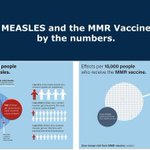
No confirmed measles outbreaks from vaccine shedding. A 2016 systematic review of 773 articles and CDC data found no proven human-to-human transmission of the attenuated measles vaccine virus (genotype A). Shedding of RNA can occur briefly but is not infectious.
No significant risk to people with normal immune systems.
Dropping MMR rates raises major risk to the immunocompromised. They cannot safely receive the live vaccine and rely on herd immunity (around 95% coverage). Wild-type outbreaks then expose them to severe disease or death, far outweighing any theoretical shedding concern.


mikeMD retweeted

Well, I’m pleased to see yet another paper making unsupported claims about the effectiveness of ivermectin and mebendazole in cancer patients has been retracted.
The linked article overreaches somewhat in its criticism, but the fundamental scientific problems with the study are undeniable.
What I find astounding is that I fully expect to see this retracted paper, and its impressive-looking statistics, cited for years to come. I doubt a single true believer will change their mind. The clinical evidence they were celebrating has collapsed, but the belief will survive just fine.
And here’s my favorite part.
Whenever you present an anti-vaxxer with a scientific study, one of the FIRST things they’ll demand to know is, “Who funded it?” They’ll scream about conflicts of interest and pharmaceutical profits.
Well, guess what?
Every author of this paper was affiliated with or financially supported by a company offering the very drug combination being studied.
The financial conflict of interest was enormous, and the methodology was deeply flawed.
Yet somehow, I suspect the people who see sinister pharmaceutical influence behind every vaccine study will have absolutely no problem with this one.
Funny how that works.
🚨 RETRACTED: Anticancer Research has officially pulled Nicolas Hulscher & Dr Peter McCullough's ivermectin cancer paper.
Its viral "84.4% benefit" claim was built on rigged survey math, massive dropouts & chemotherapy overlap.
Full breakdown 👇
techarp.com/fact-check/hulsc…