
Performance Physiologist at the SportScotland Institute of Sport
Joined February 2015
- Tweets8.2K
- Following131
- Followers134
- Likes286


Murray Sheath retweeted

This 👇
If you want to keep improving, keep the vast majority of your training time *below* the first threshold.


Murray Sheath retweeted
How do we determine what counts as "low-intensity" training?
We lactate test! 🩸
Every athlete who is serious about improving should own a lactate meter (and regularly use it!)
The reasons being...
1/ Physiology is specific to the individual.
2/ Physiology changes.
The fact that physiology changes is kinda the point of training!
For example, my last bike and run lactate test...
Despite my bike and run max HR being very similar, the first rise in lactate occurs at very different points on the curve. Very different percentages of max HR.
Meaning if I am training at 70-80% max HR on the bike, that is a very different physiological effort level for me than if I am training in that same intensity zone on the run.
This is why we can't just set blanket heart rate zones.
Additionally, over time, the lactate curve for a sport changes with fitness. I have had times when my first rise in lactate on the bike occurred at 130 bpm. I have also had times when it occurred <110 bpm. If I had just kept the same % HR zones the whole way through, it would've led to me training at very different physiological points.
The long and the short of it...
You can't set arbitrary percentages.
You have to test the individual...frequently.

Murray Sheath retweeted
Interesting new paper 📜:
While sporadic movement is good for health, if you want to improve your cardiovascular fitness, you need periods of sustained exercise.
More sporadic activity in your day doesn't generally lead to a higher VO2peak (esp for males).
For metabolic health AND cardiovascular fitness, you need both! 🏃🚶

Murray Sheath retweeted
Does walking count as exercise? 🚶
Well yeah. You're placing a demand on your body above resting demands. So it counts. But the question I think you're really asking...
How much does it count?
This brings us to the 1,2,3 rule of walking 👇
Just about every athlete will improve their fitness when they add walking volume on top of what they're currently doing. Even very high-level athletes.
However, the *amount* that they will improve varies with their fitness.
Unfit people get a lot of benefit from walking.
Very fit athletes get less.
While there is a range here, here's a useful rule of thumb on the ratio of run:walk to put "a lot" and "less" in perspective.
Unfit (VO2max ~40 ml/kg/min) - 1:1
Equal fitness benefit to time spent walking vs running.
Fit (VO2max ~50 ml/kg/min) - 1:2
About half the fitness benefit to a given time spent walking vs running. But approx the same benefit for a given *distance* whether walked or run.
Very Fit (VO2max ~60ml/kg/min) - 1:3
It takes about 3hrs of walking to get the same fitness boost as one hour of running for a very fit athlete. At this point, walking becomes a useful supplement when too tired to run, but not a main driver of fitness.
########
So, the long and short of it...
For most folks, esp most middle-aged and older folks (i.e. with a VO2max <50 ml/kg/min), walking not only "counts" as exercise, but it should make up a large portion of the aerobic training in your week.
Or, as I say a little more pointedly in the article below...
Just F'ing Walk! 👇
Murray Sheath retweeted

My new website - history, training for, and performance analysis of middle distance running. The result of 30 years of thinking about this stuff!
ENDURANCE endurancehistory5.wordpress.…
Murray Sheath retweeted

🎉 I am proud to announce the release of lactater version 1.0.0
lactater is my open-source R package for analysing lactate thresholds. This release covers the whole workflow: record the test, estimate the thresholds, check how much to trust them, build training zones, and hand the athlete a report.
Which threshold method should you use, and how much can you trust the number? This release is built around those two questions.
What's new:
→ Ten method families in one call: Log-log, OBLA, Bsln+, Dmax and its variants, LTP, LTratio, IAT, Stegmann, Keul and Simon. Each one is explained with its evidence. fmmattioni.github.io/lactate…
→ How sure are we? Confidence intervals, checks on the test, and a look at which stage moves the result. fmmattioni.github.io/lactate…
→ Training zones from LT1 and LT2, with heart rate and RPE for each zone. fmmattioni.github.io/lactate…
→ Is the change real? Compare two tests against the test-retest noise of each method. fmmattioni.github.io/lactate…
→ Race time predictions for running and cycling, or calibrate your own equation. fmmattioni.github.io/lactate…
→ A two-page report for the athlete or the coach. fmmattioni.github.io/lactate…
→ A web form to record the test, and a guide to running a good one. fmmattioni.github.io/lactate…
fmmattioni.github.io/lactate…
→ A cheatsheet. fmmattioni.github.io/lactate…
It is free and open source. Install it with install.packages("lactater").
Thank you to everyone who reported issues and sent ideas over the years. If you use it in your lab or with your athletes, I would love to hear how it goes.
#sportsscience #exercisephysiology #lactate #rstats #opensource


Murray Sheath retweeted

Now available ahead of print: Putting Performance First: Measuring What Matters in Sports Science Research, by Christopher J. Stevens& Lee Taylor. doi.org/10.1123/ijspp.2026-0…
Murray Sheath retweeted

The higher the baseline self-rated mental stress in life, the lower the VO2max increase following a given training cycle.
Mindset, mental skills and life organization can impact training adaptations.


Murray Sheath retweeted

Training at Altitude: Part 1 is live 🏔️🏊♂️
Why does “easy” stop being easy at 7,000ft?
17 camps in Flagstaff and one pattern I’ve seen time and again: the Mid-Camp Dip.
Why it happens, what coaches can spot early, and how I try to manage it.
Article in comments ⤵️

Murray Sheath retweeted

Adolescent growth spurt is a dynamic period ... why you should consider and how to modify training for these athletes.
Learn more here:
joeeisenmann.substack.com/p/…

Murray Sheath retweeted

Thresholds aren't real limits.
Your muscle always produces lactate. Blood lactate is just the balance between what leaves the muscle and what other organs clear. Nothing switches on at a threshold.
An extract from chapter 2 of my new book. I'm sharing it on Substack.
Murray Sheath retweeted
Now available ahead of print: Conceptual Frameworks and Assessment of Readiness to Train in Endurance Exercise: A Systematic Review, by Lorenzo Micheli amd colleagues.
doi.org/10.1123/ijspp.2025-0…

Murray Sheath retweeted

Great to contribute to this @UniofBath article, highlighting our research into growth, maturation and injury risk in academy football—and how it’s helping support young players’ development. ⚽️
stories.bath.ac.uk/research-…


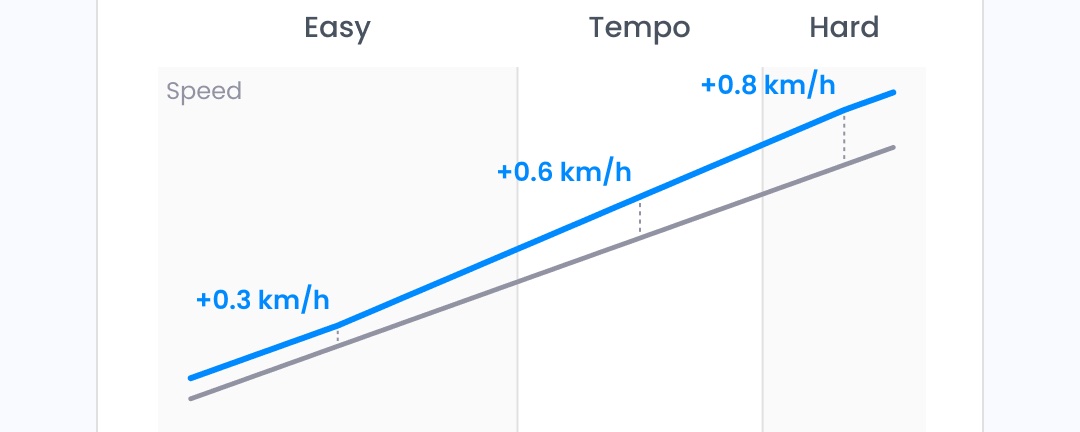
Murray Sheath retweeted
Why A.I. will never replace high-performance coaching 👇
The year is 2030 and I am a 15-year-old up-and-coming athlete who has dreams of Olympic Gold. 🥇
Who do I turn to: the coachmaster-3000 or a real-life coaching squad with a proven pedigree?
The answer should be obvious; the reason a little less so.
By that stage, I suspect the coachmaster-3000 will be very knowledgeable. More knowledgeable than many coaches. And, I suspect that any human coach worth their salt will have a coachmaster-3000 in the office that they consult with. And yet, I'd bet the house that 99.9% of athletes winning Olympic Gold will have a real-life human in their corner. Why?
The main reason, in my opinion, doesn't come down to knowledge. It comes down to emotion. To human connection...
I really wanted to make my coach proud.
I never wanted to disappoint him.
I wanted to justify the belief he had in me.
Would I feel the same way when my sycophantic coachmaster-3000 told me that it believes in me? Would it carry the same level of motivation that pushes me through the tough days that are bound to show up in the years of training that high performance takes?
Nah.
Now, this isn't to say that A.I. won't make a big splash in low-performance coaching. If you don't really want to make that commitment to a human, if you want to fool yourself that knowledge is the limiter, A.I. will be there. And there's always a market for self-deception.
But real coaching, coaching that takes athletes to their full potential, that requires a living, breathing, feeling, human. That requires a coach.
Always has. Always will.
Murray Sheath retweeted
Training Load for Young Swimmers: Thrive or Survive? Part 3 - is live 🏊♂️ 🏊♀️
How might two coaches build training differently when one starts with volume, and the other starts with what the swimmer needs next?
Some thoughts on progression, patience and leaving room to grow.

Murray Sheath retweeted

🏊 ‘Hip-driven’. ‘Shoulder-driven’.
Familiar coaching cues used in swimming. But what’s happening beneath those labels?
My new research reveals how shoulder–hip coordination changes between sprint & 400 m pace; and why WHEN you rotate deserves attention. 👇

Murray Sheath retweeted
One of the neat things about writing your ideas down over the past 20 years and putting them all in one place, you can ask ChatGPT the question...
How have my views on training changed over the years? 👇
1. I now see individualization as a measurable process.
2. Measuring training load isn't enough. The distribution of that load matters A LOT.
3. Aerobic development determines long-term development.
4. Recovery determines the training load.
5. Success isn't about a few fast races; it's about a sustainable athletic life!
######
1. From individualization as coaching judgment to individualization as a measurable process.
In your 2008 “Adaptive Training” post, you were already rejecting generic schedules and emphasizing the athlete’s physiology, psychology, and life circumstances. You also expressed skepticism about predicting adaptation very far ahead. Individuality II: Adaptive Training
The later work increasingly asks whether you can learn that individual response from data: which training produces improvement, how much, and under what conditions. By the book, models are part of that learning process, with an explicit warning that complexity is only useful when the data supports it. Chapter 3
The shift is from “adjust the plan to the athlete” toward “build an increasingly accurate understanding of how this athlete adapts.”
2. From measuring training load to distinguishing the ingredients of an effective dose.
This is one of the clearest technical developments. Your 2015 analysis gave considerable weight to aggregate training load. Later articles became more explicit that equal amounts of TSS can conceal very different training—and produce different outcomes for different athletes. Volume versus intensity, 2015
By 2018, your volume-responder/intensity-responder discussion makes that distinction central. The question becomes less “How much load?” and more “What combination of volume and intensity works for this person?” Individual responses to volume and intensity
I’d describe this as increasing specificity about the dose, rather than a change of allegiance from intensity to volume.
3. Aerobic development has become a broader foundation for athletic development.
Your 2007 writing already strongly favored years of aerobic development. The explanation was often framed around Ironman: lactate curves, fat oxidation, glycogen conservation, and sustainable race output. Interpreting lactate curves, 2007
In the book, that foundation supports a larger system: general fitness, recovery capacity, tolerance for future training, and eventually event-specific performance. Chapter 4: The Foundation of Fitness
The conviction has strengthened and broadened. Aerobic fitness increasingly reads as the capacity that makes subsequent development possible, rather than primarily an Ironman performance requirement.
4. Recovery has become more explicitly part of the training prescription.
Your early writing absolutely recognized fatigue. In 2007, you described moving away from frequent exhaustion toward moderation and a repeatable basic week. That alone rules out a simplistic “you used to advocate grinding harder” interpretation. Real World Periodization, 2007
The recovery chapter goes further: recovery conditions influence how much adaptation an athlete receives from a given workload. Sleep, psychological stress, and life outside training belong inside the explanation of training effectiveness. The recovery chapter
That isn’t a newly discovered belief—you reference your much earlier research on psychosocial stress—but it has become more prominent and integrated.
5. Success has expanded from race preparation to a sustainable athletic life.
The early archive is heavily oriented toward solving competitive endurance problems. The book deliberately begins with why someone should live an athletic life, before prescribing how to train. Health, enjoyment, and long-term development become explicit organizing principles. Chapter 1, Chapter 2
Your “Fitness Base Camp” article is a useful bridge: maintain a sustainable level of fitness, make occasional ambitious pushes, and avoid repeatedly falling back to nothing. Fitness Base Camp
Performance still matters enormously. But it increasingly sits within a life that allows athletic development to continue for decades.
########
What surprised me most was how much of today’s philosophy was already present in 2007–2008: consistency, moderation, individuality, variety, and patience. I wouldn’t describe your evolution as a reversal.
My interpretation is that the early work asks, “What training develops the qualities needed to perform?” The later work increasingly asks, “What training can this particular person absorb, benefit from, and sustain long enough to realize their potential?” That second question contains the first, but demands a much more complete understanding of the athlete.

Making lemonade out of 🍋…
Since I had to blow up my old server and move everything, I figured the website deserved a facelift too.
Nearly 20 years of writing on endurance training, finally under one roof - from my first blog posts in 2007, through the Endurance Corner years, to today.
Plus calculators, topic guides & search.
Find your next training rabbit hole 👇
alancouzens.com

Murray Sheath retweeted

You can be highly trained and still underperform if your overall load is too high.
Sleep, nutrition, stress, and recovery all influence performance.
Our Athlete Health & HIIT Mini-Course is free for Skool community members. Link in comments.
@mart1buch
@PaulBLaursen

Murray Sheath retweeted
Now available ahead of print: Structuring Variability in Functional Fitness: Implications for Training Prescription and Monitoring, by Manoel J. Rios and David B. Pyne. doi.org/10.1123/ijspp.2026-0…