







Nick Panos retweeted

👉When my son was in the hospital, I saw firsthand how important pharmacists are to patient care. The nurses frequently contacted the pharmacist to double-check medication dosages and to review potential drug interactions when alerts came up which was more frequently than I recalled prior to being an advocate.
As a parent, knowing that another set of knowledgeable eyes was looking out for his safety gave me peace of mind. Pharmacists are truly an essential part of the healthcare team, and their role can make a lifesaving difference!
I remember the hospital nurses saying that they don't know what they would do without the pharmacy team. Some of the nurses were newer.
After seeing what the pharmacists and staff do and all that endure from patients & corporations, I'll always be their biggest cheer leader. They don't get enough credit or appreciation for the work they do or for their critical role in healthcare.
One day in the ICU without care from a pharmacist increases death by 20%.
news.uga.edu/icu-pharmacists…

Sunharbo
I understand where the “sun-“ comes from in asundexian, but what does “-harbo” mean?
fda.gov/news-events/press-an…

2
3
352

The King of Halloween candy 🎃

Reese's cups were made with Hershey's chocolate for 35 years before Hershey owned them. Harry Reese started making them around 1928 in Hershey, Pennsylvania, coating them by hand on marble slabs with chocolate Hershey supplied. His sons sold the company to Hershey in 1963.
The package reads milk chocolate (sugar, cocoa butter, chocolate, skim milk, milk fat, lactose, lecithin, PGPR), then peanuts, sugar, dextrose, salt, TBHQ and citric acid. That's 2 recipes on one label, the chocolate inside the parentheses and the filling after it.
The chocolate is real milk chocolate. Its fats are cocoa butter and milk fat, the 2 that FDA's milk chocolate standard allows. Lactose is milk sugar, added on top of the skim milk. Lecithin and PGPR are emulsifiers. PGPR is usually made from castor oil, and it cuts the friction between the sugar, cocoa and milk particles so melted chocolate flows into the mold and around the filling. It gets that flow with less cocoa butter, which cuts cost.
The filling is roasted peanuts ground with sugar, dextrose and salt. Dextrose is glucose, usually made from corn starch. TBHQ is a synthetic antioxidant that slows oil from going rancid, and FDA caps it at 0.02% of the fat in the food. The citric acid ties up the trace metals that speed rancidity up. Hershey prints the pair as "to maintain freshness."
96


Hot off the press!
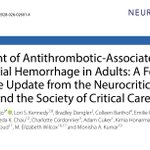
A focused update on the treatment of antithrombitic associated intracranial hemorrhage from NCS and SCCM
link.springer.com/article/10…

Nick Panos retweeted

One of the great lessons of adulthood is accepting that life isn't always fair.
Sometimes the undeserving get the promotion. Sometimes the person you love doesn't love you back. Sometimes good people die far too young. Sometimes you'll do everything right and will still lose.
None of us gets through life untouched by sorrow. Our character is measured less by what happens to us than by how we respond.
Find gratitude. Find purpose. Find joy. Then become a source of those things for others.
Life is too short to live any other way.
-J.B. Lloyd

Nick Panos retweeted

We live in the safest, healthiest, most technologically advanced period humans have ever created.
And somehow we’ve become terrified of the science that helped create it.
Sharing an awesome review of antiseizure medication dosing and monitoring in the ICU
link.springer.com/article/10…

Nick Panos retweeted

The measure of your intelligence is not your ability to acquire knowledge but how you handle uncertainty and navigate through it and behave when you don't know what to do.
Nick Panos retweeted

A new consensus statement, highlights the vital role of clinical pharmacists in acute stroke care. Recommendations help accelerate time-sensitive treatments, improve care efficiency and advance equity in stroke care delivery. bit.ly/4zv2USo

Any comments from the anti-mRNA vaccine gallery? statnews.com/2026/08/19/mrna…

1
240
Nick Panos retweeted

ICU Pharmacology Secrets:
If you work in an ICU of a hospital with busy cardiology and cardiothoracic programs, keep this on your radar:
Ticagrelor (Brilinta) can cause false-negative results in functional laboratory tests for heparin-induced thrombocytopenia (HIT), such as the serotonin release assay (SRA) and heparin-induced platelet activation (HIPA) test
Why this happens
Ticagrelor is a reversible P2Y12 receptor antagonist commonly used after coronary interventions or acute coronary syndrome. Unlike clopidogrel, prasugrel, or aspirin, its reversible binding leaves active drug circulating in the blood sample. HIT antibodies activate platelets through the FcγRIIA receptor, but this pathway relies heavily on P2Y12 co-signaling. Because ticagrelor blocks that receptor, it inadvertently shuts down the lab assay, giving you a clean result on a patient who actually has HIT
Clinical significance
While HIT isn’t everyday occurrence, it carries massive risk, especially in cardiac patients. The incidence of HIT after cardiac surgery is 1-2%, and it is ∼0.5% after transcatheter aortic valve replacement. Even if ticagrelor is held pre-op, we routinely restart it shortly after surgery in high-risk patients
Another high-stakes scenario is managing surgical patients with a recent history of HIT. Heparin remains the standard for cardiopulmonary bypass. Guidelines allow us to use heparin intra-operatively, once functional tests turn negative -even if the antibody ELISA stays positive- while keeping them on non-heparin agents before and after. If ticagrelor is masking that functional test, you could re-expose a patient to heparin under a false sense of security
Take-home messages
1. Never rule out HIT on a negative functional assay alone if the patient is taking ticagrelor
2. Trust the full clinical picture: Re-evaluate the 4Ts score and look closely at the anti-PF4/heparin ELISA. A strongly positive optical density (e.g., OD > 1.5) should raise red flags regardless of a negative SRA
3. Consider workarounds: Send alternative testing like the PF4-dependent P-selectin expression assay (PEA), if available
4. Stay the course: If clinical suspicion remains high, maintain non-heparin anticoagulation (bivalirudin is our go-to), remove all heparin from the lines, and re-test once the drug clears or alternative panels are back
Useful reference:
Blood (2020); 135(11): 875-8
Nick Panos retweeted

Underrated life advice: Just be easy to work with. Show up on time. Do what you said you'd do. Bring solutions, not problems. Never create drama. Be responsive. Be emotionally consistent. Be kind. People will always want to support someone who just makes their life easier.
Nick Panos retweeted

Remap cap influenza has been submitted to lancet and is preprinted
papers.ssrn.com/sol3/papers.…
@ABsteward @BradSpellberg
Nick Panos retweeted
We need to teach how doubt is not to be feared but welcomed. It's OK to say, "I don't know."
Nick Panos retweeted

We hope you find this statement informative and helpful as we all aim to optimize prescribing.
This quoted post is unavailable.
Consensus recommendations for clinical pharmacist integration into acute stroke care teams endorsed by ACCP, NCS, SAEM, SCCM and affirmed by AAN
Integrating clinical pharmacists reduces door to needle times for both ischemic and hemorrhagic stroke patients

Read about it here: accpjournals.onlinelibrary.w…

113