




Nikolaï Posner retweeted
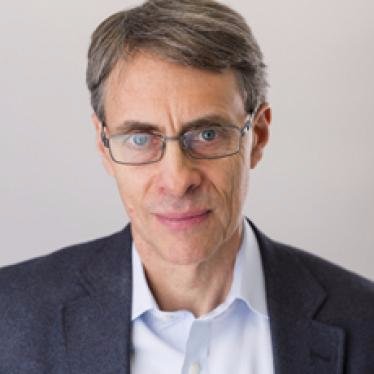
"Why are French police so violent? Their job is to protect the state, not the people. Officers are instruments of state whose job is to repress, rather than manage, public dissent." trib.al/S65OegJ

Nikolaï Posner retweeted

"Le médecin a déclaré que j'étais un miraculé" : Raphaël, 17 ans, victime de violences policières le 17 octobre à Paris, témoigne.
Et à gauche c'est @DavidYambio de @RefugeesinLibya.


Nikolaï Posner retweeted

🇫🇷 Une tentative de traversée clandestine de la Manche a tourné au drame ce matin, faisant trois morts dont un enfant, alors que les candidats à l'exil tentent de rallier l'Angleterre à la faveur des dernières fenêtres météo favorables avant l'hiver.
➡️ u.afp.com/S9Av

Nikolaï Posner retweeted

Blocus de lycées : la Marseillaise chantée par les lycéens de Saint-Denis en présence de Bally Bagayoko venu soutenir le mouvement.
Nikolaï Posner retweeted

Un homme, mort, gisant dans l’eau après avoir tenté de traverser la Manche pour trouver refuge au Royaume-Uni.
Cette image a été prise par le photojournaliste Sameer Al-Doumi sur la plage d’Hardelot, en France, il y a deux jours.
Dans l’indifférence.
instagram.com/p/DdqjKYZDVHh/…

Nikolaï Posner retweeted

Hier, à la suite d’un relais Mayday, l’Ocean Viking a changé de cap pour porter secours à une embarcation en détresse avec 80 personnes à bord.
Alors que notre navire s’approchait, nous avons vu les garde-côtes libyens intercepter l’embarcation.
Nous n’étions qu’à quelques minutes. Ces quelques minutes ont fait la différence entre un sauvetage et un débarquement en lieu sûr, et un retour forcé vers un lieu de détention, de violence et d’abus.

ALT Interception d'une embarcation en détresse par des garde-côtes libyens. Crédit : Lucien Migné_SOSMEDITERRANEE
Nikolaï Posner retweeted

Le gouvernement 🇪🇸 a ouvert une enquête après des accusations de violences sur des migrants perpétrées par des militaires à Ceuta. Les victimes évoquent des coups de matraques, des brûlures, et racontent avoir été forcés par des soldats à se raser la tête.
infomigrants.net/fr/post/737…

Nikolaï Posner retweeted

En fin, le travail de dénonciation des graves violations commises par des militaires espagnols, a poussé le gouvernement espagnol à ouvrir une enquête.
Espérons que cette enquête soit menée à bout pour définir les responsables et stopper ces atrocités contre de simples migrants.


Nikolaï Posner retweeted

On 13 September, an MSF bus carrying 10 humanitarian staff in Gaza City was damaged by an Israeli airstrike on a targeted vehicle just two metres away. One of our colleagues was injured in the strike.
The bus was clearly identified as an MSF vehicle, with a large MSF sticker visible on its roof. Once again, Israeli forces have shown a blatant disregard for the safety of humanitarian and medical personnel.
Nowhere is safe in Gaza. Civilians, healthcare workers and humanitarian staff must be protected. Clearly marked medical and humanitarian vehicles must be spared from attacks.
Nikolaï Posner retweeted

El discurso de Yuval Abraham tras ganar el Premio Especial del Jurado en #Venezia83 con #Naza: "La negación de un delito es lo que ayuda a que persista. Y por eso es muy importante para nosotros que los israelíes vean esta película. Es nuestro país el que comete estos crímenes" – at Montevideo, Uruguay
Nikolaï Posner retweeted

Can helping migrants be treated as a crime — and used to justify Europol holding your personal data?
Austrian activist Natalie Gruber was investigated after documenting alleged rights violations against migrants at the Greek-Turkish border. The Greek criminal case was eventually dismissed — but her personal information remained in Europol’s systems.
Now she is suing the European Data Protection Supervisor (EDPS) — the EU watchdog responsible for overseeing Europol’s use of personal data — alleging it failed to protect her rights and instead effectively shielded Europol. She is seeking €130,000 in damages.
The case could have consequences far beyond Gruber — for activists, human-rights defenders and oversight of Europol’s growing data powers.
Read the full story on EUobserver 👉 euobserver.com/236643/cleare…
Investigative. Influential. Independent.

Nikolaï Posner retweeted

Censure caractérisée à @FranceTV.
Quelle contradiction peut-il y avoir dans une séquence baptisée "carte blanche" ?


Nikolaï Posner retweeted

Révélation @lemondefr @LHreports : pour la première fois un cadre de la police aux frontières (son ancien directeur à Mayotte) reconnaît l’utilisation de tactiques agressives à Mayotte en mer pour arrêter les #kwassas lemonde.fr/societe/article/2…

Nikolaï Posner retweeted
La censure de Jehad Alshrafi, photojournaliste palestinien d’AP, au festival de la photo sportive de Deauville est une honte.
Cela pose encore une fois la question de la liberté d’informer et la liberté de raconter le monde.
Que son travail soit vu !
apnews.com/photo-gallery/pho…

Nikolaï Posner retweeted
Le festival de photo de sport de Deauville cède aux pressions pro-israéliennes et retire une photo prise à Gaza
➡️ l.humanite.fr/ADe

Nikolaï Posner retweeted

This week, the four-part documentary “Gates of Europe” aired on the Dutch public broadcaster NPO and will soon be available on ARTE. It presents itself as an objective investigation into the work of the European Border and Coast Guard Agency: Frontex.
It is not.
Having participated in the making of this documentary, Front-LEX, Refugees in Libya, and Aegean Boat Report denounce it as a manipulative production that seeks to whitewash Frontex’s crimes and absolve the agency of its responsibilities.
One of the co-directors, Els van Driel, presented us with a project whose intentions and approach differed significantly from the final production.
Suspenseful music, striking archival footage, a façade of impartiality, emotional testimonies, and beautiful cinematography are not enough to establish the truth. What ultimately shapes a narrative is the way a story is framed, constructed, and edited.
In that specific case, it is a carefully crafted public relations narrative.
This was the first time Frontex opened its doors to a film crew. There is no doubt, and it was even quietly acknowledged, that every scene involving Frontex management was carefully anticipated and choreographed, resulting in a production that bears little resemblance to the agency’s reality.
The documentary opens with Hans Leijtens, Executive Director of Frontex, cycling to the agency’s headquarters in Warsaw. Seated in one of the conference rooms of the brand-new building, he lays out the narrative Frontex seeks to project throughout the documentary: “People make mistakes, and perhaps sometimes people might have the wrong intentions, but we have to face that and show our colleagues, the world, the migrants, that we can be trusted. And for that, you need radical transparency, especially from us, because we have nothing to hide.”
If there is one word worth remembering, it is « show ». That is exactly what the audience is given throughout the four episodes, directed by no one less than Frontex itself.
A press officer explains how his work has affected the relationships between his wife and her friends. A spokesperson sheds what appears to be staged tears while standing in front of an empty boat in Lampedusa, saying, “Sorry, it hits me every time.” Hans Leijtens is shown petting dogs. Repeatedly, we hear lines such as, “We do what we can,” or, “There is a limit to what we can do.”
What is striking is that the filmmaker allows these performances to unfold without challenge, despite the fact that we provided substantive legal and practical arguments to challenge them. These arguments, however, were cut off and did not make it into the final cut. Placing performative empathy above real accountability and well-designed appearance above the simple reality. With that the filmmaker gives Frontex a stage and legitimacy that it does not deserve. For those who have spent years challenging Frontex impunity and fighting for accountability this portrayal feels like a slap in the face.
As a matter of facts, Frontex is a highly funded, EU agency with rapidly expanding resources that enables, facilitates, and conceals crimes against humanity. That is not an opinion.
This documentary is only one element of the agency’s new communication strategy: an effort to rehabilitate its public image and convince audiences that Frontex has fundamentally changed since the departure of its former Executive Director, Fabrice Leggeri, and that it is now committed to accountability and transparency. Rest assured. It is not.
The production is undeniably well crafted, and it will likely persuade dozens of thousands of viewers as well as a large part of the European parliament.
Surely not us.
aegeanboatreport.com/2026/08…
