

Se vinco, vinco per tutto il nostro popolo. Se perdo, perdo solo me stesso.
Joined March 2019
- Tweets14.1K
- Following698
- Followers792
- Likes7.4K




Vasil Levski retweeted

Ayn Rand – The Girl Who Saw It First
She was twelve when the Bolsheviks came into her father’s pharmacy in St. Petersburg and put a red seal on the door. In a single afternoon, a man who had worked all his life owned nothing. She never forgot his face.
Her name then was Alisa Rosenbaum. She watched what followed: the hunger, the informers, the university purged of anyone with the wrong parents. In 1926, she obtained a visa to visit relatives in Chicago. She was twenty-one, and she never went back. She never saw her parents again.
She left the old name behind with the old country. Nobody knows for certain where "Ayn Rand" came from, and she never settled the question. What the name conveys is plain: two strong, hard and clear syllables, with no country, no family and no past in them. It was the first thing she built in America, and she built it herself.
On her second day in Hollywood, a car stopped beside her at a studio gate. The driver was Cecil B. DeMille. He gave her a ride and a job as an extra. On that set, she noticed a tall actor with the face of one of her heroes and deliberately stuck out her foot so that he would trip over it. She married Frank O’Connor, who stood by her for fifty years.
She had one conviction: the West could not defend itself because it was ashamed of its own best men. So she wrote its defence.
Her philosophy starts with three words: A is A. A thing is what it is. Reality does not bend to wishes, votes or slogans. She took this principle from Aristotle, the only philosopher to whom she acknowledged a debt, and saw herself as continuing his work. The three parts of Atlas Shrugged are named after his classical laws of logic. From A is A, everything follows: reason is man’s only means of acquiring knowledge, contradictions do not exist, and whoever asks you to accept one wants something from you and is asking you to abandon reality for something else.
Check your premises.
Her characters are that philosophy made flesh.
Howard Roark, the architect of The Fountainhead, would rather break stone in a quarry than change a single line of a building to please a committee. He is integrity: a man whose work and whose soul are one and the same.
Ellsworth Toohey is his enemy, and her most prophetic creation. He builds nothing. He rules by praising the mediocre, mocking the great and teaching people that they are small. Kill a man’s capacity to admire, and he is yours.
Dagny Taggart runs a railroad better than any man around her. She is competence, and the joy of it.
Hank Rearden invents a new metal and is made to feel guilty for it. Through him, she showed the sanction of the victim: evil is impotent and lives only on what the good produce and agree to hand over.
And John Galt. "Who is John Galt?" is asked on the first page, as a shrug of despair. He is the engineer who invents a motor that could power the world, sees that it will be seized in the name of need, and walks away. Then he persuades the builders, one by one, to do the same. He stops the motor of the world to prove who had been running it.
His oath is her ethics in one sentence: "I swear by my life and my love of it that I will never live for the sake of another man, nor ask another man to live for mine."
The Fountainhead was rejected by twelve publishers before going on to sell millions of copies. When her publisher begged her to cut Galt’s sixty-page speech, she asked whether he would cut the Bible. He did not cut it. In 1991, a survey conducted by the Library of Congress and the Book-of-the-Month Club asked readers which book had most influenced their lives. Atlas Shrugged came second – after the Bible.
Mises reportedly called her the most courageous man in America. She was delighted and asked only whether he had really said "man."
The life was harder than the books. To finish The Fountainhead on deadline, a doctor prescribed her amphetamines; according to her biographers, she took them for some thirty years. She smoked two packs a day and dismissed the evidence linking smoking to cancer, until a surgeon removed part of her lung.
Around her gathered a circle of young admirers who met in her apartment on Saturday nights. They called themselves, jokingly, the Collective. One of them was Alan Greenspan. The joke turned sour. The philosopher of independence came to demand agreement on everything: the right novels, the right music, the right friends. Doubters were put on trial in her living room and expelled.
Then came Nathaniel Branden, her chosen heir, twenty-five years younger. She insisted that both spouses be told and give their consent, because she would not live a lie. They consented. Nobody was the better for it. When she discovered that he had concealed another woman from her, she slapped him, denounced him in print and ordered her followers never to speak to him again. Most obeyed.
She could reason her way to almost anything, including the idea that feelings should obey logic. Hers never did.
In 1973, her youngest sister came from the Soviet Union to visit. Rand showed her New York and offered her freedom. Her sister found America vulgar and went home to Leningrad. The Bolsheviks had taken her father’s shop. Fifty years of the Lie had taken something worse from her sister: the ability to recognise freedom when she saw it. Nothing taught Rand more about what the Lie does to a mind.
She died in New York in 1982. By her coffin stood a six-foot dollar sign made of flowers. For her, it was the symbol of Liberty: free trade between free minds. Her enemies laughed. They had never seen a red seal on their father’s door – she had seen it at twelve, and she knew what the symbol of Liberty costs.
What should we do with her?
Take the builder’s virtues, all seven: rationality, independence, integrity, honesty, justice, productiveness and pride – the kind that is earned. Nobody has stated them better, and no civilization grows without them.
Put them where she refused to: on the foundation she rejected. Charity and hope hold the ground; her virtues build upon it. Galt swore by his life and his love of it. A civilization must swear by more than one life: by the lives that come after it. That is hope – the affirmation of life that plants trees, raises children and builds what it will never see finished.
Together, they make Western Civilization: reason that understands the world, the builder’s pride that shapes it, and an affirmation of life that hands it on. Each alone fails. Reason without a goal turns cold. Pride without hope ends with its owner. Hope without builders remains a wish. Together, they form the widest frame ever found that actually works.
And keep her warning with her teaching. A school of free minds becomes a sect the day agreement matters more than truth. We need her courage, and we need to avoid her living room.
The novel opens with a shrug: Who is John Galt? It was meant as an expression of despair. It is really a question to each of us – and the answer is whoever still builds, and refuses to apologize for it.


Thomas Sowell – The Man Who Asked for the Evidence 📚
He was born in 1930 in North Carolina, in a house without running water. His father died before he was born. He grew up in Harlem, left school at sixteen, delivered telegrams, worked in a machine shop and served in the Marines. Then he went to Harvard, Columbia and Chicago.
He started as a Marxist. Books did not cure him. A summer job did.
In 1960, at the U.S. Department of Labor, he studied the minimum wage in Puerto Rico's sugar industry. Each time the wage was raised, employment fell. He proposed a simple test to find out why. Nobody in the building wanted it run. The department's budget depended on the law being good; whether the law was good was not its business. That summer, he understood that an institution has interests of its own, and that the truth is rarely among them.
Everything else followed from there. For sixty years, he has asked the three questions that no ideology survives: compared to what, at what cost, and what hard evidence do you have?
He put the whole of economics in one line, observing that there are no solutions, only trade-offs. And he put the whole of politics in another, noting that it is hard to imagine a more dangerous way of making decisions than putting them in the hands of people who pay no price for being wrong.
He gave the planners their true name: the anointed. People who judge themselves by their intentions and everyone else by results, and for whom every failure of their policy is proof that it was not tried hard enough.
He was a black man from Harlem who said that culture matters more than grievance, and that the policies made to help the poor had hurt them most. For that, the people who claim to speak for the poor never forgave him. He kept writing anyway – more than forty books, without a single slogan in them.
He is ninety-six. He has never held power, never led a movement, never raised his voice.
He only asked for the evidence. In the age of the Lie, that turned out to be the most radical thing a man could do.
—
America has one honor that fits: the Presidential Medal of Freedom, its highest civilian award. 🏅🇺🇸
He should receive it now, while he can still walk up and collect it. 🗽

Vasil Levski retweeted

Su una ral da 30k l'irpef sono 5 mila euro. Da cui puoi dedurre/detrarre spese mediche, farmaci, interessi passivi mutuo, spese ristrutturazione, spese veterinarie animali domestici, erogazioni liberali, spese sport/scuola dei figli, ect, ect. Praticamente l'irpef va a zero.
Vasil Levski retweeted
Thomas Sowell – The Man Who Asked for the Evidence 📚
He was born in 1930 in North Carolina, in a house without running water. His father died before he was born. He grew up in Harlem, left school at sixteen, delivered telegrams, worked in a machine shop and served in the Marines. Then he went to Harvard, Columbia and Chicago.
He started as a Marxist. Books did not cure him. A summer job did.
In 1960, at the U.S. Department of Labor, he studied the minimum wage in Puerto Rico's sugar industry. Each time the wage was raised, employment fell. He proposed a simple test to find out why. Nobody in the building wanted it run. The department's budget depended on the law being good; whether the law was good was not its business. That summer, he understood that an institution has interests of its own, and that the truth is rarely among them.
Everything else followed from there. For sixty years, he has asked the three questions that no ideology survives: compared to what, at what cost, and what hard evidence do you have?
He put the whole of economics in one line, observing that there are no solutions, only trade-offs. And he put the whole of politics in another, noting that it is hard to imagine a more dangerous way of making decisions than putting them in the hands of people who pay no price for being wrong.
He gave the planners their true name: the anointed. People who judge themselves by their intentions and everyone else by results, and for whom every failure of their policy is proof that it was not tried hard enough.
He was a black man from Harlem who said that culture matters more than grievance, and that the policies made to help the poor had hurt them most. For that, the people who claim to speak for the poor never forgave him. He kept writing anyway – more than forty books, without a single slogan in them.
He is ninety-six. He has never held power, never led a movement, never raised his voice.
He only asked for the evidence. In the age of the Lie, that turned out to be the most radical thing a man could do.
—
America has one honor that fits: the Presidential Medal of Freedom, its highest civilian award. 🏅🇺🇸
He should receive it now, while he can still walk up and collect it. 🗽
Hayek finished the job of obliterating the entire socialist project in 1945 with one devastating insight: the knowledge needed to run an economy does not exist in any one place.
It is scattered across millions of minds – the farmer who knows his field, the shopkeeper who knows his street, the engineer who knows his machine – and only prices can gather it. No planner can collect it, because most of it cannot even be written down. The socialists spent the next eighty years building bigger ministries to collect it anyway.
And yet here we are, watching politicians explain that this time it will work, because now they have data, experts and algorithms. They cannot tell you how many nurses a single hospital will need next winter – how exactly are they going to know what three hundred million people want, need and can make, every day, in every town?
Every Soviet shop with left shoes only, every empty Venezuelan shelf, every five-year plan fulfilled on paper was just Hayek being proven right. He left the planners one sentence to hang over their desks: "The curious task of economics is to demonstrate to men how little they really know about what they imagine they can design." But sure, let's give the committee a supercomputer. What could go wrong?

Vasil Levski retweeted

All the best people declare war on Hogwarts. Have you ever considered dividing your gender identity into separate pieces and storing it in hidden objects, so you can’t be invalidated to death?

Vasil Levski retweeted

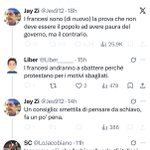
Je vous présente une des pires pays d'extrême-droite d'Europe, le Danemark 🇩🇰
- 10 points de moins de dépenses publiques que la France
- Excédents budgétaires et dette publique de 29% du PIB
- Licenciement sur simple lettre du patron. Taux de chômage de 3%.
- Pas de SMIC imposé par l'Etat
- Age de départ à la retraite à 67 ans, bientôt 68
- Retraite partition limitée à un minimum vieillesse égal pour tous. Les compléments de retraite se font uniquement par capitalisation
- Environ 48 % de la population a une assurance santé privée
- Politique d’immigration très restrictive : protection temporaire par défaut, regroupement familial difficile, obligation d’intégration réelle
- Résidence permanente seulement après 8 ans + langue + preuve d’emploi soutenu
- Fin du visa automatique pour les migrants au chômage depuis plus de 3 mois
- « Paradigm shift » sur l’asile : protection temporaire par défaut, objectif prioritaire de retour au pays plutôt que d’intégration définitive
- Contrat ordinaire pour l'immense majorité des employés du service public
- Durée de travail limitée à 48h par semaine par l'Etat. Majorité des conventions collectives à 37h par semaine.
- Un des taux d'activité les plus élevés au monde
- Allocation chômage conditionnée à une recherche d’emploi très active : au moins 2 candidatures par semaine, obligation d’accepter des jobs hors de son domaine, risque de perte des droits si on ne prouve pas sa disponibilité
- Interdiction du droit de grève pour certains fonctionnaires
- Impôts sur les bénéfices parmi les plus faibles d'Europe
- Aucun impôt sur la fortune
- Protection de la propriété et justice parmi les meilleures du monde
- Création d’entreprise en 1 jour, entièrement en ligne.
- Classé 7e à l'indice de liberté économique contre 65e pour la France.
- Classé 4e pays de l'OCDE où il est le plus simple de faire des affaires. La France est avant-dernière.
Ça fait peur, très peur. Un véritable enfer néolibéral.
Les heures les plus sombres, à 1 heure de Paris en avion.
Vasil Levski retweeted

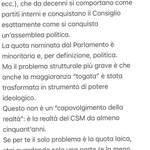
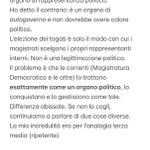
Il caso del libro che fa propaganda contro la Meloni, e dell'editore che si picca perché il Ministro ha osato criticarlo, ci rammenta che l'autonomia scolastica è una sciagura.
L'autonomia in assenza di democratizzazione (ossia di elezione del dirigente scolastico da parte di genitori, docenti e alunni con voto per capita) significa né più né meno avere consegnato a burocrati una piccola porzione di Stato (ossia un istituto scolastico).
Quella piccola porzione di Stato, che include soldi presi dalle tasse, beni ereditati dal passato, autorità stabilita dalla legge, funzione educativa, è amministrata a propria discrezione da un gruppetto di dipendenti pubblici che in realtà di "dipendenza" ne ha poco o nulla. Fa quel che gli pare.
Molti per fortuna usano questo potere cercando di svolgere al meglio la loro funzione, ma altri sono liberissimi di adoperarla per i propri fini e interessi. Incluso (ed è l'esempio più classico) indottrinare gli studenti per fargli votare, una volta grandi, il partito preferito dei docenti.
Vasil Levski retweeted

Quando parlano di "interesse collettivo" intendono l'interesse dei dipendenti pubblici👍🏼


Vasil Levski retweeted

elettore di destra: la Meloni mette troppi tailleurs non vado a votare
elettore di sinistra: buongiorno signora faccio parte della ONG Dario Fo, sappiamo che lei è cliente Coop e tesserata Cgil Pensionati, le possiamo offrire il servizio gratuito di navetta fino al seggio? conosce altre persone che potrebbero aver bisogno del servizio? se ce ne indica almeno 3 per lei una vacanza a Viserbella di 5 giorni...


Vasil Levski retweeted

Metti che Musk arriva su Marte e scopre che i marziani hanno la barba, la giacca con le toppe ai gomiti e il Fatto Quotidiano sotto il braccio.
Vasil Levski retweeted
Musk è scappato in Texas dalla California e, dopo che la sinistra ha vinto pure lì, pensa di fare i datacenter nello spazio. Non girava per scherzo nella Silicon Valley la voce secondo cui, in fin dei conti, Musk volesse andare su Marte semplicemente per sfuggire ai comunisti.
Vasil Levski retweeted

Socialism is fascist in politics, and fascism is socialist in economics. Both hate the free market and worship state intervention.
LONG LIVE FREEDOM, DAMN IT...!!!

Vasil Levski retweeted

The most racist white man you know would likely run into a burning building to save a black family
And the most anti-racist, liberal white woman you know would likely laugh at you and your family homeless on the street after she had you fired from your job for your opinions

Vasil Levski retweeted

Io purtroppo la vedo semplice (e difficile da sanare). Ci sono due elettorati: uno del 40% vota sempre, l'altro del 60% castiga e vota in massa quando è esasperato ma se deluso poi sta a casa e diventa 30%.
L'elettorato che vota sempre consente ai suoi di occupare tutti i nodi del potere, che si conquistano con la continuità. L'elettorato che castiga si attiva quando le cose vanno malissimo, si entusiasma per un leader, quello arriva e trova i cocci (altrimenti il suo elettorato non si sarebbe attivato), quindi una situazione non semplice. Fa cazzate? Via subito. Non fa cazzate? Raccoglie i cocci? Delude lo stesso perché l'apparato in mano alla sinistra lo frena. Quindi via anche lui e chi arriva dopo si trova pure la casa in ordine. E così chi vota sempre continua a consolidare. Anche se la destra trovasse il "rivoluzionario illuminato" tanto atteso probabilmente, in quanto rivoluzionario, non riuscirebbe a costruire sufficiente apparato, cosa che richiede tanto tanto tempo e mente non rivoluzionaria. Quindi alla fine il vantaggio di chi vota sempre rispetto a chi castiga è molto difficile da superare.
Non impossibile ma molto difficile.
Vasil Levski retweeted

When a Muslim Brotherhood member wins a Senate race, that’s NOT DEMOCRACY; that’s USEFUL IDIOTS hating their own country. When the mullahs in Iran took over, socialists helped them, and later, the Islamists killed them all. This is the most dangerous moment for Western civilization. GOD BLESS AMERICA.
U.S. Senate candidate Abdul El-Sayed is a dark chapter in this great nation’s history.
And as the Bible warns:
“For whatsoever a man soweth, that shall he also reap.” — Galatians 6:7 (KJV)
Be careful what you plant in the name of democracy. You may not enjoy the harvest.
Vasil Levski retweeted
Queste midterm fanno presagire un tristo futuro dominato da bimbiminkia, islamici e donne inchiavabili.

