

Ph.D. in Biblical Counseling #sbts. professor at #lbc, counselor #connectionpointbiblicalcounseling
Dacula, GA
Joined November 2017
- Tweets1.5K
- Following490
- Followers331
- Likes2.8K





Pamela retweeted

One of my most controversial takes:
No one else has the power totrigger you.
When someone does something that triggers you, your amygdala fires first.
You can slow the response with a breath and choose the extinguisher over gasoline. So, you actually always have the power to not be trigger-able. 
It's hard and holy work, but it's worth it to regain that sense of control that you used to believe someone else could take from you by triggering you.
Save this for the next time you start to feel triggered, and share it with a friend who needs to know how much power they actually have over their own emotional state.
Follow for more brain science tips to stay in control.
And click the link in my bio to learn more about self-brain surgery.
#neuroscience #anxiety #anger #emotions 
Pamela retweeted
Today, I’m going to give you ten years of healing in a couple of minutes.
I'm a brain surgeon, and I'm gonna show you how to make rapid progress in healing the wounds you’ve been carrying; the ones from childhood, from broken relationships, from things said that can’t be unsaid, and from things done that can’t be undone. Let's scrub in and get it done.
Here's a Fact: Your Wound Lives in Your Brain, But Your Healing Lives in Your Mind
When something hurts you, your brain stores it. The sights, the sounds, the sting of the words, the shape of the moment. That storage is real and physical.
But here’s where the hope of healing lies: your brain doesn’t get the final vote on what that memory means to you. Your mind does. And your mind is not the same thing as your brain.
Neuroscience nugget: Emotional memories get encoded in circuits involving the amygdala and hippocampus, but each time you recall a memory, it becomes temporarily unstable and gets rewritten via a process called reconsolidation. That means every time you revisit a wound, you have a fresh chance to change how it’s stored.
Self-Brain Surgery Procedure: The next time an old wound surfaces, don’t just relive it. Instead, reframe it while it’s “open.” Ask: What is the truest, most redemptive way to understand this moment now? Speak that new understanding out loud before you let the memory close back up.
Scripture: “He heals the brokenhearted and binds up their wounds.” Psalm 147:3, NIV
This is self-brain surgery. Hard and holy work.
Follow me to connect neuroscience and scripture every day. Save this to help when you need to heal. Share it with a friend who's hurting.
Click the link in my bio to learn more about The Life-Changing Art of Self-Brain Surgery, my NYT bestselling book.
(Not medical advice. See your provider for help)
#selfbrainsurgery #neuroscience #neuroplasticity #grief #healing
Pamela retweeted

If you try to handle the trauma of others without understanding its impact or knowing how to respond, you will damage those who are already severely hurt.
Pamela retweeted

One of the best things about CCEF is that you find ACBC, ABC, IABC, and IRBC, and virtually every BC group worshipping together and treating each other with kindness, respecting our differences and pursuing unity where possible. It is a beneficial conference with great sessions!
Pamela retweeted
When allegations of abuse arise, particularly about a leader, many believe truth will “hurt” the church and so sin is excused, covered up, or given an innocuous name. Such actions protect the institution, not the name or true body of Christ.
Pamela retweeted

TRUE STORY: A gay man and a ‘trans man’ found Jesus and then repented and became a straight Christian couple.
The truth will set us free.

Pamela retweeted

Get it while it’s hot.
…if it’s ever been hot…

Kindle Deal: The Dynamic Heart in Daily Life by Jeremy Pierre (@jeremypierre). challies.com/kindle-deals-fo…

Pamela retweeted
Your brain doesn’t know what time it is. Every time you replay that conversation from last year, that mistake from last month, that moment you wish you could take back from yesterday, your brain treats it like it’s happening right now. Same stress chemicals. Same alarm bells. You’re not remembering it. You’re reliving it, on a loop you built yourself.
That's because of two things: your brain doesn't know the difference between what's really happening and what you're just imagining, and neuroplasticity means that your brain automates things that you think about and turns them into programs that it runs without you having to think about them next time.
So, the more you rehearse something from the past or something you're just imagining, the more your brain builds out a reality as if that thing is still here right now.
The ninth Commandment of self brain surgery is, "I must believe that what I'm doing I'm getting better at." That means if you're doing things with your mind that are making your brain better at living in the past or worrying about imaginary outcomes, you're getting better at feeling worse. So knock it off.
Here’s the shift: you can’t edit the past, but you can stop rehearsing it. Every replay is a rehearsal, and your brain gets better at whatever you rehearse. Let's make neuroplasticity work for us and not against us.
We call that self-brain surgery. It's not easy at first, it's hard and holy work. But remember, you get better at whatever you repeatedly do
Philippians 3:13 says it like this: forget what lies behind and strain towards what lies ahead. Not denying it happened, but refusing to keep performing it. There's better stuff in the future, but not if you keep building a brain that lives in the past.
Follow me to connect neuroscience and scripture every day. Save this for the next time your mind hits replay. Share it with someone stuck on a loop.
Click the link in my bio to learn more about Self-Brain Surgery.
#SelfBrainSurgery #Neurosurgery #FaithAndScience #BrainHealth
Pamela retweeted
An ungodly system will excuse, minimize, or distort what is in fact crippling, deforming, shattering, and life-destroying to humans.
Pamela retweeted

@ccef is offering David Powlison's legacy course, "Theology & Secular Psychology." I believe this course will be both helpful and clarifying for many of the conversations which are happening today. Registration opens 9/24.
ccef.org/course/theology-and…
Pamela retweeted
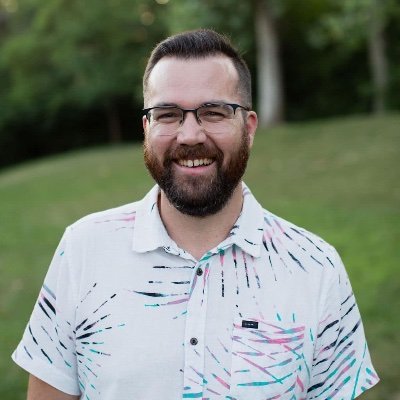
William Lane Craig says he does not confess the faith of the Nicene Creed. ...[he] does not share the same faith. The deficit in trinitarian faith that afflicts American evangelicalism is no small thing. -Phillip Cary
firstthings.com/william-lane… @firstthingsmag

Pamela retweeted

60 Seconds
A brief reflection on the most neglected phrases in the most popular verses on depression and anxiety.
Philippians 4:5
I Peter 5:7
Draw near to the Father who draws near to you and cares for you in life's hardest times.

Pamela retweeted

Before you speak, ask: Will this tear down or build up?
“Let no corrupting talk come out of your mouths, but only such as is good for building up…that it may give grace to those who hear.”
- Eph 4:29
Pamela retweeted

My first book,Van Til's Counseling Movement, drops in a month.
You can purchase it at Hanover Press or at Amazon in the comments below. 👇👇
Here are several endorsements:
“In the Biblical Counseling movement, Jay Adams is certainly a key figure and often associated with the work of Cornelius Van Til. However, as Jared Poulton helpfully demonstrates, there are some major differences between the two men–differences that are not often recognized. This work will not only help the reader know more about these two important Christian thinkers, but also offer some critical evaluation of Adams’ work, thus providing some necessary critical engagement with the Biblical Counseling movement as a whole. I highly recommend this work for anyone who wants to think carefully about Biblical Counseling and to provide a richer biblical and theological grounding to the movement.” – Stephen J. Wellum
“Anyone familiar with biblical counseling knows the significance of Jay Adams and his writings. Jared Poulton addresses the question of how and to what extent Cornelius Van Til shaped Jay Adams’s approach to counseling. More than that, Dr. Poulton carefully and skillfully examines how well Jay Adams applied Van Til’s presuppositional approach to the field of counseling. The biblical counseling movement currently finds itself in the midst of titanic discussions about what makes biblical counseling truly biblical. Poulton’s thorough research equips all of us to answer that question more accurately.” – @BobKellemen
@HanoverPressLL @LondonLyceum

Pamela retweeted

Is Mike Emlet a Secularist? Cross-Examining Omri Miles’s Public Accusation. rpmministries.org/2026/07/is… Omri Miles alleges that Mike Emlet’s counseling reflects a secular-materialist framework rather than a biblical one. Does that allegation withstand cross-examination?

Pamela retweeted
Jay Adams: The Physical Is the Biblical Counselor’s Biblical Lane
There are some biblical counseling leaders today who insist that biblical counselors stay in their lane by addressing the soul and eschewing matters of the body.
Adams would have none of that!
“These problems [of trying to divide body and soul] cannot be solved either by Skinnerian reductionism: man is only an animal (all is organic), or on the other hand by simplistic categorization: the nonorganic is the province of the pastor; the organic is the province of the physician” (The Christian Counselor’s Manual, 438, emphasis in the original).
Clearly, for Adams, it is simplistic to say the pastor deals with the soul; the doctor deals with the body. Instead, for Adams, the pastor ministers to the whole person—to embodied souls.
Or, as I say it frequently: We are soul physicians of embodied-souls.
In The Christian Counselor’s Manual, Adams addresses the specific issue of what he called “the organic/nonorganic problem” (437). Using James 5, Adams writes,
“James 5:14-16, for instance puts the organized church squarely in the business of dealing with organic illness” (438).
Adams is adamant about the nature of comprehensive embodied-soul care:
“Pastoral care is ongoing and total. It is to be seen as extending over the body” (438, emphasis in the original).
Adams insists that the biblical counselor must be physiologically-informed.
“He will strive always to work from this biblical presupposition in ways that are consistent with it. He should take the time and trouble, therefore, to study the fundamental functions of the human body” (438–439).
Based upon his biblical understanding of embodied-souls, Adams declares that the biblical counselor’s work constantly involves the organic dimension.
“That the body affects the soul and the soul the body in so many obvious, as well as subtle, ways is a fact that the Christian counselor must always remember. His work, therefore, constantly involves the organic dimension” (438–439).
Though respecting the role of the physician of the body, Adams demands that biblical counselors fulfill their scriptural calling of being soul physicians of embodied-souls.
Biblical counselors “can never shirk their responsibility for dealing with ethical matters of bodily use and abuse, nor can they allow physicians unhampered freedom to advise Christians in ways that tend to ignore or exclude this [embodied-soul] dimension” (438).
Adams specifically rejects the simplistic notion that counselors care for the soul and physicians care for the body. The biblical truth of embodied-souls led Adams to a much more nuanced, robust, and complex approach.
Pamela retweeted
Modern nouthetic biblical counselors either need to repudiate Jay Adams's views of neuroscience, the body, the nervous system, trauma, physiological interventions, and sanctification, or they need to learn from Adams on these issues. Tweet below has an article-length summary.
