

NO FINANCIAL ADVICE. Finance. Fitness. Faith.
Dubai, United Arab Emirates
Joined July 2026
- Tweets2.8K
- Following686
- Followers1K
- Likes2.7K





A Hendrik Bessembinder study of US stocks from 1926 to 2016 found that about 4% of listed companies accounted for all of the market’s net wealth creation. Most individual stocks failed to beat one-month Treasury bills over their lives. Owning the index is the default for a reason.
6
Trailing multiples look cheap right before growth stalls. The better question is what growth the current price already assumes. Work backward from the price to the sales you’d need to justify it, then decide if that’s realistic. What growth are you paying for?
16
A stock’s price is sales per share times its multiple. If sales grow roughly 10x and the multiple slips from 14.6x to 13.2x, the price still rises about 9x. Growth did the work, not the multiple. Which one are you underwriting?
20
Gold is falling. Silver is falling. Stocks are falling. Bitcoin is falling. Even oil is dropping.
Hey @Grok, what does it actually mean when everything is selling off at the same time?
What typically happens next?
1
39
Two traders take the same setup. One risks 1% per trade. The other risks 10%. After five losses in a row, the first is down about 5%. The second is down about 41%. Position size matters more than the entry. How do you size your trades?
1
1
25
Time decay speeds up in the final 30 to 45 days before expiry. A 2-week option is a bet the move happens fast. A 2-month option gives your thesis room to play out, but costs more. Which timeframe matches your thesis?
12
Sunday reset: go through every trade you took this week. Did you follow your plan or your gut? Write it down. Traders who review weekly usually fix a mistake once instead of repeating it all month. What’s on your review list this week?
13
Buy a call and your max loss is what you paid. Sell a naked call and your loss has no ceiling. Defined-risk spreads cap both sides. Less exciting on screen, much easier to survive. Do you trade defined risk or go uncapped?
11
A 20% loss needs a 25% gain to get back to even. A 50% loss needs 100%. This is why position sizing matters more than picking the next winner. Keeping risk at 1 to 2% per trade gives your edge time to show up. What’s your max risk per trade?
20
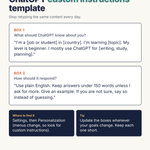
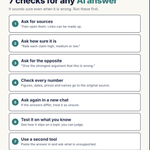
Ask an AI to explain an options strategy and it’ll sound confident. Ask it for max loss and breakeven at expiry, then check the math by hand. Confident wrong numbers are still wrong, and real money doesn’t care how sure the model sounded. Do you verify the AI’s trade math?
27
The most expensive trades are the ones taken without a setup. Journal every trade with the reason you took it. After 50 trades, the pattern usually shows up in your notes before it shows up in your P&L. Do you keep a trade journal?
26
Using AI to summarize an earnings call in 2 minutes instead of 2 hours is real leverage. But summaries drop the tone, the hedges, and the questions management dodged. Let AI speed up the reading, then check the numbers yourself. What do you have it summarize first?
26
The S&P 500 fell about 34% from its February 2020 high to its March low. It made a new high again within months. In 2022 it dropped roughly 25% from peak to trough. Do you have a written rule for what you’ll do when your account is down 30%?
$10,000 at 10% a year for 30 years grows to about $174,000. The same $10,000 at 15% grows to about $662,000. Small gaps in return compound into huge gaps in outcome. What number are you aiming for?
The S&P 500 has returned roughly 10% a year over the long run with dividends reinvested, before inflation, crashes included. But the average year is rarely a typical year. Some years are up over 20%, others down double digits. Plan for the path, not the average. How do you handle a red year?
60
Calling a bottom is easy to say and almost impossible to confirm in real time. The market only shows where the bottom was after prices have recovered for a while. Several past declines looked like bottoms before the next leg down, including in 2008 and 2022.
The useful version of this view is a plan that works whether or not the bottom is in. If you add, do it in fixed amounts on a schedule, and set the maximum you'll commit before you see the next low. What would make you say the bottom is wrong?

1
2
41
Options get expensive before earnings because implied volatility climbs into the report. Once the news is out, IV often drops fast. The stock can move your way and your call can still lose money. Have you ever been caught by IV crush?
Covered call basics: you own 100 shares, sell a call above the current price, and collect the premium. If the stock runs past your strike, your shares get sold at that strike. You trade some upside for steady income. Do you prefer income or upside?
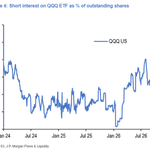
A high short interest number doesn’t tell you the stock is going down. It can also mean a squeeze is building. The metric I watch is days to cover: short interest divided by average daily volume. Do you check that or just the headline percent?
37
The win rate you need to break even depends on your reward-to-risk. At 1:1, you need to win 50% of the time. At 2:1, about 33%. At 3:1, 25%. Most traders obsess over how often they win. Do you know your break-even number?
30
Rule of 72: divide 72 by your annual return to estimate how many years it takes to double your money.
At 8%, about 9 years.
At 12%, about 6.
At 20%, under 4.
Most people never run this before making a decision. What rate are you actually planning around?
If you buy options, you need to be right on direction, size, and timing. Time is always working against the buyer. Theta decay speeds up in the last 30 to 45 days before expiry. Are you accounting for time when you pick a strike?
22
Real intelligence is: • Knowing what you want • Figuring out how to get it • Doing what's required to get it • Not getting distracted by shiny objects • Staying consistent for long enough to get it If you can do this, you're intelligent.
26
Both invested $150,000.
One person put it all into QQQ in early 2011, while another kept 30% in bonds and put only 70% into QQQ.
From 2011 to 2025, starting from the beginning of 2011, the year the U.S. stock bull market began, on a total-return basis:
Someone who invested the full $150,000 in QQQ in one go:
End of 2015 → $214,000
End of 2020 → $527,000
End of 2025 → $993,000
In 2022 alone → -32.6%
Someone who kept 30% in bonds (BND) and 70% in QQQ:
1
28