

In my humble opinion...
Earth
Joined February 2014
- Tweets1.6K
- Following259
- Followers286
- Likes1.5K





Raymond Ofungi retweeted

Uganda Cancer Institute performs stem cell transplant
“We were almost booking the plane to go to India. But when Dr Dungu told me about the transplant, I said, why do I go there? Let me do it from here,” Awany said.
His decision became a test of how far Uganda’s cancer treatment capacity has advanced. UCI successfully performed the transplant, making Awany the second patient in Uganda to undergo the procedure locally.
observer.ug/news/cancer-inst…

Raymond Ofungi retweeted

Today in History: Martin Luther Nsibirwa Assassinated Outside Namirembe Cathedral.
#NilePostNews
nilepost.co.ug/today-in-hist…

Raymond Ofungi retweeted

🚨🔴⚪️ THE WORLD’S YOUNGEST REIGNING MONARCH WAS A GUNNER 👑❤️
Uganda is mourning the passing of King Oyo, who died on 27 August 2026.
Crowned King at just three years old in 1995, King Oyo became the world’s youngest reigning monarch and went on to lead the Tooro Kingdom for 31 years.
He was also a proud Arsenal supporter, making his passing especially painful for the Ugandan Gunners. ❤️🤍
We have been informed that King Oyo had donated land for a school where registered Ugandan Arsenal fans would have been able to send their children for free education. Sadly, the project had not yet commenced before his passing.
A King. A Gunner. 👑❤️🤍
We mourn with the Ugandan Arsenal community and all those grieving his loss.
🕊️ May His Majesty rest in eternal peace.
#AFC #Arsenal #KingOyo #Uganda #UgandanGunners #RIPKingOyo #COYG

Raymond Ofungi retweeted

...This is @KerAlurKingdom's public condolence message on the passing away of the King of Tooro, Omukama Oyo Nyimba Kabamba Iguru Rukidi IV. May his soul rest in eternal peace.

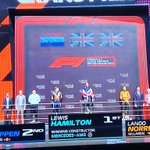
Back to the top of the block!! @LewisHamilton 🏁🏁🏁 #Ferrari #formula1 @naila_b @BiggieLondon @patrickoyulu @Rwak1Moses @AudeOfungi

Raymond Ofungi retweeted
Pope Paul VI visit to Uganda. Thursday 31st July 1969. I was given the name Paul after his visit.

Raymond Ofungi retweeted
UGANDA DESERVES SOME 'NECESSARY NOISE' — NOT JAZZING FWAAA!
In the early 2000s, I owned a short-chassis Mitsubishi Pajero - 2.8 litre, 4M40 diesel engine. At the time, it felt like power, prestige, and proof that life was moving. Had I known what I know now, I might have paused…or at least asked a better mechanic.
One morning, somewhere between Kampala optimism and Kabale ambition, the engine taught me a lesson. Just before Mbarara, at that speed bump opposite the Coca-Cola factory, it knocked - then blew. Not coughed. Not protested. Blew.
Long story short, I imported another engine from Japan. The 4M40, as I later learned in the honesty of Ugandan garages, had a reputation. Temperamental. Demanding. Foreign, yes - but it did not fail because it was foreign. It failed because something inside its delicate balance had gone wrong.
That is the thing about engines. And, as it turns out, about policy bills.
A good engine works because its parts trust each other. Pistons do not accuse spark plugs of foreign influence. The crankshaft does not suspect the fuel of betrayal. Everything plays its role within a calibrated system. Once you begin to doubt the very parts that make motion possible, you do not protect the engine - you destabilize it.
That is why the #SovereigntyBill started sounding like my old Pajero before Mbarara. It arrived polished, patriotic, and confident. But soon the knocking began: vague language, wide powers, harsh penalties, and a strange detour into private enterprise, money transfers, church donations, and Ugandans abroad being treated like suspicious spare parts.
Uganda has long been admired as a relatively open and progressive economy. So when a bill begins sounding like it wants to move sensitive financial oversight from the Bank of Uganda garage to the Ministry of Internal Affairs workshop, even the mechanic at Wankoko pauses.
“Owaaye…Enjini eno efudde. Enjini eno erabika eyonoonese.”
And now, timely enough, the 'real mechanic' has spoken.
He has asked that the bill returns to its actual engine room: sovereignty of policy decision-making - not meandering into private transfers, not frightening churches, not turning diaspora remittances into intelligence reports.
But perhaps that question - “why the kelele?” - came, let me say a little late.
Because it is precisely that noise - lawyers like @SarahBireete @miriamatembe raising red flags, @BOU_Official
Governor putting in a stellar performance against the bill, Hon. @MwesigwaRukuta1
giving a logical beware type explanation, citizens like @benmwine asking hard questions in the @Parliament_Ug committee, diaspora groups like Uganda Global voices and many others refusing to be mislabeled, experts like @PhillipKarugaba pointing out constitutional cracks — that forced the bonnet open.
Sometimes, what sounds like kelele (noise) is the engine saving itself.
That day near Mbarara, I learned that when an engine knocks, you do not silence it. You listen.
So before this legislative '4M40' blows at the speed bump of constitutional scrutiny, the wise thing is simple: keep listening, remove the bad parts, and rebuild only what is necessary.
Sometimes, that ka - necessary noise is well deserved. It shows citizens are listening, engaged, and still invested in the country’s engine.
Over to you, Parliamentary Committee. Get it right.
#SatireIsNotACrime #OhUganda – at Edison, NJ
Raymond Ofungi retweeted
NO, THE DIASPORA DOES NOT WEAR PRADA…
Uganda please, the Diaspora does not wear Prada!
We are not strutting down some Fifth Avenue runway, sunglasses on, accents confused, loyalties for sale. No. The diaspora is that stubborn, beautiful mix of Luganda proverbs, Alur pride, Banyankore Kweterana humor, Teso Kere, and Acholi resilience to name a few - served with a side of airport goodbyes and Sendwave remittances. We are Ugandan. Full stop. No designer label required.
Now, let me take you back - because Uganda’s policies have always had a way of arriving like an unexpected thunderstorm in 'Jjera-wood' (read: Najjera). On April 18, 1979, after the fall of Amin, banks were heavily looted. Dimes withdrawal became tricky. Banks reacted and said, “My friend, you can only withdraw 5,000 shillings.” You looked at your own money like it belonged to government. Then Obote II gave us the famous “chit system” -where sugar became rarer than a polite boda boda rider in Kyanja. Suddenly, connections were currency, and omuntu wa wansi was left negotiating life like a man buying Rolex without chapati.
But even those…even those did not attempt what this Sovereignty Bill is flirting with: the audacity to look at a Ugandan abroad and whisper, “Foreigner.”
Foreigner? Me? The same me who supports my kith and kin in Uganda? The same me whose December ticket alone probably funds that car chasing birds at Entebbe’s runway? The same me whose burial plot is already quietly reserved somewhere in Pakadha between my brother Alfred and Francis grave and that barkcloth Mutuba tree? My friend, what flavored shisha are we smoking?
This is where the Prada analogy enters, kubanga we must educate each other small-small. “The Devil Wears Prada” whose sequel launch premiered in New York yesterday, taught us that evil doesn’t always look like a monster in the tunnels at Clock Tower. Sometimes it is well-dressed, well-worded, and dangerously convincing. Policies too can come dressed in fine language -sovereignty, protection, order -yet underneath, they quietly rearrange your rights like furniture in a house you built.
Today it is the diaspora. Tomorrow, it is anyone who thinks too loudly.
My good friend and @SmackObs @PhillipKarugaba said it best in those spirited Uganda Global Conversations sessions moderated by @SmackObs Timothy Gaburungyi and on another space hosted yesterday by @rkabushenga - rights are not seasonal. They do not expire at Entebbe Airport. The Constitution did not say, “All Ugandans are equal…until you board Emirates.”
And let us not pretend this is abstract. The kadama sends 500K home - hardware shops smile, contractors eat, boda bodas fuel up, data bundles are purchased, and life…moves. Mwebereremu. You pull one thread, the whole sweater unravels.
This bill, my friends, is that small pebble in your shoe. Ignore it, and soon you are limping. Entertained by it, and one day you are crawling.
So no, Uganda - The diaspora does not wear Prada. We are not devils in designer suits. We only wear #Ondaba brands. We are your sons, daughters, investors, critics, lovers, so Ugandan, and loudest ambassadors.
And if loving #Uganda loudly is now a problem - then perhaps the problem is not us.
Kill the bill in @Parliament_Ug. Before it learns how to wear a suit.
#StopTheSovereigntyBill #Ondaba #SovereigntyBill – at Edison, NJ


Raymond Ofungi retweeted
THE SOVEREIGNTY BILL SWEEPIN' THE CLOUDS AWAY?
On a sunny day, a Ugandan should be allowed small luxuries -tea, memory, perhaps even a quiet hum of Sesame Street’s “Sunny Day, sweepin’ the clouds away…” -without the intrusion of legal uncertainty.
Yet increasingly, even the most ordinary acts are beginning to feel less ordinary.
And today, that feeling is no longer hypothetical.
With the Protection of Sovereignty Bill 2026 now formally tabled before @Parliament_Ug, what was once policy speculation has crossed into legislative reality. The conversation has shifted - from “what if” to “what now.”
A Ugandan living abroad, sending school fees home, supporting relatives, or offering commentary on national affairs, may now have to confront a more complex question: at what point does engagement with one’s own country become regulated activity?
Because under the proposed Protection of Sovereignty Bill 2026, that boundary appears to be shifting.
The bill defines a Ugandan residing outside the country as a “foreigner.” This is not symbolic language; it is a legal position. And once adopted, it reframes how everyday interactions - financial, social, and even expressive - may be interpreted.
Support that has long been understood as familial -medical assistance, tuition, rent, food - can, under a stricter regulatory framework, be recast as cross-border financial flows. Categorised. Reportable. Potentially subject to authorisation.
The implications are not abstract.
When ordinary behaviour is recoded in regulatory terms, it introduces friction. Senders hesitate. Recipients become cautious. What was once instinctive - helping family, contributing to community life, participating in national conversation -becomes conditional.
And now that the bill sits within the formal machinery of Parliament, that hesitation is likely to grow - not because the law has changed yet, but because its possibility suddenly feels real.
This is where the issue moves beyond legal drafting into lived experience.
Uganda’s diaspora contributes roughly 9.3 trillion Uganda shillings annually in remittances, sustaining households, supporting education, and supplementing healthcare. These flows are not peripheral to the economy; they are embedded within it. Any framework that complicates or discourages them, even unintentionally, risks consequences that extend far beyond compliance.
The question, therefore, is not whether sovereignty matters. It does. The question is how it is exercised.
How does a country safeguard its interests without narrowing the space for its own citizens to participate, contribute, and remain connected? At what point does protection begin to resemble distance?
Because if reform results in a climate where support feels suspect, where expression feels measured, and where belonging appears conditional, then the long-term cost may not be captured in policy language - but it will be reflected in behaviour.
Fewer risks taken. Fewer voices heard. Fewer hands extended.
Because if the outcome of reform is a climate in which support feels suspect and engagement feels risky, then the cost may not be immediately visible - but it will be felt.
If this was crafted to catch a few, it risks casting a shadow over all of us. Call it, the Hydra Effect!
And no - this won’t be one of those “Sunny days, sweepin’ the clouds away…” moments.
Even Big Bird would pause and wonder what exactly is going on. Because it is, frankly, embarrassing - that those entrusted with steering a nation would table such measures for such small battles, as though tomorrow will never come.
It does - and memory of our actions remains remarkably permanent.
We can do better.
Video: @nbstv #SovereigntyBillUg | @pwatchug – at Edison, NJ
Raymond Ofungi retweeted
THE WEEKEND PLATE
There are two types of people as #EidElFitri approaches.
Those who have fasted for 30 days…
And those of us who have been fasting in imagination -waiting patiently for #kyakulya.
You know the second group. We are the “strategic friends.” The ones suddenly remembering long-lost Muslim classmates. The ones who can pronounce “Asalam o Alikum” with confidence on D-Day, but have never quite recovered from saying “Alaikum salad” last year and being politely ignored near the meat pot.
Let’s be honest. For many ordinary Ugandans, Eid is less about the crescent moon and more about the curvature of a well-loaded plate. It is about lusaniya rising like a small hill, pilau perfumed like a five-star promise, and that chicken -oh, that chicken -moving from theoretical discussion to practical application.
But somewhere between the second serving and that ambitious third scoop, reality taps you on the shoulder.
Because while you were negotiating invites and perfecting greetings, someone else was negotiating with hunger. For thirty days.
From dawn to dusk. No shortcuts. No “just a small bite.” No “let me taste the stew and confirm salt levels.” Discipline. Quiet resilience. Faith in its most personal form.
And then comes the evening. The breaking of the fast -not with a stadium cheer, but with a humble prayer. A date. Water. Gratitude. The kind of moment that reminds you that food, before it is enjoyment, is provision.
That is the part we, the “festival specialists,” often miss.
We show up for the feast, but forget the journey.
Yet maybe -just maybe -that’s the beauty of Eid. It invites even the clueless among us. The ones who come for the pilau but leave with perspective. The ones who arrive with appetite and depart with a quiet respect for devotion.
So yes, by all means, locate your Muslim friend. Confirm your invite. Wash your hands like a man about to change his destiny.
But when you sit down to that glorious plate, pause -just briefly.
Remember that what you are enjoying is not just food. It is the celebration of endurance, faith, and gratitude.
Then proceed.
Because even spiritual reflection should not interfere with well-prepared pilau.
Eid Mubarak. And please -get the greeting right. #Uganda – at Edison, NJ
For a while been meaning to stop and take a photo of this jointcin Morningside, Sandton. Finally scratched that itch ...If you know you know!! @odagacharles @patrickoyulu @Rwak1Moses @SmackObs

Raymond Ofungi retweeted
ALL THE KING'S MEN!
When Padyere MP aspirant Denis Olyeko Oryema watched his son Lino Olyeko graduate as a King’s Horse Guardsman in London, it wasn’t just a family milestone – it was an Alur story stretching from Nebbi to Hyde Park Barracks in the United Kingdom.
In Buganda, some men don’t simply go to work – they report for duty in barkcloth. The Kabaka’s #Abambowa, wrapped in kanzumingi, step out with spear, shield, top-curved panga (zinzimiya) and a rope to restrain troublemakers. They arrive on empty stomachs to avoid toilet breaks; the Kabaka’s security comes before byakunywa and food.
Across in #Bunyoro, history remembers the #Abaruusura – Omukama Chwa II Kabalega’s standing army. Today they’re called Cultural Royal Guards, but the idea is the same: your chest and your spear between the Omukama and danger.
Fast-forward to London, where guards have swapped barkcloth for polished breastplates, but the brief is familiar: you blink, the monarch doesn’t, and the stare holds.
Now picture the Blues and Royals on parade at Knightsbridge’s Hyde Park Barracks: gleaming helmet, cuirass, sword at the ready, horse standing like it, too, has read the drill manual. The Household Cavalry performs the King’s Life Guard one day and deploys as an armoured reconnaissance unit the next.
Into that line of royal guardians rides one of our own: Trooper Lino Olyeko (photo below), son of Padyere, Nebbi District. On Friday, as he passed out with his squad, his father Denis (photo) stood by his stirrup, holding his regalia and sword like every prayer from the hills of Parombo had just hardened into steel. For a moment the usually unflappable King’s Life Guard tableau looked very African: a proud father fussing over his boy’s collar while the horse pretended not to notice.
For the Alur and for Padyere county, these photos are going straight to the sitting room wall. They tell a simple story: a boy who listened, a father who encouraged, a family that believes service still matters. From school roll calls to drill commands in London, Lino has ridden a long way.
Look closely at those pass-out pictures. The uniform says Blues and Royals; the posture says King’s Horse Guardsman. Tucked just at the edge of protocol, in the set of his shoulders and that almost-smile, is a young Alur horseman who knows that somewhere in the crowd, his father is watching – and that is an honour all of its own.
cc @KennedyJavuru | #Uganda
#AllTheKingsMen #RoyalGuards #Ugandans #UnitedKingdom


Raymond Ofungi retweeted
‘East Coast’ 'Buzigan' on the Verge of Running New York!
By the time New York woke up this morning, Kampala group chats were already five voice notes deep.
Somewhere on the campaign trail, a random New Yorker says, “I used to live in Muyenga," and @ZohranKMamdani replies "Oh, I lived in Buziga.
Now, yours truly for two years lived in Konge. My hommies and I -who lived that side of town, used to call ourselves the "East Coast" boys. If you lived in Muyenga, Kabalaga, Konge, Buziga, Munyonyo, Gaba etc you were #EastCoast
Suffice it to say, we are now claiming 'joint custody' of Zohran, who ironically, also lives in the East Coast of USA. 'East Coast' Buziga to East Coast, New York, game meets game!
Today, that once soft-spoken, but curious intern who - according to @Opiaiya (cited in @Roduza beautiful artcle in Reuters) once tiptoed into the @DailyMonitor newsroom, notebook in hand, is staring down the biggest headline of his life – and this time, he is the story. Back then, his job was to chase quotes. Tonight, he might become the quote every newsroom scrambles for: 34-year-old, Muslim, Buziga-raised kid may become #MayorOfNewYorkCity.
From that newsroom in Namuwongo to the blue subway line in Queens, the through-line has always been curiosity and stubborn hope. The boy who had to brief his dad @mm1124 every evening on current affairs is now the man about to be the lead item on every bulletin from New York to Namanve. The one who wanted to be a “top reporter” may end up as “top story” instead.
And Ugandans? From Arua to Zzana, Astoria to the Bronx, they’re holding their breath. Aunties in Boston have already cooked, uncles in Masaka are pretending not to care but quietly refreshing timelines. The “East Coast” crew are drafting captions in advance, just in case: “From Buziga hill to City Hall – Ki ekiriwo, New York City?”
But history doesn’t confirm itself. It needs voters.
So if you’re in #NewYorkCity and you haven’t voted yet, this is your cue. Grab your jacket, your MetroCard, your hopes and your doubts – and head to your polling place. Stand in that line like it’s the Rolex queue at 2 a.m. in Wandegeya. Cast that ballot and help seal this wildly improbable, beautifully Ugandan, thoroughly New York story.
Today, New York writes its headline. Don’t just read it. Be part of it. #voteZohran
Remembered 35 years on. Honesty, Consistency, Humanity and Humility
Thank you dad !!! @Ugandapolice1
#Uganda #IGP
REST IN POWER!

Great to see someone finally taking action on #noisepollution in and the cities #NEMA #Uganda
@bikhado @tonyofungi
@patrickoyulu
softpower.ug/nema-intensifie…


Raymond Ofungi retweeted
UG CRANES JERSEYS RULE
At every football tournament, there is always that one cultural spectacle that outlives the goals, the red cards, and even the refereeing scandals. Mexico 1986 had 'The Wave'. South Africa 2010 had the vuvuzela, loved locally but hated globally. And CHAN 2024? Ladies and gentlemen, welcome to Uganda’s invention: the back-of-the-jersey philosophy class.
Forget Nike slogans - Ugandan fans have taken differentiation to another level. On the terraces, you’ll find jerseys not just numbered, but sermonized: “Nakato Sikusanga Ewange,” “Stingy Men. Enough is Enough,” and my personal favorite, “Ffe wetuli, tetugenda, tumanyi gyetuva ne gyetugenda. Tukubira ku frontline.” 🤣🤣🤣. CAF is frowning, but Twitter is laughing. Instagram is sharing. Uganda is trending.
And isn’t that the essence of marketing? Differentiation. Standing out in a noisy, crowded space by being boldly, sometimes scandalously, unique. Apple did it with the iPod. Cameroon did it in 1982 when Pepe Kallé sang the entire Indomitable Lions squad into a Lingala hit. South Africa blew its lungs out on plastic horns until FIFA banned them. Uganda is now writing football literature on polyester, positioning itself in the conversation - not because of goals, but because of wit.
The beautiful irony? My brother, a diehard Manchester United fan, didn’t know that the names in “Roger Milla” were an actual World Cup lineup. That’s how African football culture works - songs, symbols, spectacles. The shirt slogans are simply the next chapter.
So let CAF threaten. The jerseys are doing what jerseys are meant to do - represent the people. Ugandans are no longer in “Kamooli Mode” (that invisible corner of global football). They are on the frontline - seen, read, heard, memed, and retweeted. And when all is said and done, CHAN 2024/5 will be remembered not for the scorelines, but for the shirts that spoke louder than the strikers.
Uganda’s brand? Differentiation, stitched in bold letters across the back.
I hope Nakato gets the message!
#Nkugambye
#SatireIsNotACrime #Ugandan – at Elizabeth, NJ

Raymond Ofungi retweeted
Should Mandazis Have the Right of Way?
The Public Accounts Committee (PAC) of Parliament sat yesterday to grill the Uganda Police Force on matters of road security protocols, assets, and the abuse of lead cars. But what grilled me more was the buffet table laid out like a pre-wedding meeting in Kanyanya.
Yes, there were tough questions about who deserves a siren and who just thinks they’re Moses parting traffic. But before we even got to the issue of road users being bounced off the tarmac, I couldn’t help but notice that what had real right of way - uninterrupted and unapologetic - were the mandazis.
As someone who tuned in because my OB, the Deputy IGP, was speaking on national issues, I expected security talk. Instead, I got snack attack. A Honorable (no need for full names - let's protect the hungry) was on a full food marathon: mandazi after mandazi, washed down with flasks of chai that would make a "Toninyira Mukange" joint jealous.
Another MP lamented the lack of a single patrol car at his district police station - with a mouth full of mandazi and a plate featuring more 'assets' than the very police force he was questioning. The irony did not just slap - it set up camp.
These committees are supposed to reflect our national decorum. But watching this, I began to wonder: is there a secret committee budget line for tea and accompaniments? Shouldn’t they be served water and national conscience instead?
Let’s be clear: there’s a time and place for everything. Breakfast is for home. Mandazis are for the canteen. Parliament is for leadership. Yet what we saw was a merging of all three - a katogo of national shame.
We speak of lead cars bouncing pedestrians, yet no one is bouncing these snacks off committee tables. If you squint, you might think you're watching a mukolo in a tent in Kyengera, not a public hearing on national police resources.
And now, I hear whispers that some MPs fear the canteen. Eh! So instead, they bring the canteen to committee? At this rate, we’ll soon have bogoya protocols, sumbusa security clearances, and a mandazi marshal to oversee pastry deployment.
Maybe we deserve better. If you cannot ask serious national questions without one hand in a samosa and the other reaching for a toothpick, maybe we need a Public Accounts Committee on Snacks (PACS).
Otherwise, dear Parliamentarians, before you ask who deserves the right of way on the road, kindly ask:
Do mandazis deserve the right of way on national TV?
EAT. FROM. HOME!
#SatireIsNotACrime #Uganda – at Edison, NJ


Raymond Ofungi retweeted
THE UGANDAN BENCH MARK!
Let’s gather round for a gem of historical importance in Uganda.
We all know @GardensNajjera for that late-night Kikalaaya Fix, Mama D's Keychen (🖐 @Mama_d256) for its "World Record" Food, strut down Bandaali Rise like it’s a fashion week runway, and map out Kyankwanzi for those intense political seminars.
Even the Karuma baboons have mastered roadside diplomacy (read: begging). And don’t get us started on the “hackers” who magically found that vault.
But here’s the real juice: Did you know the zero point for measuring distances from Kampala isn’t the Post Office, as most folks, 'who know things', may have thought?
Nope! It’s Amber House, home to the @MEMD_Uganda .
Hidden in its quadrangle is a historic obelisk, planted in 1907 by Mr. Weldon of the British colonial government.
This unassuming stone marks Kampala’s “distance-zero” and elevation—3905.40 feet above Mombasa’s sea level. Mombasa itself is at Zero.
It's called the #BenchMark
While we’re busy debating potholes, boda boda chaos, did Alien Skin punch gundi, and city garbage, this monument has quietly done its job for 117 years—no bribes, no breakdowns.
So, the next time @UNRA_UG tells you Kampala-Kanungu is 424.6 km, tip your hat to Amber House.
And to Mr. Weldon. (NB: Not the Mr. Wendal in the renowned Arrested Development song.)
Who knew the Ministry of Energy was powering more than just electricity?
Does @MTWAUganda know about this gem? #Uganda – at Edison, NJ