

Reading the fine print so you don't have to
USA
Joined October 2026
- Tweets131
- Following8
- Followers82
- Likes49




In July 2025, the GAO took a hard look at shrinkflation using Bureau of Labor Statistics data. Overall, it barely moves inflation. Prices rose 34.5% from December 2019 to December 2024, and downsizing added about 0.06 of a percentage point of that. That's roughly 0.01 a year
But in the aisles where it happens, it's a lot. Here's how many points downsizing added to each category's prices over those five years:
Household paper products: 3.0
Snacks: 2.6
Candy and gum: 2.3
Ice cream: 1.8
Breakfast cereal: 1.6
Coffee: 1.4
It's a small number of products, but they're the ones you buy. From 2021 to 2023, only 1.1% of cereal items were downsized, but they made up 8.6% of cereal sales. For paper towels, downsized items were 38.6% of dollar sales
The AP found one brand's toilet paper rolls went from 340 sheets to 312, and a small box of tissues from 65 to 60. At the same price, you're paying 9.0% more per sheet and 8.3% more per tissue
Your best tool is the unit price on the shelf tag. But only 16 states, DC and two territories had unit pricing laws as of November 2024, per NIST, so not every store has to show it
Other countries went further. Since July 2024, larger food stores in France have to post a notice next to products that got smaller while their unit price went up. South Korea's rule took effect in August 2024
So if the toilet paper aisle feels like it's shrinking, it is
35
You'll see a "Women's Leather Jacket" from stores for as little as $60. The material line will say: 100% polyurethane
The description does call it a "faux-leather moto jacket." But the title just says "Leather."
Same story with "vegan leather." BLANKNYC's "Women's Vegan Leather Blazer" will run you $118 at Target. Material: polyurethane
Vegan leather isn't a material, it's a name. On both listings, the material is polyurethane, a plastic. The other common one is PVC
The FTC has guides for this, last overhauled in 1996. In plain words:
You can't use the word "leather" on its own unless the product is leather "in all substantial parts."
If something looks like leather and isn't, that should be disclosed. The FTC's own examples: "imitation leather," "simulated leather," "vinyl," "plastic."
"Bonded leather" (ground-up leather scraps glued together) shouldn't be called leather either. One option is stating the split, like "60% leather fibers and 40% non-leather substances." The FTC set no minimum
These are guides, not a ban, so read them as what the FTC considers deceptive, not as proof that any listing breaks the law
On the tag, look for the material, not the style name. "PU," "polyurethane," "PVC," "polyvinyl chloride" or "100% polyester with polyurethane coating" all mean the same thing: not hide
1
20
A label can say "0g sugar" and still contain a sweetener the FDA itself calls a sugar
That sweetener is allulose. Chemically it looks a lot like other sugars, but your body doesn't metabolize it the same way
In 2019, the FDA said brands could leave allulose out of Total Sugars and Added Sugars. It also let them count it at 0.4 calories per gram instead of the usual 4. That became final guidance in 2020
Here's the part most people miss: the FDA never changed the actual rule. It just said it would use "enforcement discretion."
Then a "sugar free" Chobani yogurt with 4 grams of allulose per serving landed at the Seventh Circuit in Franco v. Chobani. The FDA filed a brief saying the rule is unambiguous, and that total sugars include all monosaccharides, "including allulose."
In July, the court revived the case. It said the guidance was an enforcement position, not a reading of the rule, so it doesn't block state consumer claims
In September, a new wave of class actions followed. Defendants named in the filings include Trader Joe's, Magic Spoon, Haleon (Emergen-C), Conagra (Duncan Hines) and Nature's Way. These are allegations, and none has been decided
To check it yourself, skip the front of the box and go to the ingredients list. If allulose is in there, that "0g" is the FDA's discretion talking
Then look at Total Carbohydrate on the Nutrition Facts panel. Allulose still has to be counted there, even when Total Sugars says 0g
2
31
"Pasture raised" on an egg carton has no single USDA definition. The USDA says so itself
Here's what each word means, per a USDA grading memo from April 2025:
Cage free: hens can roam "vertically and horizontally in indoor houses," with food, water, litter and protection from predators. That's it. No space minimum
Free range: everything cage free gets, plus continuous outdoor access during the laying cycle. That outdoor area "may be fenced and/or covered with netting-like material." There's no space minimum there either. In 2014, Certified Humane pointed out the USDA version could be met with just a "pop hole" to the outside
Pasture raised: the USDA notes "a lack of a single definition." On a USDA-graded carton, the eggs have to be certified by a recognized group, like Certified Humane or American Humane
So the real numbers come from the certifiers. Here are Certified Humane's, set in 2014:
Cage free: at least 1.5 sq ft per bird inside the barn
Free range: 2 sq ft per bird outdoors, outside at least 6 hours a day when the weather allows
Pasture raised: 108 sq ft per bird (1,000 birds per 2.5 acres), outdoors year-round, fields rotated. Hens can go inside at night, or for up to two weeks a year in severe weather
That's 2 sq ft vs 108 sq ft, about 54x the room per hen on paper. Both cartons can show a green field
Cage free is now close to half the country. In March 2026, USDA counted about 146.4 million cage-free hens, 46.4% of all table-egg layers. The other 53.6% were in cages, and those cartons don't have to say so. About 21 million of the cage-free hens, 6.7% of all layers, were USDA certified organic. By October 2026, the cage-free flock was up to about 151.6 million
The front gives you the word. The seal tells you which definition. Without a seal, "free range" means the USDA version: outdoor access, with no set size
2
36
Mrs. Butterworth's Original Syrup will say: high fructose corn syrup, corn syrup, water. Then 2% or less of cellulose gum, salt, cane syrup, caramel color, preservatives, natural and artificial flavors and a few others
There's no maple anywhere on the list. The bottle says "syrup," not "maple syrup," and that's on purpose
By law, anything sold as "maple sirup" (the FDA still spells it that way) has to come from the concentrated sap of the maple tree and be at least 66% soluble solids by weight, all of it from maple sap. The only extras allowed are salt, preservatives and defoaming agents, and they have to be listed
The USDA grade standard, updated in 2015, uses four names you'll see on real bottles: Grade A Golden Delicate, Amber Rich, Dark Robust and Very Dark Strong
Vermont goes further. State law bans the phrase "artificial maple syrup" outright as misleading. If a product uses "artificial maple flavor," the words "artificial" and "flavor" have to be as prominent as "maple."
In 2016, maple producer groups led by Vermont's wrote to the FDA asking it to act against products that put "maple" or maple imagery on packages with no maple syrup inside
At ShopRite, Mrs. Butterworth's 24 oz will run you $3.99, about 17 cents an ounce. Maple Grove Farms 100% Pure Maple 12.5 oz is $10.89, about 87 cents an ounce. That's about 5x the price per ounce for the real thing


2
57
They can't legally call it maple syrup because it's all just corn syrup. I'm writing about this today!
1
14
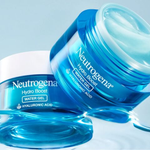
The front says "Hyaluronic Acid." The back lists it 15th out of 20 ingredients
This is Neutrogena Hydro Boost Hyaluronic Acid Water Gel, the 1.7 oz US version. On the back, hyaluronic acid goes by sodium hyaluronate
The first five ingredients: water, dimethicone, glycerin, dimethicone/vinyl dimethicone crosspolymer, phenoxyethanol
Phenoxyethanol is a preservative. The EU caps it at 1% of a cosmetic. Sodium hyaluronate shows up ten spots after it
Here's why the order only tells you so much. By law, cosmetic ingredients go in descending order of predominance. But anything at 1% or less can be listed "without respect to order of predominance," after the bigger ones. Colors go at the very end, which is why Blue 1 is number 20
So the back can't give you the exact amount. The US has no federal cap on phenoxyethanol, but if it's used at the EU limit or below, everything listed after it is at 1% or less too
For context, the industry's own ingredient safety panel reported in 2009 that hyaluronic acid and sodium hyaluronate are used in cosmetics at up to 2%
To be fair, it's normally used in small amounts, and this isn't about whether it works. It's about how much the name on the front tells you
Neutrogena sells different formulas of this gel outside the US, so check your own carton

3
51
Kind of ironic since the whole brand started as a bakery. It began as the St. Louis Bread Company, and the cafes in St. Louis still use that name
Par-baked and frozen is how most chains and grocery bakeries work now, so “baked fresh” mostly means it was finished in the oven that morning
Private Equity strikes again...
Another Shrinkflation victim: Domino's wings
January 2022: the $7.99 carryout wings deal went from 10 pieces to 8. The price stayed $7.99. The deal also went online-only, no phone orders
By law, a grocery package has to print its net quantity on the front, in the bottom 30% of the main panel. A restaurant deal doesn't even have that rule. The count is all you get, so do the math by count:
10 wings for $7.99 = 79.9 cents a wing
8 wings for $7.99 = 99.9 cents a wing
That's 20% fewer wings, and each wing costs 25% more. Those sound like they should match, but they don't. Losing 2 of 10 is 20%. Paying for 8 what you used to pay for 10 is 25% more per piece
Domino's pointed to the cost of chicken. CEO Richard Allison said the company expected "unprecedented increases" in food prices, with ingredient costs up 8% to 10% from the year before, against a usual 3% to 4%. He also said pushing orders online had "several benefits," including a higher average receipt and fewer workers needed on the phones
The same week showed the other way to do it. Little Caesars raised its $5 Hot-N-Ready pizza to $5.55, its first price increase in nearly 25 years, and said the pizza now had 33% more pepperoni
One changed the price. One changed the count. Only one of those shows up on the menu board
1
32
In 2016 Target pulled every product from one of its sheet suppliers. The "Egyptian cotton" sheets weren't Egyptian cotton
Target said the supplier, Welspun, swapped in non-Egyptian cotton on 500-thread-count Fieldcrest sheets made between August 2014 and July 2016. Target offered refunds and ended the relationship
The supply math is the interesting part
Egypt grew about 425,000 bales of cotton in 2024/25, per USDA. The whole world grew about 120.9 million. That's roughly a third of 1%, and USDA expects Egypt's 2025/26 crop to drop another 25%, to 320,000 bales
In early 2017 the Cotton Egypt Association estimated that about 90% of the "Egyptian cotton" sold worldwide the year before wasn't genuine. That's the association's own estimate, and it didn't explain how it got the number. But it's the group that licenses the name
Why fake it? Egyptian cotton is long-staple, meaning longer fibers that spin into a finer, smoother yarn. In 2017 long-staple cotton sold for about 155 cents a pound, roughly 2x the price of short-staple. And you can't see fiber length on a folded sheet
By law, the US tag has to show fiber content, country of origin and who's responsible for the product. Country of origin means where it was processed or manufactured. For sheets, Customs wants the country where the fabric was made. Nothing on the required tag says where the cotton was grown
The FTC does say a cotton type name is allowed only if it's truthful. Its example: "100% Pima Cotton" has to be 100% Pima fibers, and "100% Cotton, Pima Blend" without saying how much Pima is "unacceptable."
How to check a package:
Look for a percentage. "100% Egyptian cotton" is a specific claim. "Egyptian cotton blend" with no number tells you very little
Look for the Egyptian Cotton logo, then find the brand on the Cotton Egypt Association's accredited manufacturers list. The association says it backs the logo with DNA testing along the supply chain. Its own advice: "Not there? Don't buy!"
Don't treat thread count as proof. The Target sheets were 500-thread-count
2
43
"100% Grated Parmesan" hasn't always meant 100% parmesan
Back in 2016, grated parmesans were sent to a lab to test for cellulose, a filler made from wood pulp
A little (2 to 4%) is a normal anti-caking agent. Two store brands came back at 7.8% and 8.8%
Around the same time, the government went after a Pennsylvania cheese company that sold "100% Parmesan" that was actually cut with cheaper cheese and cellulose. Its executive got 3 years probation and a $5,000 fine
Easiest fix is buying a wedge and grating it yourself. Takes a minute and it tastes way better anyway
3
49
This started in 1972 when food scientist at General Foods, Ruth Siems, worked out a breadcrumb size that soaks up hot water and is ready in 5 minutes
Homemade is just stale bread, broth, butter, onion and celery, and honestly not much more work
You'll see comforters called "White Goose Feather Down Comforter." It's 90% white goose feather and 10% white goose down. Fill power: 100
The "White Goose Down Comforter" on the same site is 100% white goose down with 700 fill power. That will run you $239.40 on sale
Same words, mostly. Very different bedding
Here's what the words mean under the US industry standard, which is based on a 1999 FTC brochure:
Down: at least 75% down cluster. No tolerance. The minimum percentage has to be on the label
Goose down: at least 90% of the plumage has to come from geese
Blends: if it says 50% down, 50% feathers, it needs at least 50% actual down cluster
Down fiber, the broken bits, doesn't count toward the down number. If fiber goes over 10%, it gets its own line on the label. And "waterfowl feathers" means at least 80% feathers
Fill power: how much space an ounce of down fills. Higher is fluffier and warmer for the weight. It isn't required on the law tag, but if a company advertises it, the industry tolerance is 5%
The old FTC standard was looser. Under its rescinded Down Guides, "down" meant more than 70% down. The 1999 brochure called that 30% wiggle room outdated, and the industry moved to 75%. It also said makers can't "shoot for the tolerance," and that a company under an FTC order could face civil penalties of up to $11,000 per violation
Other countries draw the line elsewhere. Under the EU standard, a product can be labeled down with 60% down, as long as the real percentage is on the label
And "down alternative" doesn't even have down in it. Serta's King Year Round Down Alternative Comforter, $99.99 at Target: 100% polyester fill, 100% polyester shell. That's not a knock. It's washable and good for allergies. It's just polyester
On the law tag, read the down cluster percentage first, the bird second, fill power third. If "feather" comes before "down" in the name, expect more feathers than down
2
36
Greek Yogurt, Cottage Cheese, and Lentils
If you're vegan, then good luck. Lentils would be your best bet but I don't know how far you can stretch that haha
83
By law, anything sold as "butter" has to be made only from milk or cream, with optional salt and color, and be at least 80% milk fat. That law dates to 1923
That's why the tubs next to it use other words
I Can't Believe It's Not Butter! The Original has a full name: "45% Vegetable Oil Spread." The back will say: purified water, soybean oil, palm and palm kernel oil, salt, soy lecithin, natural flavor, vinegar, vitamin A palmitate, beta carotene for color. Water is first
Country Crock Original is even shorter: purified water, soybean oil, salt, vinegar
Why "spread" and not "margarine"? By law, margarine has to be at least 80% fat too. At 45% fat, it can't even be margarine
Land O Lakes Butter with Canola Oil will say: pasteurized sweet cream, canola oil, salt. Real cream, but with oil added it can't be just "butter," so the oil goes in the name
Regular Land O Lakes salted butter is two ingredients: sweet cream, salt
For baking, this matters. A recipe written for butter expects at least 80% fat. The spread is 45% oil, and its first ingredient is water
On the tub, look for the percent next to "vegetable oil spread." On the box, the one word that counts is "butter."