

All your prediction markets & tools in one place with charting, mentions data, sports odds, contract filters, risk analytics & more! Not investment advice.
Joined October 2025
- Tweets588
- Following414
- Followers393
- Likes1.8K




Pinned Tweet
We're excited to roll out our latest feature, Resolve Elections! We want this to be your 2026 US midterm election prediction markets hub! A thread🧵on all the new features: resolvemarkets.com/elections

Part of what has allowed us to survive multiple election betting cycles since 2016 is the ability to adjust and change our minds where necessary. Tonight, with the latest batch of polls from @atlas_intel & NYT/Siena and the excellent EV tracking & modelling work being done by the likes of @Thorongil16, @ZacharyDonnini, @armin, and @umichvoter, just to name a few, we are exiting our YES Abbott and YES Donalds positions. The data has become compelling enough to no longer ignore. Even if Abbott & Donalds are ultimately victorious, our confidence is no longer there the way we'd need it to be to diamond hands these positions into Tues. In addition, always worth a second look when sharps such as @GaetenD, @keendawg and @TradeandMoney are your counterparties! This is not a recommendation to trade but rather simply a way to hopefully share our evolving thoughts on what may shape up to be the most exciting midterm election since 2006. Stay safe out there and good luck to everyone this week!

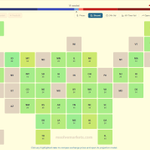
ONE WEEK TO GO: A check-in on 24 hour cross-exchange volume for gubernatorial races has TX out in front, just as it is on our Senate heatmap, too.
resolvemarkets.com/election-…

OHIO SENATE: Next up in our midterm analysis series is the special election for the Ohio senate seat vacated by Vice President Vance in January of 2025. Governor DeWine appointed then GOP Lieutenant Governor Jon Husted to replace Vance. This race intrigues us for several reasons, most notably because Sherrod Brown, the Democratic challenger, was a three term senator from Ohio already, making him a household name in the state.
Background: In the modern political era, Ohio has been seen as a "bellwether" state, even having earned the phrase "As Ohio goes, so goes the nation" in political science circles. However, following President Trump's first term victory in 2016, Ohio has looked fairly ruby red, having voted for Trump decisively three times in a row in presidential elections. That being said, Sherrod Brown managed to do something that had seemed to be impossible in the Trump era: he won reelection as a democrat in 2018 for a third senate term, at 53.5-46.5. He was part of a trifecta of Democratic senators winning in "Trump" states that year along with Montana's Jon Tester and West Virginia's Joe Manchin.
Fast forward to 2024, and Brown is up for reelection and loses in what was by all accounts a tough year for Democrats. However, Brown vastly outperforms Harris, losing to GOP's Bernie Moreno by 3.5, 46.5 to 50 where Harris lost the state by roughly 11 points. Brown's outperformance in a red wave year is the first signal to us that he has the potential to reclaim his seat in 2026 if the "blue wave" does, in fact, materialize. Brown outperformed Harris in all 88 Ohio counties, and some counties even voted for Trump and Brown, such as Lorain (West of Cleveland).
What is difficult to measure is whether certain states have become more partisan in the last few cycles, Ohio included. For example, we'd be hard-pressed to imagine a Democrat - including Joe Manchin - winning a statewide office in West Virginia in 2026. Is Ohio the same? We'd argue that it's partisan shift is a bit less ossified than in these other "Trump" states, in part due to the ticket splitting Sherrod Brown experienced in 2024, even if he came up short.
So, what are the polls saying? As of this writing, the @RCPolitics average of polls has Brown up by 3.1. In 2024, Brown underperformed the polls by 1.9. In 2018, while no final average was given, he also underperformed his polls by between 3 to 10 points, depending on cutoff time. This time around, just as with our first analysis on Texas, there is far more polling being conducted which does give us more confidence in the figure being reported. However, with polling errors in recent history landing on the wrong side for Brown, we need to take this into account. Trump not being on the ballot this iteration may also be a benefit to Brown.
Energy: then, there is the diesel angle. Unlike our first two states in our analytics, Texas & Maine, Ohio is far more tied to agriculture, which relies heavily on diesel and fertilizer. Rising prices due to the Iran war have weighed on midwestern farmers and agricultural economies. As of this writing, a gallon of diesel fuel in Ohio costs about $6.24, almost double the final price in 2024 of $3.47 (NBC). This alone may be enough to swing it in Brown's favor.
The elephant in the room: the GOP gubernatorial candidate, Vivek Ramaswamy, has recently come under fire for an ad attacking his Democratic opponent that even members of his own party have distanced themselves from. There could be a backlash not only to Ramaswamy, but also to down ballot Republicans such as Husted.
Data centers: This has become a hot button issue in Ohio where public sentiment has turned negative towards the buildout of data centers. Brown has been framing Husted as having been "pro data center". The @ezraklein podcast recently had a good episode on Trump voter focus groups where this has been a consistent issue that Brown is hammering Husted on. Given the heightened anxiety around this topic, if this has staying power, it could be a drag on Husted, especially given how pro data center President Trump has been.
Conclusion: We think this one goes to Brown. A combination of high diesel prices, household name recognition, a populist message, poor GOP approval ratings, Trump not being on the ballot, and a GOP gubernatorial candidate that has mismanaged his campaign messaging all make for a positive environment for any Democrat running statewide in Ohio. However, this is still a Trump +11 state, so this is by far not a foregone conclusion. The past polling errors against Brown combined with the slim lead he currently holds in the polls means this is well within the margin of error. At ~70c, the price for a Brown victory also feels a bit rich here. We do not currently hold a position. We will be watching - but not chasing - a YES Brown position. As always, these views are our own and do not constitute a recommendation to buy, sell, or trade any contract.
resolvemarkets.com/elections
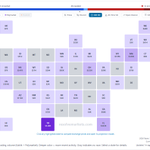
Aggregate volume on midterm senate election contracts finally starting to perk up a bit here. Will be interesting to see in the final ten days what the flows look like.
resolvemarkets.com/elections

Our @PredictIt book is growing at a rapid pace. Will post final positions on Nov 3. Not trade/investment advice.

Depositing into @PredictIt ahead of the 2026 midterms feels like coming home. Hello again, old friend. We have work to do.

Not all prediction market exchanges are in agreement about senate prices. See the differences using our Senate map. We just scooped up shares of NO Paxton on @PredictIt at 62c while the @Kalshi price was 68c. (Not a recommendation to trade).
resolvemarkets.com/election-…

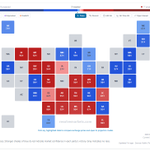
TWO WEEKS TO GO: Our aggregated senate price map across three prediction market exchanges has Democrats priced to control 52 seats.
resolvemarkets.com/election-…

Depositing into @PredictIt ahead of the 2026 midterms feels like coming home. Hello again, old friend. We have work to do.
Kind words from one of the greats in the space. We wish @probaaron luck in his next endeavors, including his excellent substack “Resolution Pending”!

MAINE SENATE: Next up in our midterm analysis series is a closer look at the Maine senate race. This is the one that intrigues us the most after the Texas senate race in large part due to its unpredictability based on past polling errors. Let's first start with some history:
2020: Joe Biden wins Maine 53-44. Meanwhile, Susan Collins wins Maine 51-42. This is a huge ticket split in the modern political era. What's more, the polling error was *massive*. The @RCPolitics average of polls had the Democrat up somewhere around +5 heading into election day, with the final result a whopping +8.6 for *Collins*. This was an insane ~13 polling error! And this wasn't the first time - Collins has a history of massively outperforming her polls even before 2020. In 2014, she outperformed the RCP average of polls by +7.8, and in 2008, another massive blue year, she outperformed her polls by +8.4.
So, where does this polling error come from? For one, Maine had been polled relatively poorly in past cycles. The last poll conducted in the 2020 cycle was an Emerson college poll with 611 likely voters in the last few days of October. And, nothing against Emerson as a pollster, there just wasn't a huge sample size right at the end. So, a smaller sample size is certainly partly responsible for this. But, our hunch is that it goes further than that. Maine is just generally more of an independent state. Recall that Maine's other senator is Angus King, formally an Independent (even though he caucuses with the Democrats). Furthermore, from everyone we've talked to on the ground in Maine, Susan Collins is not generally disliked in the way many other standard establishment politicians are. She has been able to navigate multiple elections successfully in large part due to her simple message of bringing money home for her state (newyorker.com/news/the-lede/…) and by being perceived as independent enough that she can attest to bucking her own party and President Trump where it makes sense for her constituents. Knowing this, let's now turn to today.
2026: This time around, there is more polling being conducted, but still not to the same extent that, say, Texas is in our first midterm analysis series. Maine is also more of a rural state than others are, making polling harder in some areas outside of the Portland metro area. Therefore, are we to distrust the polls? Not necessarily. But, the larger the sample size, the better we feel about accuracy. As it stands today, the RCP average of polls has the Democratic challenger, Troy Jackson, up around +1.6, far underperforming the D+8 environment on the generic congressional ballot that other Democrats are experiencing.
Then, there's the elephant in the room: Graham Platner. With Platner bowing out of the race, Troy Jackson filled the Democratic spot. By all accounts, this has been an underwhelming transition, with polls barely budging as a result of the switch. We consider this switch a negative for Democrats, not because Platner would have been a better candidate in a head-to-head match-up (we'll never know the counterfactual) but because consistency is an asset in elections, and the circumstances by which Platner exited were not positive for the Democratic brand in Maine.
It's not all positive for Collins, though. The demographics of the state have changed with more Bostonians moving to the Southern Portland area in the last six years, high fuel prices, a trade war with Maine's northern neighbor and trade partner Canada, and a generally negative environment nationally for Republicans, and her age all being headwinds for any GOP incumbent this cycle (although at 73 years of age, she is arguably young for the Senate).
With such a messy pre-general timeline, it's tough to extrapolate certain primary metrics to the general as we did with Texas partisan turnout. For Maine, the best we can do is look at the 2020 baseline and make some demographic assumptions. We do so in the attached animation based off of our election projection analysis tool & data. The animation is split into three parts: the first being the 2020 split between President & senate. The second being a simulation of 10,000 elections. The third is a closer look at the potential polling error this time akin to past cycles.
Ultimately, even with a more favorable environment for Democrats than past cycles where she has been on the ballot, we lean towards this being a Collins win. If there is even *half* the polling error this time as there was in 2020, it's still Collins' to lose. Our own modelling tells us that Jackson is a favorite up until we introduce a polling error. The polling error could, of course, not materialize this cycle as it has in the past. But, we are skeptical that it will be the case this time, particularly given the consistency of a favorable Collins polling error in the last three cycles where she has been on the ballot. Therefore, we still view Collins as the favorite. A Collins YES contract makes for an interesting hedge if your book is heavy long Democrats heading into November 3. As always, this is not a recommendation to trade any specific contract. Let us know what you think! You can make your own turnout assumptions for Maine and other states by making a free account and using our election projection tool:
resolvemarkets.com/election-…
Hey @keendawg & @Domahhhh we’re spreading the word on the excellent @EventualNews podcast. Had a 13 hour flight last week and it helped pass the time bigly!!! As we inch closer to Nov 3, you guys are putting out some great stuff on the little nuances of each race. Keep it up!

We refuse to believe Blexas extends as far as the governorship. Consistent polling delta betwen Abbott and Paxton. Our thesis is Texas midterm Republicans vote for their governor and leave the senate section blank. Less than three weeks to go! Not a rec to trade.

Since the GOAT was kind enough to share his midterm bets with the rest of us, here are ours below as well of what we plan to carry into election day (not a rec to trade):
YES Dem House - 10,000 contracts
YES TX GOP Gov - 8800 contracts
YES FL GOP Gov - 7500 contracts
YES AL GOP Gov - 3700 contracts
YES FL GOP Senate - 2000 contracts
YES SC GOP Senate - 2000 contracts
NO NY GOP Gov - 1000 contracts
YES MN Dem Senate - 1000 contracts
NO AZ GOP AG - 620 contracts
NO OR GOP Gov - 500 contracts
Planning to add at the right price:
YES TX Dem Senate
YES OH Dem Senate
NO IA Dem Senate
NO ME Dem Senate
Let us know how half-baked you think our positions are in the comments below!
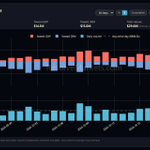
This is a seriously underrated point by our new friend @Karoshi247 . When new traders to prediction markets ask us for advice and alpha, the one we will always give away for free is to demonstrate patience & do. not. overtrade. Often times, the price you want to pay will come to you if you give it time. And yes, profitable trades are key, but half the battle is avoiding the landmines that you step on by trading when - and what - you know you shouldn't. Attached is the trading activity from one of our cofounder's accounts where you can see the density graph clearly shows a drop-off since mid summer. We are comfortable with this as there have not been the opportunities we'd like to participate in. A small green month is better than a large red month.
resolvemarkets.com/trade-ana…


Half a Million Dollars!
An important milestone reached
500k
I want to emphasize how much patience is needed in prediction markets. In September I almost made no money, while July and August were the best months of my life. I didn’t panic — I just followed the plan. That’s the beauty of day trading: it really rewards those who stick to a long-term mentality and never lose control of their emotions.
You need to learn how to win, but mastering how to lose is what will really make you survive here.
Thank you Kalshi for creating a place that allowed me to thrive and live doing one of my passions: watching soccer.
Long live Prediction Markets!

Since the GOAT was kind enough to share his midterm bets with the rest of us, here are ours below as well of what we plan to carry into election day (not a rec to trade):
YES Dem House - 10,000 contracts
YES TX GOP Gov - 8800 contracts
YES FL GOP Gov - 7500 contracts
YES AL GOP Gov - 3700 contracts
YES FL GOP Senate - 2000 contracts
YES SC GOP Senate - 2000 contracts
NO NY GOP Gov - 1000 contracts
YES MN Dem Senate - 1000 contracts
NO AZ GOP AG - 620 contracts
NO OR GOP Gov - 500 contracts
Planning to add at the right price:
YES TX Dem Senate
YES OH Dem Senate
NO IA Dem Senate
NO ME Dem Senate
Let us know how half-baked you think our positions are in the comments below!


TEXAS SENATE: Perhaps the biggest midterm question on everyone's mind is whether Democrat James Talarico can make the elusive "Blexas" a reality by defeating GOP AG Ken Paxton. We take a closer look below in the first of our midterm analysis series using our election modelling tool.
First, let's rewind the clock to 2018, which is perhaps the best analog to 2026 both nationally and at the TX state level given Trump also occupied the White House and another charismatic young Democrat, Congressman Beto O'Rourke, was taking on incumbent Senator Ted Cruz. The RealClearPolitics average of polls had Cruz +7 heading into election day, with the final result much narrower at +2.6% for Cruz. For reference, the RCP generic congressional ballot was +7.3 with the final result showing a Democratic outperformance at +8.4.
Today, the RCP average of polls shows Talarico +2.8 as of this writing. Texas is also being polled much more heavily this cycle than it was in 2018, with well over 10,000 likely voters being polled in September alone. Because of this, we have reason to believe the polls should be more accurate given the larger sample size. In this cycle's polls, voters are asked the question of who they would prefer for Governor as well, with current GOP incumbent Gov. Greg Abbott showing consistent outperformance versus Paxton. There are clearly crossover votes that will occur in a narrow subset of voters who will support the Governor but not the GOP's choice for Senate. As an aside, this makes a YES Abbott & YES Talarico play intriguing to us.
Because of 2018, we now know what kind of electoral results Texas can produce in a anti-Trump environment. Trump himself was not on the ballot then, depressing GOP turnout then as he is likely to do so again this cycle. So what would it take to erase that 2.6% margin Senator Cruz won in 2018 by? Some data to consider about 2026 vs. 2018: Texas average gasoline prices are about 3.88/gal now whereas they were approx. $2.25 in October of 2018. This alone may be enough to swing it, but let's examine another key comparison in primary turnout:
2018 GOP primary turnout: 1,549,573
2026 GOP primary turnout: 1,391,634 (-10%)
2018 Dem primary turnout: 1.042,914
2026 Dem primary turnout: 2,319,187 (+122%)
The enthusiasm gap is real. Given this, even a modest shift in any underlying turnout assumption from demographics in our projection model (white voters in Travis, Harris, or Dallas counties or Hispanic voters in the Rio Grande Valley) is easily enough to overcome the 2018 baseline result of R+2.6, just as we've done here in the attached example.
Our conclusion: slight edge to Talarico. A combination of high gas prices and a GOP candidate of historically poor quality makes this a favorable environment for Talarico to win with a final margin of probably D+2. This is not a recommendation to trade, but rather our own analysis of what we think makes the most sense. Try our projection model on any state in play this cycle by making a free account here:
resolvemarkets.com/election-…

A little late to post but we still managed to eek out a positive September. resolvemarkets.com/trade-ana…

We collected all @Kalshi live trade and orderbook data for the UEFA Nations League England-Spain match that ended 2-3 Spain yesterday as it happened in an attempt to understand trader activity in an active contract on a micro level on the largest US prediction market exchange. Some findings below along with the clip of market activity during the segment of gameplay we were most interested in from minutes 51 to 55. We specifically examined the England contract (KXUEFANLGAME-26SEP26ENGESP-ENG).
Minute 51: England is up 2-1 and priced around 0.58. Spain's Rodri fouls an England player in the box. England bid climbs to 0.65, a full minute before the Video Assistant Referee (VAR) decision is issued.
Minute 52: VAR issues the penalty. England's bid rises from 0.66 to 0.81 over the next 80 seconds as takers lift 66k contracts offered.
Minute 53: England's Harry Kane steps up for the penalty kick. A 3500 contract taker order cleaning out offers on a 7c ladder to as high as 0.85 in under a second. The largest buy of the penalty window of ~26k contracts executes at 19:58:22 UTC followed 14 seconds later by the largest sale of the penalty window at ~31k contracts at 0.80.
Minute 54: Kane misses. At 19:59:17 UTC, 218k contracts of bids cancelled and re-posted lower in a single second, seven seconds before the miss is logged. About 6k contracts of actual selling against roughly 190k of bids cancelled.
Minute 55: 50k offer at 0.70 and a 100k at 0.68, within 15 seconds of the miss.
$93,688 of England bought between the foul and the kick, worth $78,884 a minute after the miss.
Open interest: 121k contracts of new OI during this window, or roughly 9.5 percent of the contract's total.
Slippage: Out of 1836 England YES taker-side orders of 250 contracts or more for match duration, 35 filled 3 cents or higher above the pre-order ask, with the worst being a 40c sweep.
Makers: By our calculations, soccer makers on all 3 contracts (England, Spain, Tie) earned about half a cent per contract on every leg for the whole match, or roughly $56,000. This is measured as the price move 60 seconds after each fill, from the maker's side.
Method: This was recorded live from Kalshi's WebSocket trade & orderbook streams at millisecond resolution with 782k messages and 96,509 fills, reconciled one-to-one with Kalshi's own trade history and minute candlestick data.
We'll be posting more data about both this market and others like it and our findings on prediction market structure. Please let us know your thoughts & feedback!