

Rhodesia, 1965-1979. Period photos and Bush War history, daily. Fireforce, Selous Scouts, RLI, RAR, and the Rhodesian Air Force.
Rhodesia
Joined September 2026
- Tweets664
- Following561
- Followers809
- Likes3.2K


Pinned Tweet
That split is what made the Rhodesia Regiment the backbone of the war. Most of its men were territorials, not regulars, and they still held the line year after year.


Operation Dingo was a cross-border strike into Mozambique, launched on 23 November 1977. The flag going up at New Farm the next day marked the headquarters complex itself.


On 19 December 1976, about 30 Zanla entered the Aberfoyle tea estate workers' compound in the Honde Valley, marched the men to a shed and machine-gunned them while their families watched, and one man survived.

After the Urungwe contact of September 1978, Lunderstedt rescued a baby goat from beside a body and gave it to a black police sergeant. Five months later, at the second Viscount crash site, the men showed him his goat, following the sergeant like a dog.

14
393
Fireforce teams did up to three combat jumps a day from below 500 feet. Sergeant Des Archer of 1 Commando set a world record of 73 operational jumps. Low, fast, and often straight into a contact.

Rhodesia and Virginia were settled almost three centuries apart, Jamestown in 1607 and the Pioneer Column in 1890, yet both built tobacco economies run by men used to giving orders.

One thing that always strikes me is how similar the stories of Rhodesia and Virginia were, from the tobacco plantations to their destruction at the hands of the egalitarians
They also both possessed the habit of command. As Peter Baxter notes in his Rhodesia: A Complete History, the Rhodesians made exceptional officers in both world wars, and nearly all became officers for that reason. Their lives had accustomed them to develop the habit of command.
He writes: "of those 5,500 whites, over 1,700 held commissions, and the majority of others were senior NCOs. This would be noticed again in World War II and was explained by the fact that white Rhodesian youth tended to be of a higher calibre than most others of the empire. Rhodesia indeed tended to be more welcoming of a 'certain class' of Englishman, which might perhaps have contributed, combined with the fact that managing large labour forces helped develop the confidence of command at an early age. The answer, however, must remain a matter of opinion entirely, and all that can be said for sure is that white Rhodesian youth approached the war with a maximum of bravado and a minimum of reflection."


Scheepers argues the five Zipra killed near Karoi on 24 November 1978 were the gang behind the Viscount Hunyani shoot-down. He concedes the date in the earlier account was wrong, and the identity cannot be proved 100 percent. His case, not settled fact.

PATU deserves a closer look. Its men knew every track in their district, and the price of that was leaving their own farms unguarded each time they answered a callout.

In Rhodesia, Police Anti-Terrorist Unit (PATU) was essentially the minuteman militia. It was composed of farmers who would respond to counter-attack or track down terrorists who had hit a farm. PATU's principal advantage was that its members often lived and worked in the district they defended.
An incident might begin with a farmer reporting gunfire, a sighting of armed guerrillas, suspicious spoor (tracks), or an attack on a neighboring homestead. The report would reach the local British South Africa Police (BSAP) station by telephone or the Agric-Alert radio.
A typical reaction stick consisted of four men, usually armed with FN FAL rifles. PATU was organized as light infantry rather than a heavily armed assault force. PATU sticks generally lacked machine guns, and grenades were not always available. This limited their firepower when confronting larger guerrilla groups. Its four-man sticks relied primarily on rifles, local knowledge, mobility, and the judgment of junior leaders.
In well-organized districts, the interval between the alarm and deployment could be as little as 30-60 minutes. The stick received a brief account of the incident and traveled to the area, usually by Land Rover. On arrival, the men would establish what had happened, speak with witnesses, and look for evidence of the guerrillas' movements.
The timing was especially important. Many farm attacks occurred in the evening, allowing the attackers to disappear under cover of darkness. PATU might therefore spend the night conducting vehicle patrols and maintaining a security presence, with a more substantial search beginning at daylight.
When spoor was discovered, the operation became a follow-up, the Rhodesian term for pursuing guerrillas after an incident or sighting. Tracking was particularly important in the Rhodesian bush, where guerrillas could disappear into vegetation and broken terrain without leaving an obvious route of escape. PATU benefited from members who knew the local countryside intimately. The BSAP also maintained specialized tracking units, composed principally of black African trackers, generally operating in groups of six to eight under a white officer (the Support Unit or Black Boots).
If a patrol encountered armed guerrillas, the situation could develop into a firefight. PATU could operate independently or in conjunction with BSAP Support Units and the Rhodesian Army. If they were overwhelmed, there was always the option of calling in a request for “Foxtrot Foxtrot”; Fire Force.
Following an engagement, the police would have to account for casualties, establish what had happened, and report the outcome. The information could also be passed to Special Branch, which maintained intelligence networks and coordinated with other Rhodesian security organizations. In fact, the amount of intelligence gathered on terrorists allowed individual members to be identified and even groups’ past movements reconstructed.
PATU's strength was its combination of local knowledge and rapid mobilization. A farmer who knew every track, watercourse, and neighboring property could be particularly useful in investigating an incident in his own district. Its weakness was inconsistent training, leadership, and operational direction. Some patrols were conducted with little actionable intelligence and achieved almost nothing. Unfortunately, it was used as a general infantry unit rather than a rapid reaction force, leaving the general patrolling to better suited units. Chris Cocks, who served in both the RLI and PATU, criticized the enormous amount of time wasted on poorly conceived patrols and ambush duties.


Sergeant Horse Greenhough ran the SAS boating course on Lake Kariba. Man-overboard drill at full throttle, straight at the man in the water. Scheepers reckoned that at that stage of the war, Horse was a bigger threat to him than the enemy.

Scheepers won the Bronze Cross for Mapai, but his was a secret decoration. The Army Commander's letter, reproduced in the book, says the award was not to be published in the Gazette, no citation was published, and the investiture was private.

Sergeant Andy Chait was killed at Chioco on 24 March 1977, shot in the thigh and dying in the air on the way home. His half-sister says a palmist had warned him returning to Rhodesia meant no future. He came back anyway.

The K-Car's 20mm cannon was a Second World War German MG 151, a design older than the helicopter carrying it.

🇫🇷🇬🇧
Entre 1965 et 1980, l’Alouette III a constitué l’épine dorsale des opérations héliportées de la Rhodesian Air Force (RhAF) durant la guerre du Bush de Rhodésie. Mis en œuvre par le No. 7 Squadron, cet appareil français s'est illustré au cœur de la doctrine tactique Fireforce, atteignant un pic de 34 appareils en service malgré l'embargo international.
La Rhodésie reçoit ses premières Alouette III (modèle SE 3160) dès 1962, avant la déclaration unilatérale d'indépendance de 1965.
Soutien sud-africain:
Face aux sanctions internationales imposées après 1965, la Rhodésie s'appuie sur l'Afrique du Sud pour maintenir sa flotte. La South African Air Force fournit des appareils de remplacement, des pièces détachées et détache même des équipages auprès du No. 7 Squadron.
Pour compenser la chaleur et l'altitude du bush rhodésien, les ingénieurs locaux modifient les appareils. Ils allègent les cabines, améliorent les systèmes de ravitaillement et ajoutent un déflecteur sur la tuyère pour réduire la signature infrarouge face aux missiles portables Strela.
Les configurations opérationnelles (G-Car et K-Car):
Pour répondre aux besoins de la contre-insurrection, la RhAF transforme ses Alouette III (versions SE 3160 et SA 316B) en deux variantes spécialisées aux surnoms inspirés de la série télévisée britannique Z-Cars.
- G-Car (General Duties). Transport d'assaut, évacuation sanitaire (CASEVAC) et appui léger.
Deux mitrailleuses jumelées Browning .303 (remplaçant la FN MAG de 7,62 mm en 1976).
- K-Car (Killer Car). Appui-feu lourd (gunship) et poste de commandement aéroporté.
Un canon MG 151 de 20 mm à obus explosifs tirant en sabord gauche.
L'Alouette III est l'élément clé de l'encerclement vertical (Fireforce), une tactique combinant parachutistes, avions d'appui au sol et hélicoptères pour piéger les groupes d'insurgés repérés par des postes d'observation.
- Coordination depuis les airs.
Le K-Car orbite au-dessus de la zone de combat. Le commandant de la Fireforce dirige l'ensemble de la bataille depuis la cabine pendant que le canon de 20 mm fixe les cibles au sol.
- Déploiement rapide et harcèlement.
Les G-Cars déposent des groupes de quatre soldats autour de la zone pour bloquer les voies de fuite, puis redécollent aussitôt pour appuyer les troupes avec leurs mitrailleuses.
Anecdote: victoire aérienne historique. Le 9 août 1979, un K-Car du No. 7 Squadron abat un avion bimoteur Britten-Norman Defender de la Force de défense du Botswana à l'aide de son canon de 20 mm, signant l'une des rares victoires air-air d'un hélicoptère.
Fin du conflit et poursuite de sa carrière opérationnelle après 1980: d'une robustesse remarquable, l'Alouette III encaisse de nombreux tirs d'armes légères et d'éclats de roquettes tout au long du conflit, pouvant même voler brièvement avec du carburant automobile en cas d'urgence extrême. En 1980, à l'indépendance du Zimbabwe, les appareils survivants sont intégrés à la nouvelle Air Force of Zimbabwe, où ils poursuivent leur carrière pendant plusieurs décennies.
🇬🇧 Between 1965 and 1980, the Alouette III served as the backbone of the Rhodesian Air Force’s (RhAF) helicopter operations during the Rhodesian Bush War. Operated by No. 7 Squadron, this French-made aircraft played a pivotal role in the "Fireforce" tactical doctrine, with as many as 34 units in service at its peak, despite an international embargo.
Rhodesia received its first Alouette IIIs (model SE 3160) as early as 1962, prior to the Unilateral Declaration of Independence in 1965.
South African Support:
Facing international sanctions imposed after 1965, Rhodesia relied on South Africa to maintain its fleet. The South African Air Force provided replacement aircraft and spare parts, and even seconded aircrews to No. 7 Squadron.
To compensate for the heat and high altitude of the Rhodesian bush, local engineers modified the aircraft. They lightened the cabins, improved refueling systems, and added a deflector to the exhaust nozzle to reduce the helicopter's infrared signature against man-portable Strela missiles.
Operational Configurations (G-Car and K-Car):
To meet the demands of counter-insurgency, the RhAF converted its Alouette IIIs (SE 3160 and SA 316B versions) into two specialized variants, with nicknames inspired by the British television series *Z-Cars*.
- G-Car (General Duties): Used for assault transport, casualty evacuation (CASEVAC), and light support.
Equipped with twin Browning .303 machine guns (which replaced the 7.62mm FN MAG in 1976).
- K-Car (Killer Car). Heavy fire support (gunship) and airborne command post.
Equipped with a 20mm MG 151 cannon firing high-explosive shells from a port-side mount.
The Alouette III is the key element of "vertical encirclement" (Fireforce), a tactic combining paratroopers, ground-attack aircraft, and helicopters to trap insurgent groups spotted by observation posts.
- Aerial coordination.
The "K-Car" orbits above the combat zone. The Fireforce commander directs the entire battle from the cabin, while the 20mm cannon pins down targets on the ground.
- Rapid deployment and harassment.
"G-Cars" drop four-man soldier teams around the area to block escape routes, then immediately take off again to provide fire support to the troops using their machine guns..
Anecdote: a historic aerial victory. On August 9, 1979, a K-Car from No. 7 Squadron shot down a twin-engine Britten-Norman Defender aircraft belonging to the Botswana Defence Force using its 20mm cannon, marking one of the rare air-to-air victories achieved by a helicopter.
End of the conflict and continued operational service after 1980: Remarkably robust, the Alouette III withstood frequent small-arms fire and rocket shrapnel throughout the conflict; in extreme emergencies, it could even fly briefly using automotive fuel. In 1980, upon Zimbabwe’s independence, the surviving aircraft were incorporated into the new Air Force of Zimbabwe, where they remained in service for several decades.

October 1979, at Tepid. Nineteen-year-old Lieutenant David Greenhalgh held a road with 16 cooks and clerks and one mine. That night 130 to 400 Zipra walked a metre past them in the dark. He let them go. The debriefing room answered: hear, hear.

The vote was held on 27 October 1922. Responsible government won 8,774 votes to 5,989 for union, a margin of just under 2,800 from fewer than 15,000 votes cast.


Captain Martin Pearse had just been told he would receive the Silver Cross on 28 June 1979. Two days earlier, in Lusaka, he ducked behind a wall after throwing a bunker-bomb. The wall fell on him. His funeral was held on the day the medal was due.

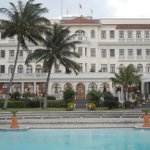
He was 21, living in Maputo as a construction apprentice on a fake passport, watching Mugabe's house. One day he saw Mugabe relaxed on his front lawn, cooking meat over an open fire. He celebrated his 21st birthday at the Polana Hotel.

The photo gives it away: shirtless, in short shorts, rifles slung, watching a hillside like it was a Sunday walk. The war was fought in that kind of heat, and the RLI treated it as routine.

Some of the most one-sided engagements in modern military history took place during the Rhodesian Bush War of the 1970s.
Rhodesian Light Infantry troops regularly fought against guerrilla forces that vastly outnumbered them, sometimes 10:1, 20:1, or higher, and still inflicted catastrophic casualties while suffering almost none of their own.

Operation Neutron, February 1979. Scheepers' orders were to capture or kill ZANLA commanders Tongogara and Nhongo. The plan: shoot both men in the head with a silenced .22 pistol as they slept. A spirit medium warned them away. The guides sent to recce never came back.

March 1979, on the Pungwe. The SAS were rowing upriver to the Beira fuel depot when the once-a-year sardine migration surged up the river in a silver wave, flying into the Zodiacs. They scooped fish out for fear of sinking, then set the fuel farm alight.


