

Electrical engineer. Delaware County NY Pro work, anti grifter.
All around New York
Joined October 2012
- Tweets63.8K
- Following1.9K
- Followers1.6K
- Likes59.6K







Pinned Tweet
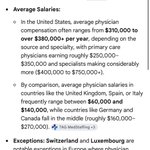
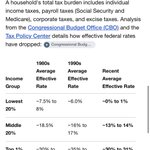
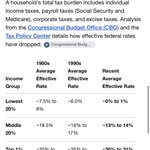
Want to understand what changed in America leading to Trump? Here you go. Start with Concrete Economics & go clockwise.

Exactly.

Trump's border policies have been effective, correct, & popular. But his deportation approach clearly contributed to the losses. The good news for Republicans is that there's plenty of room to tweak & maneuver without entirely abandoning interior enforcement & deportation. The bad news is Stephen Miller is not the guy to do that.
1
53
Musk has gone full Trump and just lies about stuff. No way would they be shutting this down if it were profitable and no way do new orders exceed production capacity.
At some point Musk may get sued over there sorts of statements.

The Cybertruck order rate far exceeds our production rate. We will try to make as many as possible before shutting down the line in about 8 months, but will have to return deposits for a lot of people.
This is not a case of Cybertruck being unprofitable, as has been misreported by legacy media, but rather that the opportunity cost of the complexity of Cybertruck is vastly outweighed by the value of incremental Cybercab production.
204
Dan Burnett retweeted

2) Now that SpaceX has basically replaced NASA, Musk feels that the US is screwed without SpaceX.
He isn't entirely wrong, but...
Musk's Game of Thrones math misses a crucial detail: The US needs SpaceX, yes. But neither SpaceX nor the US needs Musk.
Dan Burnett retweeted

Bad policy, bad character make bad politics: erratic tariffs, impulsive Iran war, blanket pardons, apparent corruption, weaponized justice, ICE brutality, mountainous deficits, hiding Epstein, abandoning allies and coddling enemies. Hoping for a course correction, for the country and for my party.
This is big. And seeing almost no coverage of it.

Still not called, but in a D+14 environment, in *California*, wealth taxes not only failing but a permanent wealth tax prohibition likely passing feels like something that people who tell us they know better about the will of the people should pay attention to.


155
Dan Burnett retweeted
If you believe this is true, (1) it is a failure of Trump to not deal with this and (2) you will learn absolutely nothing because this is mythology.
Trump squandered a multi-racial, multi-ethnic coalition that got him the majority vote 2 years ago.

Democrats imported millions of foreigners, handed them a bunch of free shit, and then registered them to vote
They have been planning this for years
We saw the results of this scheme tonight.
If we ever want to win again we need deportations and denaturalizations ramped up on steroids or our country will forever be lost to the communists.
Dan Burnett retweeted
It was gas prices.
It was the war.
It was also the corruption.
The incompetence.
The tariffs.
The playing nice with Russia.
The impression of cruelty.
The overly aggressive deportations.
The accidental arrests of American citizens who were Hispanic.
The arrogance.
The ballroom.
The reflecting poll.
The golf courses.
The arch.
The Qatari 747.
The aggressive redistricting push.
The threats against enemies.
Dan Burnett retweeted

Let's be honest, though, this isn't just about Iran. Or oil prices, or tariffs, or whatever else. People are sick of the whole clown show, dealing with a President that insists on making himself the center of attention in every aspect of American life.
Dan Burnett retweeted

The Republican Party is becoming the party of corruption and immorality, with self-dealing, philandering, and perversion omnipresent among the party’s Senate candidates and in the Trump administration. washingtonexaminer.com/in_fo…

Dan Burnett retweeted

I am a second-generation American. I was BORN in the United States. I was raised here. This is the only country I have ever called home.
I grew up believing in mostly conservative principles. Individual liberty, meritocracy, personal responsibility, and the American Dream. I believed these were values worth defending.
But somewhere along the way, something went terribly wrong.
I watched fellow Americans being told they didn't belong because of the immutable characteristics like ancestry. I watched patriotism become a test of ethnicity. I watched people who spent their entire lives loving this country being treated like outsiders in their own homeland.
And perhaps the most heartbreaking part was the silence of people we once considered political allies.
Let me make something absolutely clear.
My American identity is NOT conditional on my skin color. My citizenship is NOT diminished by my surname. And my patriotism does NOT require validation from anyone.
I can disagree with you on immigration, economics, foreign policy, or virtually any political issue. That is democracy.
But I will NEVER entertain a debate about whether I belong in the country where I was born.
No political party is entitled to my unconditional loyalty. Especially not at the expense of my dignity.
I did not come to America. I was born in America.
And I refuse to spend the rest of my life proving that I belong in my own country.
I am an American. Not a guest. Not a foreigner. Not a second-class citizen.
An American. Full stop.

I just cast my ballot for James Talarico.
As a second-generation Indian American, I am thoroughly disgusted by the xenophobia, racial resentment, and increasingly brazen attacks on my identity. My family has contributed to the American story through hard work, sacrifice, and an unwavering belief in the opportunities this nation promises. I am every bit as American as anyone else, and I will not tolerate being treated as a perpetual foreigner in the country I call home.
I implore every eligible Texan to get out and vote. This election is about the kind of state and country we are prepared to defend—and the principles we refuse to surrender.
@TeamTalaricoHQ
@texasdemocrats
Dan Burnett retweeted
I was the editor on this one. Here's a gift link: bloomberg.com/news/features/…

Dan Burnett retweeted

Utterly unacceptable situation playing out in France right now, with rioting and arson at schools. I thought this was being exaggerated online until I actually got an email today from my child’s school reporting matter of factly, “students sought to express their anger and voice their demands by blocking access to the school. Consequently, classes could not be held for the remainder of the day.
Tensions ran high at times, particularly due to numerous arson attempts by individuals from outside the school.” To say I was unimpressed by the conclusion the principal came to after acknowledging all that—and holding out the possibility this may continue to disrupt our children’s education—is an understatement: “ The students' demands deserve to be heard,” she said.
Say, what? The right to speech is one thing, but no one has the right to keep another child from learning. This is insane.
This really is the European mindset. I appreciate it. It is very reasonable approach to life. But I am glad this is not the American way.

It’s possible to live an extremely tasteful and sophisticated life on six figures and even less than that. Many of these tech bros can’t make their lifestyles look appealing on 8, 9, 10, 11 and even 12 figures. It’s actually insane. Elon Musk is reportedly living in an Airstream these days. The world would be infinitely better if these guys could be content with great clothes and wine and a Porsche GT3.
1
180
Dan Burnett retweeted

Yann LeCun: we are not going to get human-level intelligence or AGI by just scaling LLMs.
“There’s absolutely no way in hell.”
“The idea that we’re gonna have a country of geniuses in a data center, that’s complete BS.”
“It may feel like you have a PhD sitting next to you.”
“But it’s not a PhD.”
“It’s a system with gigantic memory and retrieval ability, not one that can invent solutions to new problems.”

Dan Burnett retweeted

We are on the cusp of a wave of new therapies for some of the worst diseases. But the world won’t benefit unless the US fixes its drug regulatory system. My new essay for @nytimes, on how slow clinical trials are now the biggest obstacle to curing cancer.
nytimes.com/2026/09/04/opini…
- I interviewed dozens of researchers, especially oncologists at leading U.S. centers. A striking consensus emerged: science is no longer the main bottleneck to new cancer drugs. It is our ability to test discoveries in patients through clinical trials.
- The cost of starting a Phase 1 trial in America has roughly doubled over the past decade. As a result, companies increasingly take early trials abroad: Australia’s Phase 1 trial volume has nearly doubled in a decade, driven mainly by U.S. companies.
- Unfortunately, the underlying incentives are badly asymmetric: Institutions can be blamed for harms caused by moving too fast, but almost no one is blamed when patients deteriorate during avoidable delays. One doctor called the emerging system “ritualized safety over actual risk assessment.” Or as, @DavidHongMD put it: "We often forget that the biggest risk is the cancer itself."
- This problem is becoming more urgent because medicine itself is changing. Sequencing, biological engineering and A.I. make increasingly personalized therapies possible. But our regulatory system was mostly built for standardized drugs tested in large populations.
- @sytse, the co-founder of GitLab, shows what personalized medicine can achieve: after relapsed osteosarcoma and being told there were no options left, he pursued a highly individualized approach and has now been cancer-free for a year. But doing so required extraordinary resources and regulatory expertise.
- Pierce Ogden’s father was less lucky. After molecular analysis identified a drug that might target his glioblastoma, the manufacturer agreed to provide it. But administrative barriers delayed access until it was too late. “My dad was ready to try anything,” Pierce told me. “But the system is paternalistic.”
- The A.I. revolution is making this bottleneck more important, not less. A.I. relies on relevant data. Information from early-stage trials could compound with A.I. tools to achieve truly revolutionary medicines. Without the data, this is far less likely to happen.
- Another important shift is that innovation increasingly comes from academic labs and small biotech companies rather than Big Pharma. These small companies find it far harder to unable to absorb delays and regulatory barriers.
- Apart from cancer, China is the biggest winner from America's outdated medical regulations. China has a much faster trial system, with testing often starting a full year earlier. This allows Chinese pharmaceutical companies to experiment and improve medicines while American companies play with mice. Today, half of all drugs licensed by major pharmaceutical companies originate there, up from less than 5 percent only a decade ago.
- But we don't need to copy China. The best model is Australia: lots of on-site scientific and ethics reviews, and requirements that are proportionate to small, early-stage trials. Phase 1 studies there begin roughly 6–12 months faster, without any notable increases in adverse safety events.
- Operation TrialBlazer, a 2026 HHS initiative is a good start in this direction, but we need legislative action by Congress to truly make Phase I trials faster and more efficient!
I want to thank everyone who helped me with this article: everyone I interviewed and the amazing editors at the Times. This is the result of a months long journey of extensive interviews and research.
Special thanks go to those who came on the record. One of the features of the system is an atmosphere of fear, where practitioners are afraid to publicly come out and explain these issues. So anyone who does is a hero in my book!

Dan Burnett retweeted
Whatever the US does on Iran, it mustn't lift the blockade as part of negotiations. The temporary lifting of the blockade gave Iran valuable breathing room in June and July. The blockade is now reaching its maximum impact. Iran is seriously hurting...
robinjbrooks.substack.com/p/…

Excellent post and very true. I would quibble a bit with some of last points but the bottom line is we have to balance risks with rewards. Americans are being killed daily by traffic accidents and diseases like cancer. We have to measure that against whatever we think the risks are from new technologies and then go with what saves the most lives.

There's something deeply unsafe about safetyism.
We wish people a safe flight—yet flying commercially is almost perfectly safe.
We don't wish people a safe drive—yet US roads are the equivalent of a 737 crashing every 48h, killing everyone aboard.
But we scare people when they get in an airplane but not when they get in a car.
The biggest opportunity we have to improve road safety is self-driving, yet there's lots of anti-self-driving safety talk, and self-driving is held to a *dramatically* superhuman safety bar.
The din about AI safety has reached extreme tenor—yet there have been zero material safety incidents. And the positive benefits of AI could improve and save many lives. But the safetyists say we must slow down.
We destroyed the nuclear power industry in this country nominally out of safety concerns, yet joule for joule nuclear power is *by far* the safest form of energy, even accounting for Chernobyl (a genuine disaster) and Three Mile Island (generally a non-event).
Building and fire codes are supposedly there to protect us from unsafe buildings. But actually the red tape makes development slow and sometimes impossible. So the safetyism protects us from jobs, innovation, and reindustrialization.
TSA was there nominally to protect us from terrorist threats—yet to the extent it pushes passengers at the margins from safe airplanes to dangerous roads, it actually kills not just time and money but actual humans.
Safetyism is deeply unsafe.
2
115
Dan Burnett retweeted

Obama is making exactly same argument I have been making: the problem isn’t AI in general, it’s agents with internet access.
kudos for his being the first politician to get it.

🚨 OBAMA ON AI: "If we are thinking about AI just in terms of how do we cure cancer or get better energy, you can do that without having agentic AI and having it just roaming free in the internet. The reason you are doing that is because you have to market a product that people will pay money for.
That’s a misalignment between what our society needs and the commercial imperatives that these companies are facing, not because necessarily they’re trying to do bad things, but because they’ve got to justify these valuations.
So, that’s one more reason why it is really important for us to have a competent government and a serious bipartisan conversation around this issue, and we have to do it fast. And I would encourage voters to pay attention to this. If somebody does not have a serious plan for how to deal with this, then they’re not meeting the moment, and you should probably look for somebody else."
This is a really good question. I have been wondering the same thing. Would be good to get an answer to this.

I actually think Obama is asking one of the more interesting questions in the AI debate.
I’m extremely bullish on agentic AI, but I do wonder how much of the push toward autonomous agents is being driven by what society needs vs. what companies can monetize.
If AI can help discover drugs, improve energy, accelerate science, and solve real problems, do we really need every system to become an agent that can freely act across the internet?
That distinction matters to me.
More autonomy isn’t automatically more progress.
The interesting challenge is figuring out where autonomy creates genuine value and where we’re just adding capability because the market rewards it.
1
1
70