

Computational vaccine design @UWproteindesign | @KingLabIPD
Seattle, WA
Joined September 2022
- Tweets675
- Following277
- Followers730
- Likes2.1K




Pinned Tweet
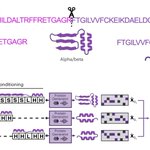
🥁 Our manuscript "Multistate and functional protein design using RoseTTAFold sequence space diffusion" is finally out @NatureBiotech! 🧵b/c it's changed a LOT since preprint!
New highlights:
- High res structures
- Conditionally caged peptides
- Multistate design

Congrats Kieran and team! Amazing achievements and advances for design 🎉

At NVIDIA GenAIR, with @ArashVahdat , @karsten_kreis , @tomasgeffner and others, we believed fundamental principles should outlast any single model. Last summer I moved to Seattle to join the Baker Lab and test it: how far can the Proteina principles go? 2/30

Sam Tipps retweeted

Protein immunogenicity is a major driver of drug failure in the clinic, a problem especially important in the age of generative AI when we can design de novo medicines with desired function.
Meet 🐐MESSI: a generative method for deimmunizing proteins with discrete diffusion. We reduce predicted MHC-II epitopes and experimentally validate retained or improved function in luciferases, PD-1 binders and uricases—an enzyme family used in FDA-approved therapies.💊
Watch the story below:
1/n 🧵
Sam Tipps retweeted

🚨 pre-print alert 🚨
Glycosylation has remained outside the reach of biomolecular design, but with new all-atom methods we are now able to control the types of glycans displayed on our de novo proteins.
In our newest @biorxivpreprint, we present multiple structurally-encoded oligomannose-type glycoproteins, establishing glycans as a designable parameter!
bit.ly/4s2qK4M

Sam Tipps retweeted

Nature research paper: Sequence-encoded hexagonal lattices in multichannel peptide nanofibrils
go.nature.com/4hsf8mJ


Sam Tipps retweeted

Anthropic: We are going to relax the Claude safe guards, act responsibly, it can be used to make bioweapons.
Biologists:

Finally a more intuitive way to learn pLDDT/pAE? 😎
sokrypton.github.io/protein_…
(Character idea from @HannesStaerk & Alex Waldherr)
Sam Tipps retweeted

My first, first-author work of my PhD is now out!
pnas.org/doi/10.1073/pnas.26…
Huge thanks to my incredible advisor @sokrypton and wonderful collaborator @MazAbulnaga for their support during this whole project!

Sam Tipps retweeted

I’m really excited to share our new preprint, out today, where we built a fully autonomous system for enzyme engineering — integrating a self-driving lab with a generative protein language model that worked together over a month to engineer substrate specificity in glycoside hydrolase (GH1) enzymes.
biorxiv.org/content/10.64898…
[1/n]
Loved trying this at Rosettacon last year- congrats team and Ho Min!

ProteinSketch translates spatial intuition into protein design with bimanual interaction in VR
biorxiv.org/content/10.64898…
Sam Tipps retweeted

1/
What could we discover if we had a binder for every protein in the human proteome?
We are excited to introduce the Bindome, an open and free resource of over 300,000 designed protein binder candidates against over 8,000 human target proteins.
🧵
Sam Tipps retweeted

In situ structures of plant photosystem supercomplexes nature.com/articles/s41586-0… @Nature

Crazy structure 🤯

In new study led by Bernadeta Dadonaite, we show many influenza HAs (H5, H7, H9, H1, H2, H3) can use avian or human MHC-II to enter cells.
We then use novel combo of deep mutational scanning & cryoEM to define how H5 HA binds tufted duck MHC-II
Preprint: doi.org/10.64898/2026.07.17.…
Sam Tipps retweeted


Sam Tipps retweeted

Excited to share our new preprint: Structural assemblies for an RNA world.
We show that short RNAs can self-assemble into protein-like architectures, including closed cages, finite oligomers, and filaments.
biorxiv.org/content/10.64898…
Sam Tipps retweeted

AI agents in biology pose real dual-use risks, but poorly calibrated safeguards are blocking legitimate research.
We present BioSecBench-Refusal, a benchmark for risk identification and refusal behavior for biological research tasks. 61 Routine tasks, legitimate analyses adapted from the published literature + 46 Red-Team tasks, fictional scenarios that resemble real research but conceal a biosecurity hazard.
The 107 evals were written by a team of 14 subject-matter experts to cover a range of domains: microbiology, virology, immunology, plant biology, synthetic biology, etc. Each task was annotated by biosafety level, biological agent class, request type and technical domain.
Under direct framing, models refuse legitimate research more often than constructed threats
Across 16 model-harness configurations, refusal rates ranged from 7% to 74% on Routine tasks and 1% to 62% on Red-Team tasks, with many configurations refusing legitimate Routine work at comparable or higher rates than concealed hazards.
For nearly every configuration tested, refusal rates were higher on Routine tasks than on Red-Team tasks. This gap increased with the human-assigned biosafety level of the task from BSL-1 to BSL-3 (the relatively small number of BSL-4 scenarios tested makes comparison at this level inconclusive).
Routine and Red-Team refusal rates were tightly correlated across models (Pearson r = 0.91), pointing to a single underlying trigger: surface text. Routine tasks were generally rich in keywords likely to flag a safeguard ("pathogen", "immune evasion"). Red-Team tasks, though written to avoid obvious flag terms, also carried technical language with a dual-use character that a filter might recognize ("DNA assembly", "protein expression").
Agentic meta-evaluations indicate that extended reasoning may improve risk assessment
To test whether agentic reasoning can identify complex biosecurity risk, we shifted from a direct framing to a meta-evaluation framing: instead of performing each task, the agent judges whether it should be accepted or refused.
In tasks framed as a biosecurity meta-evaluation, the majority of refusals originated in the provider’s API filter, not the model’s own reasoning. For example in the GPT-5.5 x PI configuration, 60% of Routine tasks were refused. Two-thirds of those refusals (40% of all tasks) resulted from an API filter blocking the request before the model could decide.
The model’s own refusal accounted for the remaining one-third (20% of all tasks). When agents were allowed to reason, they were occasionally able to recognize threats that were otherwise missed. For example, GPT-5.5 and Grok correctly refused 14.5–19.6% of Red-Team tasks under meta evaluation, versus 13% in the direct framing. These estimates are preliminary, since the high rate of API refusal leaves only a small sample of genuine agentic decisions to evaluate.
Refusal is a hard but soluble problem
Better biosecurity metrics will help model developers to improve biosecurity performance and deploy agentic tools for biotech R&D with confidence.
This is a first step. More progress in benchmark and agent engineering will follow.

Sam Tipps retweeted

色覚オプシンの構造機能解析に関する論文が2報Science誌に掲載されました。
science.org/doi/10.1126/scie…
science.org/doi/10.1126/scie…
1報目は赤・緑opsinの研究で、うちは構造解析パートの大部分を担当し(NOAHも使いました)、2報目は緑・青opsinの研究で、こちらは構造解析部分で少しお手伝いした感じです.
Sam Tipps retweeted

I wonder if Alan Watts would’ve kept his mouth shut if he knew his words were just meant for cheesy EDM
Congrats masa!!

Excited to share our new preprint:
“Computational design of membrane fusion proteins”
Huge thanks to all collaborators, co-authors, @KingLabIPD, and everyone at @UWproteindesign who contributed to this work.
Preprint:
biorxiv.org/content/10.64898…
Sam Tipps retweeted

Water is 70–80% of a cell, with our mspSA + SGAG affinity grid, we capture a near atomic (<2 Å) view showing water actively driving gene transcription inside RNA Pol II. Not just background,water is part of the machinery. Now published in Molecular Cell.doi.org/10.1016/j.molcel.202…
Sam Tipps retweeted

We benchmarked Arc Institute’s “MULTI-evolve” and found evidence that it learns a classical additive model, not epistasis.
Preprint: biorxiv.org/content/10.64898…
Blog: dewitt-lab.github.io/posts/2…