

Wife. Mom of 3. Homeschooling family. Living with stage 4 breast cancer. Sharing my story, treatment experiences, and the search for more options.
California
Joined May 2022
- Tweets75
- Following101
- Followers152
- Likes268


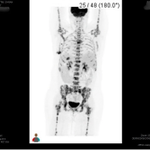

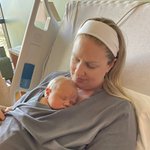


This is my family.
My husband, our three kids, and me.
I'm 46 years old.
I have stage 4 breast cancer.
In December 2023, I had my first scan and was told I had stage 1 breast cancer.
Then I got a second opinion.
In January 2024, I learned it was actually stage 4.
Terminal.
Five years to live.
My youngest had just turned one.
Not exactly how I expected life to go.
It's been almost three years since that conversation.
A lot has happened since then.
A lot of treatments.
A lot of scans.
A lot of things I never thought I'd have to learn about.
My husband has spent countless hours researching cancer, treatments, clinical trials, and anything else that might help me.
He's done more for me than I could ever fit into one post.
We've both spent a lot of time trying to figure out how to keep me alive.
And now, after almost three years of treatment, my cancer is progressing.
We're looking for what's next.
Right now, I'm trying to get access to a treatment called ANKTIVA.
I'm hoping ANKTIVA will be my next miracle.
Because five years was never going to be enough for me.
And somehow, in between all of that, we're still raising three kids.
We homeschool. There's laundry, dinner, kids' activities, and a house that never stays clean.
We plan vacations. We talk about the future. We try to keep life as normal as possible.
All while trying to figure out how to make sure I'm here for it.
I've thought about sharing our story for a while.
The treatments.
The research.
The things we've learned.
What's worked. What hasn't.
And what it's actually like to be told you have five years to live when you have three kids you want to watch grow up.
So here I am.

My Cancer Story
Part 5 of 7: Changes
I remember looking at my bloodwork and thinking, I didn’t even know liver enzyme numbers could go that high.
They just kept climbing.
And climbing.
My doctors stopped Kisqali.
We waited for my liver enzymes to come back down.
It took about a month.
Then we’d restart the medication.
And almost immediately, my liver enzymes would start climbing again.
Stop.
Wait.
Restart.
Stop.
Wait.
Restart.
It felt like a constant tug-of-war.
Every time we stopped Kisqali to give my liver a break, I worried we were giving the cancer one, too.
Eventually, we had to accept that Kisqali wasn’t going to work for me.
Around this same time, I made another big decision.
I wanted to change cancer centers.
I will forever be grateful to Moffitt Cancer Center.
They found my Stage IV cancer when it had been missed elsewhere.
They started my treatment.
They gave me hope.
But I was craving something different.
A smaller cancer center.
A more personal relationship with my doctors.
I wanted to feel like the people caring for me really knew me.
Not just my scans, bloodwork, and treatment plan.
I wanted them to know the person behind all of it.
The wife.
The mom of three.
The woman who was trying to live as normally as possible while fighting Stage IV cancer.
So I transferred my care to Gene Upshaw Cancer Center in Truckee, California.
I also switched from Kisqali to Verzenio.
Around this time, I began working with a natural oncologist.
I didn’t want to rely on medication alone.
I wanted to fight this cancer from every possible direction.
If conventional treatment wasn’t going to work forever, what else could I be doing now to give myself the best possible chance?
I was already doing daily cold plunges, red light therapy, fasting, taking modified citrus pectin, using the sauna, exercising, and paying close attention to my nutrition.
I wanted to explore anything that might help me stay as healthy as possible.
We started looking into things like mold exposure, food sensitivities, gut health, inflammation, and more in-depth hormone testing.
We also monitored my vitamin levels, supplements, absolute lymphocyte count (ALC), and other blood markers.
Monthly bloodwork.
Monthly Signatera testing.
One thing we learned was that my cancer never showed up in the traditional tumor markers.
CEA. CA 15-3. CA 27.29.
Even with Stage IV cancer, those numbers weren’t telling us what was happening.
Signatera became an important part of how we monitored my disease.
My Signatera never actually turned negative. Even when the numbers dropped below the test’s detectable limit, I never received a negative result.
And through all these changes, something wonderful was happening.
My cancer continued responding.
My lymph nodes cleared.
My breast tumor kept shrinking.
Then came the scan we had been praying for.
No evidence of active disease.
Every single one of my bone lesions appeared healed on imaging, with no metabolic activity.
And my original 4.2 cm breast tumor had completely disappeared on the PET scan.
No surgery.
Just gone.
I knew it didn’t mean I was cured.
But seeing those results brought us so much hope.
For nearly a year, my scans continued showing no evidence of active cancer.
We were finally getting back into the rhythm of life. And just when things were starting to feel normal, cancer threw us another curveball.
@DrPatrick
@ImmunityBio
#MetastaticBreastCancer #BreastCancer #LivingWithCancer
#ANKTIVA
$IBRX

I work with a natural oncologists who picks out specific dosages for me of off label meds. She takes into account so many things… including Liver enzymes and CDK mediations - these can increase the concentration of the CDK’s, so you have to be careful!
9
I am very fortunate to work with both a holistic oncologist (out of pocket) and my conventional oncologist - who is very integrative and works with me on side effects and impacts of these medications.
2
177
Karol, I have never met you in person… but, you are one of the kindest souls I have ever known!
1
7
231
My Cancer Story
Part 4 of 7: Treatment
Was being Stage IV somehow a blessing in disguise?
I tried to convince myself it was.
No surgery. No recovery. No lymph nodes removed. No chemotherapy.
Just some pills.
At least that's what I told myself.
I started Kisqali at 600 mg. Letrozole. Zoladex injections. Zometa infusions.
And almost immediately, my body began to change.
My white blood cells and absolute lymphocyte count (ALC) dropped quickly.
My energy disappeared.
Walking from the car into a store was a chore.
There were days I could barely walk up the stairs.
My nine-year-old daughter had to carry the baby up and down for me.
That was hard.
I was used to taking care of my children.
Now I needed them to help take care of me.
And life didn't stop.
I was still working full-time.
Still homeschooling our three children.
Still trying to be a wife and mother.
I didn't want to drop the ball.
On the outside, I looked fine.
I was getting up, working, taking care of my family, and doing what needed to be done.
But inside, I was exhausted.
I was pushing myself through things that used to be easy.
This is what Stage IV cancer can look like.
You don't always look sick.
Sometimes the hardest battles are the ones nobody can see.
Meanwhile, there were endless appointments.
Bloodwork. Phone calls. Scheduling. Hours on hold.
Cancer was becoming a full-time job on top of everything else.
As part of my earlier testing at Moffitt, I had a biopsy of a spot in my spine.
Not long afterward, I suffered a fracture in that same area.
Intense back pain.
Then one morning, I woke up in the worst pain I had ever experienced.
We went straight to the ER.
Nobody could figure out what was wrong.
There was concern that the cancer had spread to my liver.
We later learned I had spontaneous fractures in the ribs on my right side, which were attributed to my medication.
So much for thinking treatment would be easier without surgery or chemotherapy.
But through all of this, we kept going.
Every few weeks, we traveled back to Moffitt.
Usually with all three kids.
While I was at appointments, my husband took them to zoos, dinosaur parks, and anywhere they could have some fun.
We decorated hotel rooms.
Celebrated birthdays on the go.
Tried to make memories between treatments.
We didn't want our children's entire childhood to revolve around cancer.
Family time became a priority, and our family photos became priceless to me.
Then came my first 3 month PET scan.
We were nervous.
Was any of this actually working?
I'll never forget my oncologist walking into the room.
He threw his arms up in disbelief.
My primary breast tumor had shrunk from 4.2 cm to 1.9 cm.
The SUV, a measure of activity on the PET scan, had dropped from 17.8 to 5.3.
Many of my bone lesions were becoming sclerotic, a sign of healing.
After months of fear, pain, and exhaustion, we finally had some good news.
My cancer was responding.
Really responding.
For the first time since my Stage IV diagnosis, we had real hope.
But the medication that was helping control my cancer was also beginning to cause another serious problem.
#MetastaticBreastCancer
#Stage4BreastCancer
#LivingWithCancer
ANKTIVA
@DrPatrick
@ImmunityBio

The photo wasn't taken at a temple, but faith and prayer are a big part of our lives. We've leaned on God a lot through all of this.🩷
1
1
12
Thank you for sharing your story! ❤️ Hearing from someone who has been through this and is still here more than 20 years later gives me hope. I’m so glad you’re doing well!
3
144
It was always stage 4. We have learned that your team is only as good as your radiologist. Looking back at the bone scan, it is obvious.
1
1
132
Did you have pain in your sternum? I remember telling my first oncologist that I had this aching pain in my chest. Dismissed that also. Now, I know it was enlarged lymph nodes and tumors.
1
1
118

My Cancer Story
Part 1 of 7: Dismissed
I’ve had people asking about my stage 4 breast cancer story since I started sharing my efforts to access ANKTIVA.
Here’s how I got here.
In January 2023, I gave birth to my third child. I was 42.
My pregnancy had been great. This was my third C-section, so I knew what recovery should feel like.
But a week after giving birth, something felt very wrong.
My entire body ached. The joint pain was so severe I could barely close my hands.
At four weeks postpartum, I went to my OB-GYN with a list of about 20 symptoms.
I was told it was normal recovery. I was older this time, after all.
No bloodwork. No tests. Not even an exam.
Two months later, I was back.
Same symptoms. Only worse.
This time, I had hormone testing. Everything came back normal.
But I was exhausted. I couldn’t sleep. My joints hurt, and the brain fog was awful.
I still have that long list of symptoms saved on my phone.
Was it perimenopause? Hormones? Something autoimmune?
I started searching for answers elsewhere.
Autoimmune testing was normal, but my CRP and ESR were elevated. Something was causing inflammation.
Another doctor prescribed bioidentical hormones. When they didn’t help, we increased the dose.
I felt worse.
Two months later, before increasing my hormones again, my doctor suggested a mammogram.
So I scheduled one.
I had spent months trying to figure out what was wrong.
I was about to get an answer I never expected.
#Stage4BreastCancer ANKTIVA

My Cancer Story
Part 2 of 7: Suspicious
I’d had my first mammogram at 40. Everything was clear.
So when my doctor suggested another mammogram, I wasn’t particularly worried.
I was 43. Breast cancer wasn’t even on my radar.
But after my mammogram, I hadn’t even made it back to my car when my phone rang.
It was the imaging center.
They had seen something suspicious and wanted me to return.
A week later, I went in for the ultrasound.
I walked out in tears.
I could tell by the ultrasound technician’s face that something was very wrong.
BI-RADS 5.
Highly suspicious for cancer.
And of all days, it was our wedding anniversary.
A day meant to celebrate the life we had built together.
Instead, we were facing the possibility of a future we had never imagined.
We should have been thinking about all the years ahead of us.
Instead, we were wondering how many we might have left.
I started calling breast surgeons and oncology offices.
Everyone was booked. Some for weeks. Others for months.
I couldn’t imagine waiting that long.
Out of desperation, I walked into a nearby oncology office with my records and scans.
The first available appointment was five weeks away.
I broke down crying right there in the office.
Then a secretary stepped in. To this day, I believe she was an angel.
“Someone just canceled an appointment. Can you be back in two hours?”
I couldn’t believe it.
A few days later, I had my biopsy.
The doctor was reassuring.
My tumor measured 2.3 cm. My lymph nodes looked completely clear on ultrasound.
Then came the biopsy results.
Confirmed breast cancer.
ER-positive. HER2-negative.
Next came more testing.
Bone scan. CT. MRI.
Everything came back clear.
For the first time in weeks, we felt like we could breathe again.
Maybe we’d caught it early.
Maybe everything was going to be okay.
We had no idea how much was still being missed.
#BreastCancer #MetastaticBreastCancer
ANKTIVA

1
5
786
My Cancer Story
Part 3 of 7: Metastatic
After all the testing, my oncologist was reassuring.
I was told I had the "best type of breast cancer."
Even now, I think about those words.
What a strange thing to say to someone who has cancer.
They believed it was Stage 1.
The plan was surgery, chemotherapy, radiation, and hormone therapy.
They could schedule my surgery within a week.
But we weren't ready to move forward without a second opinion.
From the moment I was diagnosed, we started researching and made changes right away.
Cold plunges. Sauna. Red light therapy. Nutrition. Supplements.
My husband spent hours researching when my mind was too overwhelmed to take in anything else.
We wanted to give me every possible chance.
Even if something might improve my outcome by just 1%, we wanted to know about it.
We couldn't control the diagnosis.
But we could keep looking for answers.
We decided to get a second opinion at Moffitt Cancer Center in Florida.
The first available appointment was six weeks away.
SIX WEEKS
But waiting was terrifying.
What if the cancer was spreading?
On New Year's Eve, my husband reached a nurse at Moffitt.
She found a way to get us in within two weeks.
Another angel?
I believe so.
We had no idea how important that appointment would become.
We traveled to Florida with our three children.
Our youngest had just turned one.
A breast radiologist at Moffitt reviewed the same scans my original doctors had reviewed.
Two additional suspicious masses in my breast.
Suspicious spots on the CT and Bone Scan.
The same scans.
Different findings.
More biopsies. More bloodwork.
And finally a PET scan.
Then came the phone call.
We had finished our appointments and were sitting in the Chick-fil-A drive-through.
My breast surgeon called.
Stage IV.
Metastatic Breast Cancer.
It had spread beyond my breast.
I tried not to cry.
My children were right there, staring at me.
I didn't want to scare them.
How could this be possible?
Just weeks earlier, we'd been told my scans were clear.
We thought we'd caught it early.
Now I was being told my cancer was incurable.
We went to Florida hoping to confirm our treatment plan.
Instead, we learned that our lives would never be the same.
Getting that second opinion changed everything.
It's one reason we continue searching for treatment options today, including ANKTIVA.
But first, we had to figure out how to live with a diagnosis we never saw coming.
@DrPatrick
@seagertp
#MetastaticBreastCancer
#SecondOpinion
#BreastCancer
#ANKTIVA

Sarah Chittim retweeted

Fun morning on @TuckerCarlson podcast. Long conversation about cancer and how to win the war #bioshield #cancer #NKcells #LAtNext
