

Soviet cinema: rare photos, film clips & quotes. The story the world forgot to tell.
Joined July 2026
- Tweets827
- Following409
- Followers234
- Likes506



On November 8, 1998, the French actor Jean Marais died.
On July 7, 1963, he came to Moscow as the guest of honor at the opening of the Moscow International Film Festival. Marais was also a stuntman and an idol to millions of women.
Many Soviet actresses wanted to meet the legendary Frenchman, including Elina Bystritskaya.
In one interview she admitted that in her youth she really liked Marais’s looks and saw him as a true romantic hero. But she knew that falling in love with an actor was like reading Dumas novels.
Years passed. The girl Elya from Kyiv met her idol in person and even offered him a cigarette. It was reportedly a Lucky Strike.
Today, both Jean Marais and Elina Bystritskaya are gone, but this photograph remains.

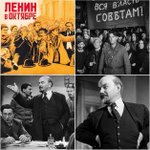
On November 7, 1937, exactly 89 years ago, the film “Lenin in October” was shown at the Bolshoi Theatre. The team was editing it until the very last day. And at the same time, the director was twice detained because of a suitcase of secret documents 🎬
Filming began on August 17. Director Mikhail Romm finished the editing just in time for the premiere. They worked like a conveyor belt: each scene was edited, given sound, and sent to the lab right after it was shot. When the last scene was filmed, the movie was ready.
A contest for a film about Lenin was announced in 1936, and Stalin personally supervised it. Alexei Kapler’s script sat unused for seven months, because famous writers were in no hurry. Romm was just over thirty, and he had made only one film before, “Thirteen.”
Romm was given rare historical documents for his work, including a text by Trotsky. He had no apartment of his own, so he stayed with colleagues. Arrests were common in the film world. Twice Romm was detained as a guest of people who had been arrested, together with his suitcase of papers.
Boris Shchukin first refused to play Lenin. Then he studied recordings of Lenin’s speeches and learned to copy his voice. The makeup team used darker wigs, because Lenin’s real light hair looked different on film from his familiar portraits.
There is an interesting trick in the Central Committee meeting scene.
There is no wide shot, so we never see the room. We only hear Lenin’s speech, while Vasily, the worker in the story, waits behind the door. Vasily is invented.
His real model, Eino Rakhya, was a victim of repression, and it was forbidden to name him.
The film was a huge success. Historians estimate that about 21 million people saw it in its first year. In 1938 it was released in France and the US.
The famous storming of the Winter Palace was filmed as a staged scene, because no real footage existed. But the scene was shown so often that many people took it for a newsreel.
The film was re-edited in 1956 and 1963, and Stalin was removed from it. It is a propaganda film from the time of the Great Terror. But it started the “Lenin” series in Soviet cinema.
Have you seen it? Which version? 👇
📷 Photos: stills from “Lenin in October” (Mosfilm, 1937)

Lidia Fedoseyeva-Shukshina, the beloved Soviet and Russian actress, has died at the age of 88. Her family announced the news on November 7.
She was the widow of Vasily Shukshin: actor, film director and writer.
Pictured: a scene from Pechki-Lavochki (1972). The title, a folksy Russian phrase meaning roughly “this and that,” was Lidia Nikolayevna’s favorite expression.
Vasily Shukshin gave his film that name.
Rest in peace. 🕊
YURI KAYUROV HAS PASSED AWAY. IT WAS ONLY RECENTLY THAT WE WISHED HIM A HAPPY 99TH BIRTHDAY.
A journalist once asked Yuri Ivanovich Kayurov about the 18 films in which he had played Lenin. The actor smiled and replied:
“Actually, not 18, but 19.”
The nineteenth film was shot in Mongolia. In it, Lenin met Sukhbaatar (does anyone remember who he was? — author's note).
“This was the defining role of my artistic life and career. I was given the opportunity to create a monumental figure, both on screen and on the theatre stage. I had to devote a great deal to it: my strength, my attention, my love. Nothing can be done without love. So I had to come to love this man, and that is exactly what happened to me.”
“It would have been very difficult to carry all those roles around with me. So I would finish playing a part, wash off the makeup, and the role would leave with it. All that remained of the characters was exhaustion.”
“Yes, I suppose many serious flaws may have existed. But what am I supposed to think? ‘Why did I ever play him?’ Should I deny a part of myself? No, I would never do that. What this man left behind was the first socialist state in the world. A state is, after all, a serious achievement. I simply think it did not follow the path he had envisioned for it.”
“My film fee was quite good: 25 rubles per shooting day. For playing Lenin, I was paid at a rate of 40 rubles a day. So I earned 4,000 rubles for the film, and that money allowed me to move my family from Saratov to Moscow.”


WHAT SOVIET ACTRESSES WORE TO INTERNATIONAL FILM FESTIVALS. RARE PHOTOS FROM THE PAST
From 1959 onwards, the Moscow International Film Festival was held every two years, following an order issued by Soviet Minister of Culture Ekaterina Furtseva.
She was responsible not only for the festival's programme and organisation, but also wanted to make sure that Soviet actors, especially actresses, looked just as elegant as their foreign colleagues.
Many actresses were allowed to have dresses made at the Central Committee's atelier. Some were helped to get hold of fabrics that were otherwise hard to find. But more often than not, Soviet actresses had to find their own ways of looking their best. Despite shortages and rather modest salaries, they managed to look truly stunning.
Actress Zhanna Prokhorenko made this beautiful white coat herself. She finished the very last stitch late at night, just before leaving for San Francisco, where she and Vladimir Ivashov were going to present their film Ballad of a Soldier.
Vladimir Ivashov and Zhanna Prokhorenko were abroad for the very first time. Their first stop was a shop. Just to have a look, just to try a few things on...
Vladimir Ivashov liked a beautiful coat, but he couldn't afford it. The entire Soviet delegation had been given just $300 in travel money.

BELOVED SOVIET ACTORS
All four shared the same first name — Oleg.
Oleg Borisov
Oleg Dal
Oleg Basilashvili
Oleg Yankovsky
#BelovedSovietStars

“Ivan’s Childhood.” Directed by Andrei Tarkovsky. 1962.
His first feature film. Based on a story by Vladimir Bogomolov. The war through the eyes of a boy scout. Ivan has no childhood left. It only comes back to him in dreams.
In the frame is a birch grove. Captain Kholin and the nurse Masha. Kholin was played by Valentin Zubkov. Masha was played by Valentina Malyavina. She was 20 then. She was a first-year student at the Moscow Art Theatre School. The scene was shot in a grove outside Moscow, and it was not an easy shot.
The film won the Golden Lion in Venice in 1962. For Tarkovsky it was the start of a world name.
“Once There Was a Singing Blackbird.” Directed by Otar Iosseliani. 1970.
Gia plays the timpani in the orchestra of the opera house in Tbilisi. The instrument is rarely heard. So Gia has plenty of free time. Dates. Friends. Long dinners. He is always rushing and always late. But at the right moment he makes it in time to strike the drums.
It was shot almost like a documentary. This is real Tbilisi at the turn of the 60s and 70s. The film reached Soviet screens in 1972. The lead role was played by Gela Kandelaki.
Critics still argue about it. Some say the director condemns his hero for wasting his life on trifles. Others see it differently. His talent was friendship and the gift of making people feel a celebration.
The last shot. A clock mechanism. Time keeps going. Watch this film.
THE LOVERS (1969). Directed by Elyor Ishmukhamedov.
Some film scenes stay with us forever. One of them is the unforgettable sequence of watermelons floating down a mountain river.
The film tells a story of young people, love, friendship and hopes for the future. Set in sunny Tashkent in the 1960s, it captures a time when life seemed full of possibilities and the world lay open ahead.
But one of the film's most memorable scenes has a remarkable story behind it.
The idea came to the director years before filming. One day, Elyor Ishmukhamedov went on a trip to the mountains with his father in an old Pobeda car. They bought around twenty watermelons and placed them in a mountain stream to cool while they stopped for lunch. Suddenly, a heavy rainstorm broke out. The water level rose, and the watermelons were swept away by the current.
Ishmukhamedov jumped into the river after them. He later recalled the experience as a moment of extraordinary excitement, full of thunder, rain, sunshine, a rainbow and rushing water.
Years later, that real-life adventure became one of the most beautiful scenes in Soviet cinema.
The sequence was filmed in the mountains. Rodion Nakhapetov played Timur, but a stunt double was involved in the dangerous waterfall scene. According to actor Shukhrat Irgashev, a dummy was thrown into the waterfall instead of Nakhapetov. The actor himself was later pulled out of the fast-flowing Chirchik River with a net.
Just look at those watermelons drifting down the mountain river. There is so much youth, freedom, sunshine and pure joy of life in this scene. It feels as if youth itself is carried along by the current.
For me, this is one of the most wonderful scenes in the history of Soviet cinema.
🎬 On this day in 1934. Chapaev premiered.
92 years ago tonight, Leningrad’s Titan cinema screened one of the most legendary films in Soviet history.
It was directed by the Vasilyev “brothers”, Georgi and Sergei, who weren’t actually related, just namesakes. They based it on Dmitry Furmanov’s novel about Civil War commander Vasily Chapaev, whom Furmanov fought alongside.
Some details worth knowing:
▪️ The directors used Furmanov’s diaries and the memoirs of his wife, Anna.
▪️ Anka the machine-gunner is named after her.
▪️ They also spent a lot of time in military archives and the Museum of the Red Army, and both had fought in the Civil War themselves.
Audiences were gripped from the very first screening. The film became a cultural phenomenon that people watched, quoted and retold for decades.
Have you seen it?

🎵 Now playing: a song from a Soviet classic
In Pyotr Todorovsky’s City Romance (1970), a lonely X-ray doctor meets a young kindergarten teacher, and two very different worlds try to find each other. The song many viewers remember from the film is Mireille Mathieu’s “Pardonne-moi ce caprice d’enfant” (“Forgive Me This Childish Whim”), a French summer hit of 1970 written by Patricia Carli.
Mathieu was adored in the USSR, and this song became tied to the film in people’s memories. Its tenderness and its plea for forgiveness suit a fragile, uncertain love story.
Some songs don’t just accompany a film. They become its heartbeat. 🎬
FOUR BEAUTIFUL AND TALENTED SOVIET ACTRESSES — ALL NAMED NATALIA! ❤️
1. Natalia Varley
2. Natalia Kustinskaya
3. Natalia Fateeva
4. Natalia Seleznyova

“God, it hurts so much…” Those were the last words spoken by Soviet actor Yevgeny Urbansky as his colleagues rushed to his side. The doctors had not yet arrived.
On November 5, 1965, exactly 61 years ago, a tragedy in the Karakum Desert claimed the life of one of the most remarkable actors of Soviet cinema.
Urbansky was filming The Director, in which he played the leading role of Alexei Zvorykin. The character was inspired by Ivan Likhachev, the director of the Moscow Automobile Plant.
A special ramp had been built about 40 kilometres from Bukhara. A car was supposed to race up it and leap into the air. Urbansky was strongly advised to let a stunt double perform the scene, but he refused. He wanted to do it himself.
The first take went almost perfectly. The crew decided to shoot another. That second take proved fatal.
The car overturned, and the frame of the windshield crushed the actor. The battery came loose and struck him on the head, fracturing his cervical vertebrae.
He lay on the sand dune, groaning in unbearable pain. The ambulance managed to get him to hospital alive, but an hour later, Yevgeny Yakovlevich Urbansky was gone.
He was just 33 years old.
He never got to see his daughter. She was born several months after her father's death.

Soviet Cinema Vault retweeted
Если бы Игоря Талькова не убили, то сегодня он отмечал бы своё 70-летие. Если бы...
Но он обещал вернуться. В страну не дураков, а гениев. Пусть даже через 100 веков.
🎵 A SONG FROM SOVIET CINEMA — “THE LAST POEM”
This beautiful song, performed by Irina Otieva, comes from Love & Lies (1981), the Soviet film directed by Ilya Frez. It was released in New York in March 1982 under this title.
The music was composed by Alexey Rybnikov, originally in 1970 while he was working on Treasure Island. Years later, he found the perfect words in a poem by Indian poet Rabindranath Tagore, translated into Russian by Adelina Adalis.
A song born years before the film found its place on screen — and one that still deserves to be heard.
Soviet Cinema Vault retweeted
3 ноября родился Александр Градский. Сколько раз слушаю эту песню, всего мороз по коже.
Alexander Gradsky would have turned 77 today. 🕯
Born November 3, 1949, he had a voice you could never mistake for anyone else’s: raw, soaring, and able to go from a whisper to a thunderclap in a heartbeat.
One of his most haunting performances is “Song About the Ship” from Nikita Mikhalkov’s cult 1974 film At Home Among Strangers, a Stranger Among His Own (Svoy sredi chuzhikh, chuzhoy sredi svoikh), with music by Eduard Artemyev. It sounds like a premonition and a farewell at the same time. Best heard in silence.
Gradsky passed away on November 28, 2021, but his songs, his rock operas, and that unforgettable voice live on Rest in peace, maestro.