

Search Engineering & Topology. American.
Austin, TX
Joined June 2023
- Tweets16.4K
- Following2.6K
- Followers1.3K
- Likes51.3K


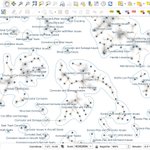


Seems like an excellent candidate for a new Semantic Terrain.
cisa.gov/news-events/bulleti…
To imagine what is possible , one needs to first see far.
To see far, one must navigate to the distant places.
To see far, and clearly, one must go far, and fail much.
So then , they may know what is possible, and unlikely.
They are busy making a new co-pilot XX++ plus ultra premium, I heard. It's tough in microsoft, because they were conquered by Patronage
The Screenplay Pattern is an actor-centric design pattern for test automation that models user behavior like a stage performance.
github.com/serenity-bdd/sere…

Clint J. retweeted

LayerFS : un système de fichiers qui donne à chacun de vos agents un Workspace complet et modifiable, posé sur un historique partagé, sans copier la base.
Chaque agent commit en parallèle.
157 snapshots tiennent dans 100 Mo, 19,9 fois moins que Btrfs + zstd. Licence MIT. ⬇️
Does meaning possess an experimentally recoverable morphology .. and, if so, what does that morphology reveal about the processes that produce knowledge?
Does the organization of meaning obey discoverable principles that remain stable across subjects, languages, representations, and even the intentions of those who created the knowledge?

Can we distinguish document collections by their organizational function without reading their content?
A Semantic Terrain is the geometry of a corpus under one embedding model, metric and construction.
A Meta Terrain rebuilds that geometry from selected regions of existing terrains, and new structure appears,

