

Alaska’s voice for protecting what works: our fish, our people, our economy, our future.
Alaska
Joined October 2025
- Tweets161
- Following1
- Followers86
- Likes1




There's a lot of science behind what happens on Alaska's pollock fishing boats.
From stock assessments that help determine catch limits to onboard observers and monitoring technology that track fishing activity, the fishery operates under rules designed to protect fish populations and keep the industry accountable.
Fishermen use these measures firsthand every day. Their experience, alongside scientific research and reliable data, deserves a place in conversations about the future of Alaska's fisheries.

Changing ocean temperatures, habitat conditions, food availability, and competition all affect how many salmon survive and return to Western Alaska's rivers.
We need to keep working to reduce bycatch while also addressing the bigger challenges facing salmon populations. Real progress means understanding the full picture and making decisions based on the science.
ow.ly/azQS510198B

For Alaska's next generation of fishing families, the dream isn't to leave. It's to build a future here.
Fishing is more than a paycheck. It's how families put down roots, raise their children, and keep coastal communities thriving.
Alaska's seafood industry generates approximately $1.5 billion in annual labor income, supporting livelihoods and opportunities across the state.
A future in Alaska should be something families can build toward.
Learn more at securingalaskasfuture.org

Less than 1.5% of the Alaska pollock catch is other species. That number comes from strict rules, onboard observers and constant monitoring. It's no accident. fisheries.noaa.gov/species/a…

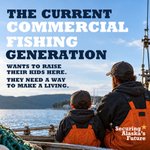
Alaska families shouldn't have to leave home to find work.
For generations, commercial fishing has given Alaskans a way to earn a living, raise their kids, and stay in the communities they grew up in.
For the next generation, having those same opportunities matters just as much.
Alaska families shouldn't have to leave home to find work.
For generations, commercial fishing has given Alaskans a way to earn a living, raise their kids, and stay in the communities they grew up in.
For the next generation, having those same opportunities matters just as much.
Learn more at securingalaskasfuture.org

Salmon recovery won't come from blaming a single fishery.
Warming oceans, changing marine conditions, and habitat challenges all play a role in current salmon returns. Focusing on one cause for any issues ignores the bigger picture and distracts from solutions capable of making a difference.
Alaska's pollock fishery is already subject to stock assessments, monitoring, and regulations. Protecting salmon means addressing the full range of challenges, not reducing a complex issue to a single talking point.
Salmon deserve solutions, not scapegoats.

Salmon matter to Alaska.
They put food on family tables, support fishing jobs and businesses, and sustain communities and traditions across our state.
When salmon returns decline, Alaskans deserve more than assumptions about why. We need good science, serious research and a clear understanding of what’s happening in our rivers and oceans.
Because protecting Alaska’s salmon — and the people and communities that depend on them — starts with getting the facts right.

Kodiak Mayor Terry Haines is describing what is at stake for coastal communities. Alaska's seafood sector generates $5.2B in annual output. Take away one part of it and the effects reach families, processors, and local businesses.
Hear it from the people who live it. youtube.com/watch?v=tPu1abXS…

Understanding salmon declines starts with understanding the science. Headlines may be loud and “certain”, but the only “certain” data scientists can agree on points to a changing ocean, and any solution must address that.
The Alaskan pollock fishery backs management built on research, monitoring, and continual improvement, not absolute mandates that ignore how wild fisheries work.
Get the facts: securingalaskasfuture.org

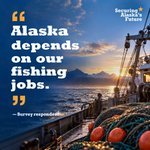
A recent poll respondent shared a strong sentiment. In a lot of our coastal towns, fishing pays for the school, the store and the harbor. Alaska depends on these jobs.

In our recent poll, one respondent left this thought. We're asking the same thing.
A fishing job supports more than one household. It also supports the processor, repair shop, fuel dock and local businesses that help a community thrive. Fisheries policy should protect healthy stocks while recognizing the people and places that depend on them.

The work doesn’t end when the catch comes aboard. Seafood processing turns that catch into food and supports jobs on shore. Healthy fisheries, working boats and processing plants are connected parts of Alaska’s economy.
Source: live.laborstats.alaska.gov/s…

Will you take our 60-second survey?
Before Alaska’s leaders make decisions that could affect fishing jobs, coastal communities, seafood workers and families across the state, they need to hear from the people who understand what’s at stake.
Your answers will help highlight what Alaskans are worried about, what questions still need to be answered, and what facts we need to put in front of state leaders.
docs.google.com/forms/d/e/1F…

Behind Alaska’s seafood industry are people who harvest the catch, run the processing lines and keep communities working. Protecting healthy fisheries also means protecting the livelihoods built around them.

Alaskans want and deserve both healthy salmon runs and strong fishing communities. Those goals require an honest understanding of what the science says, when studied under a robust management plan.
The Yukon River Chinook crisis is complex. Treating one fishery as the sole cause may be politically convenient, but it will not deliver the comprehensive fixes that both salmon and communities deserve.
Good policy begins with evidence, not a predetermined target.
Read more: securingalaskasfuture.org

Ted Stevens helped bring Alaska's fisheries home. Decades later, local, science-based management continues to sustain our coastal communities and working families.
See how we're working to protect Uncle Ted's legacy: securingalaskasfuture.org/pu…

The pollock fishery is woven into Alaska’s economy. Its economic impact comes ashore in the form of jobs, income, and business activity.
It is also a major part of Alaska’s seafood harvest. Decisions affecting this fishery will reach workers, families, and communities across the state.
Alaskans deserve fisheries policy that recognizes those stakes and follows the best available science.
Explore the numbers: securingalaskasfuture.org/wh…

Pollock supports roughly 6,300 jobs and generates $832 million dollars in economic activity across Alaska. The impact means paychecks at processing plants, freight moving through coastal communities, local businesses staying busy and tax revenue helping fund public services.
The activity goes a lot further than the boat
Alaska’s fishing fleet creates value far beyond the water.
Every season supports paychecks, local purchasing, port activity, transportation, and businesses throughout the state. That economic activity reaches families and communities that may never set foot on a fishing vessel.
Protecting responsible, science-based fisheries management means protecting an economic engine Alaska cannot afford to lose.
Learn why pollock matters: securingalaskasfuture.org/wh…

Sustainable fisheries and building strong coastal economies are not competing goals. In Alaska, each depends on the other.
That is why the Alaska pollock fishery is closely monitored, publicly managed and continuously improving as science and technology advance. Responsible management means protecting fish stocks while recognizing the people and communities that depend on them.
Alaska can pursue continuous improvement without abandoning the workers who keep our coastal economy moving.
Join the movement: securingalaskasfuture.org
