
Plant biologist at Tel Aviv University
Tel Aviv, Israel
Joined December 2018
- Tweets305
- Following145
- Followers229
- Likes108





Shaul Yalovsky retweeted

2/המהלכים הללו יצריכו גמילה דרמטית של הציבור הישראלי מהשקרים בהם הושקה. הנה רשימה: הישגיה הצבאיים של ישראל לא מומשו למציאות טובה יותר ובת קיימא, עד כה. ישראל לא הכריעה את חמאס ברצועת עזה. ישראל איננה יכולה בכוחות עצמה להוביל את חיזבאללה לפירוק מנשקו. ישראל איננה יכולה להוביל בוודאות קרובה לנפילת המשטר האיראני. צה"ל יהיה זקוק תמיד למודיעין מקדים כדי להתמודד היטב עם מתקפת פתע, ומתקפות כאלה יכולות להתרחש - תמיד. הסדרים מדיניים, לדוגמה אלה עם המצרים, הירדנים והפלסטינים מפחיתים דרמטית את הסיכוי לעימות צבאי, גם אם אינם מושלמים, ומהווים נכס בטחוני ראשון במעלה עבור צה"ל; הם חשובים בהרבה מעוד כמה קילומטרים בסוריה. ישראל טרם שיקמה את ההרתעה באורח מלא. הישראלים אולי לא רוצים מדינה פלסטינית, אבל בעולם ובארה"ב אלה תומכי ישראל שעודם תומכים בפתרון הזה והוא המחסום האחרון בפני דרישה למדינה דו-לאומית.
אלה אמיתות קשות. הן יצריכו הכנה של הציבור הישראלי לשינוי. ללא שינוי, יהיה קושי לבלום את מה שמתרחש בארה"ב. אם החקיקות למיניהן יעברו וייתקלו בווטו של טראמפ, ישראל נכנסת לקזינו מסוכן מאוד. יש סיכוי סביר שהבית הלבן הבא יישלט בעוד שנתיים בידי הדמוקרטים. הם יבטלו את הווטו הנשיאותי מייד. מכאן ועד לסנקציות חריפות על ישראל – המרחק קצר.
מאז הקמת המדינה, ממשלות ישראל היו קשובות מאוד לדעת הקהל בעולם ובארה"ב. הן קבעו מדיניות גם בהתחשב בכך. מתוך הבנה יסודית שגורל המדינה היהודית הוא שברירי, שאנטישמיות היא דבר אמיתי; שלא ייתכן ש"עם לבדד ישכון" - משום שזו הדרך לחורבן. אבל מאז, ישראל איבדה את הרסן. זה קרה, אם לאמץ את ההגדרה של המינגווי, לאט-לאט - ואז בבת אחת. את המחיר נשלם בשנים הקרובות, והמאבק יסודו בהאטה, דילול וריכוך של צעדים נגד ישראל, במקביל לריפוי מהותי של ההתנהלות הישראלית.
אין לנו יותר זמן.
Shaul Yalovsky retweeted
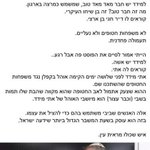
1/בעיניי, הטור ביום שישי הוא מהחשובים שכתבתי. לפחות מבחינת הדחיפות העצומה ומצב החירום הנוכחי, שהוא לדעת מקורותיי חמור מתרחיש בו איראן השיגה נשק גרעיני. הנה הקטע הרלבנטי.
ישראל במצב חירום אסטרטגי עמוק ומחריף. הניצחון הענק של הדמוקרטים בבחירות האמצע, יחד עם תפנית בדעת הקהל כלפי ישראל, יביאו עמם מהלכי חקיקה בקונגרס. זה יכול להתחיל בסנקציות בעקבות טרור יהודי בשטחים, להמשיך בניסיון לחסל את העמימות הגרעינית הישראלית ולהגיע לשיא בהגבלות על מכירת נשק – כזה שיוגדר "התקפי". בהמשך נשק בכלל.
את המהלכים האלה אפשר לעכב או לדלל, אך לא למנוע לגמרי. קחו לדוגמה את הסנאטור החדש מטקסס, המטאור ג'יימס טלריקו. כאשר הוא החל את הקמפיין שלו, הוא אימץ גישה מרכזית מאוד ביחס לשאר המפלגה הדמוקרטית באשר לישראל. בכל זאת, הוא התמודד במדינה אדומה, רפובליקנית, שמרנית. ככל שהקמפיין התקדם, טלריקו הפך להיות יותר חד בביקורת על ישראל. מה הוא גילה? שלא רק שדמוקרטים סולדים מישראל ומדיניותה, אלא שהוא יכול למשוך קולות של רפובליקנים רבים באמצעות עמדה ביקורתית יותר כלפי נתניהו וממשלתו.
ההתפתחויות הללו לא יסכנו רק את היתרון האיכותי של ישראל- אלא את היכולת של חיל האוויר להיות בכשירות מבצעית. חיל האוויר וצה"ל כולו נסמכים לתפקודם השוטף על אספקה שוטפת של ציוד, כלים ותחמושת אמריקנית. לא משנה כמה חלקי חילוף מחזיקה ישראל במחסניה, אם האמריקנים יפסיקו לספק אותם לחיל האוויר, בסוף – הוא יתקשה לתפקד. לכל מי שמפטפט על "לייצר בארץ" או "לקנות מהודו" – מומלץ לדבר עם ראשי להק ציוד בעבר בחיל האוויר, או מנכ"לים לשעבר של משרד הביטחון.
הסכנה לביטחון הישראלי היא אמיתית, מוחשית וקרובה בהרבה מפצצה גרעינית באיראן. וזה רחב בהרבה מאספקת ציוד ונשק. מהשלום עם מצרים ועד להסכמי אברהם, מרכיב משמעותי שהביאה ישראל ליחסיה עם העולם הערבי היה הנגישות והקרבה לוושינגטון. אם ישראל הופכת ליותר ויותר מצורעת, לידידיה יש פחות תמריץ; לאויביה יש סיבה לתקווה. לישראל יש שני נכסי ביטחון אסטרטגי מהותיים: צה"ל ומערכת הביטחון, והברית עם ארה"ב. ללא הברית עם אמריקה, צה"ל ומערכת הביטחון ייחלשו משמעותית. פיזית, מילולית.
**
המצב הזה דורש שינוי דחוף בהתנהלות ישראל; מהלכי חירום נרחבים. מבוססי מדיניות.
ב"מדיניות" הכוונה היא שהממשלה החדשה תצטרך ליזום שורה של צעדים אמיתיים, עם משמעות אזורית. עצירה כוחנית ומהירה של הטרור היהודי בשטחים, וריסוק התשתיות שלו. זה יצטרך להיות מהיר ואגרסיבי. הצדק הזה לא רק צריך להיעשות, אלא גם להיראות – לאור הנזק העצום שנגרם לישראל. וזו רק ההתחלה, הסיפתח. יהיה צורך במהלך מדיני נרחב כלפי הפלסטינים, וב"מדיני" הכוונה היא לתהליך שלום. ישראל תצטרך להציג גישה חדשה לגמרי לרצועת עזה, בנייתה ושיקומה. החזקת השטחים בסוריה ובלבנון תצטרך להישקל היטב מול תועלות ביטחוניות ומחירים מדיניים. מדיניות הפעלת הכוח של צה"ל הייתה תחת הגדרת "מלחמה" מאז ה-7 באוקטובר. זה לא יכול להימשך כך; המחירים המדיניים עצומים. הפוליטיקאים והמטה הכללי נכנסו לפרדיגמה מראשית המלחמה, של לקיחת "אפס סיכון" מהרמה הטקטית (דמות חשודה שמתקדמת על ציר בעזה), ועד הרמה האסטרטגית (התרעות למכביר על מתקפות פתע). התוצאה: אינפלציה בפעילות התקפית. כאילו אין לזה מחיר. מי שמחפש מחיר למה שהתרחש בעזה מאז הפסקת האש – כדאי שיביט במתרחש בוושינגטון ובעולם.
Shaul Yalovsky retweeted

Congratulations to Prof. Nir Ohad & team on this fascinating study! Their work shows that a plant DNMT3 enzyme can reprogram DNA methylation and affect gene expression in human cells- a remarkable bridge between plant and human epigenetics. 🌱🧬
cell.com/iscience/fulltext/S…

Shaul Yalovsky retweeted

To all, especially those who consider themselves “pro-Palestine” and who liked the Israeli-made documentary film NAZA about the Israeli military’s use of novel AI and technological means for aggressive targeting during the war in Gaza: would you be equally enthusiastic about a Palestinian-made documentary showcasing how Hamas engaged in asymmetric warfare since October 7? Would you give a lengthy standing ovation to a documentary that detailed how the terror group abused civilian infrastructure to hide weaponry, fire projectiles, carry out ambushes, conduct hit-and-run attacks, divert aid, steal supplies, torture Gazans, hide inside schools and hospitals, and ignore Palestinian civilians’ pleas for it not to use their homes, properties, shelter areas, or humanitarian zones for militant activities? Given the danger to the lives of Palestinians who speak openly to cameras, would you be just as embracing, believing, and accepting of Palestinian voices in Gaza who would offer anonymous testimonies for this documentary, given that you’re clearly comfortable with members of the Israeli military offering anonymous testimonies and details about their army’s behavior?
To be clear, this is not a 1-to-1 comparison between the subject of NAZA and this theoretical documentary about Hamas. The point is that I strongly believe there is a greater willingness to believe Israelis when they speak out against their military and government. Could it be that when and if Palestinians do the same about the fascist terrorist group that has ruled them with an iron fist for two decades and led them to mass devastation, they aren’t actually heard? Could it be that, in fact, Israeli voices serve the narrative in ways that are more palatable to "pro-Palestine" Western audiences than actual Palestinians opposed to or living under Hamas?
If you genuinely want to understand how Hamas’s so‑called “resistance” guaranteed Gaza’s devastation after October 7, I will personally be leading an international effort to assemble the talent and resources needed to produce a documentary rooted in Palestinian self‑interest rather than Israeli state narratives and tell the hidden and untold truths regarding this terror “resistance” group.


Shaul Yalovsky retweeted

חדשות רפואיות מגניבות! מודרנה, החברה שהצליחה בקורונה, מנסה כבר זמן רב לפתח חיסון לסרטן. אבל מה זה אומר? פעמים רבות יש לנו סוגי סרטן שבהם יש מוטציות, וקשה נורא לטפל בסוגים הללו, מודרנה הוכיחה בשלב 3 של הניסויים הקלינים במלנומה, שאפשר לרצף את המוטציה, ולמצוא חיסון וטיפול בעקבות כך>

Shaul Yalovsky retweeted
Are we thinking about the Israel-Hamas conflict all wrong? Listen to my interview with NPR's Meghna Chakrabarti's about my background, book (Hamas and Its Two Million Hostages), the road to October 7 & problems with the "pro-Palestine" activist movement.
npr.org/player/embed/fis-510…

Shaul Yalovsky retweeted
Gestapo in Norway? At the urging of several "pro‑Palestine" activists who recognized me and didn't like my presence, including individuals who openly supported Hamas at the Arendal Week political festival in Norway, Norwegian secret police stopped me and my friends, including three prominent Jewish advocates, and questioned us as if we were a threat. They took my ID and pressed me on "why I was well known," what my political affiliations were, and why I was attending the festival. I explained that I was a speaker with a fully booked event the day before, here to talk about a new book about Gaza and Hamas I had just put out, and provided clear information that should have dispelled any "suspicion." Despite our cooperation, the interrogation continued with increasingly inappropriate questions. I became frustrated, offended, alarmed, and demanded my ID back and an end to the detention. The Norwegians I was with described how they've never seen or experienced anything like that in their country before and were shocked by the questions they were asked by the secret police, presuming that they were criminals. Shortly afterward, some of the same "pro-Palestine" activists, or Hamas agents, appeared on my social media to leave hostile comments about my presence at the festival, making it obvious that they had filed the false report that triggered the police action.
If Norwegian authorities are willing to behave like political enforcers toward a Gazan American and three Scandinavian Jews who are simply trying to engage with diverse audiences, all because pro‑resistance agitators want to sabotage my efforts to speak and share my work, it reveals a bleak reality about the current discourse on Israel and Palestine. It shows how deeply troubling and undemocratic influences are shaping perceptions and policy, driven by actors who reject pluralism and seek enforced conformity. Norway spends billions of its taxpayer money promoting democracy, freedom, and liberal values abroad. It should start by respecting genuine freedom of speech at home rather than becoming a tool for supporters of a foreign extremist movement.
If this is how Norway wants to treat political dissenters and its Jewish community, then shame on it 💔
Shaul Yalovsky retweeted

Today in @Nature, we report MouseMapper: foundation-model AI to map disease perturbations across the entire mouse body cell-by-cell.
In obesity, it revealed body-wide inflammation & unexpected facial nerve damage. 🧵👇🔉
nature.com/articles/s41586-0… led by @Dorie00 & @yingchen733
Shaul Yalovsky retweeted

The US National Institutes of Health (NIH) has one of the few labs in the world which can study Ebola virus.
In March 2025 RFK Jr had it shut down.
We now have a huge Ebola outbreak on our hands.
What a foolish move

Shaul Yalovsky retweeted

Microtubules were discovered and named by looking at plants through an electron microscope. The pair behind it: Myron Ledbetter, a plant biologist, and Keith Porter, co-founder of cellular biology. 🌱 🔬
Porter was the giant. Harvard PhD 1938. From 1939 at the Rockefeller Institute, he and Albert Claude invented biological electron microscopy — first EM image of an intact cell in 1944, named the endoplasmic reticulum, co-invented the Porter-Blum ultramicrotome that made the whole field possible, co-founded the American Society for Cell Biology and the Journal of Cell Biology.
Ledbetter was the plant person — Berkeley Master’s, Columbia PhD in botany, then came to Rockefeller to learn EM under Porter and followed him to Harvard.
Their motivation was a long-standing botanical question. Plant cells lay down cellulose in highly patterned arrangements — circumferential, helical, and random — and these patterns determine cell shape. What in the cytoplasm tells the cellulose where to go?
Porter argued in the 1950s the endoplasmic reticulum was the patterning agent, but too floppy and sparse for the job. Something else was orienting it — a structural element no one had yet resolved.
The opportunity came from chemistry. In 1962, David Sabatini at Yale introduced glutaraldehyde as an EM fixative. Porter heard about it immediately and pushed Ledbetter to try it on plants.
The plants… Three species, all with root tips full of wall-building cells. Phleum pratense (timothy grass) does most of the work and supplies every cortex image. Spirodela oligorrhiza (duckweed) catches a cell mid-division and gives them the spindle. Juniperus chinensis (Chinese juniper) provides the clinching image — tubes running parallel to cellulose fibers across the membrane, as if guiding their deposition. Two flowering plants and one conifer — enough phylogenetic spread to claim universality.
The instrument… A standard 100 kV transmission electron microscope — fires electrons through tissue and builds an image from how they scatter off heavy-metal-stained structures. Far better resolution than light microscopy, but the sample is killed, dehydrated, embedded in plastic, and sliced thinner than a light wavelength. Whether your prep preserved anything real is the whole game. Osmium tetroxide alone shredded the delicate plant cortex. Glutaraldehyde locks proteins in place in seconds. They ran it on root tips, looked at the cortex, and the tubes were just there, waiting.
What they saw… Hollow cylinders, ~250 Å across, with a clear central lumen and a wall suggesting smaller subunits packed side by side. Lengths indeterminate — traceable for several microns without finding an end. Each tube sat in a clear “halo” excluding ribosomes and everything else. In the cortex they ran parallel to the surface, wrapped like hoops on a barrel, up to three layers deep. In dividing cells, 500+ packed the mitotic spindle, oriented along its long axis, converging on the chromosomes.
Before this paper, the cytoplasm was a messy soup with organelles floating around. A few people had glimpsed tubular profiles in odd places — Roth / Daniels in an amoeba a year earlier, Slautterback in Hydra in the JCB issue just prior. But Slautterback called them phospholipid membranes for ion transport… Wrong!
Ledbetter and Porter predicted one kind of protein tube, of repeating subunits, present everywhere — plants and animals, cortices and spindles, cilia and flagella — doing the cell’s structural work.
What’s amazing is how much they got right from so little! The subunit composition was correct — tubulin wouldn’t be isolated until 1968. The identity with cilia and flagella was also correct. The claim about spindle birefringence was correct. Plant cells forming spindles without centrioles anticipated decades of work on acentrosomal nucleation. And the alignment hypothesis, born from the juniper image, drove cell biology for the next fifty years.
pmc.ncbi.nlm.nih.gov/article…


Shaul Yalovsky retweeted

We have been cooking up this story for a while and we are excited to finally be able to share!
Read on if you're interested in whole plant regeneration WITHOUT the application of hormones!


Shaul Yalovsky retweeted

In back-to-back papers, our lab and the Casal lab tackle the question: How does temperature reshape auxin-driven growth?
Together, we reveal that temperature directly rewires ARF behavior.
nature.com/articles/s41467-0…

Shaul Yalovsky retweeted

With missiles raining down across the country and a powerful war raging across the Middle East, life at Tel Aviv University continues in spite of it all.
Our students keep learning. Our researchers keep asking hard questions. Our labs, classrooms, and libraries remain places of curiosity, determination, and hope.
Because even in difficult times, the pursuit of knowledge doesn’t stop. It moves forward — for Israel, and for the future of humanity.
#resilience #amisraelchai #IranWar #campuslife #Israel #EpicFury
Shaul Yalovsky retweeted

Amazing letter by @Cornell President rejecting the resolution. Should be read by all:
Dear Zora,
Thank you for conveying SA Resolution 61: Calling for the Termination of Cornell University’s Partnership with the Technion – Israel Institute of Technology While Preserving Cornell Tech. I reject this resolution, which fundamentally conflicts with Cornell’s principles of academic collaboration and our core commitment to academic freedom.
Cornell Tech is not a political entity. It is an academic partnership, created through shared investment by Cornell University, the Technion, and the City of New York for the benefit of the city and the state, according to a negotiated set of conditions that govern its development and the terms of its 99-year ground lease on Roosevelt Island. As one of Cornell University’s many international partnerships and collaborations, Cornell Tech deepens, enriches, and strengthens the ability of our students, faculty, and staff to pursue knowledge and advance the university’s academic mission. The Joan and Irwin Jacobs Technion-Cornell Institute, the core international partnership upon which Cornell Tech is based, is an extraordinarily valuable collaboration focusing on education and research in health tech, media tech, and urban tech, and supporting the development of new startup companies.
Severing our relationship with the Technion—or with any entity affiliated with governments, institutions, or enterprises with which some of our community members disagree—as a statement of political protest, would not only hinder our research, teaching, and public engagement; it would imperil our academic principles.
Our university, like all of our peer institutions, regularly faces pressure—from across the political spectrum, from within and beyond our own community—to make academic decisions according to political priorities. The phenomenon is not a new one: universities have grappled with such pressures from governments and societies for as long as the institution of the university has existed. When we yield to these pressures and proscribe specific collaborations or collaborators on grounds other than merit, we compromise our principles of academic freedom, undermine our own institutional excellence, and damage public trust in our work.
Moreover, this resolution inaccurately asserts that “the continued operation of Cornell Tech as a Cornell University campus does not require an ongoing partnership with the Technion-Israel Institute of Technology.” Cornell Tech, while part of Cornell, is a joint effort of the university, the Technion, and the City of New York. It is no more possible for Cornell to unilaterally terminate that effort and claim full control of the campus than it would be for the Technion or the City of New York to do the same.
Finally, I am deeply troubled by the selective manner in which this resolution singles out the Technion, alone of Cornell’s many international partners, for censure. Cornell currently maintains 159 active agreements with institutions in 59 nations and regions; all of these institutions have some government affiliation, and many conduct research with military and security applications. Cornell itself has military research contracts, conducts research with potential military applications, and has relationships with companies whose products are used in military contexts. Cornell also has relationships with institutions in countries whose governments have been accused of human rights violations—as our own has been.
None of these publicly available facts are mentioned in the resolution; only our partnership with an Israeli institution is targeted for erasure. The political bias evident in this selective approach is deeply disturbing, and the resolution is incompatible with both the Student Assembly’s purpose and Cornell University’s core values. I reject it fully and forcefully.
Sincerely,
Michael Kotlikoff
President and Professor of Molecular Physiology
Cornell University

Cornell rejects anti-Technion BDS resolution.
And tells @ZohranKMamdani not even to think about ending the Consortium:
“It is no more possible for Cornell to unilaterally terminate…than it would be for…the City of New York to do the same.”
assembly.cornell.edu/resolut…
Shaul Yalovsky retweeted

I am a Democrat. I served in the Clinton administration. I did not vote for Donald Trump and am highly unlikely to support him or his acolytes in the future. I also have serious disagreements with many of the Trump administration’s domestic and foreign policies.
But it is profoundly disturbing that a growing segment of the far left appears to be almost rooting for Hamas, Hezbollah, the Iranian regime, and other forces fundamentally opposed to the United States and our allies. This seems to reflects a corrosive strain of anti-Americanism, dressed up in postcolonial theory, that risks blinding us to the moral realities of our world and the nature of our adversaries.
Shaul Yalovsky retweeted
Rama Duwaji, the wife of NY Mayor Mamdani, liked posts praising the Oct. 7 massacre in Israel.
Yet the (embarrassing) New York Times headline describes it as “Support for the Palestinian cause.”
In an attempt to downplay the story, the NYT is implying that the “Palestinian Cause” means slaughtering 1,200 Israeli men, women, babies and the elderly, raping men and women, and kidnapping 251 people - including children, babies and grandparents over 80.

Shaul Yalovsky retweeted
A molecular 'gatekeeper' in plants opens the door for beneficial microbes
Congratulations, Thomas Ott on a great paper in Science.
cibss.uni-freiburg.de/news/a…
