

I couldn't find a reason for having a Tweeter account until Ukraine was invaded. #NAFO
Portugal
Joined March 2022
- Tweets9.1K
- Following2K
- Followers1.7K
- Likes26.6K



Pinned Tweet
Help reunite children with their families. Donate at [bringkidsback.org.ua](bringkidsback.org.ua/) ❤️
Or visit profile @BringKidsBackUA

L. Bastos 🇺🇦 retweeted

Ui! A Sandra Felgueiras atirou o Garcia Pereira para uma valeta muito funda 😂
Venha alguém para tapar.


L. Bastos 🇺🇦 retweeted

Ukrainian Nobel laureate Matviichuk: Russian occupiers abducted a woman for her pro-Ukrainian views. They tortured her and gang-raped her multiple times.
Then they took her to Russia and fabricated criminal charges against her.
I met her five-year-old daughter. She hugged me, started crying and begged: "Please return my mom."
I'm a human rights lawyer, but I have no legal tools to force Russia to return her mother. I felt broken.
I hugged her and promised we'd fight for her mother until she returned home.
L. Bastos 🇺🇦 retweeted
That the Communist hammer and sickle isn’t commonly regarded as evil and offensive as the Nazi swastika is a failure of education.

“Dear Italian students, who today take to the streets carrying flags with the hammer and sickle and wearing T-shirts emblazoned with ‘CCCP’,” began an open letter in Italian by Lithuanian expat Neringa Budryt.
“I would like to ask you a question: do you truly know what the symbols you carry represent? And do you know what would have happened to many of you had you openly demonstrated in countries living under the oppression of communist regimes?
Let me tell you something. It is easy to display a red flag when, for you, communism is merely an abstract idea of equality, social justice, and rebellion against the system. It is easy to wear a T-shirt with "CCCP" on it when you have never experienced the reality of a communist regime.
We come from that part of Europe where communism was not a T-shirt, a symbol of rebellion, or a romanticized notion of equality. It was the system in which we lived—a system we never chose.
We know the history of Soviet repression, Stalinist purges, the Gulags, and mass deportations. Above all, we know the word "Siberia"—a place to which thousands of innocent people were forcibly deported, simply for thinking differently.
In Siberia—amidst freezing cold, starvation, and forced labor—many lost their lives; those who survived carried the scars of that experience forever. Entire families were torn apart, and generations were denied the chance to live freely in their own homeland.
In the countries of the Soviet bloc, censorship, political police, surveillance, and the suppression of dissent drastically curtailed individual freedoms.
We grew up in a system where state control permeated even our daily lives. At school, we were required to wear the red necktie of the "Pioneers." We were monitored; they tracked where we went and even whether we attended church. Even faith—a choice that should belong to an individual’s own conscience—could become a cause for suspicion.
We used to celebrate Christmas with our windows blacked out, to ensure no one would see us and report us. Because it was forbidden—just like so many other things: jeans, rock music, and all the symbols of a Western lifestyle. My mother returned from a Soviet labor camp. And do you know what happened to her? She was barred from continuing her education because she had been labeled an enemy of communism.
Under a communist regime, you could not protest. You risked arrest, imprisonment, interrogation, persecution—and, in certain historical contexts, even death. In the Soviet Union and other communist regimes, political dissent could cost you your freedom and your life.
Demonstrations independent of the authorities were not a guaranteed right; they were often suppressed by force.
That is why it strikes me to see young Italians proudly displaying the hammer and sickle—symbols associated with regimes that persecuted and imprisoned millions of people.
Today, you are free to take to the streets, shout against the government, criticize institutions, and wave your flags precisely because you live in a democracy that grants you these freedoms. Under an authoritarian regime of that kind, protesting against those in power could have landed you in prison.
This is not about denying the existence of social injustices, inequalities, or the right to fight for a better world. You are free to take to the streets to demand a more just society—but you should not idealize a system that denied so many people the very things you are free to exercise today: the right to choose, to believe, to speak, and to dissent. Before wearing a T-shirt with "CCCP" on it, listen to those who experienced that world. Talk to the deportees and their descendants; read the accounts of those who endured the gulags and forced exile to Siberia. Learn what it meant to be stripped of your freedom, your home, your loved ones—and even any prospect of a normal life—simply because of your background or your beliefs.
Before waving the hammer and sickle, please, study history thoroughly.”

L. Bastos 🇺🇦 retweeted

Trotsky – The Myth.
Ask a Western leftist which communist he admires, and you often get the same answer: Trotsky. The intellectual. The orator. The true revolutionary, betrayed by Stalin. If only he had won…
Look at the young Trotsky in the picture: round glasses, wild hair, burning eyes. Many young leftists today would recognize themselves in him. The look hasn’t changed. Neither has the certainty.
So let’s look at what he did when he had power.
Born in 1879 in what is now southern Ukraine, Trotsky was a brilliant writer and a spellbinding speaker. In October 1917, he played a central role in organizing the Bolshevik seizure of power.
Then Lenin made him Commissar for War, and he built the Red Army, directing it from an armoured train that rushed from front to front.
Deserters were shot. Military discipline was enforced through executions. Blocking detachments were deployed to stop retreating soldiers, and former tsarist officers recruited into the Red Army were kept under surveillance by political commissars. Their families were sometimes held hostage to guarantee their loyalty.
Cruelty knows no limits when you have no doubts.
In 1920, the Red Army marched on Warsaw. It was stopped on the Vistula.
That same year, Trotsky published an entire book, Terrorism and Communism, explaining why revolutionary terror was necessary. He wanted labour militarized too: workers organized like soldiers, subjected to military discipline and compelled to serve the needs of the state.
In 1921, the sailors of Kronstadt – once hailed as the pride of the revolution – demanded free elections to the soviets. Trotsky supported the suppression of the revolt. Thousands were killed in the assault or executed afterwards.
Then he lost the power struggle to Stalin.
Expelled, exiled, forced abroad. From there, he wrote that the revolution had been betrayed – by Stalin, never by himself.
He ended up in Mexico City, where he stayed for a time with Frida Kahlo and Diego Rivera. And so the Western romance took shape: the exiled prophet, the revolutionary betrayed, the road not taken.
In August 1940, a Soviet agent who had gained his confidence entered his study and struck him with an ice axe.
The machine Trotsky had helped build had come for him too. His killer later received the Soviet Union’s highest honour.
Trotsky was not the alternative to Stalin. He was the same machine – only with better prose. He never rejected the terror. He rejected losing control of it.
The "good communist" is always the one who lost.
Next: Stalin.


The Butchers – The Men Who Ran the Soviet Terror.
Moscow, a winter night in 1937. Long past midnight in the Kremlin, a man with a pipe sits at his desk under a lamp. In front of him, a stack of typed lists – names, one per line. He runs a blue pencil down the pages. A tick. A note in the margin. Sometimes a name crossed out, sometimes one added. The same pencil he uses to edit film scripts and poems.
His officials stay awake at home, next to the phone, in case he calls before dawn.
Hundreds of lists. Tens of thousands of names. On a single day, December 12, 1937, he and Molotov approved more than three thousand death sentences. Then, historians tell us, they went to watch a film.
But Stalin didn't invent the machine. He perfected it.
In August 1918, Lenin sent a telegram to his comrades: hang at least a hundred kulaks – hang them so that people see it for hundreds of kilometers around. Trotsky, the "good communist" of Western nostalgia, ordered the families of officers taken as hostages.
The founders gave the orders. Then the machine needed men – men who would build the apparatus, fill the camps, write the confessions and pull the triggers. And sooner or later, it devoured many of them.
1. Dzerzhinsky – the Founder. "Iron Felix," a Polish noble's son, who built the Cheka in 1917.
2. Trotsky – the Myth. The revolutionary Western intellectuals still romanticize, who wrote a whole book defending terror – until the machine he helped build killed him with an ice axe.
3. Stalin – the Editor. The man at the desk, with the blue pencil, long past midnight.
4. Yagoda – the Builder. The Gulag as an economy: canals dug by prisoners who died by the tens of thousands. Then shot by his own machine.
5. Vyshinsky – the Prosecutor. "Confession is the queen of evidence" – so he got confessions. "Shoot the mad dogs!" at the show trials, then the Soviet seat at the United Nations.
6. Yezhov – the Butcher. The Great Terror, the quotas, the Polish operation – then shot, and erased from the photographs.
7. Beria – the Strategist. Katyn, the atomic bomb, the deportations – and a predator. Shot by his own colleagues three months after Stalin's death.
8. Blokhin – the Executioner. In the spring of 1940, at Kalinin, he personally shot thousands of Polish prisoners over a few weeks, in a leather apron and cap.
9. Serov – the Hunter of Poland. He crushed the Home Army, lured the leaders of the Polish Underground State to "talks" and had them tried in Moscow. Then Hungary in 1956, and the first chairman of the KGB.
10. Andropov – the Modernizer. Dissidents sent to psychiatric hospitals instead of camps: softer, quieter – same goal: erasing people. The first secret police chief to rule the country.
11. Epilogue – The Chekists Never Left. From the KGB to the FSB to the Kremlin.
Why name them? Because their whole work was erasure – of people, of records, of memory. Remembering is the opposite of what they did.
And erasure didn't die with them. Today it rarely needs a bullet. It is called cancelling, deplatforming, debanking, lawfare. The inconvenient person isn't shot – he is removed: from his job, his bank account, his platform, the conversation. Yezhov needed a retoucher. Today a terms-of-service update does the job.
For Poles, these are not names from a history book. They are the names behind our grandparents' graves – and that is why we recognize their heirs.

L. Bastos 🇺🇦 retweeted

“Dear Italian students, who today take to the streets carrying flags with the hammer and sickle and wearing T-shirts emblazoned with ‘CCCP’,” began an open letter in Italian by Lithuanian expat Neringa Budryt.
“I would like to ask you a question: do you truly know what the symbols you carry represent? And do you know what would have happened to many of you had you openly demonstrated in countries living under the oppression of communist regimes?
Let me tell you something. It is easy to display a red flag when, for you, communism is merely an abstract idea of equality, social justice, and rebellion against the system. It is easy to wear a T-shirt with "CCCP" on it when you have never experienced the reality of a communist regime.
We come from that part of Europe where communism was not a T-shirt, a symbol of rebellion, or a romanticized notion of equality. It was the system in which we lived—a system we never chose.
We know the history of Soviet repression, Stalinist purges, the Gulags, and mass deportations. Above all, we know the word "Siberia"—a place to which thousands of innocent people were forcibly deported, simply for thinking differently.
In Siberia—amidst freezing cold, starvation, and forced labor—many lost their lives; those who survived carried the scars of that experience forever. Entire families were torn apart, and generations were denied the chance to live freely in their own homeland.
In the countries of the Soviet bloc, censorship, political police, surveillance, and the suppression of dissent drastically curtailed individual freedoms.
We grew up in a system where state control permeated even our daily lives. At school, we were required to wear the red necktie of the "Pioneers." We were monitored; they tracked where we went and even whether we attended church. Even faith—a choice that should belong to an individual’s own conscience—could become a cause for suspicion.
We used to celebrate Christmas with our windows blacked out, to ensure no one would see us and report us. Because it was forbidden—just like so many other things: jeans, rock music, and all the symbols of a Western lifestyle. My mother returned from a Soviet labor camp. And do you know what happened to her? She was barred from continuing her education because she had been labeled an enemy of communism.
Under a communist regime, you could not protest. You risked arrest, imprisonment, interrogation, persecution—and, in certain historical contexts, even death. In the Soviet Union and other communist regimes, political dissent could cost you your freedom and your life.
Demonstrations independent of the authorities were not a guaranteed right; they were often suppressed by force.
That is why it strikes me to see young Italians proudly displaying the hammer and sickle—symbols associated with regimes that persecuted and imprisoned millions of people.
Today, you are free to take to the streets, shout against the government, criticize institutions, and wave your flags precisely because you live in a democracy that grants you these freedoms. Under an authoritarian regime of that kind, protesting against those in power could have landed you in prison.
This is not about denying the existence of social injustices, inequalities, or the right to fight for a better world. You are free to take to the streets to demand a more just society—but you should not idealize a system that denied so many people the very things you are free to exercise today: the right to choose, to believe, to speak, and to dissent. Before wearing a T-shirt with "CCCP" on it, listen to those who experienced that world. Talk to the deportees and their descendants; read the accounts of those who endured the gulags and forced exile to Siberia. Learn what it meant to be stripped of your freedom, your home, your loved ones—and even any prospect of a normal life—simply because of your background or your beliefs.
Before waving the hammer and sickle, please, study history thoroughly.”
L. Bastos 🇺🇦 retweeted

We are about 2 steps from Donald having the FBI blow up some apartment blocks as an excuse to cancel the mid-terms.
L. Bastos 🇺🇦 retweeted

Ukraine just repatriated 270 POWs from Russian captivity.
He has “Jew” carved into his back.
These are the people are president says are “fine“ on Ukraine. That Witkoff calls “humanitarian.”

L. Bastos 🇺🇦 retweeted
A Ukrainian boy comforts his mom, Svitlana, during a Russian drone attack:
"Mom, listen to the sounds of nature instead of all this horror. Just enjoy nature and listen to what the trees are telling you."
"My heart is breaking. I'm supposed to be the one comforting him, but he's stronger than I am," Svitlana wrote.
📹: chykanova_coach / Threads
L. Bastos 🇺🇦 retweeted

Trump has decided to hold me—rather than Putin—responsible for all the problems. He claims to his supporters that diesel prices in America are rising because of us, — Zelenskyy.
I find it wrong and unacceptable that Trump blames me for Russian aggression and the crimes committed by Russia. He is distorting the context, and that is unfair. In my view, this is merely an attempt to divert attention from the situation in Iran and events in the Middle East. The Strait of Hormuz is blocked—that is the true core of the problem. Yet, all of this is being pinned on us, and I, as head of state, am being made a target.
L. Bastos 🇺🇦 retweeted

This is Ukraine.
This is whilst they limit access to Starlink and hold back information on strikes.
This is when they tie Ukraines hands behind its back. All of those people are responsible. They have this blood on their hands.

L. Bastos 🇺🇦 retweeted

In Kharkiv today, russia struck an ordinary commuter train.
Killing kids, striking markets, Killing dogs, burning trains - everything is possible if you are a great "humanitarian"
L. Bastos 🇺🇦 retweeted
Bucha. It was a genocide, recognized by everyone. They buried hundreds of people. They tortured people. We found the grave. There were, I believe, around 500 people. When we liberated those towns near Kyiv, there emerged this, you know, this kind of hatred for the Russians, right at that moment. Not even at the moment when they started the full-scale war. Back then nobody understood what it really was yet. People understood what this war was and what Putin did personally when we found those mass graves of tortured adults, children. I mean they didn't just kill them, they tortured and killed them.
When we liberated Bucha, I said, bring every journalist here. Don't touch anything, just bring the journalists. The whole world simply has to see this. Imagine finding a mass grave in the U.S. or in Britain, God forbid, with 500 tortured people, adults, kids, dogs, animals shot dead. I mean, they held hunting sprees there from military vehicles. People were running, they were shooting, just hunting, playing games. They literally just played with people, like slavery. So how, after this, can you listen to Putin? And how, after this, can you forgive?
From The Diary of a CEO podcast with Steven Bartlett. (2/3)
L. Bastos 🇺🇦 retweeted

Ukraine inflicted critical damage on the Novoshakhtinsk oil loading terminal in Russia’s Rostov region.
At least 8 of the 12 fuel tanks were seriously damaged in the Ukrainian attack. Each tank holds 5,000 cubic meters of oil products.
L. Bastos 🇺🇦 retweeted
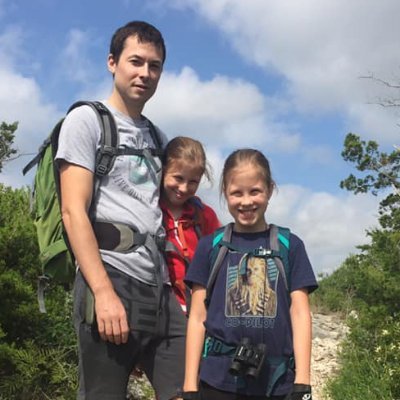
A year old Angelina that was killed by russia drone in Nova Vodolaga, her mother and two other victims had their funerals today.
I have a one year old child myself together with other two daughters, it's heartbreaking to watch.

L. Bastos 🇺🇦 retweeted
Pergunta: Então digam-me lá o que é que fica situado na Rua Soeiro Pereira Gomes, 3, em Lisboa?
Resposta: A sede do Sede Nacional do @pcp_pt
Pergunta: Então e o que é que fica sediada na Rua Soeiro Pereira Gomes, Nº 1 A, Sala B?
Resposta: A Dispõe Propriedades, S.A.
🤔
Ora, a Dispões Propriedades é uma sociedade anónima dedicada à indústria de construção civil, compra e venda de terrenos e outros imóveis, arrendamento, revenda dos adquiridos para esse fim, prestação de serviços de mercado imobiliário, mediação imobiliária.
O seu Conselho de Administração é formado por:
- Maria Alzira Ribeiro da Rocha de Sousa e Menezes - Ex autarca CDU da Câmara Municipal de Loures e de Moimenta da Beira;
- Pedro Miguel da Cunha Estrela - Ex autarca CDU da Câmara Municipal do Barreiro;
- António Damasceno Vieira da Silva - Ex autarca CDU da Câmara Municipal de Sintra.
A empresa detem um capital social de 800 mil Euros, uma património imobiliário de 244 mil €, 6 colaboradores (que até ganham bem mais que a média do sector) e 740 mil € de propriedades em inventário para vender.
Para além disso, a Dispõe Propriedades, S.A. regista duas participações no capital de outras sociedades:
- 60,12% na empresa Regiset - Comunicação e Artes Graficas da Região de Setubal, S.A e
- 80% na empresa Mimir Consultadoria Comunitária de Gestão de Empresas e Artes Gráficas, S.A
A Regiset tem no seu Conselho de Administração: Marco António Nunes de Oliveira, Ana Maria Pereira Espada e Carlos José Barros Pinto de Sousa e Menezes (marido da Alzira de Sousa e Menezes da Dispõe Propriedades).
Por sua vez a Mimir tem no seu Conselho de Administração:
- Álvaro Almada Contreiras;
- Carlos Augusto Cordeiro de Sousa - Ex membro comissão concelhia da CDU do Montijo;
- José Luís Martins de Oliveira Raimundo - Ex candidato CDU à Autarquia de Cascais;
De referir que esta sociedade foi fundada por Carlos José Barros Pinto de Sousa e Menezes - (Conselho de Administração da Regiset) e Francisco Leonel Rodrigues Lobo - Já falecido e ex autarca da Câmara Municipal de Setúbal.
A Regiset apresenta-se como um dos principais fornecedores nas contas do Partido Comunista Português apresentadas ao Tribunal de Contas e ambas as empresas, Regiset e Mimir, registam adjudicações de contratos públicos maioritariamente com câmaras de gestão CDU.
Será caso para perguntarmos ao PCP se tem algum comentário a fazer?


