

WW1, WW2, Scotland - the history, places, but mostly people's stories
Glasgow, Scotland
Joined July 2012
- Tweets49.1K
- Following4.2K
- Followers9.7K
- Likes11.2K




Pinned Tweet
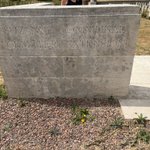
At Glenelg’s war memorial, a winged figure and a kneeling woman stand alongside a Highland soldier with his head bowed. Their story is one of victory, humanity and peace.
spotonlocations.co.uk/2026/1…

2
128
Spot On Locations retweeted

Sometimes only a fraction of my comments get used and that’s ok - here’s the full comment for those interested.
The question I want Scotland to put first is this: when someone asks for help to escape addiction, can they get the treatment and recovery support they need? That should be a defining test of our response to this crisis.
Recovery cannot keep being invited to comment after the priorities have already been announced.
Drug checking may provide useful information. But this service has barely opened and already the demand is national expansion and fewer restrictions. It would be refreshing if evaluation were allowed a speaking part before the victory tour began.
Kirsten frames this around rights, respect and compassion. I would start with the right to meaningful treatment choice, respect for people’s desire to recover, and the practical support that makes recovery possible. Compassion should include somewhere to go beyond managing the next risk.
The evidence also needs more careful handling. Much of the earlier behavioural research comes from recreational settings or people saying what they intend to do. You cannot simply lift findings from a festival and assume they apply to Glasgow’s population with entrenched dependence. A festival wristband is not a clinical diagnosis.
There is emerging community evidence of some people changing their behaviour, and we should acknowledge it. But self-reported precautions are not the same as demonstrated reductions in deaths. SDF should explain which findings apply to the people this service will actually see, what benefits are expected, and how those benefits will be independently assessed.
Those are reasonable questions, not symptoms of a compassion deficiency.
“Progressive” is a political description, not a clinical outcome. “Established abroad” tells us where something happens, not whether this particular model represents the best use of Scotland’s resources. National expansion, value for money and removing licence restrictions each require their own justification.
Before age restrictions are described as unnecessary barriers, we also need a clear explanation of the safeguarding implications. “Person-centred” is not a magic phrase that makes difficult questions disappear.
Could you ask Kirsten to clarify whether she is calling for under-18s to access drug checking? If so, what minimum age does she propose, what safeguarding and consent arrangements would apply, and how would young people be connected to appropriate treatment? Removing an adult-only condition is a substantive policy proposal, not simply tidying up an administrative barrier.”
What concerns me is the imbalance these priorities reveal. Harm reduction can support recovery, but it should not become the ceiling of our ambition. Where is the same campaigning energy, political urgency and determination to secure funding for treatment, rehabilitation and sustained recovery? Recovery cannot remain the warm word in the strategy while other interventions get the infrastructure, the expansion plans and the ribbon-cutting. If recovery is genuinely a priority, it needs a budget and a pathway not another paragraph in a policy document.
My question to SDF is straightforward: what findings would lead you to reconsider expansion? If expansion would remain the answer regardless of the results, that would be a belief system with a research bibliography.
Scotland needs services judged by what they deliver for people, not by how flattering their description sounds at the launch. A laboratory can tell us what is in a sample. It cannot tell us what our priorities ought to be.
Best,
Annemarie

🚨 @Annemarieward said: ‘A checked drug is not a safe drug, and ministers must guard against a test result being mistaken for a permission slip.'
'Recovery needs a budget and a pathway not a reassuring cameo at the end of another press release.’ @FAVORUK dailymail.com/news/article-1…

The London Cenotaph was unveiled by King George V on 11 Nov 1920, on Armistice Day.
The Flowers of Remembrance.
Bereaved mothers, wives, daughters, and sweethearts.
They walked past laying floral offerings and wreaths. It took hours of an unceasing pilgrimage
Lest We Forget.
4
235
Spot On Locations retweeted

The flowers of Remembrance. Hour after hour an unceasing pilgrimage of bereaved mothers, wives, daughters, and sweethearts lay floral offerings on the Cenotaph. Armistice Day, London, 1920.
The Somme is remembered for the battles of the Great War, but its villages also hold stories of extraordinary courage during the Second World War. Among them were schoolteacher Léopold Roussel and his wife Renée of the Possum Escape Line. Lest We Forget
substack.com/@evelynmckechni…

1
92

Spot On Locations retweeted

Bletchley Park - home of the codebreakers and a very special place
@bletchleypark @GCHQ

Spot On Locations retweeted

16 October 1938 | A Hungarian Jewish girl, Klára Boda, was born.
In July 1944 she was deported to #Auschwitz and murdered in a gas chamber.

ALT Vintage black and white photo of a young girl holding a toy and standing next to a stuffed animal, set against a patterned backdrop.
Spot On Locations retweeted

#31daysofgraves
Language
Ward Brinley Owens’ father died in 1919 presumably just before this inscription was added to his son’s grave
Amavimus, Amamus, Amabimus
The Latin means
“We loved, we love, we continue to love"
Olive, his mother lived to be 98.

Spot On Locations retweeted

History chums, if you want to join me on a Somme cemetery tour, I’m hosting my next Courcelette one on 9th November 2026 at 2:30pm. Free to attend!
#ww1


Spot On Locations retweeted
Day Three in Calgary, and the end of an extraordinary Recovery Capital Conference.
If yesterday was emotional for me personally, today gave me the chance to stand back and think about what I have actually been witnessing here.
Across these three days we have heard from medicine, research, government, Indigenous communities, workplaces, families, recovery organisations and people with lived experience.
And I think I finally understand what has impressed me most.
It is the ambition.
Not the ambition to create another programme, publish another strategy or manage addiction slightly better. The ambition to build a system around the belief that people can recover.
That sounds obvious. It isn't.
Systems reveal what they really believe about people through what they are designed to achieve. If our highest ambition is survival, we build around survival. If it is risk management, we build around managing risk.
But if we genuinely believe people can recover, the architecture has to look different.
Treatment and good medicine matter enormously. But so do family, housing, employment, community, relationships, responsibility, belonging and purpose.
That is recovery capital.
Much of my own work over the years has taken place in the awkward spaces between these worlds: government and community, treatment and recovery, policy and practice, professional systems and peer-led civil society.
Perhaps that is why I have found the conversations here so interesting.
I've spent years thinking about what makes a system genuinely recovery-oriented rather than simply capable of describing itself that way.
There is a difference.
You can put recovery into a strategy, an organisational chart and a set of performance indicators. The harder task is creating the culture, incentives and relationships in which recovery actually happens.
And eventually every system, however well intentioned, faces the same danger. It can become very good at measuring its own activity rather than asking whether people's lives are changing.
That is why independence, evidence and the voice of people who understand recovery from the inside matter so much.
Sometimes the useful question is still the simplest one
That's a lovely performance indicator. Now show me whether people are recovering.
Coming to Alberta from outside this system has given me an interesting vantage point. I recognise much of what is being attempted here from decades working across recovery, treatment, advocacy and policy in Britain, but I am also looking at it with fresh eyes.
I have found myself thinking not only about what Alberta is building, but about what makes recovery-oriented reform durable. How do you protect the original purpose as organisations grow? How do you translate principles into culture? How do you measure what actually matters? And how do you build something capable of surviving political cycles because its value can be demonstrated in people's lives?
Those questions travel rather well across borders.
There have been things this week I agree with, things I want to understand better and things I will probably continue arguing about. That is exactly how it should be.
But I leave enormously encouraged by the willingness here to ask bigger questions.
What would our systems look like if we designed them around what people might become, rather than merely around the problems they currently present?
I came to Calgary hoping I might contribute something to that conversation.
I'm leaving having learned a great deal myself, made some wonderful new connections, and with quite a few ideas about where this conversation might go next.
And my belief in recovery, if anything, strengthened.
#RecoveryCapital #RCC2026 #ROSC #AddictionRecovery #LivedExperience

EXCLUSIVE: Full video - @Annemarieward talks to The Sun.
EIGHT YEARS.
Eight years in a row.
Scotland has topped Europe’s drug-death table.
This isn’t a blip.
It’s eight years of lives lost.
How many more years?
WATCH. SHARE. SPEAK UP.
#Stopthedeaths #recoveryispossible #addiction #wedorecover #scotland
Spot On Locations retweeted

FAVOR UK statement on Scotland’s 2025 drug death figures
Today’s figures show that 1133 people died drug-related deaths in Scotland during 2025, a rise of 11% on the previous year.
Every one of those numbers represents a person, a family and a community that has experienced a loss which, in far too many cases, was preventable.
Last year, when Scotland recorded 1,017 deaths, we welcomed the 13 per cent reduction. We also cautioned against declaring victory on the strength of a single year’s figures. Police Scotland’s subsequent data recorded 1,146 suspected drug deaths during 2025, an increase of 8 per cent, so we knew there was a real possibility that progress was fragile.
Sadly, today’s figures confirm that concern. Scotland cannot continue moving between a bad year and a slightly less bad year and call that progress.
For years Scotland has debated drugs policy as though we must choose between keeping people alive and helping them recover. It is a false choice.
We need naloxone. We need good evidence-based medication. We need rapid access to treatment. But we also need residential rehabilitation, recovery communities, housing, relationships, employment, purpose and somewhere for people to go after the immediate crisis has passed.
Treatment should not simply ask whether somebody is still alive. It should ask whether their life is getting better.
That means being willing to examine outcomes honestly. How many people are leaving treatment drug-free? How many are reconnecting with their families? How many are entering rehabilitation when they need it? How many are finding stable housing, employment and community? And when an intervention repeatedly fails to produce better outcomes, are we prepared to change it?
Scotland does not need another exercise in describing the people who die. We know an enormous amount about them already.
What we need is a serious attempt to explain why Scotland continues to experience such an exceptional level of drug-related mortality, to test competing explanations rather than defending institutional positions, and to connect the considerable public money being spent with outcomes that actually matter in people’s lives.
There are thousands of people in recovery across Scotland who demonstrate that addiction does not have to be a life sentence. Our drug policy should be built around the same ambition we would have for anybody else: not merely survival, but the opportunity to get well, rebuild relationships, participate in community and live a meaningful life.
Tomorrow another set of statistics will eventually become yesterday’s news.
For the families behind those statistics, it never will.
@Annemarieward
CEO, Faces & Voices of Recovery UK
🤖 Made with AI

Spot On Locations retweeted
ca. 9 September 1942 | Female prisoner functionaries together with SS guards battered 90 French Jewish women to death at the sub-camp of Auschwitz in Budy, which was the penal company for women.
The penal company for women prisoners in Budy, about 7 km. from Oświęcim, was established in June 1942 in reprisal for an escape from Auschwitz by a Polish woman prisoner. 400 women of various ethnic backgrounds were imprisoned in Budy. Their living conditions were lamentable, and the Germans forced them to perform backbreaking labor. German women criminals and prostitutes made up the cadre in charge of the penal company.
The massacre of the French Jewish women prisoners took place in early September. Using clubs, hatchets, and rifle butts—and throwing some of their victims from the windows in the loft of the building—female prisoner functionaries and SS guards butchered 90 women.
In the afternoon, SS men from the SS reconnaissance service (Erkennungsdienst) and SS orderlies arrived at the Strafkompanie in Budy. The reconnaissance service photographed the pile of lying corpses of female prisoners and the corpses of female prisoners hanging on the wires of the fence, who were trying to escape the massacre. The SS orderlies, on the other hand, were killing wounded prisoners by dragging individuals into a room given to them and killing them with phenol injections
The camp administration investigated the incident, but failed to discover the cause. Commandant Rudolf Höss defined the massacre as “a revolt instigated by prisoners who used stones and clubs in an attempt to terrorize the capo and make their way out of the camp.”
SS man Pery Broad claimed that a German woman noticed a stone in the hand of Jewish woman returning from the toilet to the dormitory room. Broad felt that this was a “hysterical illusion.” Nevertheless, the German woman called for help and shouted that the Jewish woman had struck her. At that point, the female supervisors and guards began slaughtering the French Jews.
As an aftermath, all the women who remained alive after being injured in the massacre were killed. SS also killed six German women functionaries who had taken part in the slaughter.
---
Learn about this and other cases of organized resistance at Auschwitz:
auschwitz.org/en/education/e…

ALT A house with large windows on the first flor and roof covered in snow with bare trees in the background.
Spot On Locations retweeted

Three #Roman leather shoes, for (l-r) a man, woman, & child. Found in an ancient well at Bar Hill fort on the Antonine Wall (Scotland), they're beautifully crafted pieces of footwear, & show that the military communities had access to a bit of luxury even on the frontiers...

Spot On Locations retweeted

Earlier this year Brechin's Bar in Govan changed hands when David Low acquired it. They're now giving the place a bit of a spruce up, and when the hardboard sheeting on the exterior was removed, lo and behold, the original Victorian panelling was revealed.
🎥 Brechin's Bar
Spot On Locations retweeted
9 September 1938 | A Hungarian Jewish girl, Ágnes Noiman (Neuman), was born in Budapest.
In 1944 she was deported to #Auschwitz and murdered in a gas chamber.

ALT Vintage black and white photo of a smiling girl with braided hair, wearing a polka-dot dress.
Spot On Locations retweeted

Frank Hurley’s famous 1917 photograph, "Evening by the Cloth Hall, Ypres," taken during the Third Battle of Ypres (Passchendaele) 1917.

James Stagg: turning the tide of D-Day
Today, 9 September, marks the UK release of the gripping WWII thriller, Pressure.
nationalarchives.gov.uk/expl…

Save the historic Glenelg-Skye ferry. Please sign the petition and share widely. Thanks
you.38degrees.org.uk/petitio…
