
Always compliant patient who trusted his doctors until benzo tolerance and withdrawal hit. Surviving the frightening wilderness of poly med tapering and WD.
Colorado, USA
Joined January 2017
- Tweets349
- Following208
- Followers289
- Likes297
John Staight retweeted

In the past decade, SSRI prescriptions for teenagers have increased by 40%. For children under 12, the rate has doubled. Yet during this same period, youth mental health has dramatically worsened. How did we reach a point where chemically altering developing brains became our default response to adolescent struggles?
John Staight retweeted

“I don’t think I knew a single person who understood that taking benzodiazepines for just two months could be followed by years of persistent withdrawal symptoms.” @coldxman
Dr. Mark Horowitz discusses the similarities between benzodiazepines and antidepressants, drawing on Jordan Peterson’s experience.
Watch the full episode here: bit.ly/4AR26qL
John Staight retweeted
“The FDA doesn’t mandate long-term withdrawal studies, the drug companies don’t do it.”
Dr. Mark Horowitz tells @coldxman what antidepressant trials don’t tell us.
Watch the full episode here: bit.ly/4AR26qL
John Staight retweeted

I went through years of medical school without ever learning that stopping a benzo can trigger severe withdrawal symptoms lasting years.
I learned this from patients whose lives had been destroyed by withdrawal.
Protracted benzo withdrawal is a hidden epidemic.
John Staight retweeted

Consistent with other analyses this pre-print find that two antidepressants - paroxetine and duloxetine - are in the top 10 drugs most likely to cause withdrawal (adjusted for number of users, etc) in FDA data.
Both higher risk than morphine and paroxetine is higher risk than oxycodone. As it turns out the Sacklers were gross under-achievers when it came to obscuring the harms of their drugs. The antidepressant manufacturers (and their current cheerleaders) are the real gold standard here. medrxiv.org/content/10.64898…

John Staight retweeted

Dr. Naomi Fisher: "Telling children that they have a lifelong brain disability isn’t a trivial thing to do. Children tend to believe what we tell them, & they carry the things that they learn in childhood with them for life."

Naomi Fisher puts it so well: "There’s very little about the downsides, and I know from experience that even mentioning the possibility of overdiagnosis is enough to provoke an outcry on social media. People fight for these diagnoses, and they have become highly valued identities."
We have to end our overdiagnosis crisis thecritic.co.uk/we-have-to-e…

John Staight retweeted
If you wanted to create human suffering at scale, how would you do it?
- Tell people their inner life is a malfunction.
- Sever them from meaning.
- Disconnect them from each other.
- Convince them they are powerless.
- Then alter their biology with synthetic chemicals that dysregulate the very systems that might restore them to balance. Call it treatment. Watch them get worse.
- Prescribe more.
John Staight retweeted

And sure one can argue confound by indication but shouldn’t it go in the other direction?
John Staight retweeted

Sam says it best about antidepressant withdrawal: "People who were prescribed these drugs in good faith are now having to educate themselves in pharmacology just to escape them without becoming seriously unwell. It is an extraordinary failure of patient care, informed consent and medical responsibility."

🧵 1/ Today I’ve started tapering from 3 mg of sertraline, having held this dose for over two years. I’m approaching four years of protracted withdrawal after being taken off 150 mg of sertraline following long term use. What followed was a succession of drug switches, high dose reinstatements with adverse reactions and dosage changes after my withdrawal symptoms were misdiagnosed as a mood disorder, FND and potentially bipolar disorder, amongst other things.
Unfortunately, reinstating 3 mg of sertraline did nothing to stabilise my system. Despite remaining on this dose for over two years, I continue to experience significant neurological and physical symptoms. I’m now questioning, with the help of a knowledgable psychiatrist and clinic, whether continued exposure to sertraline could actually be contributing to or aggravating my symptoms, rather than providing any meaningful stabilisation. I also remain on 25 mg of quetiapine, originally prescribed to help with sleep during sertraline withdrawal, which may be contributing to some of the problems too.
My main concern is the possibility of kindling and progressive nervous system sensitisation. Following repeated rapid tapers, reinstatements and switches between psychiatric drugs, my nervous system has become increasingly sensitive and reactive to pharmacological changes.
Kindling is a term used to describe a process in which repeated episodes of stimulation or disruption can produce progressively greater responses to subsequent exposures. In the context of psychiatric drug withdrawal, the hypothesis is that repeated withdrawal episodes and drug changes may leave some individuals increasingly vulnerable to subsequent disruptions. The precise mechanisms in antidepressant withdrawal are not yet established and this remains an area requiring considerably more research.
One possible explanation involves neuroadaptation. When someone takes an SSRI over an extended period, the brain adapts to the drug’s effects on serotonin signalling. Sertraline inhibits the serotonin transporter (SERT), reducing the reuptake of serotonin from the synaptic space. Over time, the nervous system makes compensatory adjustments to function in the presence of that ongoing pharmacological effect. When the drug is rapidly reduced or removed, those adaptations do not necessarily reverse at the same speed, potentially creating a period of physiological instability.
There is also an important pharmacological reason why I cannot simply stop taking 3 mg of sertraline because it appears to be a very small dose. Research using PET and SPECT brain imaging has demonstrated that the relationship between antidepressant dose and serotonin transporter occupancy is hyperbolic rather than linear. In other words, occupancy increases rapidly at lower doses before gradually approaching a plateau at higher therapeutic doses.
A model based estimate published using this research suggests that approximately 2.2 mg of sertraline may produce around 20% SERT occupancy, while 5.9 mg may produce around 40%. This would put my 3 mg dose somewhere in the region of 20 - 25%, although this is an extrapolation rather than a direct measurement at my dose.
This is significant because 3 mg is not necessarily pharmacologically insignificant. Even at this low dose, sertraline may still be occupying a meaningful proportion of serotonin transporters. Reducing it too quickly could therefore produce further pharmacological changes that my already sensitive system may struggle to accommodate.
My symptoms currently include bouts of akathisia, muscles in my legs tightening and cramping as though locked in a vice, intense head pressure and electrical sensations throughout my body, almost as though electrical cables have been severed, alongside numerous other neurological and sensory disturbances.
I’m concerned that these symptoms may be related to previous withdrawal, ongoing drug exposure or a combination of both. I don’t …

John Staight retweeted

The FDA and Pfizer knew there were serious questions about Zoloft’s efficacy, yet it was approved anyway.
Thankfully, internal documents uncovered during discovery in Motus v. Pfizer and unsealed by the judge in Witczak v. Pfizer helped bring these concerns to light.
They can try to dismiss Woody’s story and thousands of others as mere “anecdotes,” but it’s much harder to dismiss their own internal documents in black and white.
And here we are, nearly 35 years later, grappling with the consequences of widespread antidepressant overprescribing.
How much did they know back then, and how many people paid the price?


John Staight retweeted
When your drug dealer... I mean physician... recommends Trazodone, Seroquel or Gabapentin for sleep please send them the clinical guidelines from the Academy of Sleep Medicine. They are tranquilizing children & adults a like. No more bystanders
John Staight retweeted

Mark Taylor was shot at Columbine. His mother told the FDA he took 7 to 13 bullets through his chest and nearly died.
One of the shooters, Eric Harris, had been on the antidepressants Zoloft and then Luvox. So Mark and his mother stood before an FDA committee and asked its members a question. 🧵
John Staight retweeted

The feeling when you gradually hyperbolically taper your antidepressant and start rediscovering the world around you. Colours seem brighter, music takes on a whole new depth, nature becomes more fascinating and even the simplest things bring you joy. You find yourself experiencing moments of genuine awe at things you barely noticed before.
It’s like slowly waking up from a trance you’ve been in for years, as the emotional numbness lifts and your brain gradually comes back online. You begin reconnecting with parts of yourself you thought you’d lost, feeling love, excitement, connection and the full range of human emotions again.
It’s quite something, both exciting and terrifying, to realise just how much of the world you’ve been missing.
John Staight retweeted
Escitalopram (Lexapro) got approved for "anxiety" in children as young as 7 years old. Researchers & statisticians who examined the data have concluded that a young person taking this drug is more likely to become suicidal than have any meaningful reduction in anxiety. Resist
John Staight retweeted
In 1991, the FDA held a hearing on whether antidepressants like Prozac could trigger suicide and violence. Patient after patient testified.
Then an FDA staffer read out the conflict-of-interest waivers granted to the committee members: Merck, Sandoz, Eli Lilly, Pfizer. And then they voted. 🧵
John Staight retweeted
In 1991, Phil Donahue told his audience that Eli Lilly had declined to appear on his show about Prozac.
And then a woman in the studio audience stood up to speak. She'd been put on Prozac for a back injury, with no history of mental illness, and she went on to attempt suicide six times. 🧵
John Staight retweeted
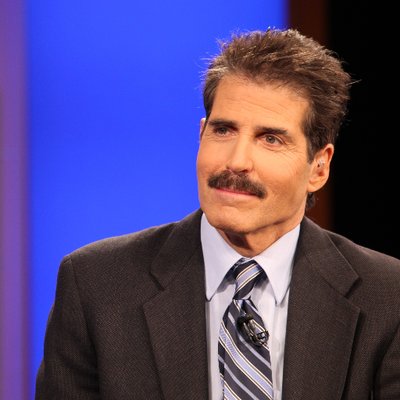
Millions are in therapy. Is that counterproductive?
“The more that you talk about everything that's wrong in your life, the more miserable you're going to be," says psychologist @DrMcFillin.
Stossel TV Fellow @AdamOmaryPhD explores failures of the mental health industry:
John Staight retweeted
I remember attending the November 2004 Senate hearing when FDA safety officer David Graham testified about Vioxx and the FDA’s failure to adequately protect the public from drug risks.
What many people don’t realize is that Graham had also raised concerns about Prozac and suicidality back in 1990 (in advance of the 1991 FDA hearing on emergence of violence and suicide with Prozac).
In a September 1990 FDA memorandum, Graham questioned Eli Lilly’s safety analysis, including the exclusion of 76 of 97 reported suicidality cases.
Fast forward to 2004. Another FDA safety scientist, Dr. Andrew Mosholder, identified approximately double the risk of suicidal thinking and behavior in children taking antidepressants compared with placebo. Yet FDA senior leadership prevented him from presenting his findings at a February 2004 advisory committee hearing.
During his Vioxx testimony, Graham specifically cited Mosholder’s experience as another example of the FDA’s systemic problems in handling drug safety concerns.
Have we fixed the underlying problems Graham warned Congress about?
Who gets to decide when a safety signal is serious enough to act on? How independent are the scientists responsible for identifying harms? And how many people must be harmed before warnings are strengthened?
Under 21 C.F.R. § 201.57(c)(6)(i), the FDA requires drug safety warnings when there is reasonable evidence of a causal association, even without definitive proof.
Unfortunately the FDA doesn’t follow their own rules and regulations.

In 2004, Dr. David Graham, a senior FDA drug safety official, testified to the Senate that Vioxx had caused an estimated 88,000 to 139,000 heart attacks and sudden cardiac deaths, and that 30 to 40% of those people probably died.
Then he said the FDA "as currently configured is incapable of protecting America against another Vioxx."
🧵
John Staight retweeted

I find it fascinating how so many people react to those harmed by prescription drugs by claiming ‘you knew the risks it was in the patient info slip’.
Often times, prescribers aren’t even aware of the risks and they have prescribed them to thousands of people.
If even prescribers aren’t aware how can you expect a patient to do what prescribers haven’t done?
John Staight retweeted
The bipolar diagnosis has drifted far from the condition it was originally designed to describe. The people most frequently swept into it are not the ones experiencing a a severe manic episode. This is not an accident.
They are the emotionally sensitive ones: the artists, the empaths, the people who walk into a room and feel what everyone in it is feeling before a word is spoken. The ones who cry at things others do not notice and feel joy with an intensity that makes practical people uncomfortable. These are not symptoms. These are gifts. They are the foundation of creativity, of deep human connection, of the kind of perception that produces art and music and the ability to sit with another person in their pain without flinching.