

Generation 𝕏
Citizen
Joined April 2007
- Tweets1.5K
- Following857
- Followers1.6K
- Likes15.1K




Pinned Tweet
“Don’t you see that the whole aim of Newspeak is to narrow the range of thought? In the end we shall make thoughtcrime literally impossible, because there will be no words in which to express it. Every concept that can ever be needed, will be expressed by exactly one word, with its meaning rigidly defined and all its subsidiary meanings rubbed out and forgotten. Already, in the Eleventh Edition, we’re not far from that point. But the process will still be continuing long after you and I are dead. Every year fewer and fewer words, and the range of consciousness always a little smaller. […] Has it ever occurred to you, Winston, that by the year 2050, at the very latest, not a single human being will be alive who could understand such a conversation as we are having now?”
Syme, speaking to Winston, in Orwell's 1984.
Steve S. 🇺🇸🗽🇵🇾🇻🇪🇬🇹 retweeted

Name one? How about a few?
Rockefeller lowered the cost of kerosene through efficient refining and distribution.
Ford made automobiles affordable through mass production.
Carnegie reduced steel production costs through industrial innovation.
Walton lowered retail prices through bulk purchasing and efficient logistics.
Dell made computers cheaper by eliminating retail intermediaries.
Kamprad made furniture affordable through flat-pack manufacturing and distribution.
Bezos intensified retail competition through Amazon.
Koum made international messaging practically free through WhatsApp.
Page and Brin made search, navigation, email, and translation available without direct charges.
And that's barely scratching the surface.
In fact, it would be considerably more challenging to find a billionaire who earned their fortune through voluntary trade without lowering costs, improving quality, increasing productivity, or making something more accessible.
That's how fortunes are generally made in competitive markets. You create value for others, and the more people you serve, the greater your potential reward.
You don't even have to buy from these businesses to benefit. Their competitors must improve their offerings or risk losing customers.
These clout chasers destroy their credibility daily without so much as flinching.
They enjoy the accumulated benefits of capitalist innovation while confidently demanding evidence that any of it ever happened.
The economic illiteracy would be impressive if it weren't so commonplace.

Steve S. 🇺🇸🗽🇵🇾🇻🇪🇬🇹 retweeted

The year is 1873. Your wife tires easily and reads too much. The doctor prescribes the rest cure: six weeks flat in bed, no books, no visitors, fed on milk, forbidden to sit up without his permission. The man who devised it is the most famous nerve specialist in America, and the women come out of it quieter, which is taken as the cure.
The year is 1915. The hospital has a new way of delivering your child. Morphine, then scopolamine, and the mother wakes two days later with a baby she cannot remember having. They call it twilight sleep. The women are strapped into padded cots so they do not hurt themselves while they scream, and the straps are the modern part. The babies arrive blue and slow to breathe.
The year is 1945. The truck comes down your street fogging DDT, and the children run behind it in the white cloud because the man on the back says it is harmless. At the beach it is sprayed over the bathers on their towels. It goes on the cattle, over the barn, and across the kitchen table.
The year is 1948. Your son has trouble with his ears. The doctor slides a rod tipped with radium up each nostril and holds it there for the best part of ten minutes, and you bring him back three more times. Hundreds of thousands of American children get the same treatment. The cancers arrive in their fifties.
The year is 1962. The health visitor tells you breastfeeding is old-fashioned and the formula is scientific. By 1972 fewer than one American baby in four is breastfed at all. The formula is skimmed milk and sugar, with the milk fat taken out and vegetable oil put in.
The year is 1971. The family planning clinic fits a small plastic crab called the Dalkon Shield. Its tail is a bundle of fibres that wicks bacteria up into the womb. 2.8 million are fitted in America before it is withdrawn, and the company goes bankrupt under the claims. It had been sold as safe and superior.
The year is 1983. The doctor says your arteries are the butter's fault. The dripping tin goes in the bin, the yolks go to the dog, the margarine goes in the fridge, and you have the heart attack anyway, on skimmed milk, having done everything right.
The year is 2001. Your 15-year-old is low, and the doctor prescribes Paxil, because the trial in the journal says it is effective and well tolerated in adolescents. The raw data, reanalysed 14 years later, shows more suicidal thinking on the drug than on the sugar pill. The company pays $3 billion to settle. Nobody rings the house.
The year is 2009. The government has spent around £500 million stockpiling Tamiflu for the pandemic, on the strength of the manufacturer's trials. When the trials are finally prised loose five years later, the drug shortens flu by about half a day and nothing shows it keeps anyone out of hospital. The stockpile goes out of date in a warehouse.
The year is 2026. The doctor has ten minutes and a screen. The number is high, so the tablet is for life. The weight is high, so the injection is for life. The meat is bad for the planet and the oil is good for the heart, and the person in the chair is as certain as everyone who ever sat in it.
Every one of those was settled, by a committee, in a journal, with a doubter somewhere being laughed at. The rest cure, the straps, the fog, the rod, the formula, the crab, the margarine, the trial, the stockpile. All of it certain, all of it printed, all of it done to somebody who had asked for help.
You were never the one who was wrong. You were the one it was done to, and the only person in the story who did as they were told every single time.
The apology comes a generation late, in a footnote, addressed to nobody.
The next one is being drafted now.

He made it so.

BREAKING: Sir Patrick Stewart, the acclaimed actor best known for Star Trek and the X-Men films, has died aged 86.
Read more about the circumstances of his death and his career ⬇️
telegraph.co.uk/news/2026/10…

Steve S. 🇺🇸🗽🇵🇾🇻🇪🇬🇹 retweeted

Democrats: Ranked choice voting makes for freer, less polarized elections!
Also Democrats: *immediately proceed to game ranked choice voting*

BREAKING: NYT reports that operatives with Democratic Alaska U.S. Senate candidate Mary Peltola’s campaign were behind the effort to find & recruit a candidate named Dan Sullivan to run against incumbent GOP Senator Dan S. Sullivan in an effort to confuse voters and peel votes from him.
Specifically, NYT says they have reviewed text messages and documents that reveal in summer 2025, a Peltola staffer received instructions from campaign staffers to find as many people named Dan Sullivan in Alaska as possible.
The staffer complied, going through voter records, and compiled a list. The operation “involved secret trips to far-flung Alaskan communities and the appearance of a mysterious Midwestern operative, who traversed the state using a fake name and made his pitch to would-be candidates over beers at brew pubs.”
Per NYT:
“The plan worked. This spring, a retired teacher from a tiny fishing village along the Alaska Panhandle, reachable only by air and sea, announced his candidacy for Senate. His name was Dan J. Sullivan.”
nytimes.com/2026/10/28/us/po…


Steve S. 🇺🇸🗽🇵🇾🇻🇪🇬🇹 retweeted

@NFL @NFLOfficiating fucking unwatchable. Are you kidding me????? Get bent


Steve S. 🇺🇸🗽🇵🇾🇻🇪🇬🇹 retweeted

Personal foul - 15 yards - referee being an emotional bitch. Automatic Lions 1st down.
Steve S. 🇺🇸🗽🇵🇾🇻🇪🇬🇹 retweeted

If you're about to vote Democrat, read this. Here's why socialism doesn't work, explained to a 10-year-old.
You're in a class of 30 students. One kid works like crazy and gets an A. Another does nothing and gets an F. The teacher decides that's unfair and gives everyone the class average: a C.
The A student stops working. Why bother if it changes nothing? The F student keeps doing nothing. Why work when you get a C for free?
Next year the class average drops to a D. Then lower. Then everyone is failing.
The teacher doesn't get it. He thinks the problem is that students don't show enough solidarity. So he punishes those who don't try hard enough. He watches everyone. He decides who studies what. He bans switching classes.
That's exactly what happened. Every time. In every country.
USSR, China, Cuba, Venezuela, North Korea, Cambodia, Ethiopia, East Germany. Same result. Every time.
Socialism punishes those who produce and rewards those who don't. Eventually nobody produces. And when nobody produces, the government uses force to make people work.
It's not a bug. It's the design.
Two-thirds of Democrats now have a positive view of socialism. Even Fetterman, a sitting Democratic senator, says the word should be unacceptable in his own party. Read the menu before you order.
Steve S. 🇺🇸🗽🇵🇾🇻🇪🇬🇹 retweeted

Deleting Instagram did NOTHING to improve my productivity. I now doomscroll on Jira.
Um, @NFLOfficiating — you’re embarrassing yourselves in Green Bay tonight. What a travesty.
Steve S. 🇺🇸🗽🇵🇾🇻🇪🇬🇹 retweeted
To every American, and to everyone watching France burn from abroad:
Do not blame the French people for this.
We never asked for it. We never voted for it. And the one time we were clearly asked, we said no.
Here are the numbers your media won't show you.
70% of the French say there are too many immigrants in France today.
79% want a tougher immigration policy.
77% disapprove of the government's record on immigration.
83% want foreign criminals and long-term unemployed foreigners sent home.
And no, it's not just the old. 69% of French 18 to 24 year olds support suspending legal immigration for three years.
This is not a fringe. This is the French people.
In 2005, we were asked if we wanted the European Constitution. 55% voted no. Three years later, our politicians passed the same text under another name, through parliament, without ever asking us again.
That is modern France in one sentence. The people say no. The elites do it anyway.
So who is responsible? The politicians who lied to us. A class of leaders formed in the same schools, the same forums, the same networks, loyal to each other before they are loyal to their nations.
In 2017, at Harvard, Klaus Schwab, founder of the World Economic Forum, bragged about his Young Global Leaders program in four words: "We penetrate the cabinets." He added that it was true in France. Emmanuel Macron was one of his Young Global Leaders.
It's the same project in Brussels with Ursula von der Leyen and in Paris with Macron. Borders treated as an obstacle. Nations treated as relics. The people treated as a problem to be managed.
What you are watching in France is not the French people failing. It is the end of the globalist project, an abject, quasi-communist dream of a world run by unelected planners. It is collapsing everywhere in Europe at once, and the West has to cut this cancer out before it takes the rest of the body with it.
The peoples of Europe don't want this. They never did.
So when you see our town halls burning, don't say "the French chose this."
The French never chose this.
They were forced into it.
If you're French and you agree, repost this so the world hears it from us.
If you're American, look at us carefully. Then choose differently on November 3rd.
Steve S. 🇺🇸🗽🇵🇾🇻🇪🇬🇹 retweeted

Vin Scully explaining the Dodgers-Giants rivalry meant hearing the history from someone who had lived through both versions of it.
The feud began with Brooklyn and the New York Giants before both clubs moved west in 1958.
Scully had called Dodgers games before and after the move, so this was not a broadcaster summarizing a history book. He had been there for most of the modern story.
Very smart and required reading.

Bernie Sanders says the top 1% owns more than the bottom 93%, that fewer than a thousand billionaires got $2.2 trillion richer last year, and that it's "obscene."
It's the most seductive and most wrong economic argument of our time. Let me explain why.
First, wealth distribution follows a power law. Always. Everywhere. Books, music, startups, followers on X, goals in soccer. A small minority captures most of the value. That's not a bug of capitalism. It's the mathematical signature of every system where value gets created.
So the only question that matters isn't "how big is the rich's slice?" It's "is the cake growing, and is the slice of the poorest growing with it?"
And the answer is yes. In 1990, more than one human in three lived in extreme poverty. Today it's about one in ten. During exactly the period when billionaires multiplied.
Bernie shows you the slice. He never shows you the cake.
Second thing he won't tell you: past a certain level, wealth stops being consumption. It becomes capital allocation.
Elon Musk isn't sleeping on a pile of cash. He owns stakes in Tesla, SpaceX, xAI. Jeff Bezos owns Amazon stock. That "$2.2 trillion" isn't sitting in a checking account. It's factories, rockets, data centers, millions of jobs. Nobody can eat $100 billion. You can only decide where to invest it.
Once you understand that, the whole debate changes. The real question becomes: who allocates capital better?
The people who built Amazon, SpaceX and Nvidia? Or politicians?
A 5% wealth tax isn't "taking money from the rich." It's taking investment decisions away from people who proved they can create value and handing them to people who proved the opposite.
Because the fundamental difference between an entrepreneur and a politician is consequences.
The entrepreneur invests his own money. If he allocates badly, he loses everything. The market corrects him brutally, no appeal. That's why most startups die: the system kills bad decisions.
The politician invests other people's money. If he allocates badly, nothing happens. Worse, he gets a bigger budget to "fix the problem."
Milton Friedman put it better than anyone. There are four ways to spend money. Your money on yourself: you care about price and quality. Your money on others: you care about price. Others' money on yourself: you care about quality. Others' money on others: you care about nothing.
Government is the fourth box. By design.
Perfect example: California high-speed rail. Approved in 2008 for about $33 billion. Current estimated cost: over $100 billion. Passengers carried: zero. No entrepreneur would have survived that. The politicians who pushed it built careers on it.
And when allocation has no consequences, it eventually finds a buyer. A politician who controls billions without accountability becomes the most profitable target in the world for anyone who wants to steer that money.
The irony is that the left that rails against billionaires is itself funded by billionaires. George Soros is one of the biggest Democratic donors in history. The Gates Foundation shapes public health policy across the planet.
Politicians don't fight billionaires. They pick their own. The ones who fund the state over the ones who compete with it.
So if we actually want fewer poor people, we have to stop judging ideas by their intentions and start judging them by their results. And the results are brutally clear.
China, 1978: Deng Xiaoping opens the economy to markets. More than 800 million people escape extreme poverty. The largest retreat of misery in human history. Not through redistribution. Through the freedom to build.
India, 1991: liberalization. Same movie.
South Korea and North Korea: same people, same language, same starting point in 1953. One became one of the most advanced economies on earth. The other has famines.
Poland and Ukraine: comparable living standards in 1990. Today the average Pole is more than three times richer than the average Ukrainian.
Argentina: a year and a half of liberalization, and the poverty rate falls from over 50% to around 30%.
No country in history escaped poverty by punishing the people who build. Every single one did it by letting them build.
And if you want to see what Bernie's program looks like in real life, you don't have to imagine it. It exists. It's called France. We've been running it for 45 years.
Mass nationalizations in 1981. Two years later, Socialist president Mitterrand has to reverse course into austerity.
Retirement at 60. The 35-hour workweek.
A wealth tax for 35 years. Hundreds of wealthy households left every year for Belgium, Switzerland, London, taking their capital, their companies and their future taxes with them. Macron finally scrapped it in 2018.
Hollande's 75% tax: raised a few hundred million, drove talent out, abandoned after two years.
One of the highest tax burdens in the OECD. Public spending around 57% of GDP, a record in the developed world.
Last balanced budget: 1974. Public debt: over €3.4 trillion. Mass unemployment for four decades.
If taxing the rich and growing the state made people prosperous, France would be the richest country on the planet.
It isn't. GDP per capita in France is barely more than half of America's. It's lower than Mississippi, the poorest state in the US. Not a single global tech giant. Our best engineers build Silicon Valley instead. I've been going back and forth between Paris and San Francisco for years. I see it every week.
And California is about to replay the movie. Prop 40, on the ballot November 3rd, would take 5% of billionaires' net worth. Even Gavin Newsom, a Democratic governor, opposes it. The state's own nonpartisan budget analyst warns that income tax revenue could drop every year if the wealthy leave. Larry Page, Sergey Brin and Peter Thiel have reportedly already started moving their assets out.
You don't fight poverty by shrinking the top. You fight it by growing the cake.
Bernie wants a society where nobody has too much. I want a society where nobody has too little.
The first has been tried everywhere and produces equality in stagnation. The second lifted a billion people out of misery.
Choose.
Steve S. 🇺🇸🗽🇵🇾🇻🇪🇬🇹 retweeted
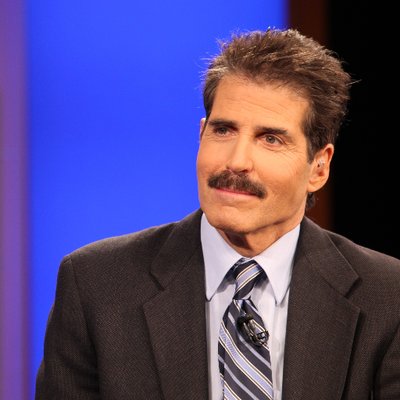
“Major European cities will be sunk beneath rising seas ... by 2020!" reported The Guardian in 2004.
But wait, 2020 was six years ago!
No cities are underwater.
In this video, I debunk activists' claims about polar bears, droughts, bees, food shortages and more:
Steve S. 🇺🇸🗽🇵🇾🇻🇪🇬🇹 retweeted

Expecting a good product to overcome bad advertising is an oddly popular strategy.

Steve S. 🇺🇸🗽🇵🇾🇻🇪🇬🇹 retweeted

Our concerns about AI should be far more the risk that in the future everyone is dumb , not dead.
